Quranic Answer
Religious Pride: A Reflection on Humility and Human Relationships In a world where religious identity can often lead to division rather than unity, religious pride stands out as an important social and individual issue that plays a crucial role in shaping human relationships and our understanding of spirituality. Pride, in many ways, is diametrically opposed to the core teachings of most religions. It has the potential to create barriers between people, foster discontent, and obscure the true essence of faith and humility. The Quran, as a revered text in Islam, provides profound insights into how arrogance and pride can corrupt the spiritual journey of an individual. Allah warns us repeatedly of the negative consequences of such traits. This emphasis on humility is not merely a suggestion but a crucial lesson for believers who seek to deepen their faith and improve their relationships with others. In Surah Luqman, verse 18, Allah states: 'And do not turn your cheek [in contempt] toward people; and do not walk through the earth exultantly. Indeed, Allah does not like everyone self-deluded and boastful.' This powerful verse serves as a reminder that those who harbor pride and arrogance in their hearts are not favored by Allah. The essence of this message is a call for humility—an invitation to view others not as inferiors but as equals in the eyes of the Creator. The religious divide is often deepened by the belief that one group is superior to another based on their religious practices, affiliations, or understandings. However, the Quran teaches that all humans are creations of one Creator, and, consequently, no one has the right to look down upon another. Each individual is on their unique spiritual journey, and understanding this intrinsic equality can foster genuine compassion and love among people of different faiths and backgrounds. To combat the insidious nature of religious pride, individuals must first engage in critical self-reflection. One essential question to ponder is whether our actions are motivated by a desire for the pleasure of Allah or by the need for validation from others. This self-questioning acts as a compass guiding us back to the righteous path. When our intentions are focused on serving others rather than ourselves, we can mitigate the effects of pride in our lives. As we delve deeper into the spirit of true faith, it becomes evident that it is rooted in humility and selfless service to others. Humility, as a foundational virtue, not only aligns with divine principles but also enriches our interpersonal relationships. Those who embody humility are more likely to foster environments of understanding, acceptance, and love. Additionally, they are often more adaptable and open to the diverse interpretations of faith and spirituality that exist around the globe. In Surah Al-Hashr, verse 18, Allah speaks to believers: 'O you who have believed, fear Allah. And let every soul look to what it has brought forth for tomorrow...' This verse carries immense significance, urging individuals to engage in self-reflection regarding their actions and intentions. The underlying message encourages believers to evaluate their lives with a perspective of accountability, considering how their deeds will be weighed in the realm of the hereafter. To maintain a balance between one's faith and humility, one must adopt the habit of looking at oneself in the mirror of humility. This practice allows individuals to gauge their spiritual health and assess whether they are genuinely living with the intention of serving others, rather than garnering recognition or status. This self-awareness and sincerity in intention can become powerful antidotes to the poison of religious pride. Furthermore, fostering an environment where humility is celebrated can begin with education and dialogue. By promoting discussions about the consequences of pride within religious communities, leaders can encourage congregants to reflect on their motivations. Workshops, sermons, and outreach programs that emphasize the significance of humility and selflessness can empower individuals to appreciate their shared humanity. In doing so, these initiatives can deconstruct the barriers that pride often erects between people of various religious affiliations. Additionally, personal stories and experiences can serve as compelling tools to deepen understanding and compassion. Sharing testimonies about the transformative power of humility and community service can inspire others to follow suit. This participatory approach highlights the fact that real growth emerges when individuals are willing to step down from positions of pride and extend hands of service to those in need. Religious pride does not only harm relationships within communities but can also lead to misunderstandings between different faiths. This moment in history, where division often seems more prevalent than unity, calls for a revolution of humility. Interfaith dialogues can serve as platforms for individuals to share their beliefs while also embracing the shared principles that connect us all as humans, regardless of religious doctrine. Such exchanges can strengthen bonds and combat the pervasive sense of superiority that often taints religious discussions. In conclusion, religious pride poses significant challenges to both individuals and communities. However, by embracing the virtues of humility and self-awareness, we can navigate our religious journeys more faithfully and build bridges of understanding and acceptance. The teachings in the Quran provide a treasure trove of knowledge that encourages believers to embody the values of humility and service. By committing to these values, we resonate with the essence of what it means to be truly faithful, enriching our own lives and the lives of those around us. The path to overcoming religious pride lies within each of us—through sincere introspection, acts of service, and a deep recognition of our shared humanity.
Related Verses
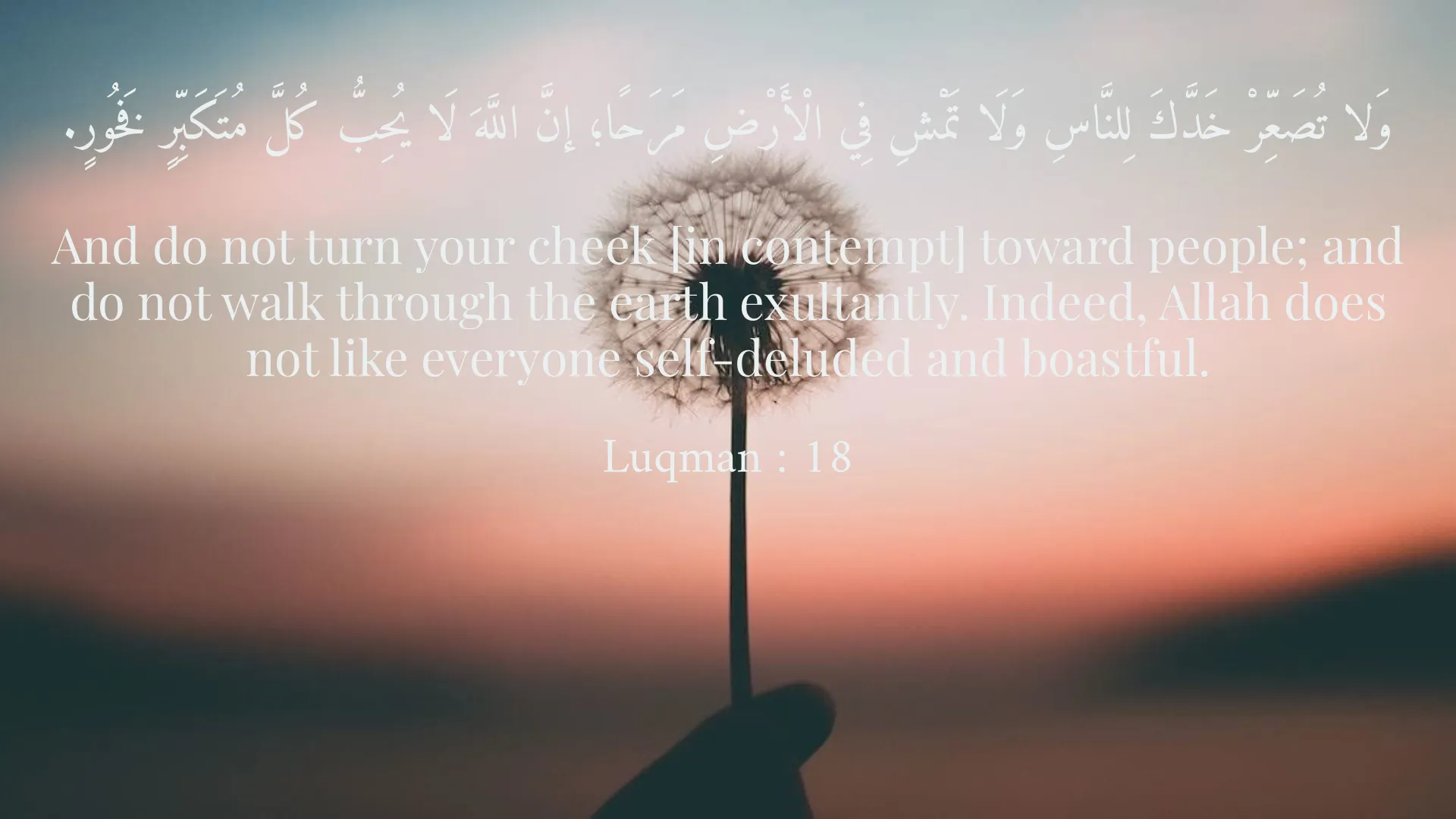
وَلا تُصَعِّرْ خَدَّكَ لِلنَّاسِ وَلَا تَمْشِ فِي الْأَرْضِ مَرَحًا؛ إنَّ اللَّهَ لَا يُحِبُّ كُلَّ مُتَكَبِّرٍ فَخُورٍ.
And do not turn your cheek [in contempt] toward people; and do not walk through the earth exultantly. Indeed, Allah does not like everyone self-deluded and boastful.
Luqman : 18
يَا أَيُّهَا الَّذِينَ آمَنُوا اتَّقُوا اللَّهَ وَلْتَنظُرْ نَفْسٌ مَّا قَدَّمَتْ لِغَدٍ...
O you who have believed, fear Allah. And let every soul look to what it has brought forth for tomorrow...
Al-Hashr : 18
Short Story
One day, someone approached a religious scholar and expressed feeling superior to others in their faith. The scholar responded, 'Remember that anyone on their path can err, and we do not see anyone above another. The only path to salvation is genuine faith and intention.' This advice brought him hope and redirected him towards humility.