Quranic Answer
Spiritual fatigue is a state where an individual experiences disinterest, lethargy, and sometimes even aversion towards acts of worship, remembrance (dhikr), Quranic study, and other religious practices and spiritual connections. This is a completely human experience, and many individuals encounter it on their spiritual journey. The Holy Quran, as the divine guiding word, offers profound and effective solutions to combat this state, which not only help alleviate the fatigue but also strengthen the roots of faith and revive spiritual enthusiasm and zeal. One of the most central solutions is the remembrance of Allah (Dhikr). The Quran explicitly states that true tranquility of hearts lies in the remembrance of Allah. In Surah Ar-Ra'd, verse 28, it says: "Those who have believed and whose hearts are assured by the remembrance of Allah. Unquestionably, by the remembrance of Allah hearts are assured." When faced with spiritual fatigue, increasing the remembrance of Allah in every state and place, such as reciting "SubhanAllah" (Glory be to Allah), "Alhamdulillah" (Praise be to Allah), "La ilaha illa Allah" (There is no god but Allah), "Allahu Akbar" (Allah is the Greatest), and sending blessings upon the Prophet, can open a door to tranquility and spiritual vigor. These remembrances should not merely be lip service but should be accompanied by presence of heart and reflection on their meanings. Specific dhikrs like "La hawla wa la quwwata illa billah" (There is no might or power except with Allah) are sources of strength and reliance, highly effective in moments of spiritual weakness. Consistent engagement in dhikr transforms it from a mere ritual to a profound conversation with the Divine, filling the heart with light and reducing the burden of worldly anxieties. Prayer (Salat) and Supplication (Du'a) are the backbone of connection with the Lord. The Quran states in Surah Al-Baqarah, verse 153: "O you who have believed, seek help through patience and prayer. Indeed, Allah is with the patient." Prayer, especially performed with presence of heart and reflection on the meanings of its verses and supplications, is a bridge for direct communication with the Creator of the universe. In moments of spiritual fatigue, performing prayer might feel difficult, but persistence, even if initially reluctant, gradually brings back vitality. Du'a is also a personal channel of communication with Allah. Pouring out your heart to Allah, asking for His help in overcoming spiritual fatigue, and requesting an increase in enthusiasm, can multiply our spiritual energy. Even if you don't feel like making lengthy supplications, speak to Allah with short sentences from the depths of your being; He is an unparalleled Listener. The five daily prayers act as spiritual anchors, grounding us and providing regular opportunities for renewal and introspection, helping to break free from the cycle of spiritual inertia. Recitation and reflection on the Holy Quran is the healing remedy for hearts. The Quran describes itself as "healing and mercy": "And We send down of the Qur'an that which is healing and mercy for the believers." (Al-Isra: 82). When we feel spiritual fatigue, we might distance ourselves from reading the Quran, but consciously returning to it, even by reading a few verses and pondering their meanings, can bring new light and life to our hearts. Try to understand its profound concepts through simpler commentaries. This understanding will not only bring you peace but also provide new insight into your life and spiritual path. Reading the Quran with a melodious voice or listening to recitations by renowned reciters can also have a profound effect on restoring spiritual freshness. The Quran acts as a constant source of guidance, wisdom, and comfort, reminding us of our purpose and reigniting our desire for closeness to Allah. Regularly engaging with its verses, even small portions, can serve as a spiritual tonic. Repentance (Tawbah) and Seeking Forgiveness (Istighfar) are ways to purify the soul and remove the dust of sins. Sometimes, spiritual fatigue stems from an accumulation of sins and shortcomings in fulfilling duties. Allah Almighty invites His servants to repentance in the Holy Quran: "Say, 'O My servants who have transgressed against themselves [by sinning], do not despair of the mercy of Allah. Indeed, Allah forgives all sins. Indeed, it is He who is the Forgiving, the Merciful.'" (Az-Zumar: 53). Sincere repentance and continuous seeking of forgiveness liberate the heart from the weight of sins and open the way for divine light to enter. This feeling of liberation, by itself, can be a significant factor in overcoming spiritual fatigue. It's a process of spiritual cleansing, allowing the soul to breathe and reconnect with its pure, original state. Patience (Sabr) and Steadfastness (Thabat) on the path of servitude are key. The spiritual journey is not always full of enthusiasm; it has its challenges and fluctuations. The important thing is not to despair during periods of fatigue and not to stop moving forward. Remember that Allah is with the patient. Even if you feel your acts of worship lack quality, do not abandon them. Continuing, even with difficulty, helps you overcome this period and return to your peak. Steadfastness in fulfilling religious obligations, even when motivation is low, is itself a spiritual jihad. Understanding that growth is not linear and that periods of spiritual dryness are part of the journey can help maintain perspective and reduce self-blame, fostering resilience. Good deeds (Ihsan) and charity (Sadaqah) also play an important role in revitalizing the spiritual spirit. Helping the needy, comforting the sorrowful, participating in charitable acts, and anything done with pure intention for Allah's sake can revive the heart and strengthen a sense of satisfaction and connection with Allah within a person. These actions return positive energy to us and can eliminate spiritual lethargy. The Prophet Muhammad (peace be upon him) said: "The best of people are those who are most beneficial to people." Engaging in acts of kindness shifts focus from oneself to others, alleviating self-centeredness that can sometimes contribute to spiritual stagnation. The joy derived from selfless giving is a profound spiritual reward. Finally, varying worship routines and seeking spiritual knowledge can also be effective. Sometimes fatigue is due to monotony. Trying new methods of dhikr, changing the place of worship, or attending spiritual gatherings and studying ethical and mystical books (with guidance from experienced scholars) can ignite new sparks in the heart. Also, associating with pious and insightful individuals who have spiritual enthusiasm can be like refreshing water, quenching spiritual thirst and saving us from lethargy. Remember that spiritual fatigue is a passing phase, and with reliance on Allah and conscious effort, one can overcome it and reach a higher level of spiritual vitality and understanding. Embracing variety and continuous learning keeps the spiritual journey dynamic and engaging, preventing it from becoming a dull routine.
Related Verses
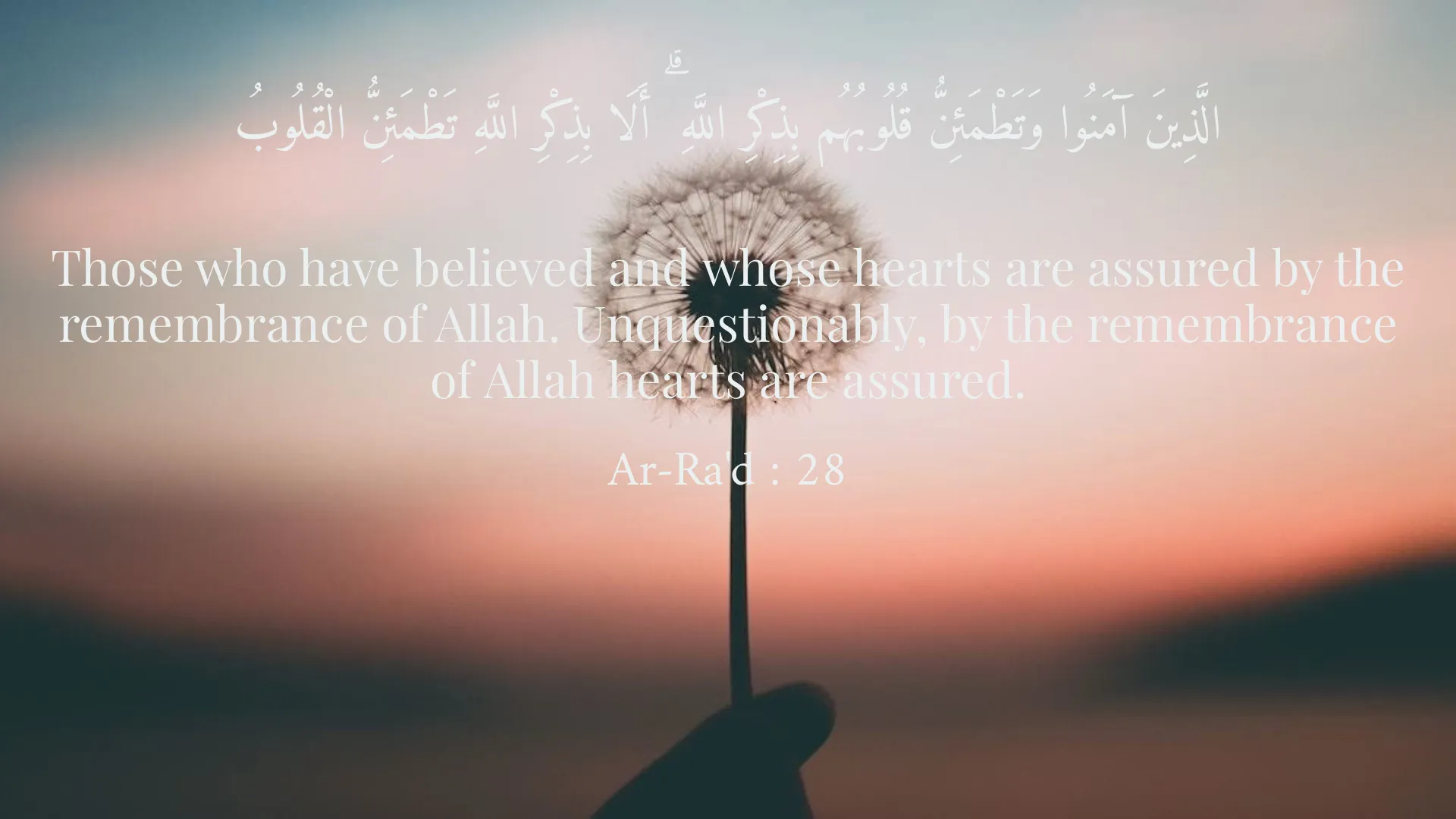
الَّذِينَ آمَنُوا وَتَطْمَئِنُّ قُلُوبُهُم بِذِكْرِ اللَّهِ ۗ أَلَا بِذِكْرِ اللَّهِ تَطْمَئِنُّ الْقُلُوبُ
Those who have believed and whose hearts are assured by the remembrance of Allah. Unquestionably, by the remembrance of Allah hearts are assured.
Ar-Ra'd : 28
يَا أَيُّهَا الَّذِينَ آمَنُوا اسْتَعِينُوا بِالصَّبْرِ وَالصَّلَاةِ ۚ إِنَّ اللَّهَ مَعَ الصَّابِرِينَ
O you who have believed, seek help through patience and prayer. Indeed, Allah is with the patient.
Al-Baqarah : 153
وَنُنَزِّلُ مِنَ الْقُرْآنِ مَا هُوَ شِفَاءٌ وَرَحْمَةٌ لِّلْمُؤْمِنِينَ ۙ وَلَا يَزِيدُ الظَّالِمِينَ إِلَّا خَسَارًا
And We send down of the Qur'an that which is healing and mercy for the believers, but it does not increase the wrongdoers except in loss.
Al-Isra : 82
Short Story
It is narrated in Saadi's Gulistan that a king once asked a dervish: "How is it that with all this poverty and destitution, I see you with a cheerful heart and a soul full of tranquility, while I, with all my wealth, am not free from all this sorrow and anxiety?" The dervish, with a kind smile, replied: "O King! You have tied your heart to the world and are constantly seeking to increase your possessions and power, thus your heart is perpetually in fear and hope and finds no peace. But I have detached my heart from the world and contented myself with what God has provided, relying solely on Him. Therefore, my heart is freed from the heavy burden of greed and avarice and is immersed in the ocean of His remembrance." The king pondered these words and realized that true peace lies within, not in external things, and the way to overcome spiritual fatigue is through connection with the Divine essence and liberation from the bonds of the world. From then on, he strove not to neglect the remembrance of God for a moment and dedicated himself to serving people, hoping that his heart too might taste the tranquility of the dervish.