Quranic Answer
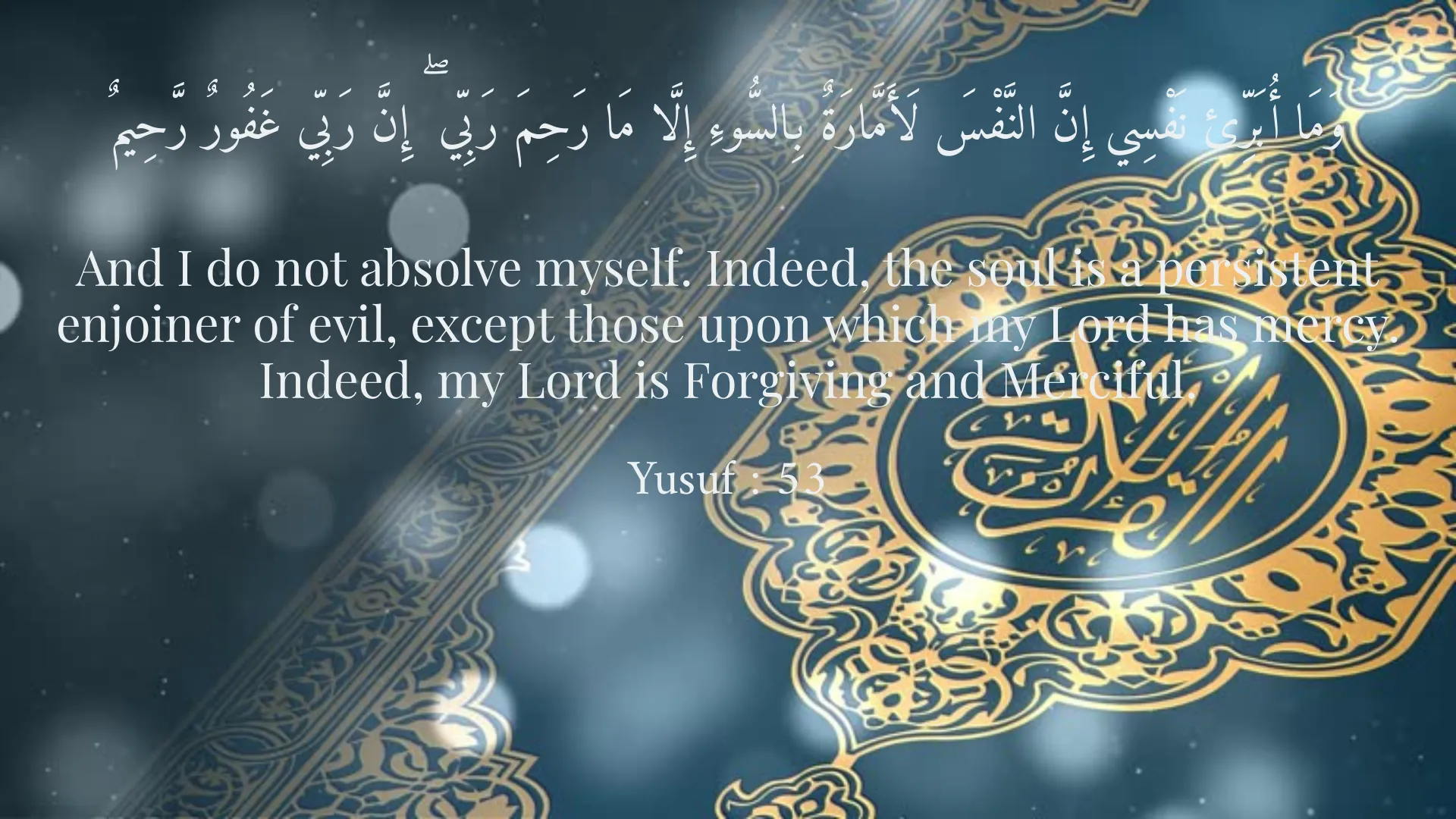
In the Holy Quran, the intricacies and struggles of the human soul are profoundly addressed, particularly concerning its propensity towards rebellion and sin. The struggle against the rebellious self is emphasized throughout the Quran, highlighting the significance of self-control and moral rectitude. One particularly illustrative verse is found in Surah Yusuf, verse 53, wherein Allah states: 'And I do not absolve myself. Indeed, the soul is a persistent enjoiner of evil, except those upon which my Lord has mercy. Indeed, my Lord is Forgiving and Merciful.' This statement encapsulates a fundamental truth about the human condition: that the natural inclinations of the soul often lean towards wrongdoing. In this verse, Allah acknowledges the inherent tendency of the soul to invite towards evil, showing that mastering one’s self is no simple feat. This poses a challenge that every individual must confront in their journey of faith and spirituality. The rebellious self, referred to in the Quran, symbolizes the inner conflict within individuals – the constant battle between righteousness and moral decay. The portrayal of this ‘nafs’ suggests that without deliberate effort and divine intervention, individuals may succumb to its negative inclinations. Thus, the Quran offers various strategies and commandments aimed at combating this rebellious self and fostering a more pious disposition. One of the paramount ways to achieve control over the self is through prayer (Salah) and nurturing a profound relationship with Allah. In Surah Al-Baqarah, verse 186, Allah reassures His servants: 'And when My servants inquire of Me, indeed I am near. I respond to the invocations of the supplicant when he calls upon Me.' This divine promise encapsulates the notion that the act of supplication and the establishment of a heartfelt connection with the Creator is instrumental in overcoming the whispers and temptations of the rebellious self. Prayer serves as a powerful means of grounding oneself, seeking forgiveness, and cultivating virtues such as humility, patience, and gratitude. It reminds believers of their purpose and reinforces their commitment to achieving righteousness. Fasting is another essential pillar of Islam that assists in the battle against the rebellious self. In Surah Al-Baqarah, verse 183, the Quran states: 'O you who have believed, decreed upon you is fasting as it was decreed upon those before you that you may become righteous.' Fasting is not merely a physical act of abstaining from food and drink; it is a spiritual exercise aimed at developing self-discipline and enhancing moral character. By abstaining from worldly pleasures, individuals sharpen their ability to resist temptations and grow closer to Allah. Fasting encourages mindfulness and reflection, allowing believers to redirect their focus away from their desires and towards their spiritual growth. Through this state of increased consciousness, one can cultivate righteousness, leading to the purification of the soul and ultimately rein in the rebellious tendencies of the self. The practice of continuous good deeds and acts of kindness also plays a significant role in countering the overpowering aspects of the rebellious self. Engaging in charitable actions, helping those in need, and being of service to the community fosters a spirit of compassion and empathy. Such practices not only benefit society but also enhance personal development and reinforce positive behavior within the individual. Through acts of kindness, individuals can transcend their selfish inclinations and channel their strengths towards uplifting others, which in turn, promotes a sense of fulfillment and joy. Moreover, the importance of community and companionship cannot be overlooked in this spiritual journey. Surrounding oneself with righteous and like-minded individuals who share a common goal of spiritual growth can provide encouragement, support, and accountability. Staying connected with the community strengthens moral resolve and provides avenues for learning and self-development. In essence, the collective effort of a supportive community aids in combating the insidious nature of the rebellious self and cultivates an environment conducive to personal and communal righteousness. In summary, the Quran provides a profound roadmap for individuals striving to confront and control their rebellious self. The verses discussed illuminate the multifaceted nature of this struggle, emphasizing the importance of prayer, fasting, acts of kindness, and community support. Each of these elements plays a crucial role in cultivating a stronger, more resilient spirit that can rise above the innate inclinations towards evil. The journey of self-control is not depicted as an easy path; rather, it is a continuous effort that requires dedication, patience, and divine guidance. Ultimately, it is through the application of these strategies and the longing for Allah's mercy that individuals can hope to navigate the complexities of their own souls and align themselves with righteousness. As believers work tirelessly to adhere to the teachings of the Quran, they find solace and strength in knowing that Allah is indeed Forgiving and Merciful, guiding them through their endeavors towards self-mastery and spiritual growth.
Related Verses
وَمَا أُبَرِّئ نَفْسِي إِنَّ النَّفْسَ لَأَمَّارَةٌ بِالسُّوءِ إِلَّا مَا رَحِمَ رَبِّي ۖ إِنَّ رَبِّي غَفُورٌ رَّحِيمٌ
And I do not absolve myself. Indeed, the soul is a persistent enjoiner of evil, except those upon which my Lord has mercy. Indeed, my Lord is Forgiving and Merciful.
Yusuf : 53
وَإِذَا سَأَلَكَ عِبَادِي عَنِّي فَإِنِّي قَرِيبٌ أُجِيبُ دَعْوَةَ الدَّاعِ إِذَا دَعَانِ
And when My servants inquire of Me, indeed I am near. I respond to the invocations of the supplicant when he calls upon Me.
Al-Baqarah : 186
يَا أَيُّهَا الَّذِينَ آمَنُوا كُتِبَ عَلَيْكُمُ الصِّيَامُ كَمَا كُتِبَ عَلَى الَّذِينَ مِن قَبْلِكُمْ لَعَلَّكُمْ تَتَّقُونَ
O you who have believed, decreed upon you is fasting as it was decreed upon those before you that you may become righteous.
Al-Baqarah : 183
Short Story
Once upon a time, a young man named Hasan felt he could not overcome his rebellious self. He was searching for a way to deal with this issue until his teacher told him, 'You must get close to Allah and ask Him to help you.'