Quranic Answer
The temptation of fame and showing off (riya) in performing religious deeds is one of the most subtle yet dangerous afflictions on the path to closeness with God. This temptation, which sometimes occurs unconsciously, can render pure acts, initiated with sincere intentions, futile and ineffective. Islam, especially through Quranic teachings, places immense emphasis on the importance of sincerity (ikhlas) in action. Ikhlas means performing all deeds, including acts of worship, charity, and any good deed, solely for the pleasure of Allah, and not for gaining attention, praise, or admiration from people. This fundamental principle is the cornerstone of every accepted act in the sight of God. The Holy Quran explicitly states that the primary purpose of human creation and the sending of prophets is the pure worship of God. In Surah Al-Bayyinah, verse 5, it says: "And they were not commanded except to worship Allah, [being] sincere to Him in religion, inclining to truth, and to establish prayer and to give zakah. And that is the correct religion." This verse shows that the spirit of every action is sincerity, and without it, the spiritual value of the action is lost. The temptation of fame is precisely where this sincerity is threatened, and the intention of the act shifts from 'for God' to 'for people.' To combat this temptation, we must first identify its roots within ourselves. Is there a hidden motive for being seen, being admired, or gaining social status when performing good deeds? If the answer is yes, the first step is to acknowledge this weakness and seek help from Allah. Reciting and contemplating Quranic verses that condemn showing off and praise sincerity is very helpful. For example, in Surah Al-Baqarah, verse 264, Allah says: "O you who have believed, do not invalidate your charities with reminders or injury, like one who spends his wealth [only] to be seen by the people and does not believe in Allah and the Last Day. His example is like that of a [bare] rock upon which is dust and then a torrential rain falls upon it, leaving it smooth. They are unable [to retain] anything of what they earned. And Allah does not guide the disbelieving people." This verse clearly illustrates that showing off, even in a good deed like charity, renders it ineffective, making it like dust on a smooth rock that is washed away by rain, leaving no trace. This Quranic example provides a clear picture of how an action becomes worthless if contaminated with showing off. One of the most effective ways to combat the temptation of fame is to strengthen one's heartfelt connection with Allah. When a person is certain that only He accepts deeds and gives rewards, and that only His pleasure and gaze matter, they will no longer seek validation and praise from creation. This concept is beautifully expressed in Surah Al-Kahf, verse 110: "So whoever would hope for the meeting with his Lord, let him do righteous work and not associate anyone with the worship of his Lord." This verse considers complete sincerity in worship as the main condition for salvation and attaining the meeting with Allah. Associating others in the intention of an act, even subtly and internally, is a great obstacle to achieving this noble goal. Other practical strategies include: striving to keep good deeds hidden as much as possible (unless openly performing an act itself encourages goodness or fulfills a public duty), constant remembrance of death and the Day of Judgment and the worthlessness of worldly statuses, studying the lives of the infallible Imams and divine saints who exemplified the highest degree of sincerity and avoidance of fame-seeking, and supplication and humble pleading to Allah to preserve pure intentions. Furthermore, self-purification and struggling against the commanding self (nafs al-ammarah) which constantly seeks praise and recognition, are of great importance. One must convince oneself that the true reward is with Allah and not in the eyes of people. If, sometimes, we are unconsciously praised, we must immediately seek refuge in Allah and correct our intention, remembering that these praises are only from Him and not from ourselves. In summary, confronting the temptation of fame in religious deeds requires constant vigilance of the heart, contemplation of Quranic teachings on sincerity and showing off, and practical exercise in concealing good deeds and relying solely on divine pleasure. This is an inner struggle that every believer must constantly strive in so that their deeds may be accepted by God and they may progress towards spiritual perfection. Constant reminder that Allah is the sole Witness and Observer of deeds and that true reward comes only from Him, is the strongest shield against this hidden and destructive temptation. Every good deed, no matter how small, if performed with complete sincerity, is greatly significant and valuable in the sight of Allah, whereas grand and eye-catching deeds contaminated with showing off will have no value. This is the great lesson that the Holy Quran teaches us, and we must always bear it in mind in every moment of our spiritual life.
Related Verses
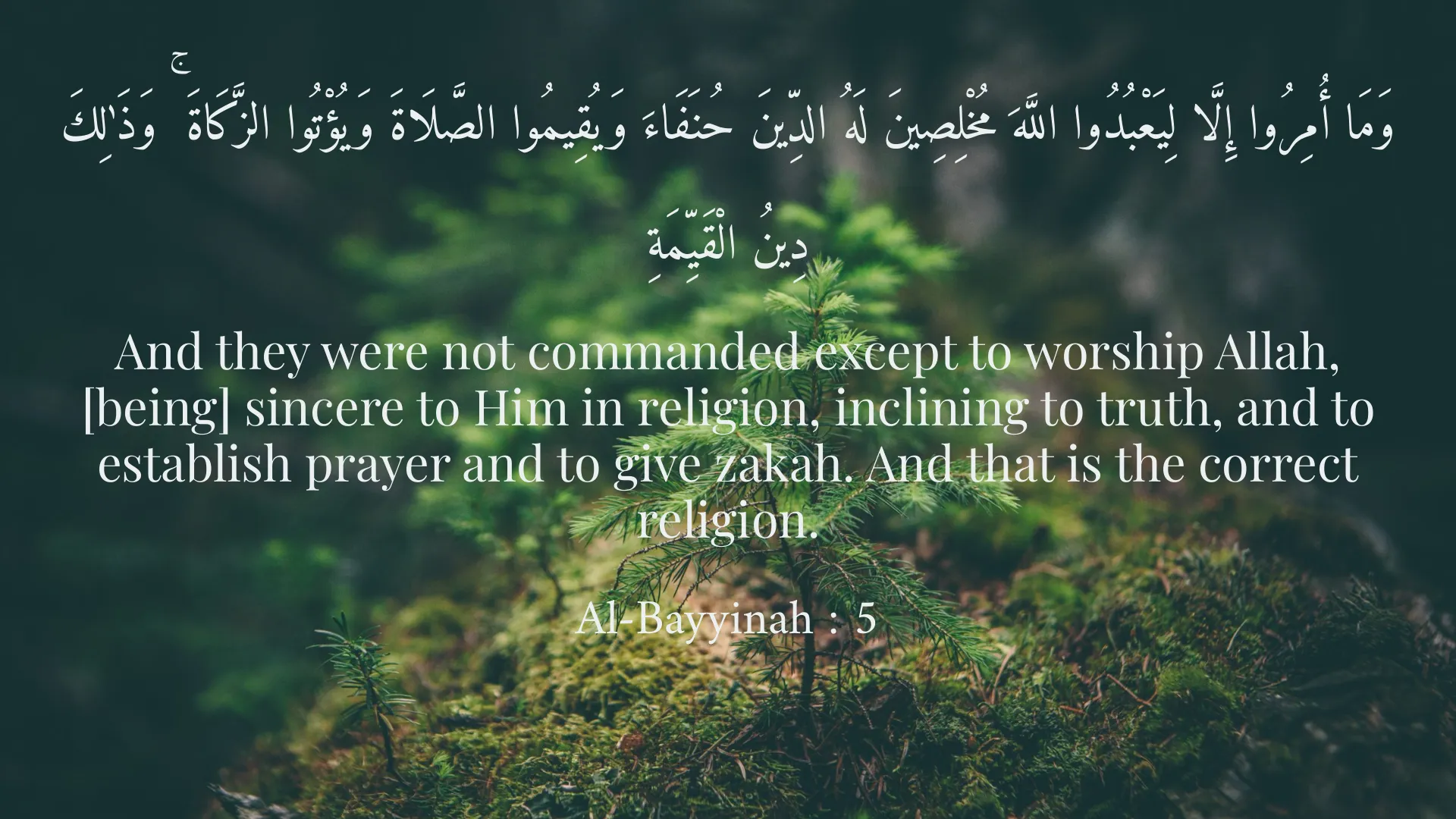
وَمَا أُمِرُوا إِلَّا لِيَعْبُدُوا اللَّهَ مُخْلِصِينَ لَهُ الدِّينَ حُنَفَاءَ وَيُقِيمُوا الصَّلَاةَ وَيُؤْتُوا الزَّكَاةَ ۚ وَذَٰلِكَ دِينُ الْقَيِّمَةِ
And they were not commanded except to worship Allah, [being] sincere to Him in religion, inclining to truth, and to establish prayer and to give zakah. And that is the correct religion.
Al-Bayyinah : 5
يَا أَيُّهَا الَّذِينَ آمَنُوا لَا تُبْطِلُوا صَدَقَاتِكُم بِالْمَنِّ وَالْأَذَىٰ كَالَّذِي يُنفِقُ مَالَهُ رِئَاءَ النَّاسِ وَلَا يُؤْمِنُ بِاللَّهِ وَالْيَوْمِ الْآخِرِ ۖ فَمَثَلُهُ كَمَثَلِ صَفْوَانٍ عَلَيْهِ تُرَابٌ فَأَصَابَهُ وَابِلٌ فَتَرَكَهُ صَلْدًا ۖ لَّا يَقْدِرُونَ عَلَىٰ شَيْءٍ مِّمَّا كَسَبُوا ۗ وَاللَّهُ لَا يَهْدِي الْقَوْمَ الْكَافِرِينَ
O you who have believed, do not invalidate your charities with reminders or injury, like one who spends his wealth [only] to be seen by the people and does not believe in Allah and the Last Day. His example is like that of a [bare] rock upon which is dust and then a torrential rain falls upon it, leaving it smooth. They are unable [to retain] anything of what they earned. And Allah does not guide the disbelieving people.
Al-Baqarah : 264
قُلْ إِنَّمَا أَنَا بَشَرٌ مِّثْلُكُمْ يُوحَىٰ إِلَيَّ أَنَّمَا إِلَٰهُكُمْ إِلَٰهٌ وَاحِدٌ ۖ فَمَن كَانَ يَرْجُو لِقَاءَ رَبِّهِ فَلْيَعْمَلْ عَمَلًا صَالِحًا وَلَا يُشْرِكْ بِعِبَادَةِ رَبِّهِ أَحَدًا
Say, 'I am only a man like you, to whom has been revealed that your god is one God. So whoever would hope for the meeting with his Lord, let him do righteous work and not associate anyone with the worship of his Lord.'
Al-Kahf : 110
Short Story
It is narrated that in ancient times, there was a virtuous ascetic whose good deeds had become famous far and wide, and people from all directions praised him. One day, these praises sowed a seed of self-admiration in his heart. Being a man of keen insight, he reflected in his solitude: 'Woe to me if my deeds, which should be for the pleasure of the Truth, become tainted by the praise of creation. The true reward is with the Lord, not in the mouths of men.' After that, he decided to conceal his good deeds as much as possible, and even in public, to purify his intention even further. It is said that from then on, a profound tranquility settled in his heart, for he knew that the only observer of his deeds was the Creator of the heavens and the earth, and that alone was enough to quench his thirsty soul.