Quranic Answer
In the depths of adversity, when faced with trials that can seem insurmountable, the teachings of the Holy Quran guide believers towards a beacon of hope and faith. At the heart of these teachings lies the emphasis on reliance upon Allah, an essential concept that resonates deeply within the lives of Muslims around the world. Allah's profound wisdom encourages individuals to cultivate hope rather than succumb to despair, providing a framework for navigating life's turbulent waters with resilience and strength. One of the key verses that encapsulates this sentiment is found in Surah Aal Imran, verse 139, where Allah assures the believers: 'And do not weaken; and do not grieve, for you will be superior if you are [true] believers.' This powerful message serves as a reminder that even in the face of overwhelming challenges, despair should not be our response. Instead, we are called to strengthen our faith in Allah and trust in His divine plan for us. This verse underlines the importance of viewing difficulties as opportunities for spiritual growth rather than insurmountable barriers. The Quran encourages believers to maintain an optimistic disposition in the face of adversity. Believers are reminded that they hold a unique position in the world, characterized by their faith, which empowers them to rise above their circumstances. This empowerment comes from the understanding that Allah is always present, ready to aid those who place their trust in Him. In light of this, one must recognize that when individuals around us may bring us down through negativity or doubt, it is crucial to remember our intrinsic worth and the support that Allah extends to us. Another critical aspect of enduring difficult times as indicated in Surah Al-Baqarah, verse 153, where Allah states: 'O you who have believed, seek help through patience and prayer. Indeed, Allah is with the patient.' This verse is particularly potent as it emphasizes two vital tools offered to believers during their hardships: patience and prayer. In Islamic tradition, patience (sabr) is not merely the absence of despair but an active, resilient stance that requires effort and strength. Through prayer (salah), individuals can maintain their connection to Allah, drawing comfort from His presence and guidance. Islamic teachings highlight that prayer is more than a ritual; it is a vital lifeline that allows believers to express their innermost fears, hopes, and gratitude to Allah. Prayer facilitates a powerful dialogue between the believer and the divine, providing solace and clarity as individuals navigate their struggles. Furthermore, patience enables believers to endure trials with grace, fostering a sense of inner peace amidst external chaos. The Quran also addresses the importance of supporting one another in our communities during trying times. In Surah At-Talaq, verse 7, Allah advises: 'And let one who has means, spend according to his means; and whoever is restricted, let him spend from what Allah has given him.' This guidance emphasizes the significance of solidarity and mutual support among believers. Those who have abundance are encouraged to assist those who are struggling, fostering an environment of compassion and empathy. Moreover, this verse reflects a deeper principle of justice in Islam, where resources are shared within the community. Providing support to others not only alleviates their struggles but also enhances the giver's own sense of purpose and fulfillment. Such acts of kindness contribute towards cultivating an atmosphere of optimism and hope that resonates throughout the community. Hence, the Quran urges us not only to rely on Allah but also to be a source of support for one another. In overcoming discouragement, it is vital to approach those who may bring us despair with kindness and respect. Adopting an attitude of empathy enables individuals to diffuse negativity and cultivate understanding. Through gentle communication, one can encourage others to adopt a mindset of hope rather than despair, fostering a more supportive environment. The importance of addressing hardship with optimism and self-confidence cannot be overstated. As Muslims, we are reminded that every struggle we face is paired with a path towards ease. This duality is beautifully articulated in the Quran, affirming that Allah does not burden a soul beyond what it can bear, and that after hardship comes ease (Surah Al-Inshirah, verses 5-6). This theme of hope and resilience becomes a source of strength for believers, motivating them to persist through adversities, trusting that Allah's mercy will prevail. In conclusion, the teachings of the Holy Quran inspire individuals to maintain hope during trials while encouraging them to rely on Allah’s guidance. By embracing the principles of patience, prayer, and mutual support, believers can cultivate resilience and inner strength in the face of challenges. The journey through adversity may be fraught with obstacles, but with faith in Allah and a commitment to a hopeful mindset, believers can transcend their difficulties and emerge stronger than before. Therefore, as we encounter life's challenges, let us remember to turn our hearts towards Allah, nurture our faith, and uplift one another with kindness, optimism, and respect. Through this, we can foster a community grounded in hope, encouraging one another to rise in the face of adversity, and emerge victorious in our struggles, as true believers.
Related Verses
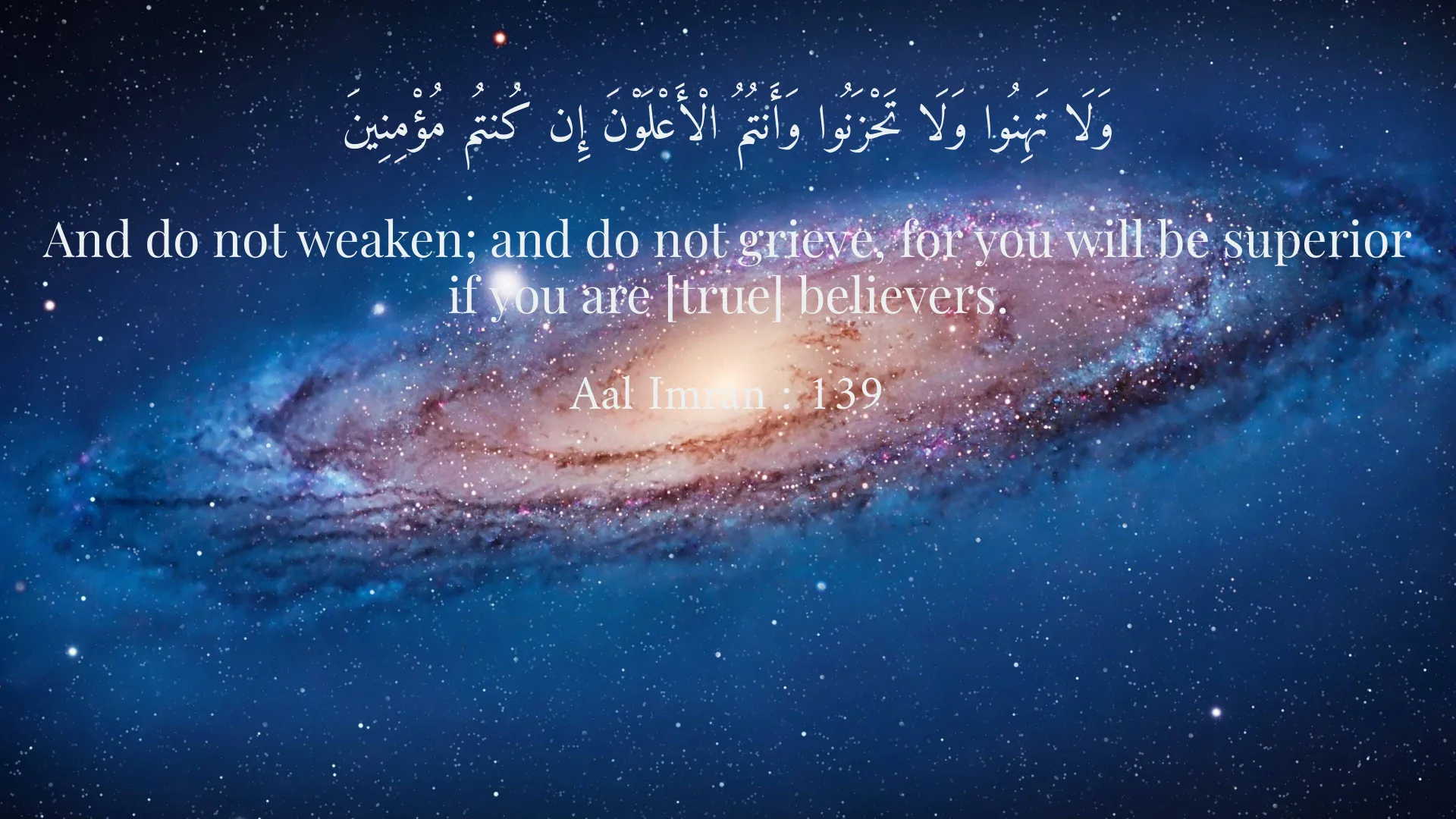
وَلَا تَهِنُوا وَلَا تَحْزَنُوا وَأَنتُمُ الْأَعْلَوْنَ إِن كُنتُم مُؤْمِنِينَ
And do not weaken; and do not grieve, for you will be superior if you are [true] believers.
Aal Imran : 139
يََا أَيُّهَا الَّذِينَ آمَنُوا اسْتَعِينُوا بِالصَّبْرِ وَالصَّلَاةِ ۚ إِنَّ اللَّهَ مَعَ الصَّابِرِينَ
O you who have believed, seek help through patience and prayer. Indeed, Allah is with the patient.
Al-Baqarah : 153
وَمَن يَتَّقِ اللَّهَ يَجْعَل لَّهُ مَخْرَجًا
And let one who has means, spend according to his means; and whoever is restricted, let him spend from what Allah has given him.
At-Talaq : 7
Short Story
One day, Maryam felt despair, but recalling the Quranic verses, she decided to rely on Allah and practice patience and prayer. Through this, she was able to overcome her despair and guide her life to a more positive direction.