Quranic Answer
One of the most significant challenges we encounter in our lives is how to deal with individuals who have wronged us. The emotions that arise from being hurt or betrayed can stir up feelings of anger, resentment, and a strong desire for revenge. However, the Holy Quran provides profound guidance on this matter, inviting us to embrace forgiveness and tolerance as essential virtues in our lives. Through various verses, we are reminded of the importance of overcoming our base instincts in favor of a higher moral ground, which ultimately leads us to a more peaceful and fulfilling life. In Surah An-Nur, verse 22, Allah advises the believers: "And let not those of virtue among you and wealth swear not to give [anything] to their relatives and the needy and the immigrants in the cause of Allah. And let them pardon and overlook. Would you not like for Allah to forgive you?" This verse contains a powerful message that encourages believers to practice kindness and generosity towards one another, even when faced with conflicts and challenges. The instruction "let them pardon and overlook" highlights the essential nature of forgiveness. When we embrace forgiveness, we prioritize our relationship with Allah and cultivate a sense of compassion for others. This is crucial, as our actions towards those who have wronged us can either elevate us spiritually or drag us down into a cycle of negativity. The reminder that "would you not like for Allah to forgive you?" serves as an incentive for believers to reflect upon their own shortcomings and to recognize the importance of extending grace to others, just as they seek grace for themselves from their Creator. Moreover, this verse illustrates that our social responsibility extends beyond merely our immediate circle. It calls upon us to exhibit these virtues towards our relatives, friends, and even strangers, especially those in need. By fostering a spirit of forgiveness within our communities, we contribute to harmonious relationships that can withstand trials and tribulations. Similarly, in Surah Al-Imran, verse 134, Allah states: "And those who spend in the cause of Allah and do not follow up their gifts with reminders of their generosity or with injury will have their reward with their Lord, and no fear will there be concerning them, nor will they grieve." This excerpt emphasizes the importance of selflessness and the power of not holding grudges. When individuals invest in the wellbeing of others, their generous acts are magnified not only in the spiritual realm but also in the social fabric of their surroundings. By committing acts of kindness without expectations of return—be it through financial support, emotional encouragement, or physical assistance—we cultivate an atmosphere of trust and goodwill. This practice elevates our spirits and releases us from the burdens of grudges and negativity that often cloud our judgment and happiness. Furthermore, the verse encourages patience and endurance when faced with hardships or negativity from malevolent individuals. The ability to endure and respond with composure, rather than succumbing to anger and retaliation, is a true test of inner strength and character. It is a sign of a pure heart, capable of rising above poor behavior from others. The practicality of these teachings is evident in our daily lives. Consider an example where someone disrespects or insults us—perhaps in a professional setting or even among friends. Instead of retaliating with harsh words or hurtful actions, we have the choice to respond with calmness and respect. By doing so, we not only disarm the negativity aimed at us but also reflect the virtues we seek to embody. This self-control transforms not just our own emotional state but also impacts those around us, often prompting a change in their behavior. Ultimately, responding to wrongdoing with patience and kindness allows us to cultivate noble qualities within ourselves. Our spirits and hearts find peace when we choose forgiveness over vengeance. As we reflect upon these teachings, it becomes clear that the journey of personal development requires constant self-awareness and the ability to navigate complex human interactions with wisdom. In a broader sense, the practice of forgiveness can serve as a powerful tool in fostering peace in our societies. When individuals prioritize reconciliation over retaliation, we contribute to a more compassionate world. The ripple effects of such behavior can lead to stronger bonds within communities and a more profound sense of unity among diverse groups. In conclusion, the challenges posed by interpersonal conflicts are considerable; however, the Holy Quran provides us with essential guidance on how to address these challenges through forgiveness and tolerance. The verses from Surah An-Nur and Surah Al-Imran emphasize our responsibility to rise above personal grievances and to lead lives filled with compassion and generosity. By doing so, we not only strengthen our connection with Allah but also enhance our relationships with others, fostering a spirit of unity and peace. Therefore, let us strive to implement these timeless teachings in our own lives, ultimately leading us to a state of tranquility and fulfillment.
Related Verses
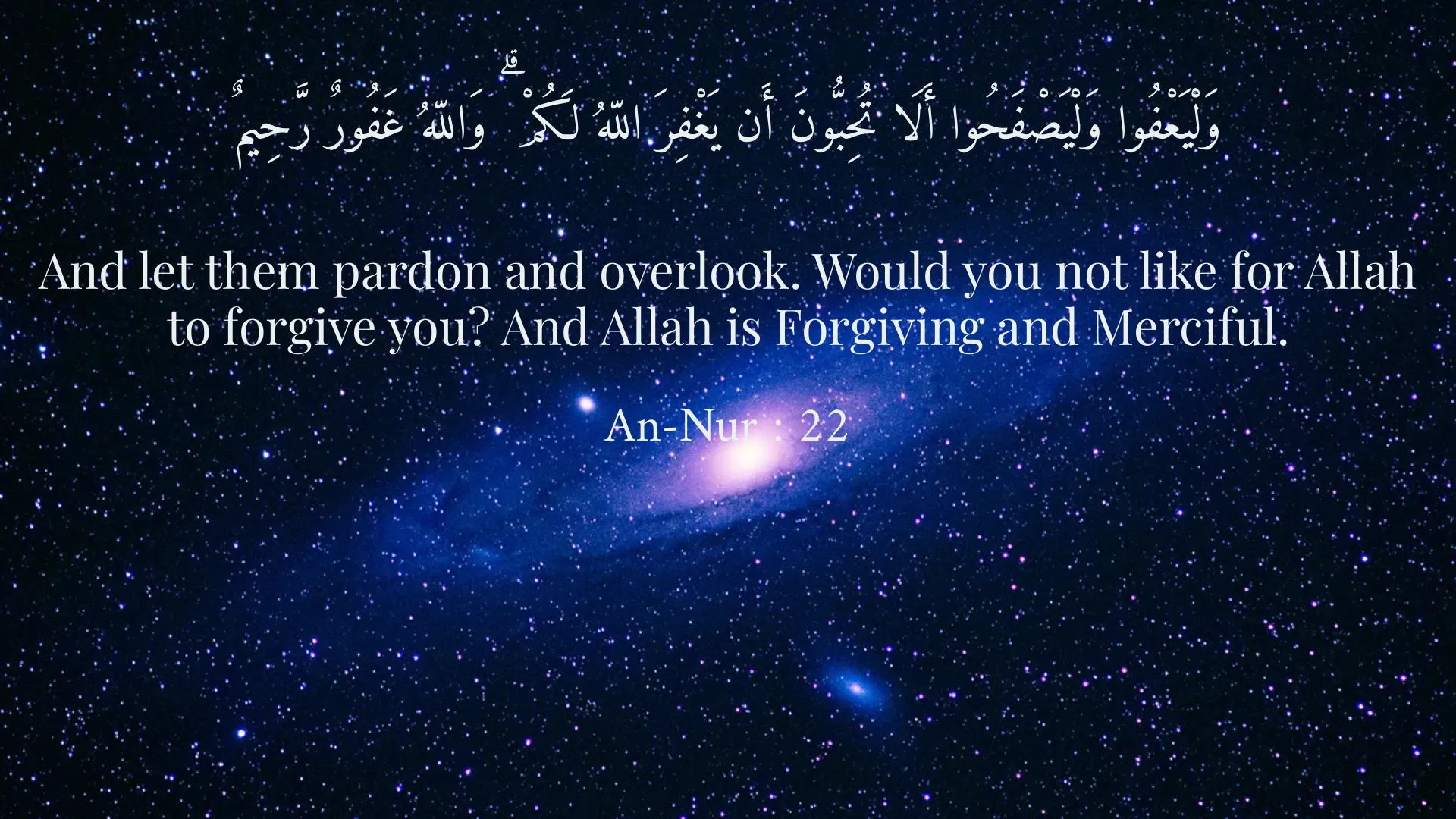
وَلْيَعْفُوا وَلْيَصْفَحُوا أَلَا تُحِبُّونَ أَن يَغْفِرَ اللّهُ لَكُمْ ۗ وَاللّهُ غَفُورٌ رَّحِيمٌ
And let them pardon and overlook. Would you not like for Allah to forgive you? And Allah is Forgiving and Merciful.
An-Nur : 22
وَالَّذِينَ يُنفِقُونَ فِي السَّرَّاء وَالضَّرَّاء وَالْكَاظِمِينَ الْغَيْظَ وَالْعَافِينَ عَنِ النَّاسِ ۗ وَاللَّهُ يُحِبُّ الْمُحْسِنِينَ
And those who spend in the cause of Allah in ease and hardship and who restrain anger and who pardon the people - and Allah loves the doers of good.
Al-Imran : 134
Short Story
One day, a woman was sitting in the market with her friend and complaining about the wrongs she had experienced from others. Her friend calmly replied, "Remember, people might make mistakes, but we should learn to follow the verses of the Quran and turn to forgiveness. Allah always sees us, and forgiveness is one of the best qualities." Thinking over her friend's words, the woman decided to put an end to her grievances and focus more on love and kindness.