Quranic Answer
Dealing with ungrateful individuals is a profound challenge many people encounter in various aspects of life. From personal relationships to professional interactions, the issue of gratitude and ingratitude holds significant relevance. In the Holy Quran, Allah addresses the phenomenon of ingratitude with clarity and insight, particularly in Surah Ibrahim, verse 7, where He states: 'And [remember] when your Lord proclaimed: If you give thanks [by being grateful], I will surely increase your favor; but if you deny, indeed, My punishment is severe.' This profound verse encapsulates the essence of gratitude and its pivotal role in leading a fulfilling and blessed life. For the faithful, gratitude is not merely an act of acknowledgment; it is the foundation upon which the cycle of receiving blessings is built. ### The Significance of Gratitude Gratitude, as emphasized in the divine scripture, is not an arbitrary expectation but a fundamental principle that underpins relationships and social interactions. It serves as a reminder that recognizing and appreciating the kindness and blessings received from others can amplify one's own fortunes. When we show gratitude, we open ourselves to receiving even more goodness, fostering a cycle of positivity and abundance. However, ingratitude not only damages relationships but also has the potential to invoke a sense of discontent within the individual. The Quran presents gratitude as an integral component of faith, suggesting that acknowledgment and appreciation of one’s blessings pave the way for a more prosperous and fulfilling existence. Conversely, ingratitude can lead to divine repercussions, warning against the negation of blessings so generously granted by Allah. This divine perspective offers valuable lessons on how to address ungratefulness effectively. ### Approaching Ungrateful Individuals When faced with ungrateful individuals, it is crucial to approach the situation with patience and comprehension. The propensity to react negatively to ungratefulness is a common human instinct. Yet, taking a moment to reflect on the divine guidance can fundamentally alter our reaction. It is essential to internalize the understanding that our responses can directly influence the behavior of those around us. The first step in dealing with such individuals is to exercise patience. Reminding oneself of the teachings of the Quran encourages a serene disposition, allowing us to navigate through instances of ingratitude with grace. Additionally, using these moments as opportunities for constructive dialogue can be remarkably effective. By gently reminding ungrateful persons of their blessings, one not only fosters a sense of appreciation but also cultivates a nurturing environment. This approach reflects the idea that kindness and respect can serve as catalysts for change in another's behavior. ### The Example of Prophet Muhammad (PBUH) The life and teachings of Prophet Muhammad (peace be upon him) provide invaluable insights into handling ingratitude. The Prophet is known for his remarkable patience, understanding, and compassion towards others, including those who were ungrateful. His approach often involved forgiveness and an unwillingness to respond to negativity with harshness. Instead, the Prophet focused on the positive aspects of human interaction and sought to elevate the sentiments of those around him. For instance, there are numerous accounts in which the Prophet faced hostility, ingratitude, and indifference, yet he epitomized grace under pressure. Rather than retreating further into resentment, he advocated for love, compassion, and understanding. This Christ-like approach illustrated that patience and kindness often yield greater results than defensiveness or aggression. By remaining true to these principles, we too can emulate the Prophet’s behavior, encouraging gratitude rather than perpetuating cycles of ingratitude. ### Cultivating Positive Behaviors When confronted with ungratefulness, it is vital to maintain a focus on one’s own behavior rather than dwelling on the negative actions of others. This shift in perspective fosters personal growth and strengthens relationships. Engaging in acts that promote positivity can lead to transformative experiences not only for oneself but also for others involved. Cultivating behaviors such as generosity, empathy, and understanding can transform dynamics with ungrateful individuals. By embodying gratitude and showing appreciation for the good, no matter how small, we set a powerful example. Ultimately, the more we exhibit gratitude in our interactions, the more likely we are to inspire those around us to reciprocate with gratitude and appreciation of their own. ### Conclusively Understanding Ungratefulness Navigating the complexities of human relationships often reveals the issue of ingratitude in varying degrees. The Quranic teachings remind us that gratitude not only enriches our own lives but also has the potential to elevate others. In confronting ungratefulness, patience, compassion, and understanding provide a framework for how to respond effectively. By emulating the virtues demonstrated by Prophet Muhammad (peace be upon him) and embracing the divine counsel found in the Quran, we establish a foundation of respect and kindness that not only addresses ingratitude but ultimately fosters deeper, more meaningful connections. In a world that can often seem fraught with negativity, cultivating gratitude serves as a beacon of light, enhancing our interactions and reinforcing the significance of appreciation and acknowledgment in our collective human experience. As we strive to promote gratitude and understanding in our relationships, we must remind ourselves of this enduring principle; every act of kindness can plant seeds of gratitude in the hearts of others, leading to a more harmonious and compassionate society.
Related Verses
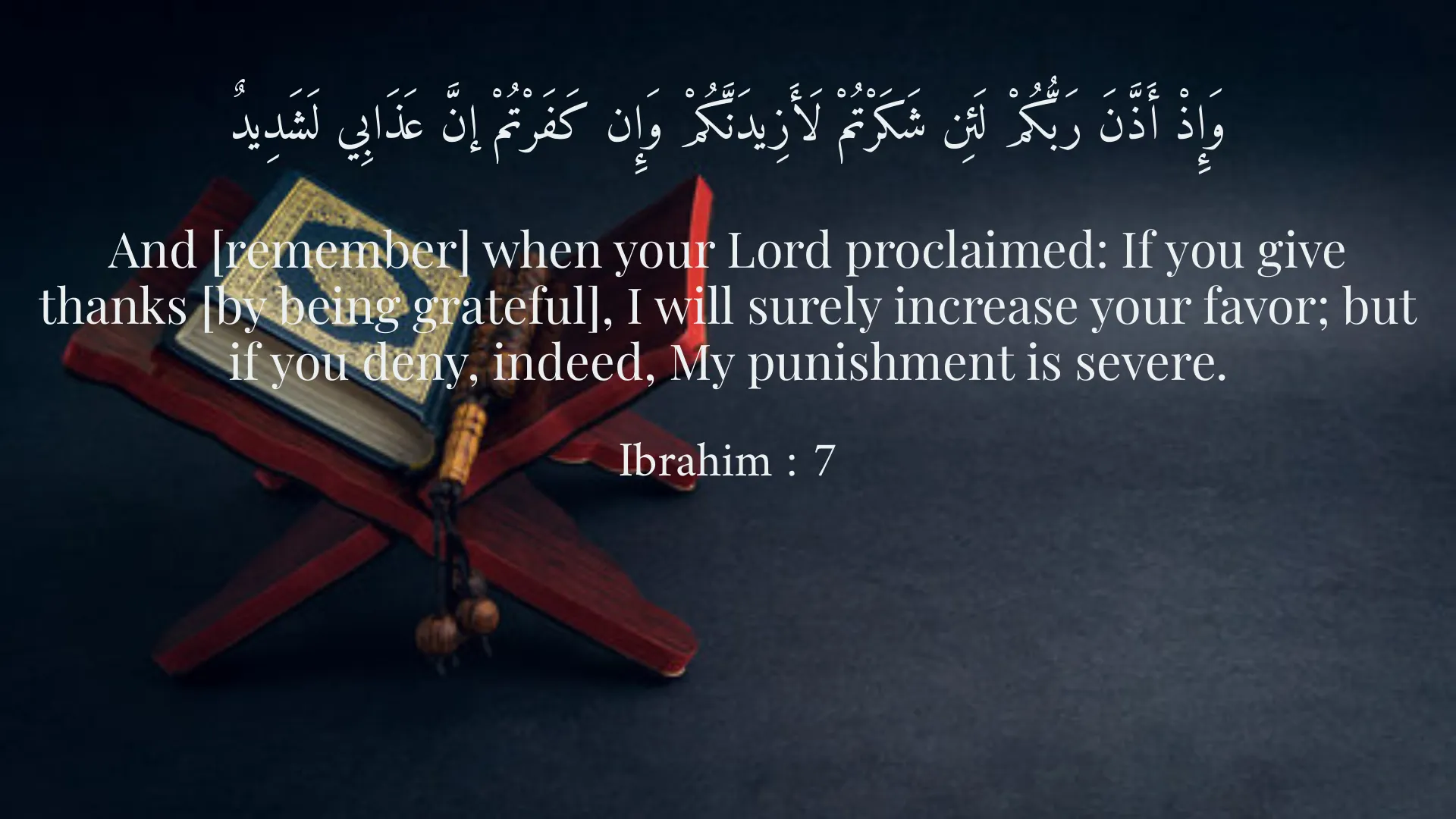
وَإِذْ أَذَّنَ رَبُّكُمْ لَئِن شَكَرْتُمْ لَأَزِيدَنَّكُمْ وَإِن كَفَرْتُمْ إنَّ عَذَابِي لَشَدِيدٌ
And [remember] when your Lord proclaimed: If you give thanks [by being grateful], I will surely increase your favor; but if you deny, indeed, My punishment is severe.
Ibrahim : 7
Short Story
Once upon a time, in a tribe, there lived a man who always complained of Allah's blessings. One day, the tribal elder visited him and said, 'My brother, gratitude for blessings increases them.' The man responded, 'Why should I be thankful?' The elder replied, 'If one day blessings were to cease, would you still question?' The man pondered and eventually began giving thanks, leading to such an abundance of blessings that he became content with everything.