Quranic Answer
Understanding the distinction between religious obsession (Waswas) and precision in religious practice is a crucial nuance in the path of spiritual growth, one that many believers encounter. While these two concepts may seem similar at first glance, they possess entirely different roots, motivations, outcomes, and impacts on an individual's personal and spiritual life. The Holy Quran, with its infinite wisdom, provides principles and foundations that help us navigate this complex path with insight, steering clear of both extremism and negligence in religion. Religious obsession, or Waswas, literally meaning a whisper or demonic suggestion, refers in religious and psychological terms to a state where an individual experiences irrational and recurrent doubts in matters of worship and religious rulings. These doubts are typically illogical, distressing, and beyond the individual's control, leading to repetitive actions (such as repeated ablution, prayer, or washing clothes) or an excessive search for reassurance. The Quran explicitly speaks of Satan's whispers, whose aim is to sow doubt, despair, and divert humanity from the righteous path. In Surah An-Nas, Allah seeks refuge for us from the evil of 'the whispering tempter who whispers into the hearts of mankind.' This verse clearly points to the external origin of Waswas, indicating that Satan strives to rob believers of their peace by creating doubt and anxiety, engaging them in baseless and trivial details. The consequences of religious obsession are severely destructive, including disillusionment with worship, severe anxiety, excessive expenditure of time and energy on minor issues, and ultimately, moving away from the essence and spirit of religion, which is ease, mercy, and tranquility. Allah Almighty states in Surah Al-Baqarah, verse 185: 'Allah intends for you ease and does not intend for you hardship.' This verse and similar ones, such as Surah Al-Hajj, verse 78, which states: 'He has chosen you and has not placed upon you in the religion any difficulty,' form a significant Quranic basis for understanding the truth that Islam is a religion of ease and mercy, not hardship and suffering. Waswas stands in direct opposition to this Quranic principle, transforming religion into a heavy and burdensome task. Conversely, precision in religion signifies a conscious, responsible, and insightful effort to perform religious duties in the best and most complete manner possible, yet without extremism or obsession. This precision stems from love for Allah, eagerness to attain His pleasure, and valuing the quality of deeds. An individual who practices precision in their religion seeks to understand rulings correctly, observe them with sincerity and heartfelt attention, and strive to perform recommended acts within their capacity without putting undue pressure on themselves. They seek perfection, not a pathological perfectionism. This precision brings peace and helps the individual establish a deeper connection with Allah. The Quran emphasizes the importance of 'Ihsan' (excellence and beneficence) in performing deeds, which includes quality and meticulousness in fulfilling obligations. Allah praises those who are 'Muhsinin' (those who do good) in numerous verses and promises immense rewards for benevolent acts. This 'Ihsan' encompasses precision in performing mandatory duties, respecting the rights of others, and striving for purity of body and soul, but not in a way that leads to obsession and hardship. The purpose of this precision is proximity to Allah and His pleasure, not getting caught in the trap of doubt. Key differences between these two concepts, which can be extracted from the overall spirit of Quranic teachings, include: 1. Origin and Motivation: Waswas originates from doubt, excessive fear of sin, or Satanic whispers, while precision stems from deep faith, love for Allah, and a desire for excellence and divine pleasure. 2. Impact on the Individual: Waswas causes anxiety, distress, wasted time, and spiritual apathy; however, precision leads to tranquility, inner satisfaction, spiritual growth, and joy in worship. 3. Degree and Limit: Waswas deviates from moderation, compelling the individual to unnecessary repetition or undue strictness, whereas precision remains within reasonable and permissible religious boundaries, adhering to the principle of 'Yusr' (ease). 4. Source of Guidance: Waswas is based on personal conjectures and suspicions, while precision is founded on knowledge, awareness, and adherence to the Sharia. The Quran instructs us to avoid excessive suspicion (Surah Al-Hujurat, verse 12). 5. Ultimate Outcome: Waswas deviates the individual from the right path of religion, leading them astray, but precision brings them closer to perfection and guides them to the straight path. To distinguish between the two, one should pay attention to their inner vitality and peace. If an act of worship leaves us exhausted, anxious, and despairing, we have likely fallen prey to Waswas. But if the same worship, despite its meticulousness and attention, brings us peace and vitality, it indicates correct precision. When facing Waswas, the best approach is to seek refuge in Allah, ignore the doubts, and perform the act normally, as acknowledging Waswas only strengthens it. As stated in Surah Al-A'raf, verse 200: 'And if an evil suggestion comes to you from Satan, then seek refuge in Allah. Indeed, He is Hearing and Knowing.' This verse explicitly provides the solution for dealing with Satanic whispers. In summary, the religion of Islam was revealed based on human nature and with the aim of human growth and elevation. Its teachings are easy and practicable for everyone, and their never-intended purpose is to cause hardship and suffering. Waswas is a spiritual illness that must be combated with awareness and reliance on Allah, while precision is a virtue stemming from profound faith and knowledge. By reflecting upon the verses of the Quran and the conduct of the infallible Imams (peace be upon them) and Prophet Muhammad (peace be upon him and his family), we can discern the fine line between these two and lead a healthy and fruitful religious life, one filled with tranquility, trust, and love for the Divine Being.
Related Verses
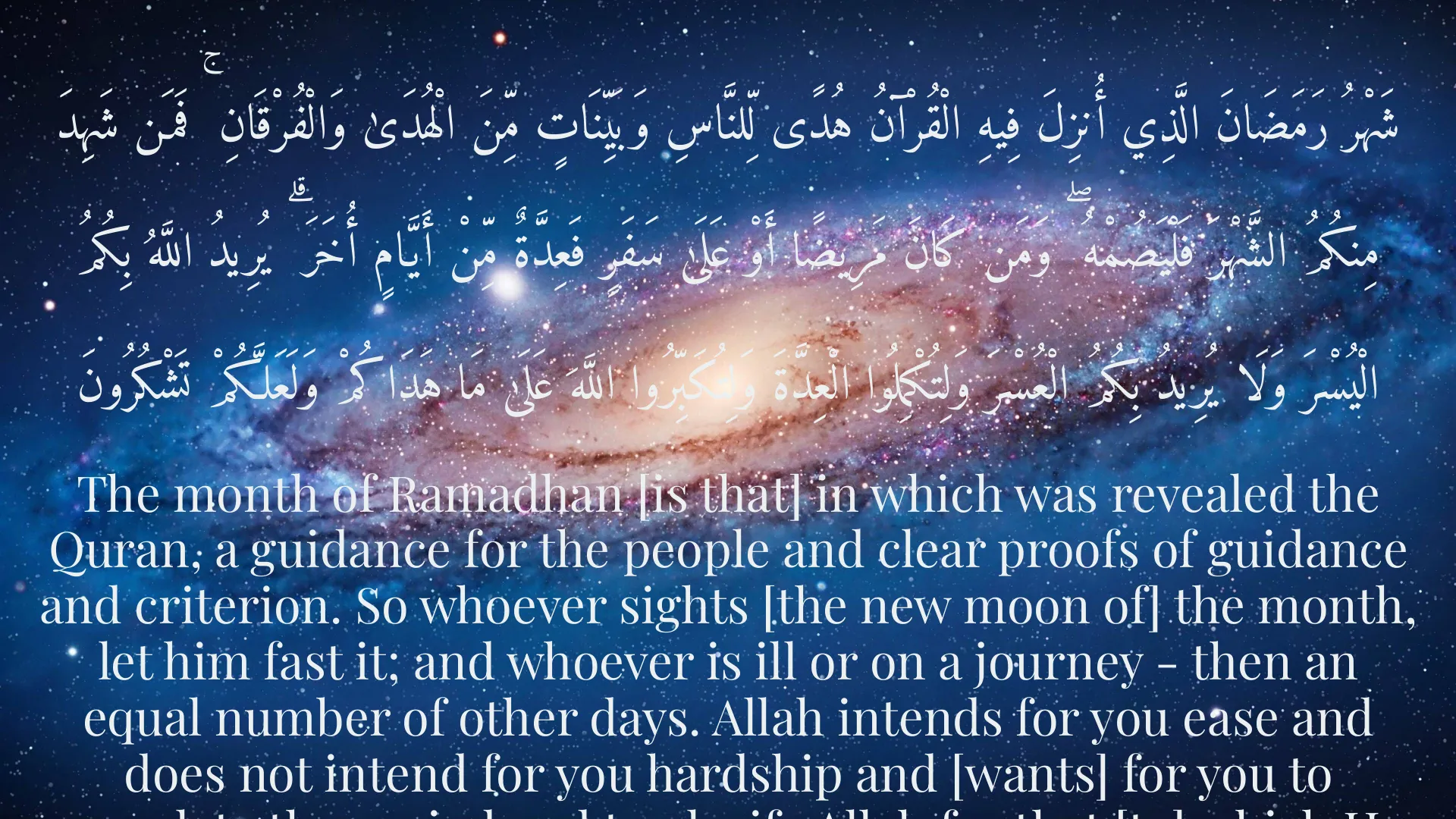
شَهْرُ رَمَضَانَ الَّذِي أُنزِلَ فِيهِ الْقُرْآنُ هُدًى لِّلنَّاسِ وَبَيِّنَاتٍ مِّنَ الْهُدَىٰ وَالْفُرْقَانِ ۚ فَمَن شَهِدَ مِنكُمُ الشَّهْرَ فَلْيَصُمْهُ ۖ وَمَن كَانَ مَرِيضًا أَوْ عَلَىٰ سَفَرٍ فَعِدَّةٌ مِّنْ أَيَّامٍ أُخَرَ ۗ يُرِيدُ اللَّهُ بِكُمُ الْيُسْرَ وَلَا يُرِيدُ بِكُمُ الْعُسْرَ وَلِتُكْمِلُوا الْعِدَّةَ وَلِتُكَبِّرُوا اللَّهَ عَلَىٰ مَا هَدَاكُمْ وَلَعَلَّكُمْ تَشْكُرُونَ
The month of Ramadhan [is that] in which was revealed the Quran, a guidance for the people and clear proofs of guidance and criterion. So whoever sights [the new moon of] the month, let him fast it; and whoever is ill or on a journey - then an equal number of other days. Allah intends for you ease and does not intend for you hardship and [wants] for you to complete the period and to glorify Allah for that [to] which He has guided you; and perhaps you will be grateful.
Al-Baqarah : 185
وَجَاهِدُوا فِي اللَّهِ حَقَّ جِهَادِهِ ۚ هُوَ اجْتَبَاكُمْ وَمَا جَعَلَ عَلَيْكُمْ فِي الدِّينِ مِنْ حَرَجٍ ۚ مِّلَّةَ أَبِيكُمْ إِبْرَاهِيمَ ۚ هُوَ سَمَّاكُمُ الْمُسْلِمِينَ مِن قَبْلُ وَفِي هَٰذَا لِيَكُونَ الرَّسُولُ شَهِيدًا عَلَيْكُمْ وَتَكُونُوا شُهَدَاءَ عَلَى النَّاسِ ۚ فَأَقِيمُوا الصَّلَاةَ وَآتُوا الزَّكَاةَ وَاعْتَصِمُوا بِاللَّهِ هُوَ مَوْلَاكُمْ ۖ فَنِعْمَ الْمَوْلَىٰ وَنِعْمَ النَّصِيرُ
And strive for Allah with the striving due to Him. He has chosen you and has not placed upon you in the religion any difficulty - the religion of your father, Abraham. He named you Muslims before [in former scriptures] and in this [revelation] that the Messenger may be a witness over you and you may be witnesses over the people. So establish prayer and give zakat and hold fast to Allah. He is your protector; and excellent is the protector and excellent is the helper.
Al-Hajj : 78
وَإِمَّا يَنزَغَنَّكَ مِنَ الشَّيْطَانِ نَزْغٌ فَاسْتَعِذْ بِاللَّهِ ۚ إِنَّهُ سَمِيعٌ عَلِيمٌ
And if an evil suggestion comes to you from Satan, then seek refuge in Allah. Indeed, He is Hearing and Knowing.
Al-A'raf : 200
Short Story
It is narrated that in ancient times, there was a devout worshipper who was extremely cautious in his acts of worship, constantly questioning whether his deeds were perfectly performed. If he performed ablution, he would pour water repeatedly to ensure no part of his body remained dry, and he would repeat his prayers many times, fearing that he might have missed something. This obsession deprived him of the joy of worship and filled his life with anxiety. One day, a wise scholar saw him and asked, 'O worshipper, why are you so distressed?' The worshipper explained his situation. The scholar replied, 'Look closely! God sent religion for the ease of His servants, not for hardship. In your pursuit of perfection, you have deviated from the path of moderation. A heart that does not find peace in worship is afflicted by obsession, not precision. Precision in religion means performing duties with knowledge and sincerity, not with needless repetition and doubt. If you wish to achieve perfection, focus on the purity of intention and trust in divine mercy, instead of obsessing over outward forms. Just as a skilled carpenter uses his tools precisely to create the best work, without constantly checking his tools and doubting their function, you too should perform your acts of worship with trust in God and a pure intention.' The worshipper found peace in the scholar's words and understood that obsession creates chains, but true precision brings freedom and the joy of worship.