Quranic Answer
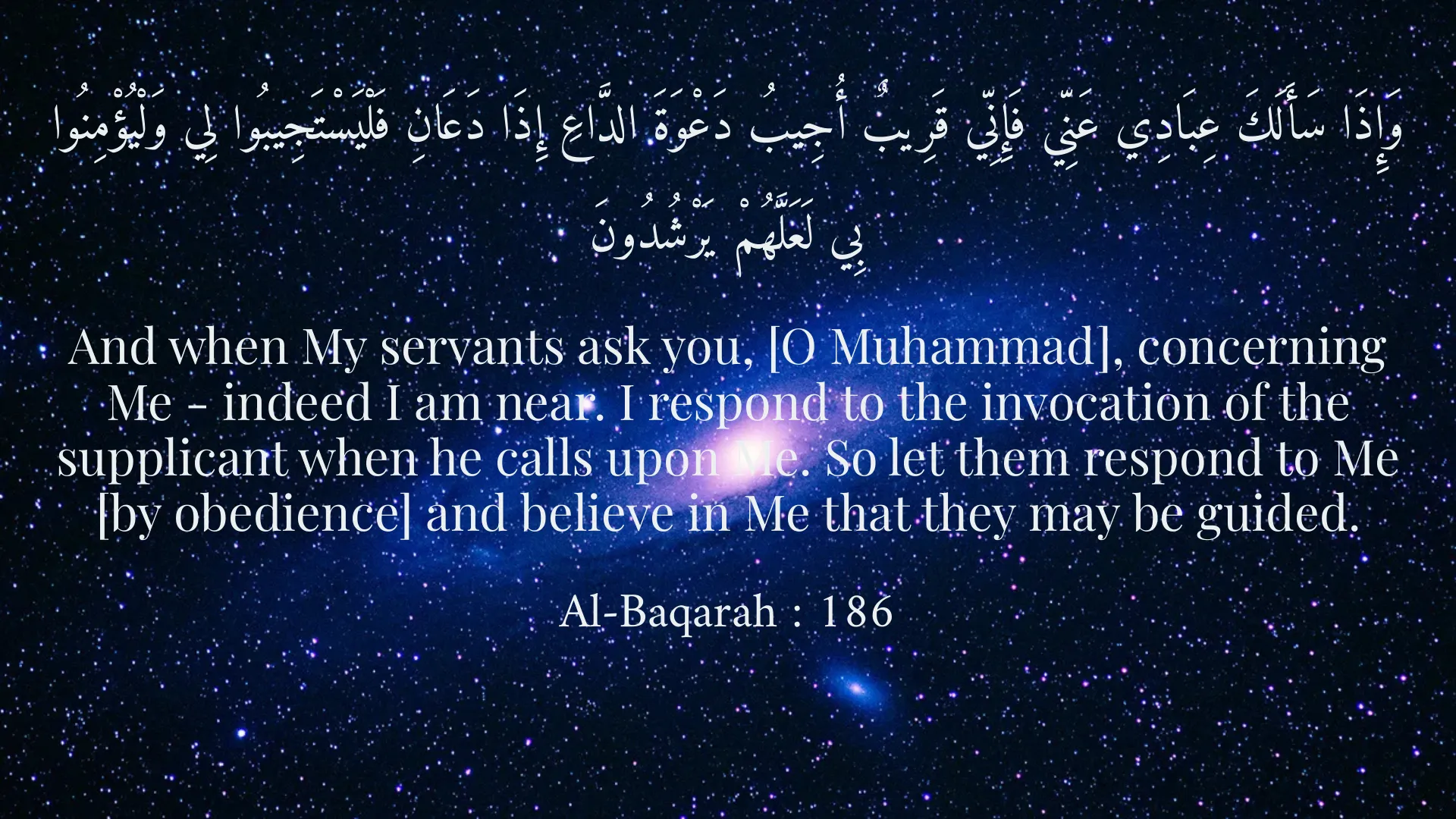
From the perspective of the Holy Quran, the relationship between sin and the acceptance of prayers (dua) is a profound and subtle matter that requires deep reflection and a precise understanding of divine messages. The Quran does not explicitly state that every unanswered prayer is necessarily due to sin; rather, it teaches us that sins can create a veil between a servant and their Lord, affecting the quality of one's spiritual relationship. This veil may manifest in an individual's heartfelt connection with God, their level of presence during worship, and ultimately, the efficacy of their supplications. The Quran repeatedly emphasizes the importance of dua and its role in the lives of believers. Allah introduces Himself as near and invites His servants to call upon Him and ask of Him. In Surah Al-Baqarah, verse 186, we read: "And when My servants ask you, [O Muhammad], concerning Me - indeed I am near. I respond to the invocation of the supplicant when he calls upon Me. So let them respond to Me [by obedience] and believe in Me that they may be guided." This verse clearly states that Allah is near to the supplicants and responds to their invocations. However, the key lies in the latter part of the verse: "So let them respond to Me [by obedience] and believe in Me." This implies that servants must also respond to the divine call, which includes obeying His commands and refraining from His prohibitions. Sins, especially major sins and persistence in them, can be a significant barrier to the acceptance of prayers. These impediments do not stem from Allah's inability to answer, but rather from the impact of sin on the human soul and spirit. When an individual becomes engrossed in sin, their heart darkens, and their soul becomes clouded. This cloudiness and darkness diminish the light of faith and weaken the spiritual connection with the Creator. In such a state, prayers that arise from a heedless and stained heart may lack the purity, presence of mind, and reliance on Allah (tawakkul) that are essential conditions for dua acceptance. How can one discern the impact of sin? Its signs often become evident within the individual themselves. One of the most important indicators is a feeling of apathy and heedlessness towards acts of worship and the remembrance of Allah. If a person feels no joy in their prayers, or lacks presence of mind during supplication, merely uttering words without true heartfelt connection, this can be a sign of sin's influence on their soul. Restlessness, lack of inner peace, and a sense of disconnection from spirituality are other symptoms that can alert an individual that something has created a distance between them and their Lord. The Quran also provides the solution to this problem: repentance and seeking forgiveness (Istighfar). In numerous verses, Allah invites His servants to repent and return to Him, promising forgiveness. In Surah Az-Zumar, verse 53, it is stated: "Say, 'O My servants who have transgressed against themselves [by committing sins], do not despair of the mercy of Allah. Indeed, Allah forgives all sins. Indeed, it is He who is the Forgiving, the Merciful.'" This verse shines a light of hope into the hearts of sinners, showing that no sin is too great for Allah's mercy to cover, provided that the repentance is sincere. Repentance rebuilds the bridge between the servant and Allah, removes the rust of sin from the heart's mirror, and prepares the heart to receive divine blessings. With sincere repentance (Tawbah Nasuh), the spiritual connection is restored, and prayers can be offered with greater sincerity and mindfulness. In addition to repentance, striving to earn lawful sustenance, fulfilling the rights of others, and avoiding injustice are also crucial factors that can remove barriers to dua acceptance. Many Islamic narrations and teachings emphasize that unlawful earnings and violations of others' rights (Haqq al-Nas) can be major impediments to prayers being answered. For this reason, the Quran strongly emphasizes justice, fairness, and upholding the rights of others. Purifying one's self and wealth from all impurities creates a conducive environment for prayers to be answered more readily. Therefore, understanding whether sin is preventing our prayers from being answered relies more on self-knowledge and inner reflection than on external signs. If we feel distant from Allah, if we are sluggish in performing acts of worship, or if our prayers lack presence of mind, these can be indicators that sin has created a veil between us and divine grace. In such a case, the solution lies in sincere repentance, rectifying one's behavior, purifying the inner self, and returning to Allah, so that the channel of communication between the heart and the Creator of the universe can be reopened, and prayers can be offered with full sincerity and hope in divine mercy. Allah is All-Knowing and All-Wise, and sometimes He delays the acceptance of a prayer or fulfills it in another form (e.g., averting a calamity or saving it for the afterlife), which is also a manifestation of His mercy. The most important thing is to continue supplicating and maintain hope in Allah's boundless mercy, even when the apparent desired outcome has not been achieved. Ultimately, this is a continuous process of self-assessment and repentance. No one can definitively say that a specific sin has prevented their prayer from being answered, as divine wisdom is beyond our limited comprehension. However, by observing Quranic teachings and internal signs, we can strive to remove obstacles and make ourselves worthy of divine mercy and acceptance. The purity of heart and soul is the key to unlocking the doors of mercy and acceptance, and this purity is achieved only through repentance and abstinence from sin.
Related Verses
وَإِذَا سَأَلَكَ عِبَادِي عَنِّي فَإِنِّي قَرِيبٌ أُجِيبُ دَعْوَةَ الدَّاعِ إِذَا دَعَانِ فَلْيَسْتَجِيبُوا لِي وَلْيُؤْمِنُوا بِي لَعَلَّهُمْ يَرْشُدُونَ
And when My servants ask you, [O Muhammad], concerning Me - indeed I am near. I respond to the invocation of the supplicant when he calls upon Me. So let them respond to Me [by obedience] and believe in Me that they may be guided.
Al-Baqarah : 186
قُلْ يَا عِبَادِيَ الَّذِينَ أَسْرَفُوا عَلَىٰ أَنفُسِهِمْ لَا تَقْنَطُوا مِن رَّحْمَةِ اللَّهِ إِنَّ اللَّهَ يَغْفِرُ الذُّنُوبَ جَمِيعًا إِنَّهُ هُوَ الْغَفُورُ الرَّحِيمُ
Say, 'O My servants who have transgressed against themselves [by committing sins], do not despair of the mercy of Allah. Indeed, Allah forgives all sins. Indeed, it is He who is the Forgiving, the Merciful.'
Az-Zumar : 53
وَتُوبُوا إِلَى اللَّهِ جَمِيعًا أَيُّهَ الْمُؤْمِنُونَ لَعَلَّكُمْ تُفْلِحُونَ
And turn to Allah in repentance, all of you, O believers, that you might succeed.
An-Nur : 31
Short Story
It is narrated that a pious man continuously raised his hands in prayer, asking God for a need. Years passed, and his prayer remained unanswered. Disheartened, he went to a wise sheikh and told him of his plight. The sheikh said: 'O man! You are like one watering a dry tree and expecting fruit. Can a heart darkened by sin and immersed in heedlessness cause the spring of divine grace to flow? Cleanse the mirror of your heart from the rust of sin, and then gaze upon the light of reliance on God. Prayer is not merely words from the tongue, but the burning desire of the heart and the purity of the soul. Unless you repent and abandon what displeases God, your prayer is like a cry in a waterless desert.' The man repented, purified his heart, and soon after, his prayer was answered. He then understood that sins are veils between the servant and the Creator, and repentance is the key to removing these veils.