Quranic Answer
Faith (Iman) is the fundamental pillar of one's religious life and the connection between a human being and their Creator. However, on this path, there are numerous internal and external challenges, one of the most perilous being "Riya" (hypocrisy or showing off). Linguistically, Riya means "to show" or "to display," and in religious terminology, it refers to performing acts of worship or good deeds with the intention of gaining people's attention and praise, instead of seeking divine pleasure and reward. The antithesis of Riya is "Ikhlas" (sincerity), which means purifying one's intention from any non-divine motive, performing every act solely and exclusively for the pleasure of Allah the Almighty. The Holy Quran explicitly emphasizes the importance of Ikhlas and strongly condemns Riya, because Riya not only diminishes the value of an action but completely invalidates it. It is considered a form of hidden shirk (associating partners with Allah), as it places the satisfaction of the creation alongside, or even above, the satisfaction of the Creator. The Importance of Sincerity (Ikhlas) in the Holy Quran: The Quran, in numerous verses, states that the primary purpose of creation and worship is sincerity towards Allah. Allah Almighty says in Surah Al-Bayyinah, verse 5: "And they were not commanded except to worship Allah, [being] sincerely obedient to Him, inclining to truth, and to establish prayer and to give zakah. And that is the correct religion." This verse explicitly states that the essence of religion and the foundation of all acts of worship is sincerity. Without sincerity, acts of worship will be mere soulless movements and fruitless endeavors. Sincerity is the jewel of faith that gives weight and value to deeds, making them acceptable in the sight of Allah. One who acts with sincerity has Allah's pleasure as their sole focus and goal, not the gaze of people or the pursuit of fame and status. It is this sincerity that purifies the heart from worldly impurities and grants a person peace and tranquility. True faith is faith that originates from the depths of the heart, where there is no intention but closeness to Allah. Ikhlas is not only essential in individual acts of worship like prayer and fasting, but it must also permeate all aspects of life, including social interactions, work, and even one's inner thoughts. It is a continuous state of the heart that a true believer must strive to achieve. The fruits of sincerity include the acceptance of deeds, spiritual enlightenment of the heart, and divine success in both this world and the hereafter. The Danger of Hypocrisy (Riya) and its Condemnation in the Quran: In contrast to sincerity, Riya is a significant affliction for faith and righteous deeds. The Holy Quran severely condemns hypocrites and deems their actions fruitless. In Surah An-Nisa, verse 142, it states: "Indeed, the hypocrites [think to] deceive Allah, but He is deceiving them. And when they stand for prayer, they stand lazily, showing [themselves to] the people and not remembering Allah except a little." This verse clearly reveals the hypocritical nature of the hypocrites; those who perform worship not for Allah, but for show and ostentation. Their prayer is not a prayer, but a performance to gain people's attention. This behavior is not only condemned by Allah but is also a form of self-deception, as a person might think they can deceive God through outward appearances, whereas Allah is aware of all intentions and secrets. Furthermore, in Surah Al-Baqarah, verse 264, Allah warns believers not to invalidate their charities with reminders or injury, or with Riya: "O you who have believed, do not invalidate your charities with reminders [of it] or [other] injury, like one who spends his wealth [only] to be seen by the people and does not believe in Allah and the Last Day." This verse shows that Riya can even invalidate a good deed like charity. One who gives charity to be known as generous and benevolent loses their reward in the hereafter. Riya is like a flame that burns the harvest of good deeds, turning them into ashes. It is the most dangerous spiritual disease that can ruin the believer's faith and actions, depriving them of immense divine reward. Riya is rooted in self-love, ambition, and worldliness, and it diverts a person from the path of pure servitude to Allah. How to Distinguish Faith from Hypocrisy? (Quranic and Ethical Solutions) Distinguishing faith from Riya is a continuous process requiring constant vigilance and self-purification. This is achieved not only by performing outward acts of worship but also by purifying one's intention and inner self. Here are some important strategies inspired by Quranic teachings: 1. Purification and Vigilance over Intention (Niyyah): The foundation of every action in Islam is its intention. Prophet Muhammad (PBUH) said: "Actions are by intentions." The first step to separating oneself from Riya is to constantly examine one's intentions. Before every act of worship or charity, ask yourself: "For whom am I doing this?" Is my goal Allah's pleasure or people's admiration? This continuous self-awareness gradually purifies intentions. The Quran teaches us that all our deeds must be purely for Allah. This means that even when we are in public, our primary intention must be for Allah, not for being seen. This mental exercise gradually identifies impure intentions and guides them towards sincerity. 2. Constant Remembrance of Allah (Dhikr and Contemplation): Whenever the heart finds peace with the remembrance of Allah (Surah Ar-Ra'd, verse 28: "Unquestionably, by the remembrance of Allah hearts are assured"), dependence on others' approval and praise diminishes. Constant remembrance of Allah not only removes the rust of Riya from the heart but also connects the heart to the ultimate source of power and love, Allah. One who knows that they are always in Allah's presence and that only He sees and evaluates their deeds, sees no need to show off to others. This presence of heart automatically keeps Riya away and frees a person from the captivity of people's gaze. 3. Secrecy in Good Deeds (Wherever Possible): In some cases, performing good deeds secretly is the best way to avoid Riya. The Prophet (PBUH) stated that the best charity is when the right hand gives so secretly that the left hand does not know what it has spent. Although not all actions can be hidden (like congregational prayers or jihad), in actions where secrecy is possible, it greatly helps in strengthening sincerity. This Quranic and Prophetic recommendation means that our primary goal should be Allah's pleasure, not being seen by people. When an act is performed secretly, Allah is the only witness, and this is the best factor for purifying the intention. This helps a person experience the true joy of acting for Allah, free from any external praise. 4. Reflecting on the Worthlessness of Human Praise and the Immense Divine Reward: Human praise is fleeting and impermanent, and it holds no value in the hereafter. However, divine reward is eternal and boundless. Focusing on this truth helps a person escape the trap of Riya. The Quran reminds us that everything is perishable except the Face of Allah. Therefore, true value lies in what is with Allah. Understanding this difference transforms a person's inner motivations and guides them towards lasting values. 5. Seeking Allah's Help (Du'a): Riya is a spiritual illness that can only be cured with Allah's help. One should constantly ask Allah to purify their heart from any trace of Riya and to make their intentions sincere. The supplication "Allahumma inni a'udhu bika an ushrika bika shay'an a'lamuhu, wa astaghfiruka lima la a'lamuhu" (O Allah, I seek refuge in You from associating anything with You knowingly, and I seek Your forgiveness for what I do not know) is a very important supplication in this regard. Supplication to Allah is the key to unlocking internal and spiritual knots. 6. Cultivating Humility and Modesty: The root of Riya often lies in arrogance and self-admiration. One who considers themselves great desires to be praised by others. Cultivating humility and modesty helps in recognizing one's true place before Allah and avoiding this undesirable trait. The Holy Quran repeatedly mentions humility and modesty and prohibits arrogance and conceit. The more a person perceives themselves as humble before Allah's greatness, the less they feel the need to glorify themselves before creation. 7. Continuous Self-Purification and Struggle Against the Self (Nafs): Freedom from Riya is a gradual process requiring continuous greater jihad (struggle against one's inner self). A person must constantly hold their self accountable and analyze their inner motives. Whenever the temptation of Riya arises, one must consciously repel it and purify their intention for Allah. This inner struggle brings immense rewards and, over time, instills sincerity deeply within a person. Ultimately, distinguishing faith from Riya is the core essence of achieving the status of "Muhsinin" (doers of good), who are frequently praised in the Quran. This inner journey leads a person to the state of Ikhlas, making their deeds acceptable in the sight of Allah. True faith is faith that is performed from the heart for the Beloved (Allah), not for gaining others' attention. This is the path that leads to eternal salvation and divine pleasure, bringing true peace to the soul.
Related Verses
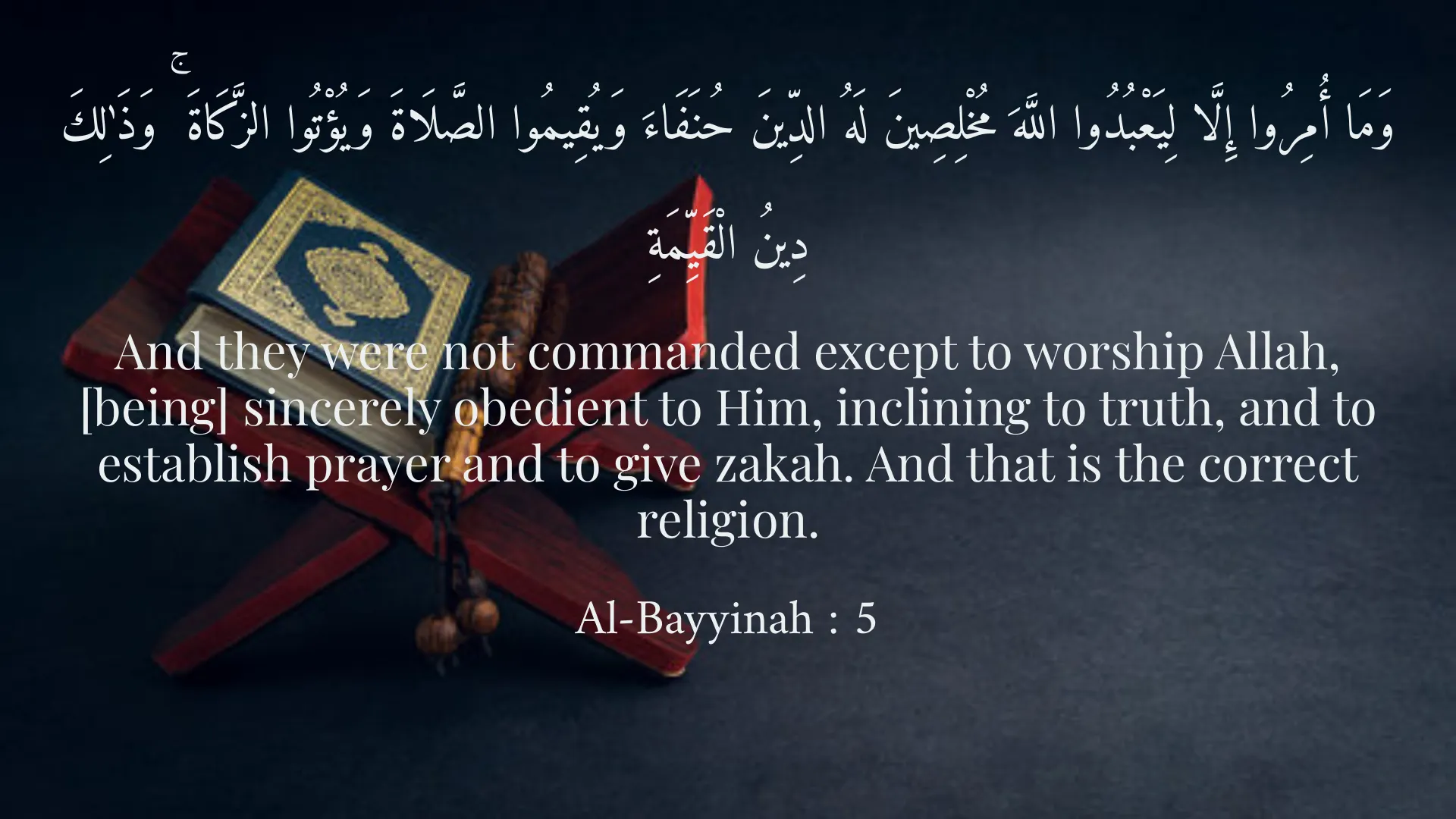
وَمَا أُمِرُوا إِلَّا لِيَعْبُدُوا اللَّهَ مُخْلِصِينَ لَهُ الدِّينَ حُنَفَاءَ وَيُقِيمُوا الصَّلَاةَ وَيُؤْتُوا الزَّكَاةَ ۚ وَذَٰلِكَ دِينُ الْقَيِّمَةِ
And they were not commanded except to worship Allah, [being] sincerely obedient to Him, inclining to truth, and to establish prayer and to give zakah. And that is the correct religion.
Al-Bayyinah : 5
إِنَّ الْمُنَافِقِينَ يُخَادِعُونَ اللَّهَ وَهُوَ خَادِعُهُمْ وَإِذَا قَامُوا إِلَى الصَّلَاةِ قَامُوا كُسَالَىٰ يُرَاءُونَ النَّاسَ وَلَا يَذْكُرُونَ اللَّهَ إِلَّا قَلِيلًا
Indeed, the hypocrites [think to] deceive Allah, but He is deceiving them. And when they stand for prayer, they stand lazily, showing [themselves to] the people and not remembering Allah except a little.
An-Nisa : 142
يَا أَيُّهَا الَّذِينَ آمَنُوا لَا تُبْطِلُوا صَدَقَاتِكُم بِالْمَنِّ وَالْأَذَىٰ كَالَّذِي يُنفِقُ مَالَهُ رِئَاءَ النَّاسِ وَلَا يُؤْمِنُ بِاللَّهِ وَالْيَوْمِ الْآخِرِ ۖ
O you who have believed, do not invalidate your charities with reminders [of it] or [other] injury, like one who spends his wealth [only] to be seen by the people and does not believe in Allah and the Last Day.
Al-Baqarah : 264
Short Story
It is said that in days of yore, two men lived in a city: one a wealthy and renowned person, and the other an unknown dervish. Whenever the wealthy man performed an act of charity, he would send heralds to proclaim his generosity throughout the city. He built houses for the poor, but prominently inscribed his name above the entrance of each house. The unknown dervish, however, gave whatever he possessed to the needy secretly, without any expectation, so much so that his left hand knew not what his right hand gave. One day, a great flood swept through the city. The houses built by the wealthy man, constructed for fame, were flimsy and crumbled with the first wave. But the houses built by the dervish, far from the public eye and solely for the sake of God's pleasure, strengthened by the efforts of the poorer inhabitants who themselves contributed to their construction, remained standing. People asked in wonder, 'What kind of structure is this that the water did not carry away?' One of the city elders replied, 'Any structure built with the brick of sincerity and the mortar of love, for the pleasure of God, is safe from all harm, both in this world and the hereafter.' Thus, the unknown dervish found a place in people's hearts, while the name of the wealthy man faded with the ruin of his constructions. This story illustrates that the true value of an act lies not in its grandeur or visibility, but in the purity of its intention and sincerity.