Quranic Answer
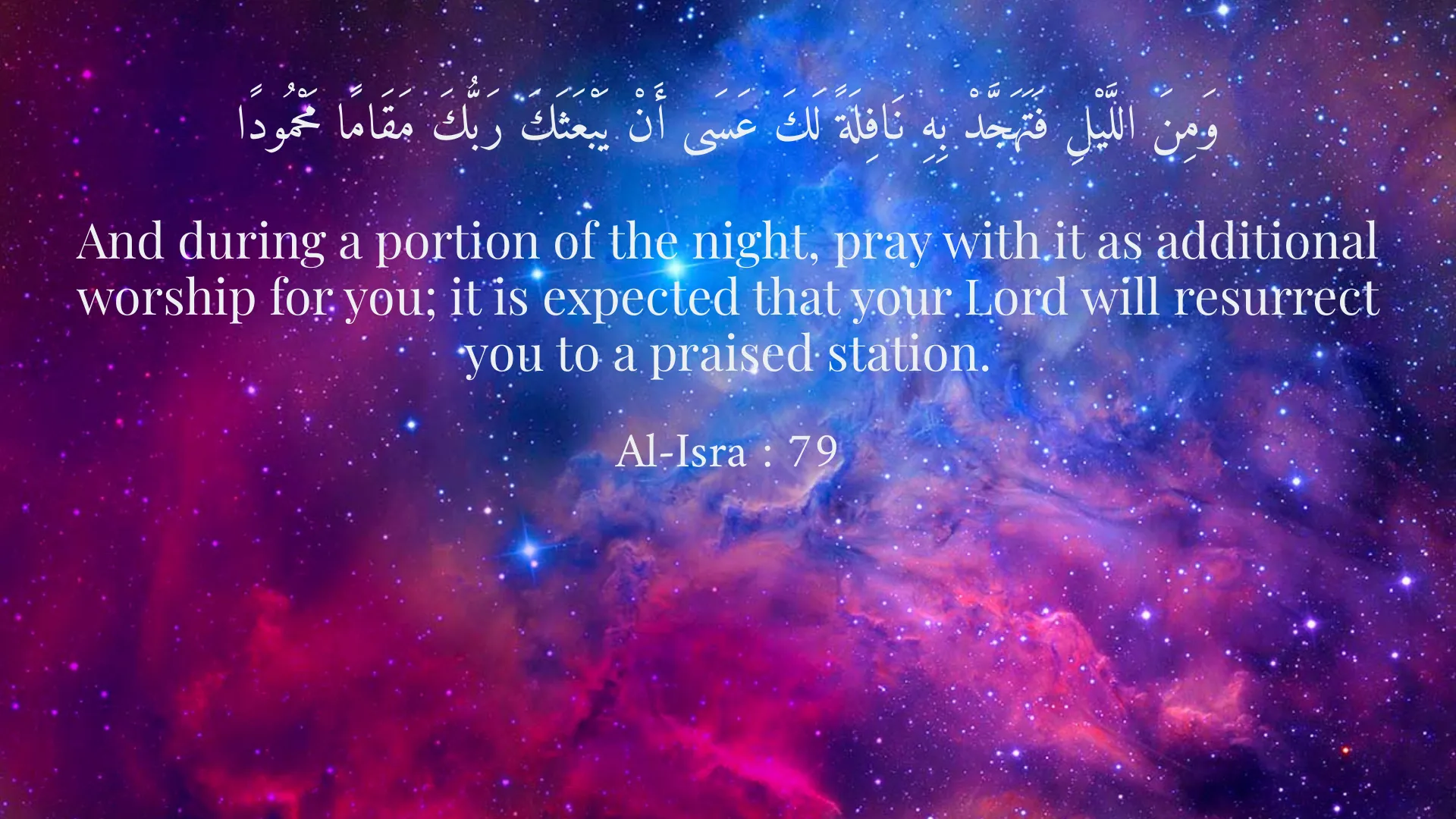
The Holy Quran holds a profound significance regarding the practice of staying up at night and engaging in acts of worship during these serene hours. This practice is not merely a suggestion; rather, it is embedded deeply within the spiritual fabric of an observer's routine, illustrating the transformative nature of nocturnal devotion. Worshiping at night has been articulated as a means to strengthen one's spiritual connection with Allah, enabling believers to elevate their internal states and ultimately progress on their path to righteousness. One of the most compelling references to the importance of night prayers is found in Surah Al-Isra, verse 79, where Allah commands, "And during a portion of the night, pray with it as additional worship for you; it is expected that your Lord will resurrect you to a praised station." This verse is a clear indicator that engaging in prayer during the stillness of night is not only an act of worship but a form of additional merit that can lead to a commendable status in the eyes of Allah. Nighttime worship is deeply woven into Islamic tradition. Believers are encouraged to seize the quietude that envelops the night to engage in various forms of spirituality. The calmness and tranquility of the nighttime serve as a backdrop for a range of reflective practices. This includes reading the Quran, making heartfelt supplications (duas), and performing night prayers, also known as Tahajjud. These activities enable the faithful to connect with the divine message of the Quran and seek guidance, forgiveness, and solace in the solitude of the night. In the context of the Quran, another illuminating verse is found in Surah Adh-Dhariyat, verse 17, which states, "They used to sleep but little of the night. And in the hours before dawn, they would ask forgiveness." This verse paints a vivid picture of the life led by the Prophet and his companions, who prioritized their spiritual sustenance over mere physical comfort. It paints a deep portrait of devout individuals who not only recognized the importance of night worship but also used this sacred time as an opportunity to seek forgiveness and grow closer to Allah. Reflecting upon the significance of such practices, one realizes that staying up at night serves multiple purposes beyond mere worship. It becomes a space for self-improvement and reflection, ensuring that believers can ponder upon their actions, cultivate gratitude, and set spiritual goals. By utilizing the tranquility of the night, individuals can wish to refine their character, seek forgiveness for their wrongdoings, and prepare themselves for a constructive day ahead. To fully enjoy the experience of staying up at night, certain practical measures can enhance the quality of one's time. For instance, it is crucial to create an environment conducive to spiritual growth. This includes minimizing distractions, particularly from electronic devices, that usually permeate our lives. Prioritizing time away from phones, tablets, and computers enables a more focused and sincere engagement with prayers and reflections. When one eliminates such distractions, it becomes easier to delve into personal thoughts and articulate devotions verbally or mentally. This intentional separation from the noise of the day allows for an enriching and peaceful experience at night. Moreover, staying up at night does not always have to be a solitary endeavor. It can also serve as a time for bonding with family and friends. Engaging in night prayers together, reading Quran verses aloud, or sharing thoughts can enhance one’s experience further. Such interactions can create treasured memories and help establish spirituality as a collective practice within families and communities. Being surrounded by loved ones can add joy to the act of worship, making it a fulfilling and enriching practice. It is also essential to set specific spiritual goals for nighttime worship. Merely staying up does not guarantee spiritual elevation; one's intent helps shape the experience. Setting goals, whether they be seeking forgiveness, expressing gratitude, or even reading a certain number of Quranic verses, provides a direction and purpose to one's nocturnal engagements. It reinforces discipline and commitment towards personal faith, leading to a more substantial spiritual experience. Furthermore, the benefits of night worship start to extend beyond spirituality into addressing one’s mental well-being. Individuals who engage in night worship often find the time for introspection beneficial for reducing anxiety and stress. It becomes a time to reflect upon life’s challenges, releases pent-up emotions, and harnesses a sense of tranquility that is often absent during the bustling hours of the day. Recognizing that these moments of spiritual engagement can significantly improve mental well-being emphasizes the holistic impact of night worship. In conclusion, the act of staying up at night for worship and reflection is filled with immense significance within the framework of Islam and holds a myriad of spiritual and psychological benefits. Staying awake for prayers during the night, engaging in Dua, and reflecting upon one's actions fosters an enriched relationship with Allah, allows for deep-seated personal improvement, and creates opportunities for meaningful relationships with others. The sacred texts urge believers to cherish these hours, signify this time as precious, and recognize its potential for growth and rejuvenation. Hence, by adopting the practice of nocturnal worship intentionally, with clear goals and a tranquil environment, individuals can profoundly transform their experiences and cultivate a flourishing connection with their faith.
Related Verses
وَمِنَ اللَّيْلِ فَتَهَجَّدْ بِهِ نَافِلَةً لَكَ عَسَى أَنْ يَبْعَثَكَ رَبُّكَ مَقَامًا مَحْمُودًا
And during a portion of the night, pray with it as additional worship for you; it is expected that your Lord will resurrect you to a praised station.
Al-Isra : 79
كَانُوا قَلِيلًا مِّنَ اللَّيْلِ مَا يَهْجَعُونَ وَبِالْأَسْحَارِ هُمْ يَسْتَغْفِرُونَ
They used to sleep but little of the night. And in the hours before dawn, they would ask forgiveness.
Adh-Dhariyat : 17
Short Story
Once upon a time, there was a man named Nouri who loved staying up at night. Each night he would awaken for Tahajjud and night prayers, using these moments to reflect on life and enhance himself. One night, Nouri realized how these nights brought him peace and closeness to God. He decided even after these nights, he would live with a happier heart and a clearer soul.