Quranic Answer
My dear friend, experiencing pain and suffering is an inseparable part of the human journey in this world. The loss of loved ones, physical ailments, financial struggles, or emotional setbacks can all plunge us into the abyss of pain. But did you know that within the very heart of these pains, there lies a unique opportunity to discover and deepen your spirituality? The Holy Quran, the book of divine guidance, teaches us how to transform these difficult moments into a ladder for ascending to spiritual perfection and establishing a profound connection with the Creator of the universe. This path not only helps us cope with pain but transforms it into a catalyst for spiritual growth and purification. The first step to experiencing spirituality amidst pain is to accept divine decree and understand that everything that happens to us is based on the infinite wisdom and will of Allah. Allah says in the Quran: "Indeed, we belong to Allah, and indeed to Him we will return" (Al-Baqarah, 2:156). This verse reminds us that we are from Him and to Him we shall return, and that everything is in His hands. Accepting this reality marks the beginning of liberation from futile resistance against fate and entering the realm of submission and contentment. When you surrender your heart to this truth, the heavy burden of "Why me?" is lifted from your shoulders, replaced by the tranquility of "This is Allah's will." This perspective does not mean being passive in the face of problems but finding inner peace while striving to improve the situation. The second pillar of spirituality in pain is patience (Sabr). Patience holds a profoundly great status in the Quran. In verse 153 of Surah Al-Baqarah, Allah says: "O you who have believed, seek help through patience and prayer. Indeed, Allah is with the patient." Patience is not merely passive endurance of hardships but active steadfastness and resilience in the face of adversity, maintaining hope, and controlling oneself against despair and restlessness. Patience is an active virtue that cleanses the heart from impatience and the mind from negative thoughts. When we embrace pain with patience, not only does our capacity for endurance increase, but doors of wisdom and knowledge open to us that we would never have perceived under normal circumstances. Pain is the teacher of patience, and patience is the key to unlocking the doors of spirituality. Alongside patience, prayer (Salat) and remembrance of Allah (Dhikr) play a vital role in experiencing spirituality. In verse 28 of Surah Ar-Ra'd, Allah says: "Those who have believed and whose hearts are assured by the remembrance of Allah. Unquestionably, by the remembrance of Allah hearts are assured." Prayer is our direct bridge to the Creator; a moment for conversation, supplication, and entrusting our heavy burdens to Him. In the throes of pain, there is no safer refuge than the prayer mat, where we can, without any veil, communicate with Allah from the depths of our being. Dhikr, the repetition of divine names and attributes, is like pure water sprinkled on the fire of pain, soothing the heart. Every glorification and every praise is a reminder of Allah's infinite presence beside us, and this presence is the greatest source of tranquility. Trust in Allah (Tawakkul) is another essential pillar. Tawakkul means, despite your efforts and planning, to entrust the outcome to Allah, believing that He will ordain the best for you. This belief is rooted in Allah's absolute knowledge and power. In verse 3 of Surah At-Talaq, it is stated: "And whoever relies upon Allah - then He is sufficient for him. Indeed, Allah will accomplish His purpose. Allah has already set for everything a [decreed] extent." When in the peak of pain, you surrender your heart to Him and know that He is All-Capable, a burden is lifted from your shoulders, and your heart becomes lighter. Tawakkul is not about abandoning responsibilities but about releasing worries and trusting in divine providence. Ultimately, pain can be a tool for purifying the soul and achieving deeper self-knowledge. Many spiritual masters and mystics have considered pain a divine gift that awakens humanity from worldly heedlessness and guides them towards their true existential reality. Pain tears down veils, breaks arrogance, and makes a person aware of their weakness and need for an infinite power. It is in these moments of vulnerability that one comes to a deeper understanding of Allah's mercy and compassion. Every tear and every sigh can be a drop of water to nourish the tree of spirituality in your heart. Gratitude for moments of ease in the past, and hope for mercy and relief in the future, are also very helpful on this spiritual path. Know that indeed, with hardship [will be] ease, and Allah never abandons His servants. Therefore, even in the darkest moments of pain, have faith in the light of hope and keep your heart illuminated with the remembrance of Allah. This is where pain becomes not just a tribulation, but a blessing for spiritual elevation, bringing you closer to the source of eternal peace.
Related Verses
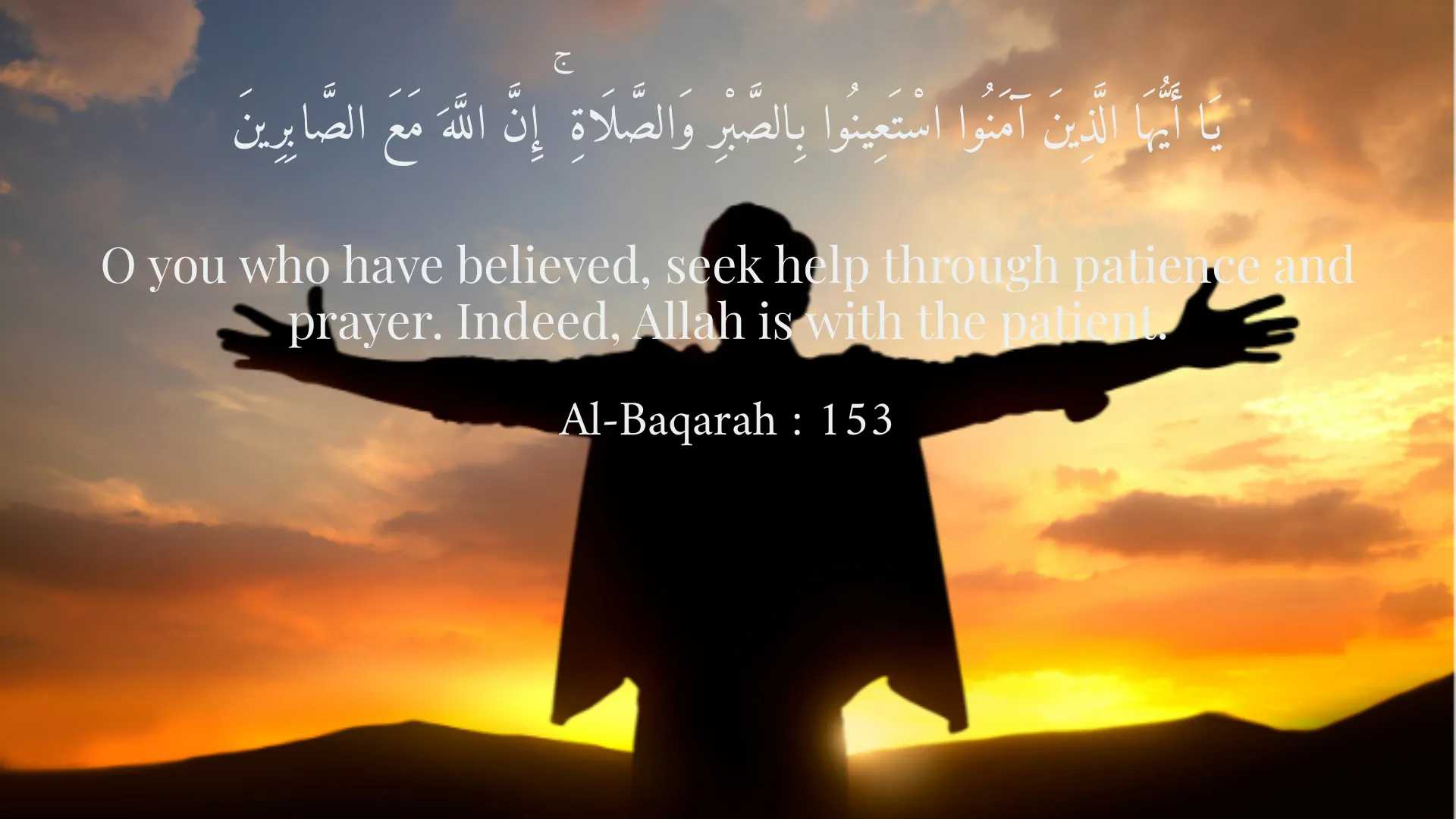
يَا أَيُّهَا الَّذِينَ آمَنُوا اسْتَعِينُوا بِالصَّبْرِ وَالصَّلَاةِ ۚ إِنَّ اللَّهَ مَعَ الصَّابِرِينَ
O you who have believed, seek help through patience and prayer. Indeed, Allah is with the patient.
Al-Baqarah : 153
الَّذِينَ إِذَا أَصَابَتْهُم مُّصِيبَةٌ قَالُوا إِنَّا لِلَّهِ وَإِنَّا إِلَيْهِ رَاجِعُونَ
Who, when disaster strikes them, say, 'Indeed we belong to Allah, and indeed to Him we will return.'
Al-Baqarah : 156
الَّذِينَ آمَنُوا وَتَطْمَئِنُّ قُلُوبُهُم بِذِكْرِ اللَّهِ ۗ أَلَا بِذِكْرِ اللَّهِ تَطْمَئِنُّ الْقُلُوبُ
Those who have believed and whose hearts are assured by the remembrance of Allah. Unquestionably, by the remembrance of Allah hearts are assured.
Ar-Ra'd : 28
وَمَن يَتَوَكَّلْ عَلَى اللَّهِ فَهُوَ حَسْبُهُ ۚ إِنَّ اللَّهَ بَالِغُ أَمْرِهِ ۚ قَدْ جَعَلَ اللَّهُ لِكُلِّ شَيْءٍ قَدْرًا
And whoever relies upon Allah - then He is sufficient for him. Indeed, Allah will accomplish His purpose. Allah has already set for everything a [decreed] extent.
At-Talaq : 3
Short Story
It is narrated that one day, a dervish with a heart full of the remembrance of God lived in poverty and solitude on a mountain. A king passing by saw the dervish, who, despite his disheveled appearance and worn clothes, had a smile on his face and an indescribable tranquility in his eyes. The king was astonished by his state and asked, "O dervish, in this solitude and destitution, how do you possess such joy and peace? Does all this pain and suffering not bother you?" The dervish replied with a cheerful face: "O King, my joy lies in knowing that everything I have and do not have, I consider it all from the Beloved, and I have entrusted my heart to His divine planning. These pains and hardships are like whips that awaken me from heedlessness and remind me of the Merciful God. It is precisely in this pain and yearning that I taste the sweet remembrance of the Truth and know that He will not leave me alone. Every hardship that comes is a sign of His hidden grace." The king was moved by these words and understood that true treasure and lasting peace are not in coffers full of gold and silver, but in contented and spiritual hearts that are submitted to divine providence, even in the depths of pain.