Quranic Answer
Finding the right path amidst the multitude of choices in life is one of the most challenging, yet crucial, issues every human being faces. Our lives are filled with crossroads and decisions, both big and small – from choosing a career and a life partner to daily decisions about relationships and priorities. The Holy Quran, as a book of divine guidance, offers clear and comprehensive solutions to help individuals navigate this journey. These solutions not only assist you in making the correct choice but also bring about inner peace and tranquility. 1. Tawakkul (Complete Reliance on God): The first and perhaps most important step in finding the right path is sincere reliance on Almighty God. Tawakkul does not mean neglecting effort and striving; rather, it means that after exerting all your strength and effort, you entrust the outcome to God and have complete faith in His wisdom and planning. The Quran states: “And whoever relies upon Allah, then He is sufficient for him” (Surah At-Talaq, verse 3). This verse illustrates that Tawakkul is a strong shield against the worries and anxieties arising from indecision in choices. When you know that Allah is the best and most knowledgeable disposer of affairs, your heart finds peace, and you proceed with greater assurance. Tawakkul liberates a person from the bondage of temptations and the fear of the future, allowing them to view options with a more open mind. This approach not only reduces the psychological burden of decision-making but also paves the way for divine blessings to enter one’s life. 2. Istikhara (Seeking Goodness from God): In cases where, after consultation and contemplation, you are still hesitant between several options and the choice feels difficult, one of the methods recommended in Islamic tradition is Istikhara. Istikhara means seeking goodness from Allah; that is, you ask God to reveal the best option for you or to incline your heart towards it. This act demonstrates humility and an acknowledgment of human knowledge limitations in the face of infinite divine knowledge. Istikhara does not necessarily mean seeing a dream or a strange sign; rather, it often means experiencing a state of inner reassurance and tranquility towards one option, or the removal of obstacles from its path. The important thing is that your intention is pure and for the sake of Allah’s pleasure, not to escape the responsibility of decision-making. Istikhara is a spiritual tool to strengthen the connection with the Creator and seek guidance in moments of perplexity. 3. Taqwa (God-Consciousness and Piety): One of the fundamental principles emphasized by the Quran for finding the right path is Taqwa. Taqwa refers to self-restraint and piety; it means considering God’s pleasure in every action and refraining from what He has forbidden. In Surah Al-Anfal, verse 29, Allah says: “O you who have believed, if you fear Allah, He will grant you a criterion (to distinguish between right and wrong).” This verse explicitly states that Taqwa is the key to discernment and distinguishing truth from falsehood. When a person lives with Taqwa, their heart becomes pure and enlightened, enabling them to recognize the divine and correct path amidst the clamor of worldly desires and temptations. Taqwa is like a light that illuminates the way for a person and protects them from falling into misguidance. Living with Taqwa provides a person with deep insight that goes beyond dry logic and material calculations. 4. Consultation (Shura) and Seeking Knowledge: The Holy Quran places great emphasis on the importance of consultation. Allah commands His Prophet: “And consult them in the matter” (Surah Aal-e-Imran, verse 159). Consulting with knowledgeable, experienced, and trustworthy individuals opens up new perspectives and helps you weigh different aspects of a decision. Sometimes, what is hidden from our view becomes clear through consultation with others. In addition to consultation, acquiring sufficient knowledge and information about the options is also crucial. The more complete your information, the more logical and less error-prone your decision-making will be. This knowledge can include research, study, or even practical experience. Combining consultation and knowledge helps you make an informed and well-reasoned choice, as decisions made without awareness and thought often lead to regret. 5. Patience (Sabr) and Prayer (Salah): Throughout all stages of decision-making and thereafter, patience, steadfastness, and seeking help through prayer are essential. Allah says in Surah Al-Baqarah, verse 153: “O you who have believed, seek help through patience and prayer. Indeed, Allah is with the patient.” Patience helps you not to despair when facing ambiguities or difficulties on the path, and prayer maintains your connection with the infinite source of power and tranquility. Prayer is not only an opportunity for supplication and communion but also an exercise for mental calmness and focus that can help clarify thoughts in moments of uncertainty. These two factors are the main pillars of spiritual and moral stability in the challenging journey of decision-making. 6. Pure Intention (Niyyah) and Focus on the Hereafter: Every decision you make should be accompanied by a pure intention for Allah’s pleasure and with consideration of its afterlife consequences. If your intention is merely to achieve fleeting worldly benefits, the likelihood of misguidance is greater. However, if the primary goal is to gain divine pleasure and attain eternal bliss in the Hereafter, Allah Himself will show the best path. The Quran repeatedly compares worldly life with the Hereafter and reminds us of the importance of prioritizing lasting eternal rewards. With this perspective, your choices become deeper and more purposeful, preventing you from falling into the trap of deceptive worldly allurements. Ultimately, finding the right path is a combination of logical effort, acquiring knowledge, consulting with wise individuals, and most importantly, relying on and maintaining a heartfelt connection with Allah. This comprehensive approach not only assists you in life’s choices but also assures you that any path chosen with these principles will ultimately lead to your well-being, both in this world and the Hereafter.
Related Verses
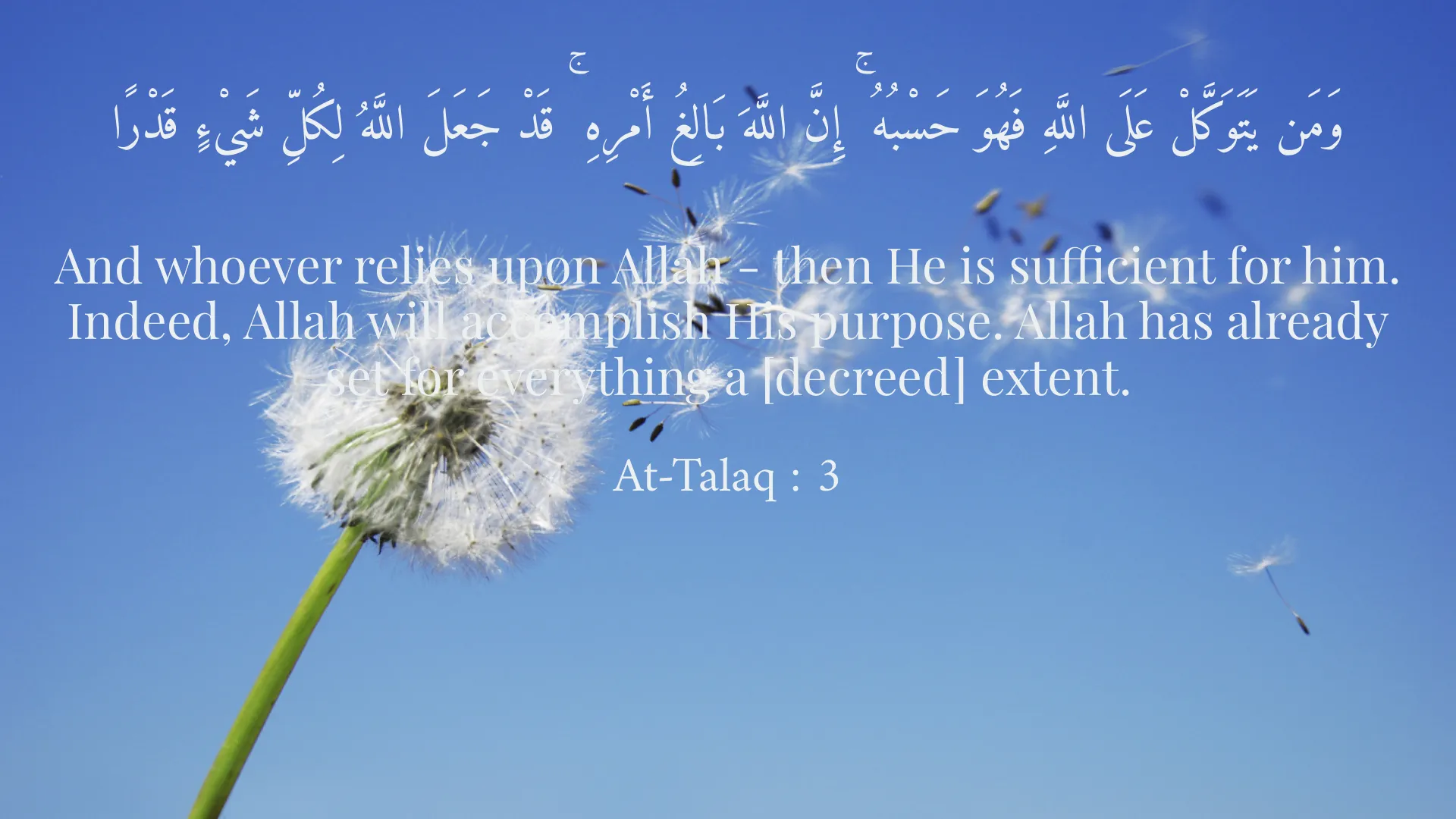
وَمَن يَتَوَكَّلْ عَلَى اللَّهِ فَهُوَ حَسْبُهُ ۚ إِنَّ اللَّهَ بَالِغُ أَمْرِهِ ۚ قَدْ جَعَلَ اللَّهُ لِكُلِّ شَيْءٍ قَدْرًا
And whoever relies upon Allah - then He is sufficient for him. Indeed, Allah will accomplish His purpose. Allah has already set for everything a [decreed] extent.
At-Talaq : 3
يَا أَيُّهَا الَّذِينَ آمَنُوا إِن تَتَّقُوا اللَّهَ يَجْعَل لَّكُمْ فُرْقَانًا وَيُكَفِّرْ عَنكُمْ سَيِّئَاتِكُمْ وَيَغْفِرْ لَكُمْ ۗ وَاللَّهُ ذُو الْفَضْلِ الْعَظِيمِ
O you who have believed, if you fear Allah, He will grant you a criterion [to distinguish between right and wrong] and remove from you your misdeeds and forgive you. And Allah is the possessor of great bounty.
Al-Anfal : 29
فَبِمَا رَحْمَةٍ مِّنَ اللَّهِ لِنتَ لَهُمْ ۖ وَلَوْ كُنتَ فَظًّا غَلِيظَ الْقَلْبِ لَانفَضُّوا مِنْ حَوْلِكَ ۖ فَاعْفُ عَنْهُمْ وَاسْتَغْفِرْ لَهُمْ وَشَاوِرْهُمْ فِي الْأَمْرِ ۖ فَإِذَا عَزَمْتَ فَتَوَكَّلْ عَلَى اللَّهِ ۚ إِنَّ اللَّهَ يُحِبُّ الْمُتَوَكِّلِينَ
So by mercy from Allah, [O Muhammad], you were lenient with them. And if you had been rude [in speech] and harsh in heart, they would have disbanded from about you. So pardon them and ask forgiveness for them and consult them in the matter. And when you have decided, then rely upon Allah. Indeed, Allah loves those who rely [upon Him].
Aal-e-Imran : 159
يَا أَيُّهَا الَّذِينَ آمَنُوا اسْتَعِينُوا بِالصَّبْرِ وَالصَّلَاةِ ۚ إِنَّ اللَّهَ مَعَ الصَّابِرِينَ
O you who have believed, seek help through patience and prayer. Indeed, Allah is with the patient.
Al-Baqarah : 153
Short Story
One day, in the land of Persia, a traveler became lost in a desert. He faced several paths and did not know which one to choose. Mirages confused him, and his desires pulled him in every direction. At that moment, he saw an old shepherd calmly guiding his flock. The traveler approached the shepherd and explained his predicament. The shepherd, with a kind smile, said: "My young friend, in this desert, any path chosen hastily and without thought leads to regret. But if you pause for a moment, seek help from the Almighty God, and reflect on logical reasons, the right path will become clear to you." The traveler learned from the shepherd's words, sat for a while, and entrusted his heart to God. After finding peace, with a closer look at the signs, he chose a path that was safe and clear, and he reached his destination safely. He realized that haste amidst choices only brings misguidance, and that tranquility and reliance on God are the true guides to one's destination.