Quranic Answer
Forgiveness is one of the most significant human challenges that individuals encounter throughout their lives. This profound concept is not only a cornerstone of human relationships but is also addressed in the Holy Quran, showcasing its importance within Islamic teachings. The concept of forgiveness carries deep ethical and moral implications, encouraging individuals to rise above their grievances and disappointments, and it is essential for personal growth and spiritual development. In Surah Al-Imran, verse 134, Allah says: "And those who spend in the cause of Allah during ease and hardship and who restrain anger and who pardon the people – and Allah loves the doers of good" (Al-Imran, 134). This verse intricately weaves together several aspects of good character, highlighting that forgiveness is a noble trait valued by Allah. The act of forgiving others is intrinsically linked to controlling one’s anger, as these two concepts revolve around emotional regulation and spiritual maturity. One of the prerequisites for forgiveness is the understanding of its benefits—not only for the person being forgiven but also for the one who forgives. When we choose to forgive, we lift a heavy emotional burden from our shoulders. It alleviates feelings of resentment, anger, and sorrow that often accompany grudges. Holding onto such feelings can lead to prolonged mental distress and can deteriorate one’s overall well-being. On the contrary, forgiveness allows individuals to heal and move forward in life. They can move beyond unpleasant memories that might hold them back and pursue a more peaceful and fulfilling existence. The act of forgiveness often requires deep reflection and personal courage. It involves recognizing that everyone is fallible, including ourselves, and embracing a more compassionate worldview. When we forgive, we often find ourselves liberated from the chains of past wrongs. As a result, not only do we enhance our mental and emotional health, but we also elevate our spiritual well-being. This liberation from negative emotions facilitates a healthier mindset and fosters genuine relationships built on compassion and understanding. In Surah Al-Baqarah, verse 261, it is stated: "The example of those who spend their wealth in the way of Allah is like that of a seed of grain that sprouts into seven ears; in every ear is a hundred grains. And Allah multiplies [His reward] for whom He wills" (Al-Baqarah, 261). This verse serves as a profound reminder of the rewards of giving in the way of Allah. It stands as a metaphor for the acts of kindness we bestow upon others, including the act of forgiveness. By choosing to forgive others, we too engage in giving, akin to sowing seeds that will bring forth bountiful rewards in our favor. Understanding the value of forgiveness is critical to our spiritual journey. The mere act of forgiving others teaches us the essence of humility and grace. It encourages us to summon the courage to let go of our pride and human frailties, leading to a more profound connection with the divine. When we repeatedly turn to Allah in prayer and seek His forgiveness for our own transgressions, we are reminded of the vastness of His mercy. This realization propels us towards extending the same mercy to those who have wronged us. In moments of pain or betrayal, it is natural for individuals to feel hurt and seek retribution. However, it is vital to remember that clinging to such negative emotions only serves to prolong our suffering. In contrast, embracing forgiveness is a transformative process that helps us confront our vulnerabilities. It enables us to rebuild our strength, allowing us to foster healthier relationships moving forward. The journey toward forgiveness may be challenging, but it ultimately serves as an antidote to emotional turmoil. The Holy Quran teaches us that God is the ultimate source of forgiveness. His boundless compassion should encourage us to adopt a forgiving attitude toward others. When faced with the burden of old wounds, it is vital to recall the teachings of the Quran and understand that Allah encourages us towards forgiveness. Just as we seek His forgiveness, we too must strive to offer forgiveness to others. Forgiveness is not merely an act of dismissing someone’s wrongdoing; it is a conscious decision to release feelings of resentment toward the offender. This process can foster personal growth, as it involves cognitive and emotional work. An individual learning to forgive will inherently develop skills of empathy, understanding, and compassion—all essential attributes for navigating complex human relationships. Practicing forgiveness in daily interactions can transform our communities. When forgiveness is embraced on a larger scale, it can foster a culture of understanding, peace, and tolerance. Individuals who practice forgiveness become role models within their families, neighborhoods, and circles, influencing others to adopt similar practices. This ripple effect can lead to more harmonious societies, reducing conflict and promoting greater unity among diverse groups. Furthermore, forgiveness can serve as a powerful tool for conflict resolution. By setting aside grievances, individuals can more effectively engage in dialogue to address underlying issues, paving the way for reconciliation. Such efforts demonstrate the strength of the human spirit and our conscious choices to foster environments of goodwill, rather than resentment. In conclusion, forgiveness is an integral aspect of our humanity. It is a powerful act of love that can redefine our existence, both spiritually and socially. By internalizing the teachings from the Quran, we can cultivate the strength to forgive, fostering a community rooted in compassion, understanding, and mutual respect. As we navigate the complexities of life, let us remember the significance of forgiveness, the peace it brings, and the profound impact it can have on our thoughts, behaviors, and relationships. Ultimately, forgiveness is a gift—one that we bestow upon ourselves as much as upon others.
Related Verses
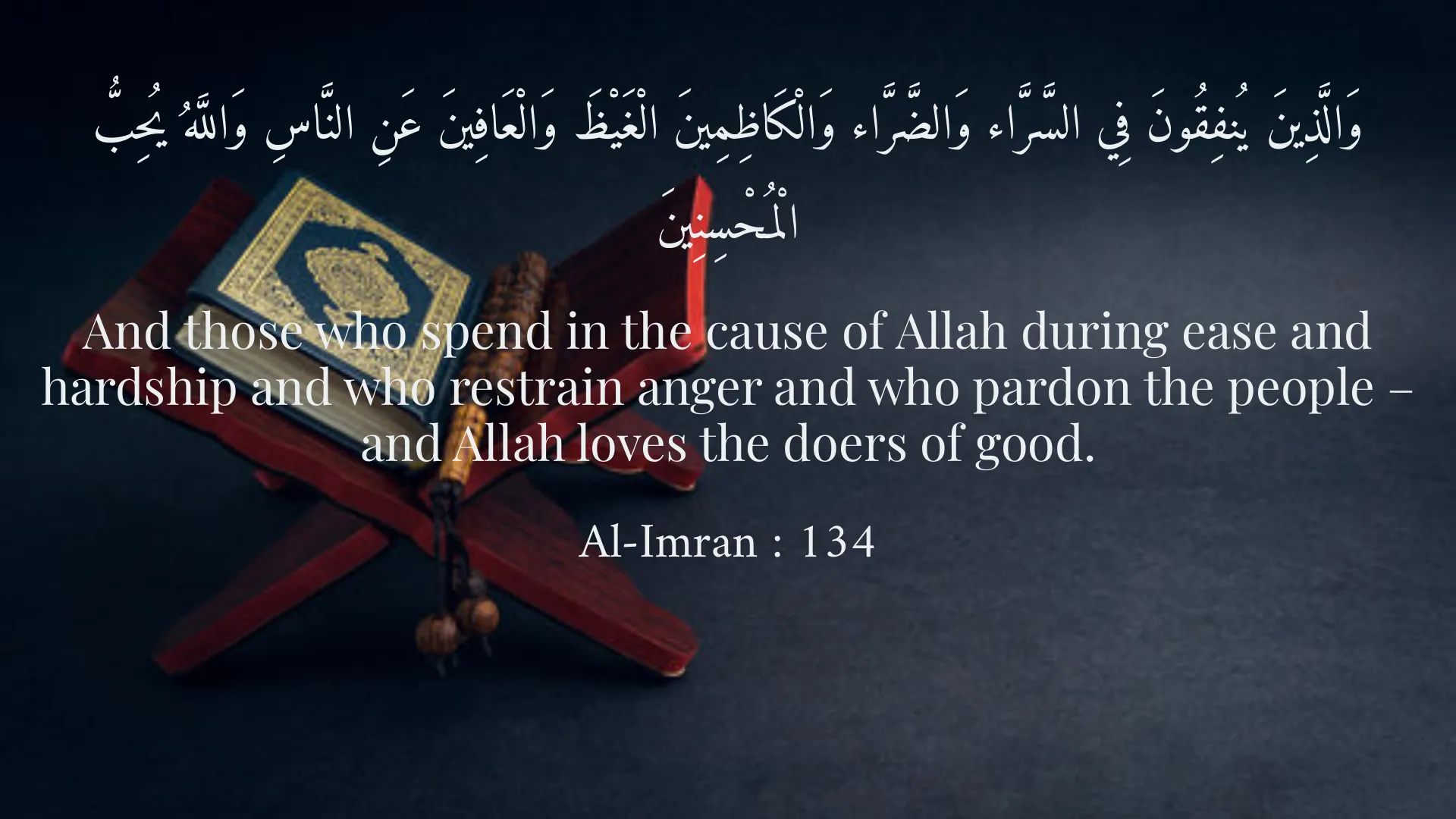
وَالَّذِينَ يُنفِقُونَ فِي السَّرَّاء وَالضَّرَّاء وَالْكَاظِمِينَ الْغَيْظَ وَالْعَافِينَ عَنِ النَّاسِ وَاللَّهُ يُحِبُّ الْمُحْسِنِينَ
And those who spend in the cause of Allah during ease and hardship and who restrain anger and who pardon the people – and Allah loves the doers of good.
Al-Imran : 134
مَثَلُ الَّذِينَ يُنفِقُونَ أَمْوَالَهُمْ فِي سَبِيلِ اللَّهِ كَمَثَلِ حَبَّةٍ أَنبَتَتْ سَبْعَ سُنبُلَاتٍ فِي كُلِّ سُنبُلَةٍ مِئَةُ حَبَّةٍ وَاللَّهُ يُضَاعِفُ لِمَن يَشَاءُ
The example of those who spend their wealth in the way of Allah is like that of a seed of grain that sprouts into seven ears; in every ear is a hundred grains. And Allah multiplies [His reward] for whom He wills.
Al-Baqarah : 261
Short Story
One day, a man named Hasan was feeling down-hearted and sad as he recalled an old conflict. He decided to take a look within himself and, with the advice of a friend, realized that by forgiving that individual, he could bring peace back into his life. He gathered his courage and called the person to apologize. After this conversation, Hasan felt the heavy burden that was on his shoulders vanish.