Quranic Answer
The Holy Quran teaches us profound lessons applicable to our everyday lives, particularly regarding the mastery of one's self. This key theme is not only central to personal development but is also deeply intertwined with our faith, practices, and overall relationship with Allah. In this article, we will explore how self-control is intertwined with faith, patience, and self-awareness, as emphasized by various verses in the Quran. To begin with, let us delve into Surah Al-Baqarah, verse 177, where Allah delineates the qualities of a truly good person. This verse reminds us that righteousness goes beyond mere declaration of faith; it includes actions that reflect that faith. A good person, according to this verse, is someone who believes in Allah and faithfully engages in righteous deeds. This relationship between belief and action is crucial, for it articulates the Quranic understanding that mastery over oneself is contingent upon one’s faith and righteous actions. The concept of self-control is further expanded upon in Surah Al-Asr. In verses 2 and 3, we find a stark reminder: 'Indeed, mankind is in loss, except for those who have believed and done righteous deeds and advised one another to truth and patience.' These words highlight the importance of patience and resilience as we navigate the challenges posed by our lower selves. By acknowledging that humanity is largely in loss, the Quran compels us to seek the company of those who embody faith, righteousness, and patience. We note here that advising one another to truth also involves the internal struggle against our desires, thus reinforcing the necessity of self-awareness in the process of personal development. Patience plays an indispensable role in achieving this inner mastery. It nurtures resilience against the temptations and inclinations of the self. Developing positive habits can greatly assist us in our pursuit of self-control. Practices such as regular prayer, fasting, and reciting the Quran serve not only as acts of worship but also as means of fostering discipline and guidance in our lives. Through consistent devotion, these habits serve to strengthen our connection with Allah and maintain a focus on righteousness and obedience. The regularity of these spiritual activities channels our thoughts and actions towards goodness, thereby contributing to the ongoing battle against our lower desires. Moreover, in Surah Muhammad, verse 7, Allah communicates a powerful message: 'O you who have believed, if you support Allah, He will support you and plant firmly your feet.' This verse signifies a mutual relationship between the believer and Allah, one that reinforces the message of empowerment through faith. When we actively engage in acts of support for Allah’s cause and stay resolute on the righteous path, we are assured of Allah’s support in our quest for self-mastery. This promise serves as an encouraging reminder that our efforts are not in vain; rather, they are met with divine assistance. To be effective in our journey towards self-control, we must consciously strengthen our connection with Allah through various means, particularly through prayer (Salah), supplication (Dua), and regular recitation of the Quran (Tilawah). Prayer, as prescribed in Islam, is not merely an act of devotion; it is fundamental to establishing a disciplined routine that aligns us closer to our Creator. The five daily prayers strategically punctuate our day, offering us moments of reflection and connection with Allah, thus serving to remind us of our purpose and to instil a sense of accountability. Supplication is another vital tool for developing self-control. By turning to Allah in prayer, we express our vulnerabilities and seek guidance, strength, and clarity. Supplication bolsters our humility and reinforces the understanding that we cannot achieve mastery over ourselves without divine aid. This acknowledgment paves the way for deeper self-awareness, as we become more open to recognizing our flaws and the changes needed to combat them. Furthermore, immersing ourselves in the Quran provides us profound insights and wisdom. The recitation of the Quran not only serves as an act of worship but also as an essential instrument for spiritual growth and self-discipline. By regularly engaging with the Quran, we familiarize ourselves with Allah’s guidance and enhance our understanding of what it means to lead a righteous life. Each verse encourages reflection and contemplation, allowing us to internalize the moral and ethical lessons embedded within. Gradually, these lessons shape our character, guiding us away from harmful habits and towards a life that is pleasing to Allah. Recognizing the self as an adversary that must be tamed is essential to our journey. The Quran presents the concept of Jihad against one's self (Nafs) as one of the most critical forms of striving in the path of Allah. It involves not just refraining from sinful actions but also actively cultivating virtues that nourish the soul. The desire to attain personal mastery should not lead to despair; rather, it must inspire us to reflect, strive, and grow with the ongoing support of faith and community. In conclusion, mastery over one’s self is a profound journey that requires commitment, resilience, and unwavering faith. The Holy Quran presents this journey in rich layers, emphasizing the importance of righteous actions, patience, and self-awareness. As we navigate our lives, let us embrace the teachings of the Quran, engage in acts of worship with sincerity, and remain steadfast in our pursuit of self-mastery. Through faith, patience, and positive habits, we become the architects of our destinies, forging a path that leads us closer to our Creator and ultimately yields personal fulfillment and tranquility.
Related Verses
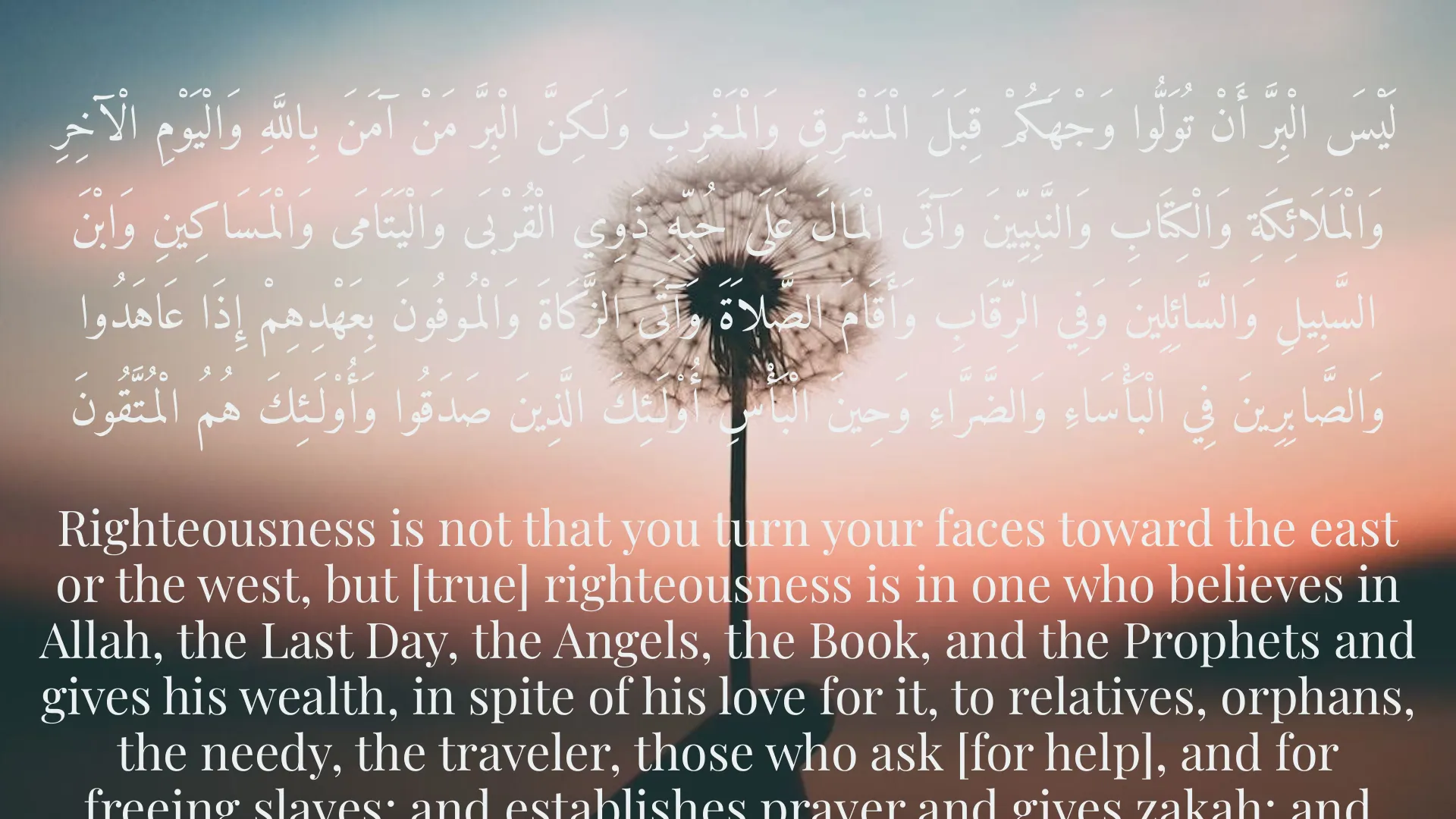
لَيْسَ الْبِرَّ أَنْ تُوَلُّوا وَجْهَكُمْ قِبَلَ الْمَشْرِقِ وَالْمَغْرِبِ وَلَكِنَّ الْبِرَّ مَنْ آمَنَ بِاللَّهِ وَالْيَوْمِ الْآخِرِ وَالْمَلَائِكَةِ وَالْكِتَابِ وَالنَّبِيِّينَ وَآتَى الْمَالَ عَلَى حُبِّهِ ذَوِي الْقُرْبَى وَالْيَتَامَى وَالْمَسَاكِينِ وَابْنَ السَّبِيلِ وَالسَّائِلِينَ وَفِي الرِّقَابِ وَأَقَامَ الصَّلاَةَ وَآتَى الزَّكَاةَ وَالْمُوفُونَ بِعَهْدِهِمْ إِذَا عَاهَدُوا وَالصَّابِرِينَ فِي الْبَأْسَاءِ وَالضَّرَّاءِ وَحِينَ الْبَأْسِ أُو۟لَـئِكَ الَّذِينَ صَدَقُوا وَأُو۟لَـئِكَ هُمُ الْمُتَّقُونَ
Righteousness is not that you turn your faces toward the east or the west, but [true] righteousness is in one who believes in Allah, the Last Day, the Angels, the Book, and the Prophets and gives his wealth, in spite of his love for it, to relatives, orphans, the needy, the traveler, those who ask [for help], and for freeing slaves; and establishes prayer and gives zakah; and [those who] fulfill their promise when they promise; and [those who] are patient in poverty and hardship and in time of battle. Those are the ones who have been true, and it is those who are the righteous.
Al-Baqarah : 177
إِنَّ الْإِنْسَانَ لَفِي خُسْرٍ
Indeed, mankind is in loss.
Al-Asr : 2
يَا أَيُّهَا الَّذِينَ آمَنُوا إِن تَنصُرُوا اللَّهَ يَنصُرْكُمْ وَيُثَبِّتْ أَقْدَامَكُمْ
O you who have believed, if you support Allah, He will support you and plant firmly your feet.
Muhammad : 7
Short Story
Ali made a vow to himself to gain mastery over his lower self. He dedicated hours each day to prayer and supplication, drawing inspiration from the verses of the Quran. Every time he faced a challenge, he would remember the verses and, with patience and resilience, overcame the challenge. Ultimately, Ali realized that through this method, he had astonishingly gained control over himself, and his life had changed completely.