Quranic Answer
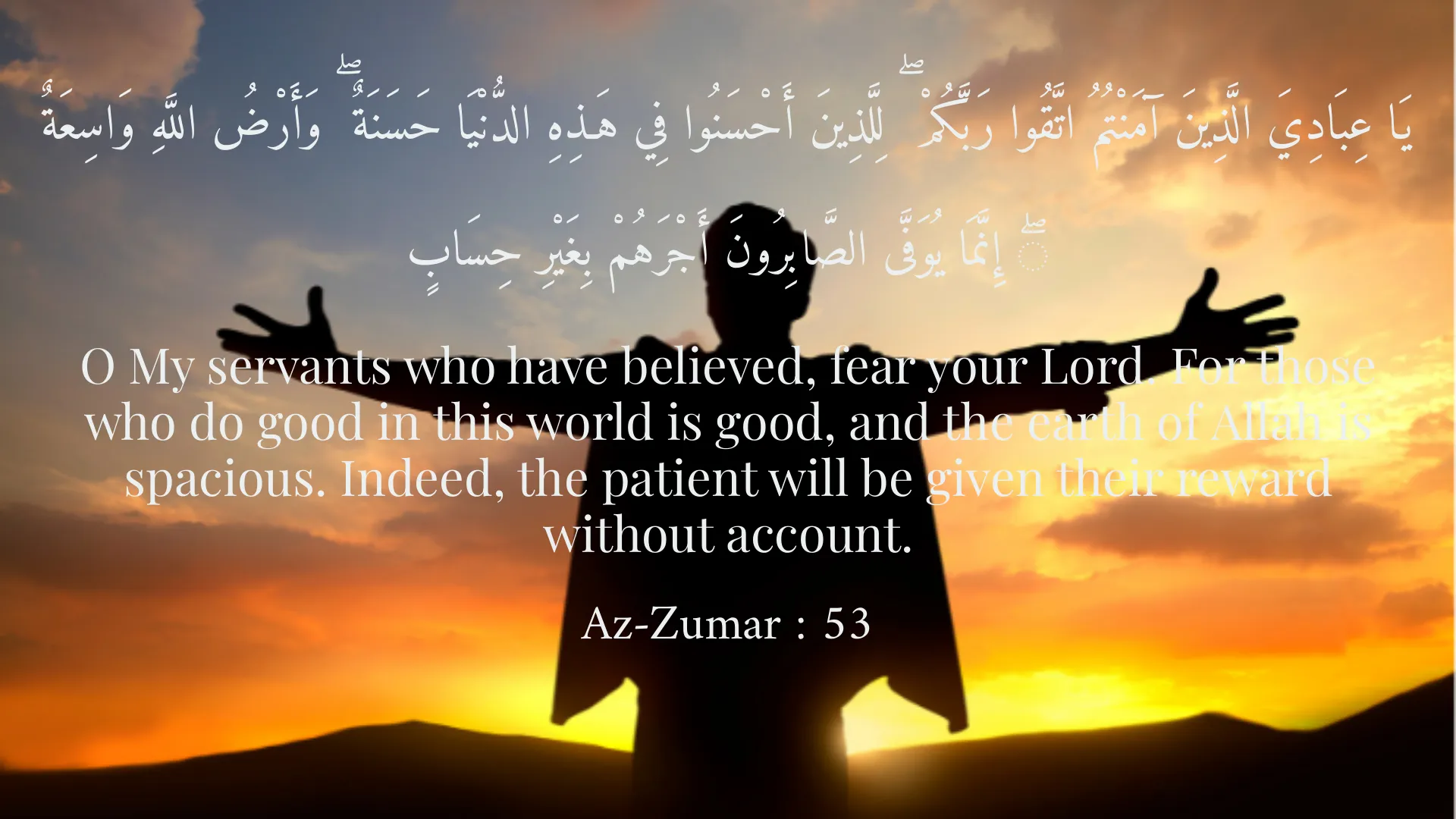
In the Holy Quran, the concepts of hope and God’s mercy are essential aspects of the beliefs that shape the hearts and minds of Muslims around the world. These concepts transcend mere theological discussions; they serve as guiding principles that influence a believer's everyday life experiences and interactions with others. The verses of the Quran, filled with divine wisdom, offer profound messages of encouragement, resilience, and support during life’s trials and tribulations. Among these verses, Surah Az-Zumar, verse 53, and Surah Al-Baqarah, verse 286, stand as pillars of hope amidst adversity. Surah Az-Zumar, verse 53, is a beautiful testament to Allah's magnanimity: "Say, 'O My servants who have believed, fear your Lord. For those who do good in this world is good, and the earth of Allah is spacious. Indeed, the patient will be given their reward without account.'" This verse promises Allah's willing forgiveness of all sins for His servants, instilling hope where despair might otherwise take root. To the believer, it emphasizes that no matter the weight of past actions, one can always turn back to Allah, repenting and seeking His mercy. This assurance serves as a profound reminder that Allah's mercy encompasses all, regardless of the magnitude of individual transgressions. This idea not only fosters personal forgiveness but also encourages a culture of compassion and understanding among believers. The notion of divine mercy is further reinforced in Surah Al-Baqarah, verse 286, which states, "Allah does not burden a soul beyond that it can bear..." This assertion brings to light the critical understanding that every challenge faced by an individual has been measured and tailored to their capacity. This verse is particularly significant during challenging times, as it reassures the believer of Allah's support and presence during hardships. These hardships serve as opportunities for growth, as Allah’s company and aid prompt individuals to harness their inner strength and resolve. Moreover, this teaching serves as a comforting companion for those who witness others struggling, embedding in them a sense of responsibility. As Muslims, we have a duty to remind and inspire each other through the teachings of Islam. By sharing verses from the Holy Quran and recounting the experiences of the prophets, we can uplift one another in moments of despair. The story of Prophet Yusuf is particularly poignant, reflecting steadfast patience and unshakeable faith in Allah's plan. After enduring betrayal, wrongful imprisonment, and countless trials, Yusuf ultimately emerges victorious, a narrative that highlights the crucial role of patience and reliance on divine wisdom. In the context of community, hope can be a collective endeavor; thus, we must strive to reinforce it among ourselves. This can be achieved through genuine gestures of compassion—whether they are practical support, kind words, or shared reflections on divine teachings. Within the framework of Islamic values, it is our collective responsibility to nurture an environment where hope flourishes. The Quranic verses encourage us to transform our understanding of silence into actions of solidarity, thereby creating a more nurturing community. We should aim to inject hope into the hearts of those who are wavering or struggling, showing them that difficult times do not last forever, and that Allah’s mercy is ever-present, ready to envelop those seeking refuge within His grace. Each interaction we have can be a means to dispense positivity—a reminder that with each hardship, there comes ease, as indicated in Surah Ash-Sharh, verse 5. This gives us profound encouragement to reach out, listen, and support those burdened by life’s challenges. In addition to offering words of comfort and encouragement, sharing the examples found in the lives of the prophets can profoundly impact those around us. The narratives of the prophets are more than mere stories; they are lessons in resilience, faith, and the power of divine mercy. For instance, the patience exhibited by Job (Ayyub) during his trials teaches us about enduring suffering with dignity and hope, while the steadfastness of the Prophet Muhammad in the face of adversity demonstrates the importance of unwavering faith. Therefore, as Muslims, reminding others of Allah’s mercy is more than just an act of kindness; it is a vital aspect of our faith that nourishes our collective spirit. When we encourage individuals to keep their faith in God’s mercy, we expand the light of hope, helping them realize that even in their darkest moments, a brighter day awaits. Through compassion, understanding, and empowerment, we can foster an enduring legacy of hope rooted in the teachings of the Quran and the noble examples set by the prophets. In conclusion, the Islamic teachings on hope and mercy form an integral part of our faith, guiding us through life's trials while fostering a compassionate community. The beautiful verses of the Quran encapsulate these concepts, reminding believers of Allah’s love and support. As we aim to practice and share these teachings, we can truly embody the spirit of hope, uplifting ourselves and those around us, reinforcing the paramount value of hope in both personal growth and community well-being. By embracing these virtues, we not only strengthen our faith but also contribute constructively to a community bound together by love, mercy, and unwavering hope.
Related Verses
يَا عِبَادِيَ الَّذِينَ آمَنْتُمُ اتَّقُوا رَبَّكُمْ ۖ لِلَّذِينَ أَحْسَنُوا فِي هَـذِهِ الدُّنْيَا حَسَنَةٌ ۖ وَأَرْضُ اللَّهِ وَاسِعَةٌ ۖ إِنَّمَا يُوَفَّى الصَّابِرُونَ أَجْرَهُمْ بِغَيْرِ حِسَابٍ
O My servants who have believed, fear your Lord. For those who do good in this world is good, and the earth of Allah is spacious. Indeed, the patient will be given their reward without account.
Az-Zumar : 53
لَا يُكَلِّفُ اللَّهُ نَفْسًا إِلَّا وُسْعَهَا ۚ لَهَا مَا كَسَبَتْ وَعَلَيْهَا مَا اكْتَسَبَتْ ۗ رَبَّنَا لَا تُؤَاخِذْنَا إِن نَّسِينَا أَوْ أَخْطَأْنَا ۚ رَبَّنَا وَلَا تَحْمِلْ عَلَيْنَا إِصْرًا كَمَا حَمَلْتَهُ عَلَى الَّذِينَ مِن قَبْلِنَا ۚ رَبَّنَا وَلَا تُحَمِّلْنَا مَا لَا طَاقَةَ لَنَا بِهِ ۖ وَاعْفُ عَنَّا وَاغْفِرْ لَنَا وَارْحَمْنَا ۚ أَنتَ مَوْلَانَا فَانصُرْنَا عَلَى الْقَوْمِ الْكَافِرِينَ
Allah does not burden a soul beyond that it can bear. It will have [the consequence of] what [good] it has gained, and it will bear [the consequence of] what [evil] it has earned. Our Lord, do not impose blame upon us if we have forgotten or made a mistake. Our Lord, and lay not upon us a burden like that which You laid upon those before us. Our Lord, and burden us not with that which we have no ability to bear. And pardon us; and forgive us; and have mercy upon us. You are our protector, so give us victory over the disbelieving people.
Al-Baqarah : 286
Short Story
One day, a young man named Saman approached a religious scholar with a heavy heart full of sorrow and despair. He said, "My life is filled with problems and I have no hope." The scholar smiled and said, "Remember, even in the darkest nights, a dawn will come. Look at the verses of the Quran; one says that no one should despair of His mercy. Hope and Allah's mercy are always there; one just needs to seek it." With these words, Saman regained his spirit and resolved to move toward hope.