Quranic Answer
Gratitude is a powerful concept that is deeply rooted in the teachings of the Holy Quran. In many verses, Allah emphasizes the importance of gratitude as a pivotal principle that should guide human life. The essence of gratitude in Islam extends beyond mere acknowledgment; it encompasses actions, behaviors, and a heartfelt appreciation for the blessings bestowed upon us. In this article, we will delve into the multifaceted nature of gratitude as presented in the Quran, discussing its significance, benefits, and practical applications in our daily lives. One of the key verses that encapsulate the essence of gratitude is found in Surah Ibrahim, where Allah states, 'If you are grateful, I will surely increase your favor; but if you deny, indeed, My punishment is severe' (Verse 7). This verse underscores the reciprocal relationship between gratitude and divine favor. Allah clearly articulates that gratitude is not simply a token of appreciation expressed through words but requires genuine expression through our actions and behaviors. Such an understanding of gratitude reshapes our relationship with Allah and guides us in the realization of our purpose. To truly grasp gratitude, we must first recognize the abundance of blessings surrounding us. Many times, we overlook the simple everyday gifts that provide comfort and joy – from the natural beauty of our environment to the support of family and friends. A genuine understanding of gratitude involves not only appreciating these blessings but also utilizing them to contribute positively to our communities. In Surah Al-Imran, verse 123, Allah reaffirms the importance of gratitude, urging believers to turn to Him at all times, especially during hardships. 'And remember when you were few and oppressed in the land, fearing that people might abduct you. Then He sheltered you and supported you with His victory and provided you with good things, that you might be grateful' (Surah Al-Imran, Verse 123). This verse offers a profound insight into the function of gratitude even in times of strife. When we face challenges, it is crucial to remember the past blessings we have received and to reflect on how those blessings can serve as a source of strength during difficult days. By practicing gratitude, we develop a positive outlook on life which not only affects our mental well-being but also enhances our self-confidence. Numerous studies have shown that individuals who actively cultivate a sense of gratitude tend to experience lower levels of anxiety, depression, and resentment, while exhibiting increased levels of happiness and life satisfaction. From a psychological perspective, gratitude can be viewed as a form of emotional regulation that helps individuals create a more balanced and fulfilling life. Moreover, gratitude acts as a form of prayer to Allah, allowing believers to connect with the Divine in profound ways. Acknowledging His blessings through sincere gratitude cultivates a sense of tranquility and inner peace. It helps in transcending the challenges that life may present, guiding us to a state of contentment and acceptance. This peace derived from gratitude serves as a source of strength, enabling us to navigate the tumultuous waves of life with grace and resilience. One practical way to foster gratitude is to implement it as a daily practice. Individuals can maintain a gratitude journal, noting down the things they are thankful for each day. This exercise not only reinforces a positive mindset but also creates a tangible record of abundance in life – a reminder in times of trial. Additionally, incorporating acts of kindness into our daily routines allows us to share our blessings with others, reinforcing the cycle of gratitude. Helping those in need not only benefits them but also amplifies our own feelings of gratitude, as it creates a sense of purpose and fulfillment. Furthermore, the spirit of gratitude can shape our relationships as well. Expressing appreciation towards loved ones fosters deeper connections and mutual support. Sincere acknowledgments can strengthen bonds, improve communication, and create an environment where love and respect flourish. By embodying gratitude in our interactions, we contribute to the spiritual growth of ourselves and those around us. In conclusion, gratitude is a fundamental principle in human life highlighted throughout the Holy Quran. It is a vital aspect of our relationship with Allah, influencing our actions and perspectives. By recognizing our blessings, supporting one another, and fostering an attitude of gratitude, we can significantly enhance our quality of life and ensure that we remain aligned with the teachings of Islam. True gratitude is not a passive acknowledgment; it’s an active engagement with life and a commitment to improve not only ourselves but also the lives of others. As we navigate the complexities of existence, let us embrace the teachings of the Quran on gratitude, allowing it to guide us to a life filled with purpose, compassion, and joy.
Related Verses
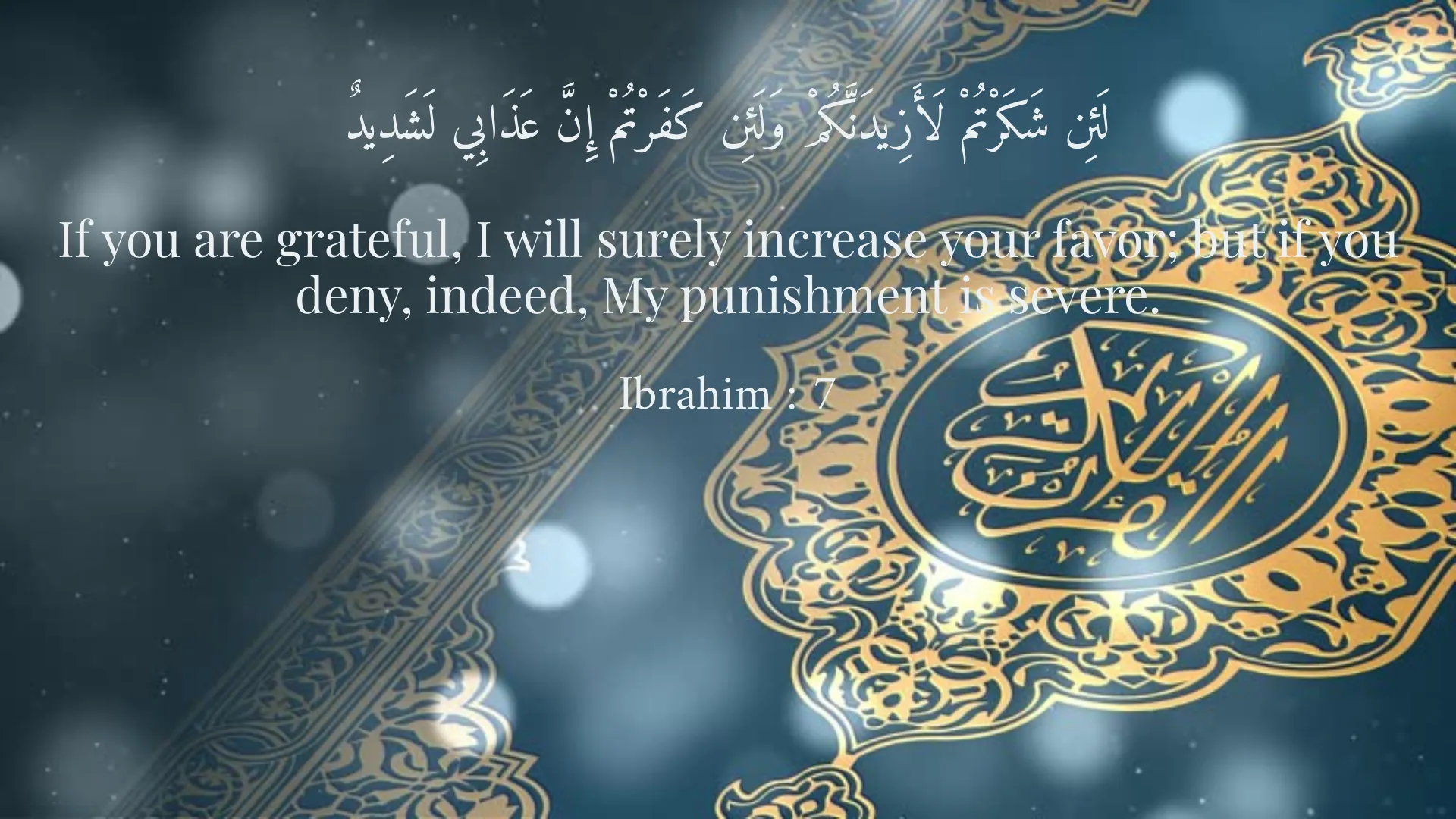
لَئِن شَكَرْتُمْ لَأَزِيدَنَّكُمْ وَلَئِن كَفَرْتُمْ إِنَّ عَذَابِي لَشَدِيدٌ
If you are grateful, I will surely increase your favor; but if you deny, indeed, My punishment is severe.
Ibrahim : 7
وَلَقَدْ نَصَرَكُمُ اللَّهُ بِبَدْرٍ وَأَنتُمْ أَذِلَّةٌ ۚ فَاتَّقُوا اللَّهَ لَعَلَّكُمْ تَشْكُرُونَ
And Allah had granted you victory at Badr while you were weak. So fear Allah that you may be grateful.
Al-Imran : 123
Short Story
One day, a man named Ahmad went to the city and was sitting among the people. He noticed from their faces and behaviors that many of them were oblivious to Allah's blessings. He decided to talk to them about gratitude. Ahmad shared examples of God's mercy for everyone and reminded them that they shouldn't only be grateful in times of joy and comfort but also remember the blessings during hardships. The people listened attentively, and after his speech, some of them had tears in their eyes and decided to be more appreciative.