Quranic Answer
In today's fast-paced and often overwhelming world, many of us face the challenge of how to maintain and nurture our connection to the spiritual dimension of life amidst daily worries and pressures. The Holy Quran, as the divine word, offers comprehensive and profound guidance for living a spiritual life in every moment of existence. Spirituality in Islam is not merely a collection of ritualistic acts; rather, it is a holistic approach to life that encompasses every aspect of human existence, aiming to achieve inner peace and divine satisfaction through continuous awareness of God's presence. To keep spirituality alive in our daily routines, the Quran emphasizes several key principles that, when adhered to, can lead to a more meaningful and blessed life. The first, and perhaps most crucial, principle is 'Dhikr' or the constant remembrance of God. Dhikr is not merely about repeating specific words, but rather a state of heartfelt and mindful awareness of God's presence, power, mercy, and supervision in all moments of life. The Quran repeatedly emphasizes the importance of Dhikr, including in Surah Ar-Ra'd, verse 28, which states: "Those who have believed and whose hearts are assured by the remembrance of Allah. Unquestionably, by the remembrance of Allah hearts are assured." This verse clearly indicates that true tranquility is found only in the remembrance of Allah. To put Dhikr into practice in daily life, we can consciously repeat the names of God, reflect on His blessings, and be grateful while performing ordinary tasks such as cooking, driving, or walking. Even encountering challenges can be an opportunity for Dhikr; in moments of difficulty, remembering God provides strength, patience, and trust. This continuous awareness gradually transforms one's perspective on the world, turning every worldly activity into an opportunity for divine proximity. The second pillar of maintaining spirituality is 'Salat' (prayer). The five daily prayers are anchors that bring individuals back to a shore of spiritual calm and focus throughout the day. Each prayer is a sacred pause amidst life's busyness, offering us an opportunity to distance ourselves from worldly affairs and turn entirely towards our Creator. In Surah Al-Ankabut, verse 45, Allah says: "Recite, [O Muhammad], what has been revealed to you of the Book and establish prayer. Indeed, prayer prohibits immorality and wrongdoing, and the remembrance of Allah is greater. And Allah knows that which you do." Prayer is not just an obligation; it is a means of purifying the soul, strengthening willpower, and preventing sins. When prayer is performed with full presence of heart and reflection on its meanings, it profoundly impacts the quality of our daily lives, helping us to make better decisions and face challenges with a spiritual approach. Meticulous planning for prayer times and striving to perform them at their earliest designated time is a sign of prioritizing this spiritual dimension. The third approach is 'reflection on divine signs' in the Quran and the universe. The Quran repeatedly invites humanity to contemplate the creation of the heavens and the earth, the alternation of night and day, the growth of plants, and the movement of clouds. This reflection (tafakkur and tadabbur) is a gateway to a deeper understanding of God's majesty and power. In Surah Aal-Imran, verse 191, Allah describes "Those who remember Allah while standing or sitting or [lying] on their sides and reflect upon the creation of the heavens and the earth, [saying], 'Our Lord, You have not created this in vain; exalted are You [above such a thing]; then protect us from the punishment of the Fire.'" By dedicating a short time each day to reading and pondering a few verses from the Quran, we can nourish our hearts and minds. Moreover, observing nature and reflecting on its complexities and beauties can awaken spirituality within us and strengthen a sense of gratitude. The fourth principle is 'gratitude' (Shukr) and appreciation for God's countless blessings. The Holy Quran frequently emphasizes the importance of gratitude and considers it a means of increasing blessings. In Surah Ibrahim, verse 7, we read: "If you are grateful, I will surely increase you [in favor]; but if you deny, indeed, My punishment is severe." Gratitude in daily life means remembering the positive aspects and blessings we possess, even when faced with difficulties. This mental exercise shifts our perspective on life and helps us to feel God's presence and mercy in every circumstance. Keeping a gratitude journal or simply taking moments to reflect on our blessings can be an effective practice. The fifth strategy is 'performing good deeds' and serving others (Ihsan). True spirituality in Islam is not confined to individual acts of worship; it must also manifest in our interactions with others. The Quran places great emphasis on justice, kindness to parents, helping the needy, and good conduct towards neighbors and the general public. Every good deed, no matter how small, if done with a pure intention for the sake of Allah, is an act of worship and a strengthener of spirituality. Helping a neighbor, offering a kind smile, or showing patience in the face of others' misconduct can all be acts that nourish the soul and strengthen its connection to God. These actions demonstrate that spirituality flows not only in the solitude of worship but also in the marketplace, on the streets, at home, and in the workplace. Finally, to keep spirituality alive in daily life, we need 'perseverance and steadfastness' (Sabr). The path of spirituality is not traversed overnight; it requires continuous and gradual effort. We might feel discouraged on some days or worldly temptations might lead us astray. But the important thing is not to give up and always return to God. The Quran teaches us that patience and prayer are powerful tools for dealing with hardships and maintaining steadfastness on the path of truth. By taking a long-term view of spiritual growth and forgiving ourselves for shortcomings, we can undertake this journey with greater peace and confidence. Daily life, with all its ups and downs, is the best arena for practicing and strengthening spirituality. With pure intention and reliance on God, we can transform every moment of our lives into an opportunity for growth and divine closeness, thereby keeping spirituality alive at the core of our daily routines.
Related Verses
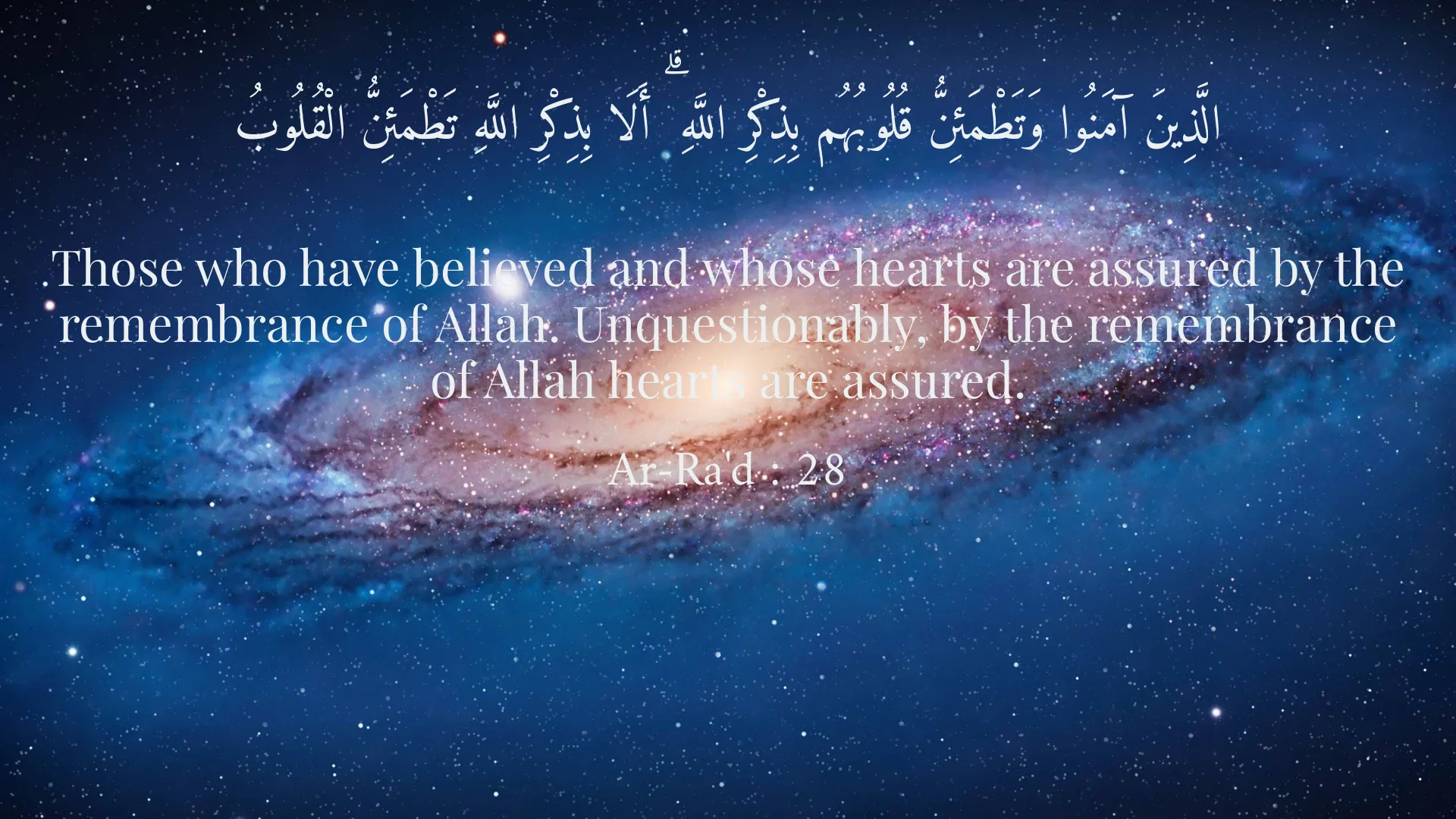
الَّذِينَ آمَنُوا وَتَطْمَئِنُّ قُلُوبُهُم بِذِكْرِ اللَّهِ ۗ أَلَا بِذِكْرِ اللَّهِ تَطْمَئِنُّ الْقُلُوبُ
Those who have believed and whose hearts are assured by the remembrance of Allah. Unquestionably, by the remembrance of Allah hearts are assured.
Ar-Ra'd : 28
اتْلُ مَا أُوحِيَ إِلَيْكَ مِنَ الْكِتَابِ وَأَقِمِ الصَّلَاةَ ۖ إِنَّ الصَّلَاةَ تَنْهَىٰ عَنِ الْفَحْشَاءِ وَالْمُنكَرِ ۗ وَلَذِكْرُ اللَّهِ أَكْبَرُ ۗ وَاللَّهُ يَعْلَمُ مَا تَصْنَعُونَ
Recite, [O Muhammad], what has been revealed to you of the Book and establish prayer. Indeed, prayer prohibits immorality and wrongdoing, and the remembrance of Allah is greater. And Allah knows that which you do.
Al-Ankabut : 45
الَّذِينَ يَذْكُرُونَ اللَّهَ قِيَامًا وَقُعُودًا وَعَلَىٰ جُنُوبِهِمْ وَيَتَفَكَّرُونَ فِي خَلْقِ السَّمَاوَاتِ وَالْأَرْضِ رَبَّنَا مَا خَلَقْتَ هَٰذَا بَاطِلًا سُبْحَانَكَ فَقِنَا عَذَابَ النَّارِ
Those who remember Allah while standing or sitting or [lying] on their sides and reflect upon the creation of the heavens and the earth, [saying], 'Our Lord, You have not created this in vain; exalted are You [above such a thing]; then protect us from the punishment of the Fire.'
Aal-Imran : 191
Short Story
It is narrated that in ancient times, there lived a pious and dervish-like man who worked in the bustling city market. People wondered how he, amidst all the buying, selling, and transactions, always remained calm and smiling, undisturbed by worldly concerns. One day, a merchant asked him, "O virtuous man, how is it that in this busy world, we never see any worry in you, and your heart is always joyful and your soul at peace?" The dervish smiled and replied, "I have two hearts. One for this world and one for the Hereafter. The heart that is with this world, I occupy it with trade and business. And the heart that is with the Hereafter, I occupy it with the remembrance of God and good intentions. The heart that belongs to the Hereafter always calls me towards peace and reminds me that this world is fleeting and the true destination is elsewhere. So, whenever the clamor of the world becomes too loud, I take refuge in my other heart, and with the remembrance of the Truth, I find tranquility." In this way, that pious man showed that it is possible to keep spirituality alive and find peace amidst the daily routines.