Quranic Answer
Every individual, at some point, grapples with the profound question of purpose and meaning in life, yearning to ensure that their journey, their choices, and their very existence are not just self-serving but are in harmony with a higher calling, specifically with the divine will and pleasure of God. In Islam, this isn't left to mere speculation; the Holy Quran, as a comprehensive guide for humanity, provides clear principles and profound insights into how one can discern whether their path in life truly aligns with the satisfaction of Allah (SWT). It’s a journey of self-discovery intertwined with spiritual growth, requiring conscious effort and constant introspection. Understanding God's satisfaction isn't about rigid adherence to a narrow set of rules, but about cultivating a holistic state of being that reflects His divine attributes in one's actions, intentions, and character. The primary cornerstone in aligning one's life with God's pleasure is a sincere and unwavering belief (Iman) in Allah, His Oneness (Tawhid), His Prophets, and His revealed books. This belief is not merely a verbal affirmation but a deep conviction that permeates the heart and translates into concrete actions. The Quran explicitly links the love of God with obedience to His Messenger, Prophet Muhammad (peace be upon him). As Allah states in Surah Al Imran (3:31): “Say, [O Muhammad], ‘If you should love Allah, then follow me, [so] Allah will love you and forgive you your sins. And Allah is Forgiving and Merciful.’” This verse beautifully illustrates that the path to God's love and satisfaction lies in adhering to the teachings and Sunnah of the Prophet, which are themselves divinely inspired interpretations and applications of the Quran. Following the Prophet means embodying his character, practicing his teachings, and striving to live by the Quran’s injunctions, thereby ensuring that one’s life choices are rooted in divine guidance rather than fleeting worldly desires. Beyond belief, the Quran consistently emphasizes the importance of performing righteous deeds (Amal Salih) with pure intention (Ikhlas). In Surah Al-Kahf (18:110), Allah declares: “Say, ‘I am only a man like you, to whom has been revealed that your God is one God. So whoever would hope for the meeting with his Lord - let him do righteous work and not associate anyone with the worship of his Lord.’” This verse highlights two crucial elements: righteous actions and avoiding Shirk (associating partners with Allah). Righteous deeds encompass a vast spectrum, including acts of worship like prayer (Salat), fasting (Sawm), charity (Zakat), and pilgrimage (Hajj), as well as ethical conduct in daily life, such as honesty, justice, kindness to parents, caring for the needy, and responsible stewardship of the environment. The key qualifier is ‘Ikhlas’ – performing these deeds solely for the sake of Allah’s pleasure, without seeking recognition, praise, or worldly gain. When actions stem from a sincere heart dedicated to God, they become vehicles for drawing closer to His satisfaction. A profound indicator of being on a path that aligns with God’s satisfaction is the cultivation of Taqwa, which can be translated as God-consciousness, piety, or mindfulness of Allah. Taqwa means being constantly aware of Allah’s presence, fearing His displeasure, and striving to obey His commands and avoid His prohibitions. It’s an internal state that guides all external actions. The Quran frequently mentions the rewards for those who possess Taqwa, indicating their favored status with Allah. This inner awareness leads to constant self-reflection (Muhasabah), where one regularly evaluates their thoughts, words, and actions against Islamic principles. If a person finds inner peace and tranquility (Sakinah) despite external challenges, it often signals a harmonious alignment with divine will. As promised in Surah An-Nahl (16:97): “Whoever does righteousness, whether male or female, while he is a believer - We will surely cause him to live a good life, and We will surely give them their reward [in the Hereafter] according to the best of what they used to do.” This ‘good life’ often encompasses inner contentment and blessings in this world. Beyond core principles, several practical manifestations indicate alignment with God's satisfaction: * Patience (Sabr) and Perseverance: Facing life's trials with patience and reliance on Allah, understanding that hardships are tests and opportunities for growth. * Gratitude (Shukr): Acknowledging Allah’s blessings and using them in ways that please Him, rather than complaining or being ungrateful. * Justice (Adl) and Excellence (Ihsan): Treating all people, regardless of their background, with fairness, respect, and kindness. This extends to fulfilling the rights of family, neighbors, and society at large. One who seeks God’s pleasure will be a source of benefit and not harm to others. * Seeking Knowledge (Ilm): Continuously learning about one’s faith, the world, and oneself, to better understand Allah’s creation and serve Him more effectively. * Trust in Allah (Tawakkul): Doing one’s utmost in all endeavors while completely relying on Allah for the outcome, free from excessive worry or anxiety. * Repentance (Tawbah) and Seeking Forgiveness (Istighfar): Acknowledging one’s mistakes, sincerely regretting them, and striving not to repeat them. A sign of true alignment is the readiness to turn back to Allah after error, knowing His mercy is vast. In essence, discerning whether one’s path aligns with God’s satisfaction is a holistic and continuous process. It’s not about achieving a momentary state but about cultivating a life where sincere belief, righteous deeds, pure intentions, and profound God-consciousness are paramount. When your inner state reflects submission and gratitude to Allah, and your outward actions embody justice, kindness, and adherence to Islamic principles, you are indeed walking a path illuminated by divine pleasure. This journey brings not only immense rewards in the Hereafter but also a profound sense of peace, purpose, and contentment in this transient world, confirming that you are on the Straight Path (Sirat al-Mustaqim) that leads to eternal success.
Related Verses
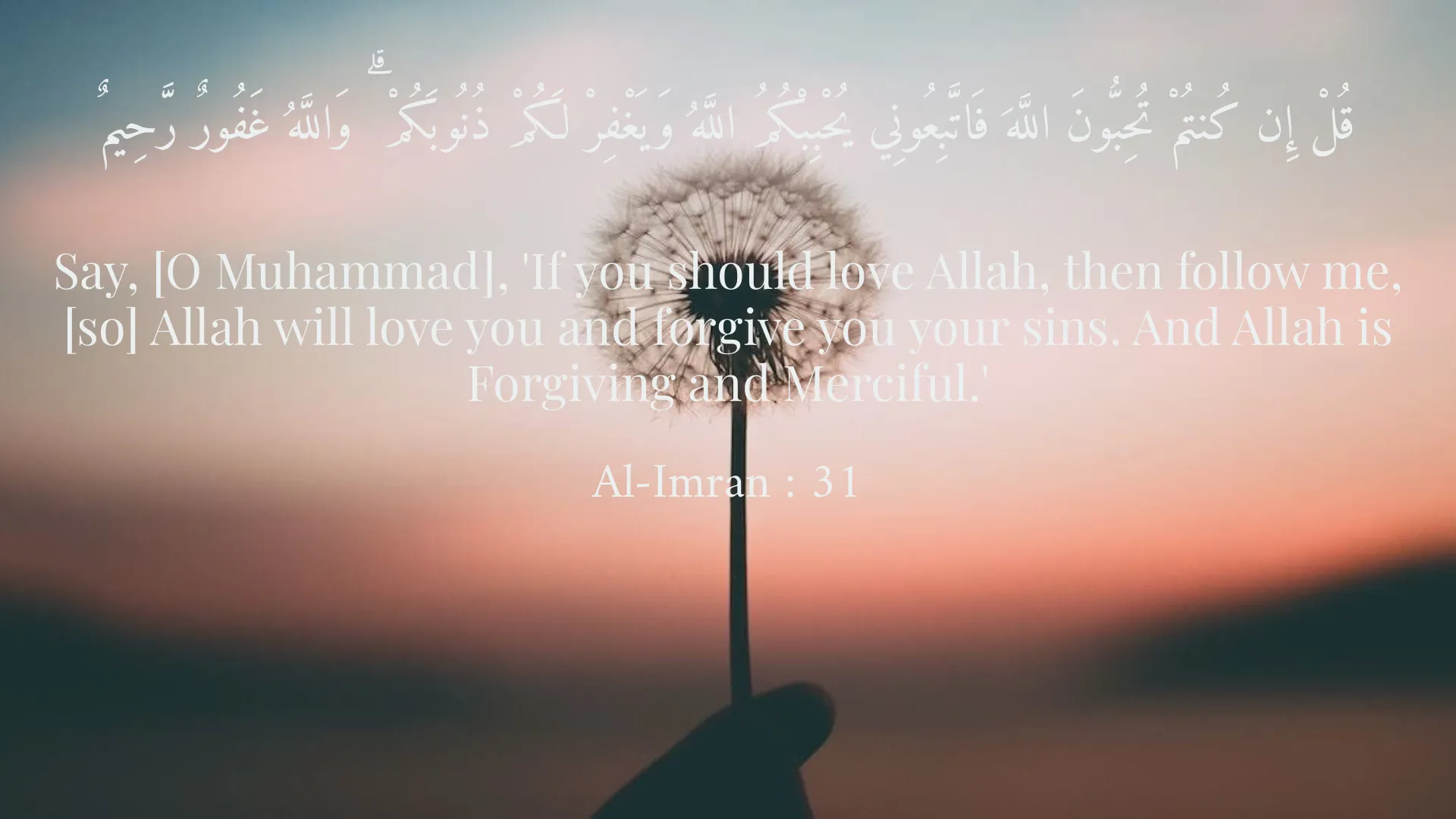
قُلْ إِن كُنتُمْ تُحِبُّونَ اللَّهَ فَاتَّبِعُونِي يُحْبِبْكُمُ اللَّهُ وَيَغْفِرْ لَكُمْ ذُنُوبَكُمْ ۗ وَاللَّهُ غَفُورٌ رَّحِيمٌ
Say, [O Muhammad], 'If you should love Allah, then follow me, [so] Allah will love you and forgive you your sins. And Allah is Forgiving and Merciful.'
Al-Imran : 31
قُلْ إِنَّمَا أَنَا بَشَرٌ مِّثْلُكُمْ يُوحَىٰ إِلَيَّ أَنَّمَا إِلَٰهُكُمْ إِلَٰهٌ وَاحِدٌ ۖ فَمَن كَانَ يَرْجُو لِقَاءَ رَبِّهِ فَلْيَعْمَلْ عَمَلًا صَالِحًا وَلَا يُشْرِكْ بِعِبَادَةِ رَبِّهِ أَحَدًا
Say, 'I am only a man like you, to whom has been revealed that your God is one God. So whoever would hope for the meeting with his Lord - let him do righteous work and not associate anyone with the worship of his Lord.'
Al-Kahf : 110
مَنْ عَمِلَ صَالِحًا مِّن ذَكَرٍ أَوْ أُنثَىٰ وَهُوَ مُؤْمِنٌ فَلَنُحْيِيَنَّهُ حَيَاةً طَيِّبَةً ۖ وَلَنَجْزِيَنَّهُمْ أَجْرَهُم بِأَحْسَنِ مَا كَانُوا يَعْمَلُونَ
Whoever does righteousness, whether male or female, while he is a believer - We will surely cause him to live a good life, and We will surely give them their reward [in the Hereafter] according to the best of what they used to do.
An-Nahl : 97
Short Story
There once was a merchant named Karim, who pursued wealth and fame, believing this was the path to happiness and respect. He amassed great riches, yet found his heart restless and his nights sleepless. One day, he visited a wise dervish, known for his contentment. Karim asked, 'O wise one, I strive diligently, yet peace eludes me. How can one know if their path is pleasing to God?' The dervish smiled gently and said, 'My dear Karim, the path pleasing to God is not paved with gold, but with the bricks of sincerity and the mortar of good deeds. A bird, though it flies high, only finds rest when its heart is content. If your actions are pure, your intentions sincere, and your heart free from attachment to fleeting worldly gains, then indeed, your path shines with divine light, and true peace will be your companion.' Karim reflected on these words, began to give generously, treated others justly, and found that as his heart softened, his life filled with a tranquility far more precious than any treasure.