Quranic Answer
Understanding whether our acts of worship have been accepted by God is one of the deepest and most significant concerns for any faithful believer. This knowledge not only grants us inner peace but also motivates us to continue and improve our deeds. The Holy Quran does not provide a direct checklist for confirming the acceptance of worship, as this knowledge belongs exclusively to Allah, who is fully aware of intentions and the inner essence of deeds. However, from the verses of the Quran, we can infer signs and fruits that help us in discerning the right path and moving towards divine pleasure. These signs serve as criteria for evaluating the inner state of actions and the spiritual and ethical transformations within an individual after worship. One of the most crucial and fundamental signs is sincerity in intention (Ikhlas). The Quran states in Surah Al-Bayyinah, verse 5: "And they were not commanded except to worship Allah, [being] sincere to Him in religion, inclining to truth, and to establish prayer and to give zakah. And that is the correct religion." Sincerity means that our actions are solely aimed at gaining Allah's pleasure, without any show-off (riya'), ostentation, or expectation of praise from people. If, after an act of worship, you feel that your heart has not inclined towards anything other than God and that you performed the act purely for Him, this is a good sign of acceptance. Sincerity is the spirit of worship, and without it, even the greatest deeds may become worthless. Another indicator is the impact of worship on one's conduct and character. True worship must lead to positive transformation in our personality and actions. Surah Al-Ankabut, verse 45, states: "Recite, [O Muhammad], what has been revealed to you of the Book and establish prayer. Indeed, prayer prohibits immorality and wrongdoing, and the remembrance of Allah is greater. And Allah knows that which you do." If prayer, fasting, Hajj, or any other act of worship keeps you away from sins and undesirable behaviors, if it makes you respect the rights of others, help the oppressed, be truthful, and uphold trusts, these are clear signs of the acceptance of your worship. Worship that is limited merely to outward movements and has no effect on one's soul and spirit might be incomplete. The acceptance of worship lies not in its quantity but in its quality and effectiveness on one's life and society. Feeling inner peace and closeness to Allah is another sign to consider. In Surah Ar-Ra'd, verse 28, we read: "Those who have believed and whose hearts are assured by the remembrance of Allah. Unquestionably, by the remembrance of Allah hearts are assured." If, after worship, you experience a sense of tranquility and inner calm, if your anxieties and worries diminish, and you feel protected by Allah, this can be a sign that your act has been accepted. This peace is the fruit of a deep and sincere connection with the Creator, which results from proper worship. An increase in piety (Taqwa) and awe of God is also a significant indicator. Surah Al-Hajj, verse 37, concerning sacrifices, states: "Their meat will not reach Allah, nor will their blood, but what reaches Him is piety from you. Thus have We subjected them to you that you may glorify Allah for that [to] which He has guided you; and give good tidings to the doers of good." This verse shows that what truly matters to Allah is the essence of piety and God-consciousness, not merely the outward form of the act. If your worship causes you to feel more humble before the divine majesty, to be careful not to violate anyone's rights in your actions, and to avoid committing sins, these are all signs of growing piety and accepted worship. Accepted worship makes the servant more humble and God-seeking, not arrogant or self-centered. Furthermore, continuity in worship and a desire to repeat it can be signs of acceptance. If, after completing an act of worship, you feel a longing for those moments of intimacy with your Lord and eagerly await the next act of worship, this indicates that your connection with Allah is alive and dynamic. Those whose worship is accepted taste its sweetness and seek to connect more with this source of peace and light. This continuity and steadfastness indicate a deep spiritual bond. Ultimately, it must be understood that these are merely signs and criteria that can guide us. The final judgment rests solely with Allah. The most important step is to always remain on the path of sincerity, striving for self-improvement, and hoping for divine mercy and forgiveness. One should not judge based on outward appearances or fall into arrogance. A believer always lives between fear and hope; fearing the non-acceptance of their deeds while hoping for the generosity and forgiveness of their Lord. We should constantly ask Allah to accept our imperfect deeds through His grace and mercy and to keep us steadfast on the path of sincere servitude.
Related Verses
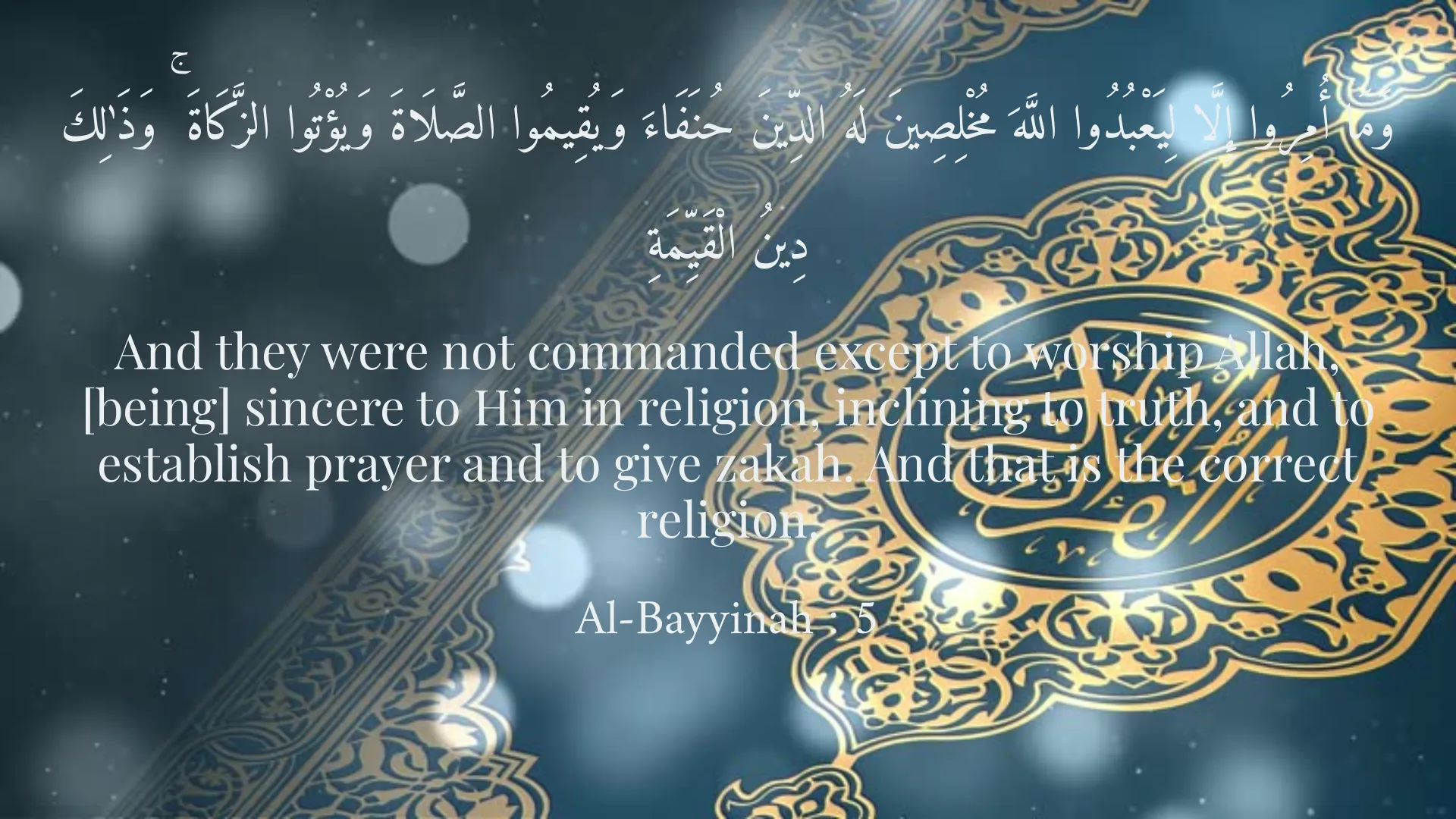
وَمَا أُمِرُوا إِلَّا لِيَعْبُدُوا اللَّهَ مُخْلِصِينَ لَهُ الدِّينَ حُنَفَاءَ وَيُقِيمُوا الصَّلَاةَ وَيُؤْتُوا الزَّكَاةَ ۚ وَذَٰلِكَ دِينُ الْقَيِّمَةِ
And they were not commanded except to worship Allah, [being] sincere to Him in religion, inclining to truth, and to establish prayer and to give zakah. And that is the correct religion.
Al-Bayyinah : 5
اتْلُ مَا أُوحِيَ إِلَيْكَ مِنَ الْكِتَابِ وَأَقِمِ الصَّلَاةَ ۖ إِنَّ الصَّلَاةَ تَنْهَىٰ عَنِ الْفَحْشَاءِ وَالْمُنْكَرِ ۗ وَلَذِكْرُ اللَّهِ أَكْبَرُ ۗ وَاللَّهُ يَعْلَمُ مَا تَصْنَعُونَ
Recite, [O Muhammad], what has been revealed to you of the Book and establish prayer. Indeed, prayer prohibits immorality and wrongdoing, and the remembrance of Allah is greater. And Allah knows that which you do.
Al-Ankabut : 45
لَن يَنَالَ اللَّهَ لُحُومُهَا وَلَا دِمَاؤُهَا وَلَٰكِن يَنَالُهُ التَّقْوَىٰ مِنكُمْ ۚ كَذَٰلِكَ سَخَّرَهَا لَكُمْ لِتُكَبِّرُوا اللَّهَ عَلَىٰ مَا هَدَاكُمْ ۗ وَبَشِّرِ الْمُحْسِنِينَ
Their meat will not reach Allah, nor will their blood, but what reaches Him is piety from you. Thus have We subjected them to you that you may glorify Allah for that [to] which He has guided you; and give good tidings to the doers of good.
Al-Hajj : 37
الَّذِينَ آمَنُوا وَتَطْمَئِنُّ قُلُوبُهُمْ بِذِكْرِ اللَّهِ ۗ أَلَا بِذِكْرِ اللَّهِ تَطْمَئِنُّ الْقُلُوبُ
Those who have believed and whose hearts are assured by the remembrance of Allah. Unquestionably, by the remembrance of Allah hearts are assured.
Ar-Ra'd : 28
Short Story
It is narrated that in Saadi's time, there was a man who spent his life in outward worship. He prayed many prayers and fasted long days, but in his heart, there was a speck of pride, and secretly he thought his deeds were superior to others. One day on his way, he encountered a poor man who was groaning from hunger and trembling from cold. Instead of helping, the worshipper looked at him with disdain and passed by, saying to himself, "Am I like them, in need of creation? I am only a servant of God." Saadi, witnessing this, said with a gentle smile: "O brother, you only worship outwardly, whereas the true servant of God is one whose heart is full of the light of sincerity and kindness, and whose hand extends towards creation. Perhaps a single morsel of bread given to this poor man with sincerity will have more weight in the divine scale than thousands of your prayers mixed with pride. For God looks at the hearts of His servants, not merely at bowed postures." These words made the man reflect and realize that the acceptance of worship lies not in the quantity of deeds, but in the quality of intention and its effect on the soul and character.