Quranic Answer
Understanding the concept of "acceptance and letting go" within the framework of the Holy Quran's teachings is deeply rooted in faith, reliance on God (Tawakkul), patience (Sabr), and insight into the transient nature of worldly life (Dunya). This spiritual skill, essential for achieving true peace amidst life's ups and downs, is not merely a psychological coping mechanism but a fundamental principle of faith that enables a believer to free themselves from the shackles of anxiety and material attachments, and to attain the serenity that comes from submission to Divine Will. Tawakkul (Reliance on Allah): The Core of Acceptance The first and most crucial step on the path of acceptance and letting go is complete and unconditional reliance on Allah (God). The Holy Quran repeatedly emphasizes the importance of Tawakkul, considering it a sign of true faith. In Surah At-Talaq, verse 3, it states: "And whoever relies upon Allah – He is sufficient for him." This foundational verse is the beating heart of acceptance. Tawakkul means that a person exerts their utmost effort in the right direction, but entrusts the outcome and ultimate conclusion of affairs to the wise planning of Allah. This absolute trust frees individuals from the heavy burden of trying to control everything, allowing them to peacefully accept that some matters are beyond their will and power. When we surrender our affairs to Allah with Tawakkul, we are essentially placing the heavy burden of our expectations and attachments upon the shoulders of an eternal and infinitely merciful power. This liberates us from mental obsessions, unnecessary worries, and futile attempts to change what cannot be changed. Accepting what has been decreed and letting go of the struggle to alter it is the essence of Tawakkul. This profound reliance fosters a sense of inner tranquility, knowing that whatever unfolds is ultimately for our good, even if we cannot perceive its wisdom at the moment. It shifts our focus from what we can control to what we must submit to, leading to a release of mental and emotional tension. Sabr (Patience): The Key Tool for Acceptance and Letting Go Patience (Sabr) is another central concept in the Quran that plays a vital role in acceptance and letting go. Sabr is not merely passive endurance but an active and conscious resilience in the face of difficulties, with the knowledge that Allah is always with the patient. In Surah Al-Baqarah, verse 153, it is stated: "O you who have believed, seek help through patience and prayer. Indeed, Allah is with the patient." Patience empowers an individual to maintain composure amidst calamities, losses, or unfulfilled desires. This acceptance that "this too shall pass" or "perhaps there is good in it that I do not see" indicates the depth of one's patience and Tawakkul. It is through patience that one can endure momentary suffering without reacting impulsively or negatively. Letting go here means releasing the urge to rapidly change an undesirable situation or letting go of the desire to control outcomes in our favor when Allah's will is otherwise. Patience allows us to accept that life does not always proceed according to our wishes, and letting go of excessive control over events is the key to inner peace. It helps us to navigate through trials with a sense of calm resilience, understanding that every challenge is an opportunity for spiritual growth and a means to draw closer to the Divine. Qadar (Divine Decree): The Framework for Acceptance Belief in divine decree (Qadar) is another pillar that facilitates acceptance and letting go. The Quran clearly states that no disaster strikes upon the earth or among yourselves except that it is in a register before it is brought into being. In Surah Al-Hadid, verses 22 and 23, it declares: "No disaster strikes upon the earth or among yourselves except that it is in a register before We bring it into being – indeed that, for Allah, is easy – In order that you not despair over what has eluded you and not exult [in pride] over what He has given you. And Allah does not like every self-deluded and boastful." These verses teach us not to grieve over what we have lost nor to become boastful over what we have gained, for both are from divine decree. This perspective transforms one's attitude towards both victories and failures. When we accept that everything occurs by Allah's permission and planning, we are freed from the heavy burden of blaming ourselves or others. Letting go here means not forming excessive attachments to worldly outcomes and understanding that what is decreed for us is ultimately what is good for us, even if it appears unpleasant at first glance. This understanding alleviates the burden of regret for what could have been and the anxiety of what might be, fostering a deep sense of contentment and peace with Allah’s comprehensive wisdom. Worship and Remembrance (Dhikr): Practical Tools for Serenity Prayer (Salat) and the remembrance of Allah (Dhikr) are practical tools for strengthening the spirit of acceptance and letting go. Prayer is a direct connection with the Creator, granting individuals a sense of peace and strength to endure hardships. The remembrance of Allah brings tranquility to hearts, as stated in Surah Ar-Ra'd, verse 28: "Unquestionably, by the remembrance of Allah hearts are assured." When the heart finds solace in the remembrance of Allah, accepting difficulties becomes easier, and letting go of worries feels more natural. Furthermore, supplication (Dua) and seeking forgiveness (Istighfar) are effective ways to release the burden of past sins and regrets. When one repents for their sins and seeks Allah's forgiveness, they effectively free themselves from the shackles of the past, creating space for a fresh start and inner peace. These acts of worship cultivate a constant awareness of Allah's presence and power, making it easier to surrender to His will. Understanding the Nature of Dunya: Transience and Worthlessness of Excessive Attachment The Holy Quran repeatedly emphasizes the temporary and transient nature of worldly life (Dunya). Understanding that this world is a place of test and passage, not an eternal abode, helps individuals to let go of their attachments to what is in it. This letting go does not mean neglecting the world, but rather not becoming excessively dependent on it. As stated in Surah Al-Imran, verse 185: "Every soul will taste death, and you will only be given your [full] compensation on the Day of Resurrection. So he who is drawn away from the Fire and admitted to Paradise has succeeded. And what is the life of this world except the enjoyment of delusion." This perspective encourages individuals to turn towards what is stable and eternal – Allah's pleasure and the Hereafter – instead of clinging to what is unstable. Letting go of excessive attachments to material possessions, status, fame, and even people, leads to spiritual freedom and deeper peace. It allows us to appreciate the blessings we have without being enslaved by them and to bear losses with equanimity, knowing that true lasting joy lies beyond this fleeting existence. Conclusion: Learning acceptance and letting go in Islam is a spiritual journey that begins by strengthening faith in Allah, complete reliance upon Him, patience in the face of difficulties, understanding the reality of divine decree, and insight into the transient nature of the world. These principles not only help individuals cope with life's challenges but also guide them towards a deeper, more enduring peace that emanates from within and is not affected by external circumstances. By adhering to these teachings, a believer learns to be submissive and confident in the wise hands of Allah, rather than striving to control every detail of life, and from this submission, experiences true freedom and tranquility. This active acceptance and conscious letting go not only reduce psychological burden but also open a door to a life of contentment and gratitude.
Related Verses
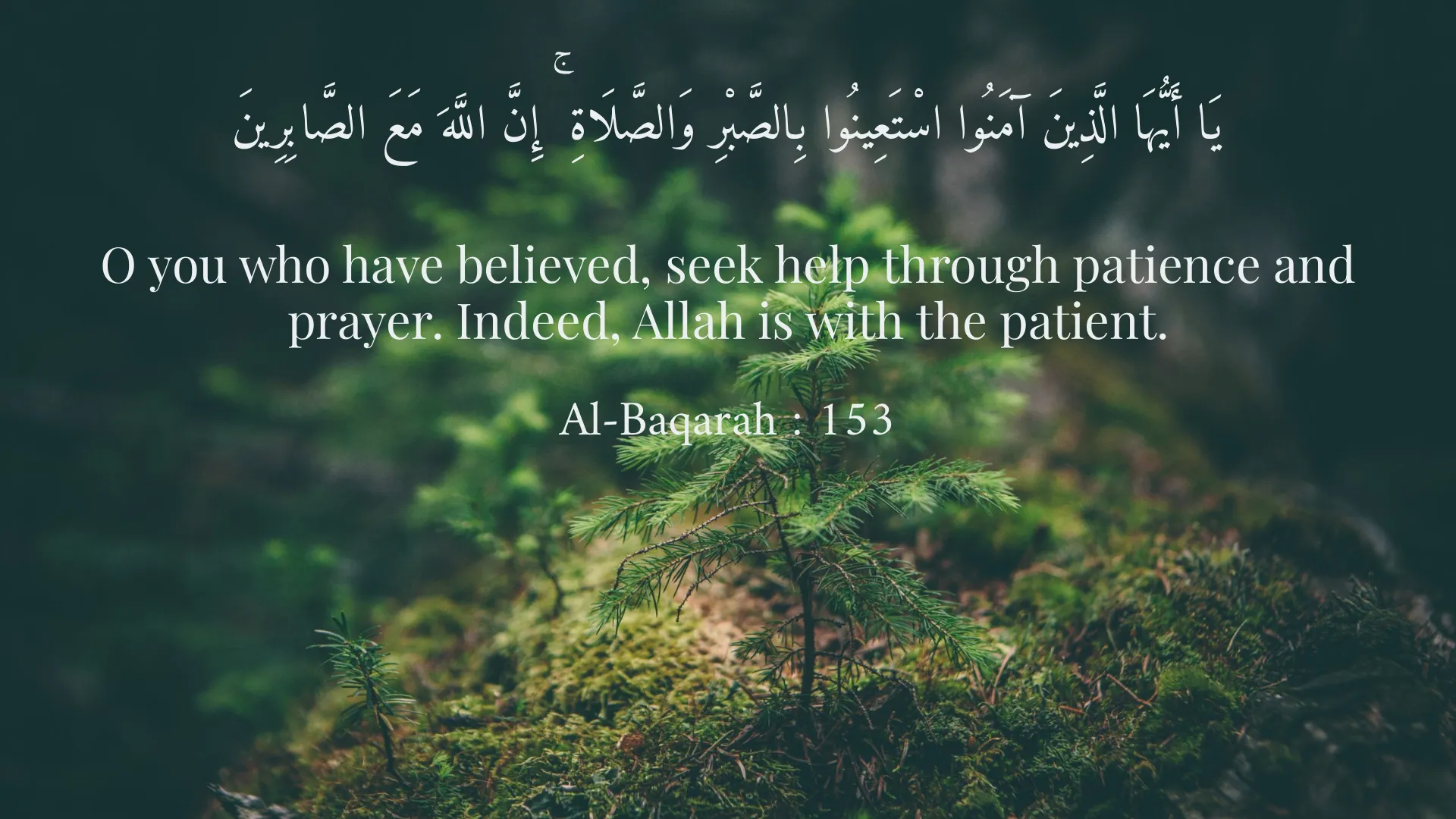
يَا أَيُّهَا الَّذِينَ آمَنُوا اسْتَعِينُوا بِالصَّبْرِ وَالصَّلَاةِ ۚ إِنَّ اللَّهَ مَعَ الصَّابِرِينَ
O you who have believed, seek help through patience and prayer. Indeed, Allah is with the patient.
Al-Baqarah : 153
وَمَن يَتَوَكَّلْ عَلَى اللَّهِ فَهُوَ حَسْبُهُ ۚ إِنَّ اللَّهَ بَالِغُ أَمْرِهِ ۚ قَدْ جَعَلَ اللَّهُ لِكُلِّ شَيْءٍ قَدْرًا
And whoever relies upon Allah – He is sufficient for him. Indeed, Allah will accomplish His purpose. Allah has already set for everything a [decreed] extent.
At-Talaq : 3
مَا أَصَابَ مِن مُّصِيبَةٍ فِي الْأَرْضِ وَلَا فِي أَنفُسِكُمْ إِلَّا فِي كِتَابٍ مِّن قَبْلِ أَن نَّبْرَأَهَا ۚ إِنَّ ذَٰلِكَ عَلَى اللَّهِ يَسِيرٌ
No disaster strikes upon the earth or among yourselves except that it is in a register before We bring it into being – indeed that, for Allah, is easy –
Al-Hadid : 22
لِّكَيْلَا تَأْسَوْا عَلَىٰ مَا فَاتَكُمْ وَلَا تَفْرَحُوا بِمَا آتَاكُمْ ۗ وَاللَّهُ لَا يُحِبُّ كُلَّ مُخْتَالٍ فَخُورٍ
In order that you not despair over what has eluded you and not exult [in pride] over what He has given you. And Allah does not like every self-deluded and boastful.
Al-Hadid : 23
Short Story
It is recounted that in ancient times, a devout and content man's house burned down, and he lost everything he owned. His neighbors and friends came to console him with heavy hearts, but they found him with a serene face and a gentle smile, showing no trace of sorrow or grief. One of his friends asked in astonishment, "O wise man, how is it that in the face of such a great calamity, you remain so calm and patient?" The devout man replied, "For a long time, my heart was attached to this house and these possessions, and I feared poverty. Now, Allah has freed me from the bondage of this fear and this attachment. He took from me that which was perishable and, in its place, taught me a precious lesson of liberation and reliance (Tawakkul). Now I know that the tranquility of the heart lies not in possessing much, but in being attached to nothing but Him." This tale illustrates that true peace lies in accepting destiny and letting go of attachments to this world.