Quranic Answer
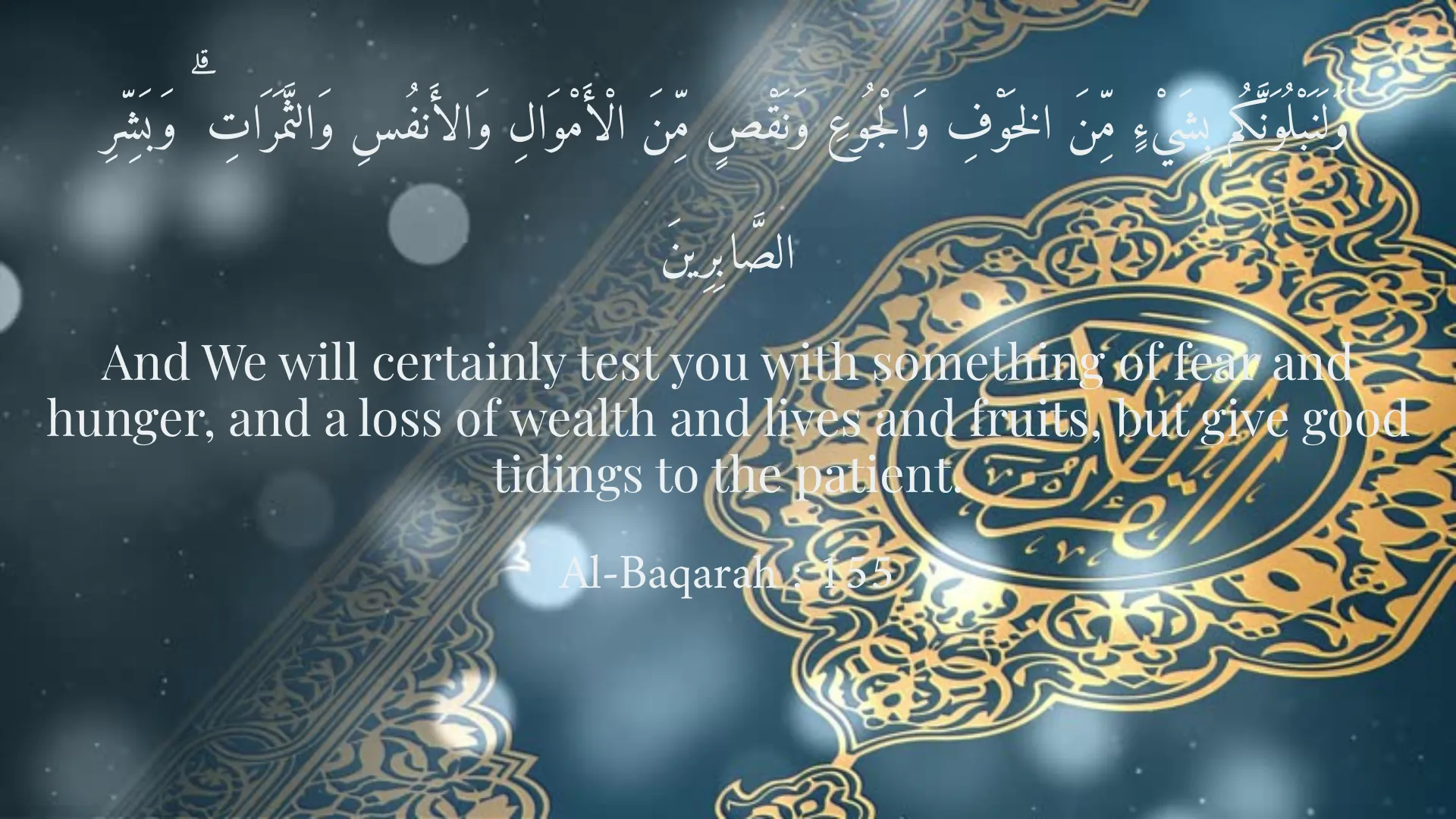
In the Holy Quran, the concept of hardships and difficulties transcends mere suffering. Instead, they are portrayed as integral opportunities for learning, spiritual growth, and eventual triumph. The Quran addresses the unique dynamics of human experience and the challenges that accompany it. In illuminating these themes, the Quran does not shy away from the painful truths of existence; rather, it presents a framework through which believers can interpret their struggles as vital to their spiritual journey. Among the verses that encapsulate this divine perspective is found in Surah Al-Baqarah, verse 155: "And We will certainly test you with something of fear and hunger, and a loss of wealth and lives and fruits, but give good tidings to the patient." This verse is powerful in its profound implication that hardships are not only inevitable but are packaged as divine tests meant to nurture our resilience and patience. The notion of testing is central to human experience. Tests are used to evaluate our strength, character, and resolve. Just as students undergo examinations to assess their learning, individuals face life’s challenges to develop and solidify their spiritual and emotional prowess. Often, it is in our darkest moments that we uncover the depths of our faith. Through trials and tribulations, believers are prompted to cultivate their relationship with Allah, finding solace in supplication and reliance on Him. This journey toward greater faith helps to illuminate the path to understanding and acceptance of life’s unpredictabilities. Moreover, the Quran encourages believers to remember that hardships, although daunting, should not lead to despair. In Surah Ali 'Imran, verse 139, Allah reminds us that we should never lose hope in the face of adversity: "Indeed, with hardship [will be] ease." This verse transforms the perception of struggle; it serves as a beacon of light, suggesting that every hardship carries within it the seeds of ease, guidance, and healing. From a psychological perspective, this teaching fosters resilience, an indispensable quality in navigating life's challenges. Hence, cultivating patience empowers individuals to sustain hope and maintain perspective, reinforcing the belief that Allah is always with those who endure. Such resilience is further amplified by recognizing that hardships possess the potential to invoke significant positive changes within an individual. As they navigate their challenges, believers are enabled to engage in meaningful reflection. This reflective process translates adversities into invaluable lessons, fostering personal growth. By analyzing setbacks and contemplating the reasons for occurring difficulties, individuals become more determined and forward-thinking. This is a vital realization: obstacles are not merely barriers; they are opportunities to self-discover, to adjust one's course, and to emerge stronger. Life then becomes a compounded sequence of experiences where each encounter enriches our character and understanding of the world around us. As elucidated in Surah Al-Anfal, verse 46, the Quran emphasizes the duality of patience and reliance on God when confronting challenges: "And do not be like those who went out of their homes arrogantly and to be seen by people and avert [others] from the way of Allah. And Allah is Knowing of what they do." This guidance recognizes the essential balance that individual agency plays alongside Divine support. Patience and reliance on Allah serve as crucial tools in managing the stress and turmoil brought about by hardship, encouraging believers to lean not only on their strengths but also on their faith. Through confronting these challenges and exercising patience, individuals gain a profound understanding of their capacity for endurance. Each person has unique strengths that evolve through trials, cultivating attributes such as empathy, compassion, and humility. The struggles endured act as reminders of our shared humanity, emphasizing our interconnectedness as we navigate through difficulties. Additionally, these experiences often instigate a sense of gratitude for the simpler aspects of life, encouraging a humble attitude towards one’s circumstances. Furthermore, it is crucial to acknowledge that hardships often serve as transformative experiences that lead to authentic progress in life. In contemplation of their hardships, individuals are encouraged to reevaluate their priorities, ambitions, and the degree to which they engage with the divine. These reflections can unveil a stronger purpose in life, anchoring their actions to profound spiritual foundations. The more one makes the effort to learn from their struggles, the better equipped they become in assuming accountability for their growth and the trajectory of their lives. The deliberate pause to analyze and integrate lessons from hardship fosters not only personal development but also mutual respect and understanding among those around us. This interconnected growth leads to a supportive community in which experiences are shared, wisdom is exchanged, and collective resilience is nurtured. Thus, adversity becomes a catalyst for building solidarity, compassion, and a shared commitment towards uplifting one another. In conclusion, the Quran articulates that hardships are important dimensions of life’s essence, layered with opportunities for growth, introspection, and resilience. Allah’s messages remind believers that their trials are not devoid of purpose; instead, they provide multiple avenues for learning, ultimately guiding them closer to their Creator. Through patience, self-reflection, and reliance on Allah, individuals can navigate their hardships, cultivate stronger faith, and emerge transformed. Hardships, therefore, should not invoke despair, but should encourage a deeper commitment to personal growth, empathy, and spirituality. In embracing the lessons contained within difficulties, we align ourselves with the divine wisdom of the Quran, leading ourselves towards a more meaningful existence.
Related Verses
وَلَنَبْلُوَنَّكُم بِشَيْءٍ مِّنَ الخَوْفِ وَالْجُوعِ وَنَقْصٍ مِّنَ الْأَمْوَالِ وَالأَنفُسِ وَالثَّمَرَاتِ ۗ وَبَشِّرِ الصَّابِرِينَ
And We will certainly test you with something of fear and hunger, and a loss of wealth and lives and fruits, but give good tidings to the patient.
Al-Baqarah : 155
وَلاَ تَهِنُوا وَلاَ تَحْزَنُوا وَأَنتُمُ الأَعْلَوْنَ إِن كُنتُم مُّؤْمِنِينَ
And do not weaken and do not grieve, and you will be superior if you are believers.
Ali 'Imran : 139
وَأَطِيعُوا اللَّهَ وَرَسُولَهُ وَلاَ تَنَازَعُوا فَتَفْشَلُوا وَتَذْهَبَ رِيحُكُمْ
And obey Allah and His Messenger and do not dispute and thus lose courage and [then] your strength would depart.
Al-Anfal : 46
Short Story
One day, a man was deep in sorrow, thinking he would never be free from his difficulties. Suddenly, a verse from the Quran came to his mind: 'Indeed, with hardship comes ease.' He decided to face his hardships with patience and resilience, turning these experiences into opportunities for learning and growth. Over time, he found peace and successfully discovered the right path in his life.