Quranic Answer
The human quest for meaning and purpose has been an enduring journey throughout history. Philosophers, thinkers, and religious leaders have tirelessly sought answers to the fundamental question: "Why are we here, and how can we lead a fulfilling and purposeful life?" The Holy Quran, as the divine word of God, not only provides profound answers to this question but also offers a comprehensive and clear roadmap for constructing a meaningful life that transcends fleeting worldly pleasures and culminates in eternal bliss. The concept of meaning in Islam is not merely an abstract idea; it is a practical methodology for achieving inner peace and success in both this world and the Hereafter, founded on solid pillars such as the purpose of creation, faith, righteous deeds, patience, gratitude, and balance between this world and the Hereafter. 1. The Purpose of Creation: Servitude and Worship of God (Ibadah) The Quran explicitly states that the primary purpose behind the creation of jinn and humankind is to worship and serve Almighty God. In Surah Adh-Dhariyat, verse 56, Allah declares: "And I did not create the jinn and mankind except to worship Me." This concept of worship extends far beyond mere ritualistic practices like prayer (Salat) or fasting (Sawm); it encompasses all dimensions of life. Any action performed with sincere intention (Niyyah) to gain God's pleasure is considered an act of worship. This includes honest work, seeking beneficial knowledge, assisting those in need, upholding justice, and maintaining family ties. When a person's life revolves around seeking divine pleasure and knowing Allah, every moment becomes precious and meaningful. This awareness that every step we take is observed by God and is part of a greater, nobler objective, gives our lives direction and depth, preventing aimlessness and emptiness. A continuous connection with the Creator, through remembrance (Dhikr), supplication (Du'a), and contemplation of His signs in the universe, brings tranquility to the heart and instills certainty in the soul. This inner peace and assurance are among the most crucial components of a meaningful life, as they diminish worldly worries and anxieties, replacing them with reliance on God (Tawakkul) and hope. 2. Faith (Iman) and Righteous Deeds (Amal Salih): Pillars of a Meaningful Life The Quran repeatedly emphasizes the inseparable importance of faith and righteous deeds. These two are intertwined and complementary. Faith is the root, the conviction of the heart, while righteous deeds are its fruit and external manifestation. Surah Al-Asr beautifully encapsulates this truth: "By time, (1) Indeed, mankind is in loss, (2) Except for those who have believed and done righteous deeds and advised each other to truth and advised each other to patience. (3)" A meaningful life necessitates positive and effective engagement with the world. Righteous deeds encompass every good, just, and beneficial action for oneself and others. These actions can range from giving charity, respecting neighbors' rights, speaking truth, upholding trusts, to striving for social justice. When an individual embarks on a path of good deeds, they not only benefit society and their surroundings but also experience a profound sense of self-worth, satisfaction, and purpose within themselves. These actions leave lasting effects on the human psyche and spirit, rescuing one from futility and lack of direction. Performing righteous deeds not only garners rewards in the Hereafter but also brings blessings and tranquility in this world, significantly enhancing the quality of life. This intersection of heartfelt faith and outward action elevates the soul and transforms life from an empty routine into a rich and purposeful journey. 3. Patience (Sabr) and Gratitude (Shukr): Keys to Serenity and Contentment Life is full of challenges, hardships, and adversities. The Quran teaches humans how to confront these circumstances and find meaning amidst difficulties. Patience (Sabr), meaning steadfastness and resilience in the face of troubles, and self-control against temptations, is a pivotal moral virtue repeatedly stressed in the Quran. In Surah Al-Baqarah, verse 153, Allah says: "O you who have believed, seek help through patience and prayer. Indeed, Allah is with the patient." Patience helps individuals not to lose hope when facing hardships and to trust in divine wisdom, knowing that after every difficulty comes ease. This virtue strengthens individuals and gives them insight to transform challenges into opportunities for growth and perfection. Alongside patience, gratitude (Shukr) plays a central role in making life meaningful. Expressing gratitude for the countless blessings bestowed upon us by Allah not only enhances feelings of contentment and happiness but also cultivates a more positive outlook on life. When a person is grateful, even in difficult moments, they can discern positive aspects and understand that all they possess is from Allah's grace and generosity. This perspective shifts one's focus away from deficiencies and complaints towards appreciation and hope. Practical gratitude, meaning the proper use of blessings in ways that please Allah, naturally leads to more righteous deeds, further expanding the circle of meaning and filling life with blessings and tranquility. 4. Balance (Wasatiyyah) Between This World and the Hereafter: A Holistic Life Contrary to the misconception that religion implies abandoning worldly life, the Quran emphasizes a balance between worldly needs and spiritual goals for the Hereafter. A meaningful life from the Quranic perspective does not mean neglecting this world and its permissible pleasures; rather, it means using this world as a means to achieve eternal bliss. In Surah Al-Qasas, verse 77, we read: "But seek, through that which Allah has given you, the home of the Hereafter; and [yet], do not forget your portion of the world." This verse beautifully illustrates that while humans should strive diligently for their worldly life, they must always keep the ultimate goal—the Hereafter—in mind. The meaning of life lies in viewing this world as a cultivation ground for the Hereafter, where every good deed sown will be harvested in the eternal abode. This perspective imbues daily activities, from work and commerce to social interactions, with meaning and depth, transforming them from mere time-passing into tools for spiritual growth. This balance prevents extremism and delivers a healthy and satisfying life for the individual, enabling them to achieve perfection and happiness in both this world and the Hereafter. 5. Remembrance of Allah (Dhikr): The Soother of Hearts One of the most effective ways to lead a meaningful life is through constant remembrance of Allah. The remembrance of God calms hearts and dispels anxieties. In Surah Ar-Ra'd, verse 28, it states: "Those who have believed and whose hearts are assured by the remembrance of Allah. Unquestionably, by the remembrance of Allah hearts are assured." The remembrance of Allah is not merely the repetition of specific words; it encompasses reflection on His greatness, realization of His presence in one's life, and acting upon His commands. This remembrance helps individuals have a secure center and refuge when facing life's challenges. When a person knows that Allah is present and observing their actions at every moment, they gain greater motivation to perform good deeds and avoid sins, which inherently gives their life meaning and direction. The remembrance of Allah saves individuals from heedlessness and confusion, guiding them on their ultimate path towards closeness to God, and bestowing upon them a profound sense of purpose and identity. Conclusion: A meaningful life from the Quranic perspective is a comprehensive journey that begins with understanding the core purpose of creation (worship of God) and continues with faith, righteous deeds, patience, gratitude, maintaining balance between this world and the Hereafter, and constant remembrance of Allah. These principles not only help individuals live a fruitful and tranquil life in this world but also prepare them for eternal bliss in the Hereafter. By adhering to these teachings, every person can experience a purposeful, satisfying, and truly peaceful life. This path contributes not only to personal meaning but also to the betterment of society and the achievement of collective salvation, elevating humanity to the highest degrees of perfection and happiness.
Related Verses
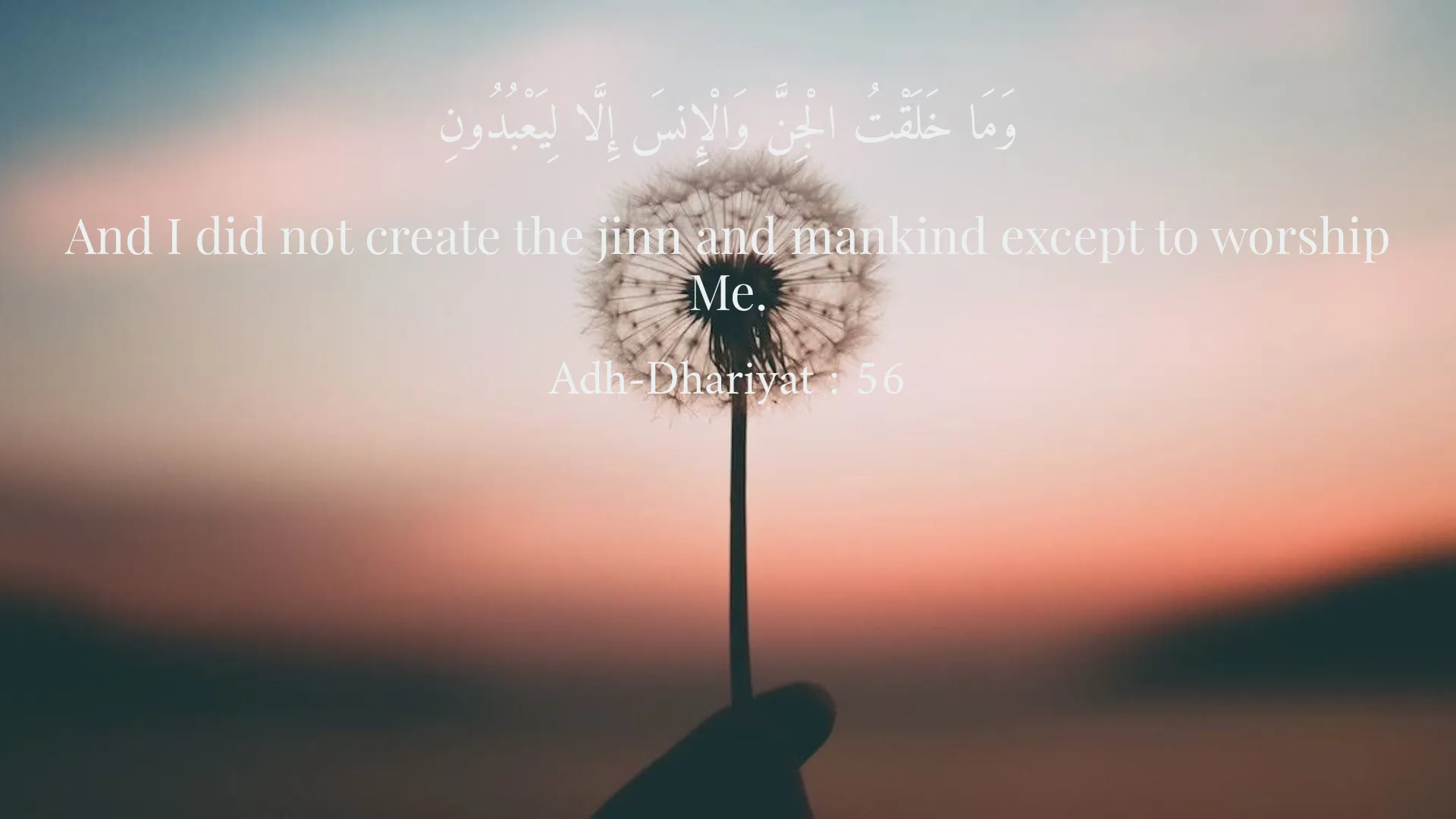
وَمَا خَلَقْتُ الْجِنَّ وَالْإِنسَ إِلَّا لِيَعْبُدُونِ
And I did not create the jinn and mankind except to worship Me.
Adh-Dhariyat : 56
وَالْعَصْرِ
By time,
Al-Asr : 1
إِنَّ الْإِنسَانَ لَفِي خُسْرٍ
Indeed, mankind is in loss,
Al-Asr : 2
إِلَّا الَّذِينَ آمَنُوا وَعَمِلُوا الصَّالِحَاتِ وَتَوَاصَوْا بِالْحَقِّ وَتَوَاصَوْا بِالصَّبْرِ
Except for those who have believed and done righteous deeds and advised each other to truth and advised each other to patience.
Al-Asr : 3
الَّذِينَ آمَنُوا وَتَطْمَئِنُّ قُلُوبُهُم بِذِكْرِ اللَّهِ ۗ أَلَا بِذِكْرِ اللَّهِ تَطْمَئِنُّ الْقُلُوبُ
Those who have believed and whose hearts are assured by the remembrance of Allah. Unquestionably, by the remembrance of Allah hearts are assured.
Ar-Ra'd : 28
Short Story
Once upon a time, a wealthy king, despite his immense fortune and grandeur, felt a profound sense of emptiness and restlessness. He possessed everything, yet found no meaning in his life. Near his palace, he observed a humble dervish living with a joyful heart and a tranquil soul, always grateful in every moment. The king asked him, "O Dervish, how is it that with all this poverty, you are so content?" The dervish smiled and replied, "O King, contentment lies not in the abundance of wealth nor in the grandeur of status. The meaning of life is in knowing why you live and to what your heart is attached. My heart is attached to the Creator of the universe, and I consider all I have to be from Him and use it in His way. When the purpose of life is the pleasure of the Lord and service to creation, then poverty and wealth make no difference; whatever exists is merely a means to achieve that great meaning." The king pondered over these words and realized that the true meaning of life is not in worldly possessions, but in the elevation of the soul and journeying towards the infinite.