Quranic Answer
Living an Islamic lifestyle is an endeavor that encompasses the entirety of one’s existence, aligning thoughts, actions, and interactions with the values and teachings of Islam. This lifestyle is not confined to mere rituals, but rather it permeates every aspect of life, guiding individuals toward a path of righteousness, compassion, and spiritual enrichment. At the heart of this journey is the Holy Quran, the ultimate source of divine guidance, and the Sunnah of the Prophet Muhammad, which serves as a practical example of how to embody Islamic principles in everyday life. One of the foundational aspects of an Islamic lifestyle is the concept of righteousness, as articulated in Surah Al-Baqarah, verse 177. Allah emphasizes that true righteousness transcends physical acts such as turning one's face toward the east or the west; it encompasses a deep faith in Allah, the Last Day, angels, holy books, and prophets. Furthermore, it underscores the significance of social responsibilities, such as giving to charity and showing kindness to one’s parents and relatives. This verse illustrates that being righteous in Islam involves a holistic approach to life that emphasizes moral conduct towards others while fostering a community spirit. Charity, or Zakat, is a vital component of Islamic teachings and serves as a means to purify wealth while providing support for those in need. By engaging in charitable acts, Muslims not only fulfill a religious obligation but also cultivate a sense of empathy and social responsibility. The act of giving is a reflection of one's faith and a means to engage in social welfare, reinforcing the interconnectedness of individuals within the Muslim community and beyond. Moreover, regular prayers, or Salah, play a critical role in maintaining a consistent connection with Allah. Performing these five daily prayers instills a sense of discipline and mindfulness in practitioners. It serves as a reminder of one’s purpose in life and the importance of seeking Allah’s guidance. Through prayer, Muslims are encouraged to reflect on their actions and intentions, fostering personal growth and spiritual awakening. In Surah Al-Isra, verse 23, Allah commands that worship be directed solely to Him and highlights the importance of treating parents with kindness. This instruction places a significant emphasis on family values within an Islamic lifestyle. Honoring one's parents, providing them with care and compassion, and maintaining strong familial ties are essential to embodying the teachings of Islam. This commitment to family enhances social bonds, cultivates love, and builds a supportive community that mirrors the ideals of Islamic teachings. Ethical conduct is another cornerstone of living an Islamic lifestyle. Principles such as honesty, trustworthiness, and selflessness should characterize all interactions with others. The Prophet Muhammad, known for his exemplary character, provides a model for Muslims to emulate. His life illustrates the importance of integrity in business dealings, compassion toward the needy, and fair treatment of others. By adhering to these ethical guidelines, individuals contribute to a more just and harmonious society, in line with Islamic values. Additionally, striving for personal and professional excellence is essential within an Islamic framework. Muslims are encouraged to seek knowledge, be diligent in their efforts, and earn a lawful livelihood. Engaging wholeheartedly in one’s work not only fulfills individual aspirations but also serves the community by contributing positively to the economy. This endeavor to succeed, while adhering to Islamic principles, showcases the balance between spiritual commitments and worldly responsibilities. The practice of Islam is, therefore, not confined to specific hours of worship but is rather a continuous journey of self-improvement and community service. Every decision made—whether in personal life, professional engagements, or social interactions—should align with Islamic teachings. As Muslims seek to build their identities on the foundation of faith, they learn to navigate life’s challenges with resilience and grace, relying on Allah’s guidance through the Quran and the teachings of the Prophet. In today's fast-paced and often chaotic world, living an Islamic lifestyle becomes even more paramount. It offers solace and clarity amidst the noise, providing a comprehensive framework for ethical living and meaningful existence. As individuals strive to embody these teachings, they become beacons of hope, compassion, and integrity in their communities, influencing others positively. In summary, living an Islamic lifestyle encompasses a multifaceted approach that integrates faith, ethics, social responsibility, and personal growth. Through adherence to the teachings of the Holy Quran and the Sunnah of the Prophet Muhammad, individuals can navigate the complexities of life with a strong moral compass, enriching their own lives while contributing positively to society. As Muslims engage in acts of righteousness—through prayer, charity, ethical conduct, and diligent work—they draw closer to Allah's pleasure, experiencing fulfillment in their spiritual and worldly endeavors. Ultimately, embodying an Islamic lifestyle is a lifelong journey of dedication, self-reflection, and commitment to the principles of Islam, aligning oneself with the eternal path laid out by Allah and his Messenger.
Related Verses
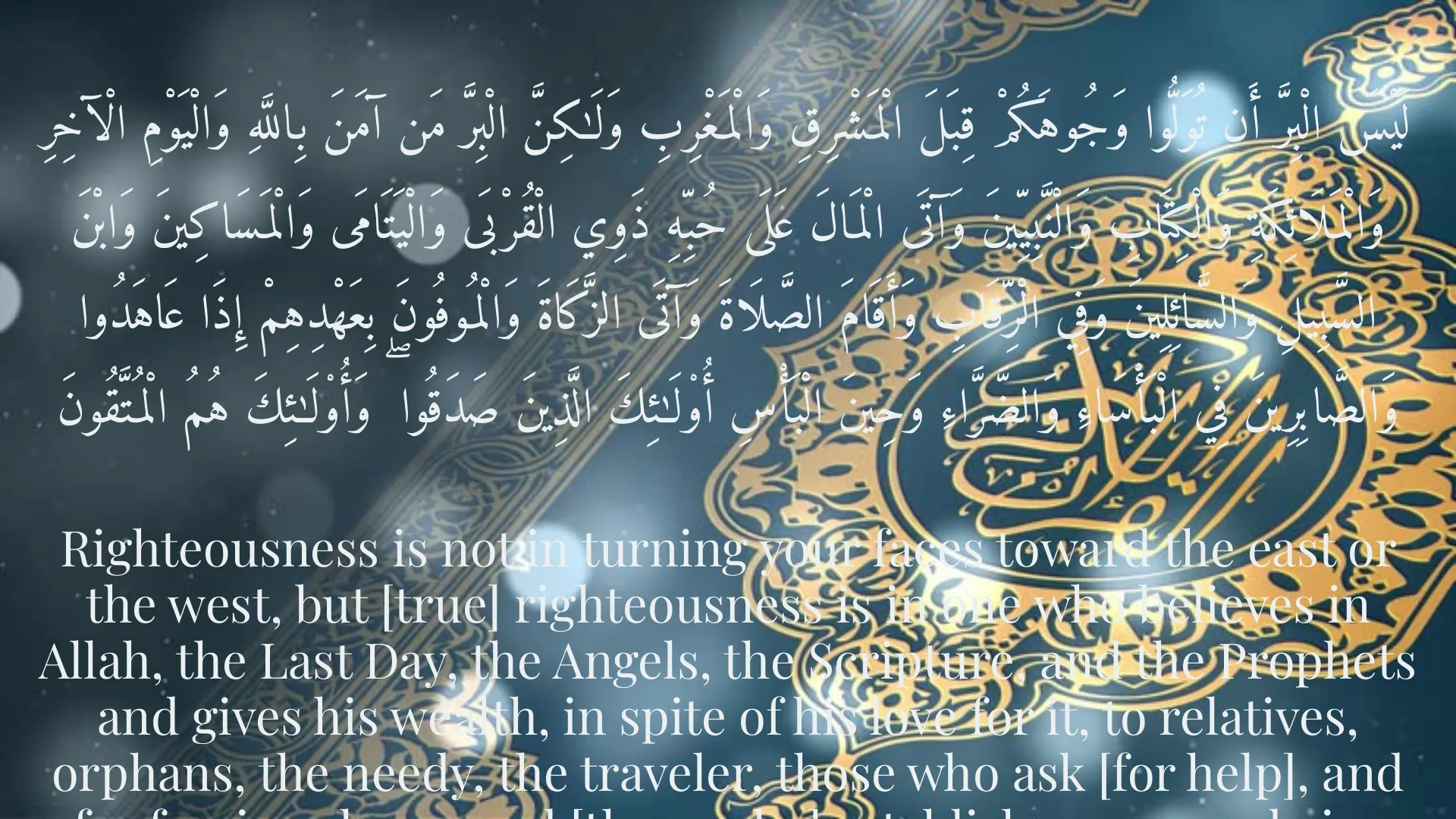
لَيْسَ الْبِرَّ أَن تُوَلُّوا وَجُوهَكُمْ قِبَلَ الْمَشْرِقِ وَالْمَغْرِبِ وَلَـٰكِنَّ الْبِرَّ مَن آمَنَ بِاللَّهِ وَالْيَوْمِ الْآخِرِ وَالْمَلَائِكَةِ وَالْكِتَابِ وَالْنَّبِيِّينَ وَآتَى الْمَالَ عَلَى حُبِّهِ ذَوِي الْقُرْبَى وَالْيَتَامَى وَالْمَسَاكِينَ وَابْنَ السَّبِيلِ وَالسَّائِلِينَ وَفِي الْرِّقَابِ وَأَقَامَ الصَّلَاةَ وَآتَى الزَّكَاةَ وَالْمُوفُونَ بِعَهْدِهِمْ إِذَا عَاهَدُوا وَالصَّابِرِينَ فِي الْبَأْسَاءِ وَالضَّرَّاءِ وَحِينَ الْبَأْسِ أُو۟لَـٰئِكَ الَّذِينَ صَدَقُوا ۖ وَأُو۟لَـٰئِكَ هُمُ الْمُتَّقُونَ
Righteousness is not in turning your faces toward the east or the west, but [true] righteousness is in one who believes in Allah, the Last Day, the Angels, the Scripture, and the Prophets and gives his wealth, in spite of his love for it, to relatives, orphans, the needy, the traveler, those who ask [for help], and for freeing slaves; and [those who] establish prayer and give zakah; [those who] fulfill their promise when they promise; and [those who] are patient in poverty and hardship and during battle. Those are the ones who have been true, and it is those who are the righteous.
Al-Baqarah : 177
وَقَضَى رَبُّكَ أَلَّا تَعْبُدُوا إِلَّا إِيَّاهُ وَبِالْوَالِدَيْنِ إِحْسَانًا ۚ إِمَّا يَبْلُغَنَّ عِندَكَ الْكِبَرَ أَحَدُهُمَا أَوْ كِلَاهُمَا فَلَا تَقُل لَّهُمَا أُفٍّ وَلَا تَنْهَرْهُمَا وَقُل لَّهُمَا قَوْلًۭا كَرِيمًۭا
And your Lord has decreed that you not worship except Him, and to parents, good treatment. Whether one or both of them reach old age [while] with you, say not to them [so much as], 'uff,' and do not repel them but speak to them a noble word.
Al-Isra : 23
Short Story
One day, a man named Jacob decided to change his lifestyle. He realized that he was often preoccupied with fleeting matters and had neglected the fundamental Islamic values. Guided by the verses of the Quran, Jacob decided to strengthen his relationship with Allah, respect his parents, and help the needy. He began to pray Fajr regularly and connect with God. Gradually, Jacob noticed that not only had his life changed, but he also felt a greater sense of happiness and peace. This transformation stemmed from his adherence to Islamic teachings and striving to live a life mindful of God.