Quranic Answer
In today's world, where speed dictates every aspect of life and we are constantly bombarded with new information and pressures, finding and maintaining inner peace seems like an enormous challenge. However, the Holy Quran, this divine book of guidance, offers profound and sustainable solutions for achieving tranquility and serenity of the heart in all circumstances. The answer to how we can live peacefully in this fast-paced world lies in the timeless teachings of the Quran, which transcend time and space, addressing the very roots of human anxiety and distress. One of the most fundamental and powerful Quranic concepts leading to inner peace is "Dhikr Allah," or the remembrance of God. In Surah Ar-Ra'd, verse 28, Allah Almighty explicitly states: "الَّذِينَ آمَنُوا وَتَطْمَئِنُّ قُلُوبُهُم بِذِكْرِ اللَّهِ ۗ أَلَا بِذِكْرِ اللَّهِ تَطْمَئِنُّ الْقُلُوبُ" (Those who have believed and whose hearts are assured by the remembrance of Allah. Unquestionably, by the remembrance of Allah hearts are assured). This pivotal verse is not merely a recommendation but a divine promise. In a world constantly in flux and turmoil, the only constant and secure point is connection to the Origin of Creation. The remembrance of God can encompass prayer (Salat), recitation of the Quran, specific invocations (Awrad), supplication (Du'a), and even contemplation of divine signs and His power in the universe. When the human heart connects with its Creator, it is liberated from fleeting worldly concerns and attaches itself to a source of infinite peace. This constant remembrance helps individuals gain a broader perspective when facing life's challenges and pressures, realizing that no problem is greater than the power of Allah. Dhikr acts as an anchor, steadying the ship of human existence in the turbulent sea of life. This state fosters an active inner calm, enabling individuals to possess an inner sanctuary even while present in a chaotic world, thus remaining unaffected by the onslaught of negative news and events. The perpetual presence of God in one's mind and heart not only alleviates anxiety but also imbues life with purpose and meaning, saving one from emptiness and disorientation. It shifts the focus from ephemeral material pursuits to the eternal, divine presence, offering a profound sense of security and belonging that no worldly achievement can match. This spiritual anchor provides a stable core amidst external instability, allowing for deep breaths and a more positive approach to life's challenges, leading to unshakable mental and emotional stability. The consistent practice of Dhikr fortifies the soul against the rapid currents of modern life, acting as a spiritual shield that protects one's inner tranquility from the constant barrage of information and demands. With each remembrance, an individual returns to their center of calm, thereby enhancing their ability to manage stress and challenges effectively. This reliance on the boundless power of Allah cultivates a reassured heart and a resilient spirit. Another crucial principle for maintaining tranquility is "Sabr" (Patience) and "Salat" (Prayer). In Surah Al-Baqarah, verse 153, we read: "يَا أَيُّهَا الَّذِينَ آمَنُوا اسْتَعِينُوا بِالصَّبْرِ وَالصَّلَاةِ ۚ إِنَّ اللَّهَ مَعَ الصَّابِرِينَ" (O you who have believed, seek help through patience and prayer. Indeed, Allah is with the patient). Patience here does not merely imply passive endurance; rather, it signifies active steadfastness and perseverance in the face of difficulties, in fulfilling acts of worship, and in abstaining from sins. In our fast-paced world, we often desire immediate results, and their absence can lead to restlessness. Patience teaches us that everything has its appointed time, and true outcomes require sustained effort. This type of patience enables individuals to face challenges without losing control or falling into despair. Salat, or prayer, is the pillar of faith and the believer's ascension. Each time an individual stands in prayer, they detach from the clamor of the world and find solace in their solitude with their Lord. Prayer is a daily exercise for presence of heart and detachment from material attachments. These five daily prayers are opportunities for individuals to "reset," regain focus, and re-energize. This act is a form of active meditation that nourishes the soul and alleviates the anxiety stemming from the speed of life. Prayer reminds us that we are part of a larger system and that our purpose extends beyond mere material achievements. It offers a structured retreat from the demands of the day, allowing for spiritual replenishment and a renewed sense of purpose, helping to diffuse the cumulative stress that builds up from constant activity and external pressures. Through prayer, individuals gain a spiritual sanctuary where they can release external pressures and absorb positive divine energies. This regular connection with God instills a sense of purpose and connection to an infinite power, ultimately leading to peace and assurance of heart. "Tawakkul al-Allah," or reliance upon God, is also a fundamental cornerstone of Quranic peace. In Surah At-Talaq, verse 3, it states: "وَمَن يَتَوَكَّلْ عَلَى اللَّهِ فَهُوَ حَسْبُهُ ۚ إِنَّ اللَّهَ بَالِغُ أَمْرِهِ ۚ قَدْ جَعَلَ اللَّهُ لِكُلِّ شَيْءٍ قَدْرًا" (And whoever relies upon Allah – then He is sufficient for him. Indeed, Allah will accomplish His purpose. Allah has already set for everything a [decreed] extent). Tawakkul does not mean abandoning effort; rather, it means that after exerting all possible efforts, one entrusts the outcome to Allah Almighty. In today's competitive world, much stress arises from attempting to control every aspect of life and worrying about the future. Tawakkul lifts this heavy burden from the individual, assuring them that a power higher and wiser than they is in charge of affairs. This sense of divine sufficiency grants an individual profound peace, freeing them from excessive worries about the future, failures, and hardships. When we know that God is our support, there is no need to carry the entire burden of the world alone. This approach gives individuals the freedom to perform their duties with a calmer and more focused mind, without being caught up in the fear of failure or the obsession with control. Tawakkul teaches one to always trust in God and to know that whatever comes, it is for the best. This deep faith cultivates a strong and peaceful heart in the face of adversity, protecting individuals from unfounded fears and chronic stress. It means entrusting outcomes to the All-Capable Hand that is aware of all things, allowing for a release from the burdens of absolute control and fostering genuine inner freedom and serenity. This trust transforms anxiety into confidence and allows individuals to navigate life's uncertainties with a profound sense of inner peace. A final and critically important point is understanding the nature of "Dunya" (worldly life) from a Quranic perspective. The Quran repeatedly reminds us that this life is temporary, fleeting, and transient, and should not be our ultimate goal. In Surah Al-Hadid, verse 20, we read: "اعْلَمُوا أَنَّمَا الْحَيَاةُ الدُّنْيَا لَعِبٌ وَلَهْوٌ وَزِينَةٌ وَتَفَاخُرٌ بَيْنَكُمْ وَتَكَاثُرٌ فِي الْأَمْوَالِ وَالْأَوْلَادِ..." (Know that the worldly life is only play and amusement, and adornment and boasting among you, and rivalry in respect of wealth and children...). This perspective helps us to avoid the relentless pursuit of material possessions and endless competitions, which are often sources of stress and anxiety. When one's priority is the Hereafter and divine pleasure, the world becomes a tool to achieve that noble goal, not an end in itself. This shift in perspective frees individuals from the grip of exhausting competitions and endless comparisons with others. They understand that their true value lies not in the amount of their possessions but in the quality of their connection with the Creator and their good deeds. This deep understanding grants individuals a peace far beyond any material achievement and makes them resilient against the pressures of modern life. Instead of aimlessly running on a path that ends in despair, one chooses a meaningful and purposeful path that leads to eternal tranquility. This Quranic view teaches us not to let worldly speed and luxuries distract us from our main path and ultimate goal. With this approach, one can be active and strive in the world while possessing a tranquil heart and a reassured mind, because they know that true and lasting values are found beyond this transient world. This perspective helps individuals maintain their peace even when faced with worldly deficiencies or failures, knowing that whatever they lose is insignificant compared to what they gain. In summary, living peacefully in today's fast-paced world, based on Quranic teachings, requires a return to one's divine nature and a deep connection with the Creator. By adhering to the remembrance of Allah, seeking help through patience and prayer, fully relying on divine trust, and having a correct understanding of the transient nature of worldly life, one can achieve sustainable and profound peace that no turmoil can disrupt. This peace does not mean withdrawing from the world but rather living actively and purposefully in the world, yet with a reassured heart and a tranquil soul. These principles serve as a roadmap for anyone seeking true meaning and peace in the challenging journey of life, a map illuminated only by the divine light of the Quran.
Related Verses
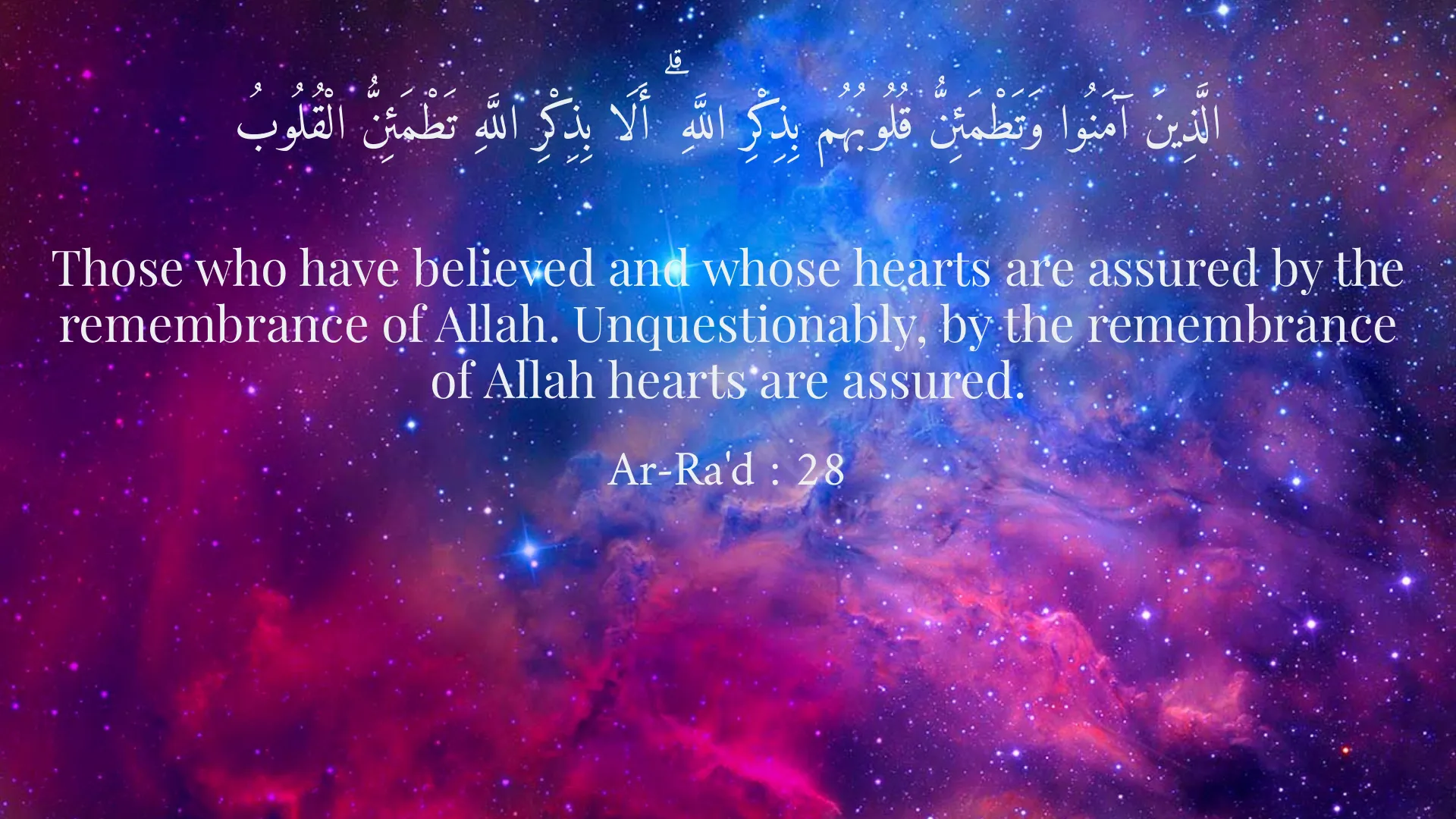
الَّذِينَ آمَنُوا وَتَطْمَئِنُّ قُلُوبُهُم بِذِكْرِ اللَّهِ ۗ أَلَا بِذِكْرِ اللَّهِ تَطْمَئِنُّ الْقُلُوبُ
Those who have believed and whose hearts are assured by the remembrance of Allah. Unquestionably, by the remembrance of Allah hearts are assured.
Ar-Ra'd : 28
يَا أَيُّهَا الَّذِينَ آمَنُوا اسْتَعِينُوا بِالصَّبْرِ وَالصَّلَاةِ ۚ إِنَّ اللَّهَ مَعَ الصَّابِرِينَ
O you who have believed, seek help through patience and and prayer. Indeed, Allah is with the patient.
Al-Baqarah : 153
وَمَن يَتَوَكَّلْ عَلَى اللَّهِ فَهُوَ حَسْبُهُ ۚ إِنَّ اللَّهَ بَالِغُ أَمْرِهِ ۚ قَدْ جَعَلَ اللَّهُ لِكُلِّ شَيْءٍ قَدْرًا
And whoever relies upon Allah – then He is sufficient for him. Indeed, Allah will accomplish His purpose. Allah has already set for everything a [decreed] extent.
At-Talaq : 3
Short Story
They say that in ancient times, a pious man, a pure-hearted dervish, lived in a bustling city. The people of the city toiled day and night, relentlessly pursuing wealth and status, finding no peace or rest. But the dervish, with his worn clothes and a tranquil heart and soul, would sit daily by the market roadside, listening to the songs of the nightingales and turning his prayer beads. One day, a wealthy merchant, who was constantly complaining about his business and never had a moment of peace, saw the dervish and asked in astonishment: "O Dervish, how is it that in this chaotic and fast-paced market, you sit so calmly and carefree? You have no trade, no worries!" The dervish smiled and replied: "My brother, do you think I am without worries? I too have my concerns, but the difference between you and me is that you fret over what you do not possess, while I enjoy and give thanks for what I have. You chase after more, hoping to find peace, while I consider whatever God has graciously bestowed upon me to be sufficient, and in that, I find tranquility. Peace is in the heart, not in the amount of one's possessions." The merchant pondered for a moment and realized that true peace lies not in the speed of business or the abundance of wealth, but in a heart reassured by God and contentment of the soul.