Quranic Answer
Life in this fleeting world is inevitably accompanied by ups and downs, joys and sorrows, moments of tranquility and suffering. The Holy Quran beautifully elucidates this truth and offers profound and practical solutions for confronting continuous suffering without complaint and with inner peace. The foremost key to achieving this is the concept of 'Sabr' (patience); a patience that is not merely passive endurance but an active and conscious resilience in the face of difficulties, coupled with an understanding of divine wisdom and hope for eternal reward. In Surah Al-Baqarah, verse 153, Allah Almighty states: “O you who have believed, seek help through patience and prayer. Indeed, Allah is with the patient.” This verse introduces a fundamental solution: seeking help through patience and prayer. Patience here signifies steadfastness on the path of truth, perseverance in the face of challenges, and not losing hope or inner peace. Prayer, as a strong pillar of connection with the Creator, provides an endless source of tranquility and spiritual strength. When a person’s heart finds solace in the remembrance of Allah, enduring hardships becomes easier, and the inclination to complain diminishes. The Quran also considers suffering and difficulties an inevitable part of divine testing. In Surah Al-Baqarah, verse 155, we read: “And We will surely test you with something of fear and hunger and a loss of wealth and lives and fruits, but give good tidings to the patient.” This verse clearly indicates that hardships are tools for evaluating faith and elevating the status of believers. Understanding that every suffering has a wisdom behind it, and emanates from an All-Wise, Merciful Creator, helps an individual adopt a more positive outlook on problems and seek lessons and growth instead of complaining. This perspective paves the way for 'Shukr' (gratitude) even amidst the severest hardships. A believing person knows that whatever they lose is either in exchange for greater possessions or for attaining a higher spiritual rank. Being grateful for breathing, for partial health, for seemingly small blessings, can shift one's perspective from focusing on deficiencies to focusing on what they have, thereby strengthening the spirit of contentment and satisfaction. The concept of 'Tawakkul ala Allah' (reliance on God) also plays a pivotal role. Tawakkul means complete trust in divine planning and will; that a person knows Allah is the best Disposer of affairs and nothing happens without His permission and will. In Surah At-Talaq, verse 3, it states: “And whoever relies upon Allah – He is sufficient for him. Indeed, Allah will accomplish His purpose. Allah has already set for everything a [decreed] extent.” This assurance of divine sufficiency frees the human heart from worries and anxieties and liberates it from the heavy burden of trying to control what is beyond its capacity. When a person knows that their destiny is in the hands of the Lord, they complain less and turn more towards contentment and submission. Furthermore, the Quran refers to the immense reward for the patient. In Surah Az-Zumar, verse 10, it is mentioned: “Indeed, the patient will be given their reward without account.” This divine promise is a strong motivation to endure hardships without grumbling or complaining. The believer knows that every particle of suffering endured for the sake of Allah and with patience is preserved with Allah, and an immeasurable reward awaits them; a reward that transcends worldly calculations and will manifest in the Hereafter. This otherworldly perspective makes worldly problems seem small in the eyes of the individual and prevents them from sinking into despair and complaint. Worldly life is a temporary passage, and every hardship within it is a gateway to perfection and eternal felicity. Ultimately, to live without complaining through continuous suffering, one must cultivate a mindset of 'Rida' (contentment/acceptance). Rida means satisfaction and submission to divine decree. This station is higher than patience, because in patience, one endures the suffering, but in Rida, their heart accepts it, even embraces it, because they know that everything is from the Beloved. This spiritual state liberates an individual from the closed circle of self-centeredness and worldly desires, which are often the source of complaint, and brings them into the broader sphere of divine assurance and submission. Thus, by remembering the verses of the Quran, strengthening patience, reliance, and gratitude, we can not only cope with suffering but transform it into opportunities for growth and closeness to Allah, achieving inner peace and contentment instead of complaining.
Related Verses
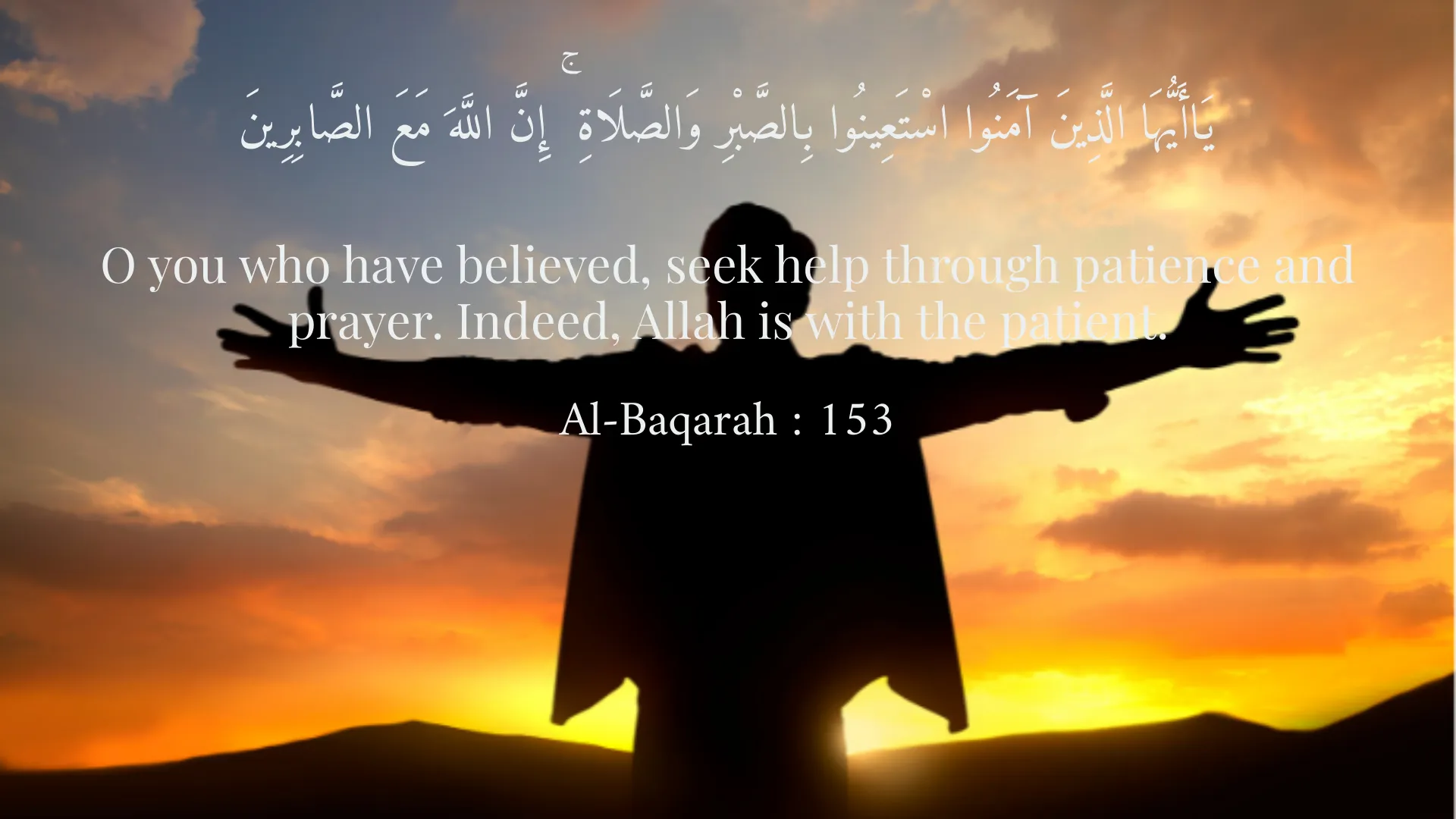
يَاأَيُّهَا الَّذِينَ آمَنُوا اسْتَعِينُوا بِالصَّبْرِ وَالصَّلَاةِ ۚ إِنَّ اللَّهَ مَعَ الصَّابِرِينَ
O you who have believed, seek help through patience and prayer. Indeed, Allah is with the patient.
Al-Baqarah : 153
وَلَنَبْلُوَنَّكُم بِشَيْءٍ مِّنَ الْخَوْفِ وَالْجُوعِ وَنَقْصٍ مِّنَ الْأَمْوَالِ وَالْأَنفُسِ وَالثَّمَرَاتِ ۗ وَبَشِّرِ الصَّابِرِينَ
And We will surely test you with something of fear and hunger and a loss of wealth and lives and fruits, but give good tidings to the patient,
Al-Baqarah : 155
قُلْ يَا عِبَادِ الَّذِينَ آمَنُوا اتَّقُوا رَبَّكُمْ ۚ لِلَّذِينَ أَحْسَنُوا فِي هَذِهِ الدُّنْيَا حَسَنَةٌ ۗ وَأَرْضُ اللَّهِ وَاسِعَةٌ ۗ إِنَّمَا يُوَفَّى الصَّابِرُونَ أَجْرَهُم بِغَيْرِ حِسَابٍ
Say, "O My servants who have believed, fear your Lord. For those who do good in this world is good, and the earth of Allah is spacious. Indeed, the patient will be given their reward without account."
Az-Zumar : 10
وَمَن يَتَوَكَّلْ عَلَى اللَّهِ فَهُوَ حَسْبُهُ ۚ إِنَّ اللَّهَ بَالِغُ أَمْرِهِ ۚ قَدْ جَعَلَ اللَّهُ لِكُلِّ شَيْءٍ قَدْرًا
And whoever relies upon Allah – He is sufficient for him. Indeed, Allah will accomplish His purpose. Allah has already set for everything a [decreed] extent.
At-Talaq : 3
Short Story
It is said that in bygone days, a devout and dervish-like man saw his shoes torn and felt saddened by it. He thought to himself: "Alas! How can I walk on these thorny, rocky paths with bare feet?" At that moment, he entered the city and was walking in the market when he suddenly saw a man who had no feet at all! The dervish, upon seeing that sight, felt ashamed and regretted his own state. He immediately prostrated in gratitude to God and said: "O my God, forgive my sin for complaining about not having shoes, while I have a blessing like feet that he is deprived of." He realized that contentment and gratitude, even in the midst of hardships, are a hidden treasure that dispels complaints from the heart and brings peace. Yes, Saadi's tale is that whenever your eye falls upon a blessing in another, look at your own blessings and be grateful; for in comparison to blessings, sufferings lose their significance.