Quranic Answer
The question "How to live with true gratitude?" is deeply rooted in the rich and profound teachings of the Holy Quran. Gratitude (Shukur) in Islam is not merely a word or a fleeting emotion; it is a way of life, an existential philosophy, and a path to inner peace and divine contentment. The Quran repeatedly emphasizes the importance of gratitude, highlighting it as a core characteristic of true believers. To live with genuine gratitude, we must first understand its true meaning. True gratitude encompasses three primary dimensions: 1. Gratitude of the Heart (Recognition of Blessings): This is the fundamental and most crucial aspect of gratitude. Heartfelt gratitude means acknowledging with every fiber of one's being that everything one possesses, from the simplest breath to the greatest achievements, originates solely from Allah (SWT). This recognition prevents arrogance and self-aggrandizement, constantly directing one's attention to the ultimate source of all goodness and blessings. In this phase, instead of focusing on what one lacks or comparing oneself to others, an individual concentrates on what they have, constantly feeling the presence of divine blessings within their existence. Even amidst hardships, a truly grateful person can perceive divine wisdom and hidden blessings; for instance, viewing illness as expiation for sins or difficulties as a means for growth and strengthening. This perspective purifies the heart from despair and brings tranquility and strengthens one's relationship with the Creator. Focusing on this dimension enhances our capacity to see good in every situation, fostering a positive and hopeful outlook on life. 2. Gratitude of the Tongue (Praise and Adoration): Following heartfelt recognition, the next step is verbal expression of gratitude. Uttering "Alhamdulillah" (All praise is due to Allah), "Subhanallah" (Glory be to Allah), "Allahu Akbar" (Allah is the Greatest), and other forms of remembrance (dhikr) and supplications are examples of verbal gratitude. This verbal expression not only fulfills our duty as servants but also keeps the remembrance of Allah alive in our hearts, helping us constantly remember the source of all good. Verbal gratitude should not be limited only to times when something good happens to us; rather, it should become a daily habit. In all circumstances, whether in prosperity or adversity, in health or in sickness, the tongue should be open to the remembrance and praise of Allah. This act not only brings divine pleasure but also refines the human spirit and fills the surrounding environment with positive energy. It truly solidifies our spiritual bond with the Creator of the universe. By repeating these phrases, the heart and tongue become aligned, transforming gratitude from a mental concept into a living, present experience. 3. Gratitude of Action (Proper Use of Blessings): This is the most practical and vital dimension of gratitude. Practical gratitude means utilizing the blessings bestowed upon us by Allah in ways that are pleasing to Him. If we have good health, we should use it for worship, good deeds, and helping others. If we have knowledge, we should apply it righteously and share it with others. If we have wealth, we should spend it in the way of Allah and assist the needy. If we possess beauty, we should use it with modesty and chastity. Misusing blessings or employing them in sinful ways is not gratitude but ingratitude (kufr al-ni'mah). Practical gratitude requires awareness and responsibility. This dimension is what truly imbues our lives with thankfulness, as our actions become a reflection of our inner state of heart and tongue. When we use a blessing correctly, we actually increase our capacity to receive more blessings, as Allah states: "Lain shakartum la'azeedannakum" (If you are grateful, I will surely increase you). This increase is not only material but can also include an increase in peace, blessings, opportunities, and closeness to Allah. Implementing this dimension of gratitude transforms our lives into a practical embodiment of faith, and its positive effects extend beyond ourselves to benefit society as well. How to Implement These Three Dimensions in Daily Life: * Contemplation and Reflection (Tafakkur): Dedicate time each day to ponder the blessings around you. From significant blessings like health and family to subtle ones like the air you breathe, the water you drink, and even the ability to see and hear. This contemplation helps strengthen heartfelt gratitude and guides you towards a more conscious life. Consider how these blessings often seem self-evident, yet life would be incredibly difficult without them. * Constant Remembrance (Dhikr): Make it a habit to keep your tongue moist with the remembrance of "Alhamdulillah." In every activity, from waking up to sleeping, from eating to performing daily tasks, keep Allah in your heart and on your tongue. This not only earns divine reward but also grants you immediate peace and contentment. * Benevolence Towards Others (Infaq and Helping): A crucial part of practical gratitude is sharing the blessings you have with others. Helping the needy, teaching the ignorant, comforting the sorrowful—all are manifestations of practical gratitude. This not only benefits others but also fills your heart with love and generosity, transforming you into a more giving person. * Avoiding Extravagance and Waste (Israf and Tabdhir): Excessive and wasteful use of blessings is a form of ingratitude. True gratitude means using every blessing in moderation and in its proper place, and taking care of it. This includes respecting natural resources, as well as our own time and energy and that of others. * Patience in Adversity (Sabr): Even when faced with difficulties and calamities, being grateful means understanding that there is wisdom behind every hardship, and that trials can be a means for expiation of sins or elevation of rank. Uttering "Alhamdulillah ala kulli hal" (Praise be to Allah in every circumstance) is a sign of true gratitude in difficult situations, providing us with strength and hope. * Looking at Those Less Fortunate: To truly appreciate our blessings, sometimes it is sufficient to look at those who have less than us or are deprived of the blessings we enjoy. This comparison helps us value what we have more and complain less, shifting our focus from envy to thankfulness. Living with true gratitude means living consciously and responsibly. It means considering every moment of life as an opportunity to express servitude and draw closer to the Creator of the universe. Such a life will be filled with peace, contentment, and blessings, for a grateful heart is always immersed in divine light, and no darkness or despair can overcome it. True gratitude is a gateway to happiness in this world and the Hereafter, and a key to unlocking divine blessings upon His servants.
Related Verses
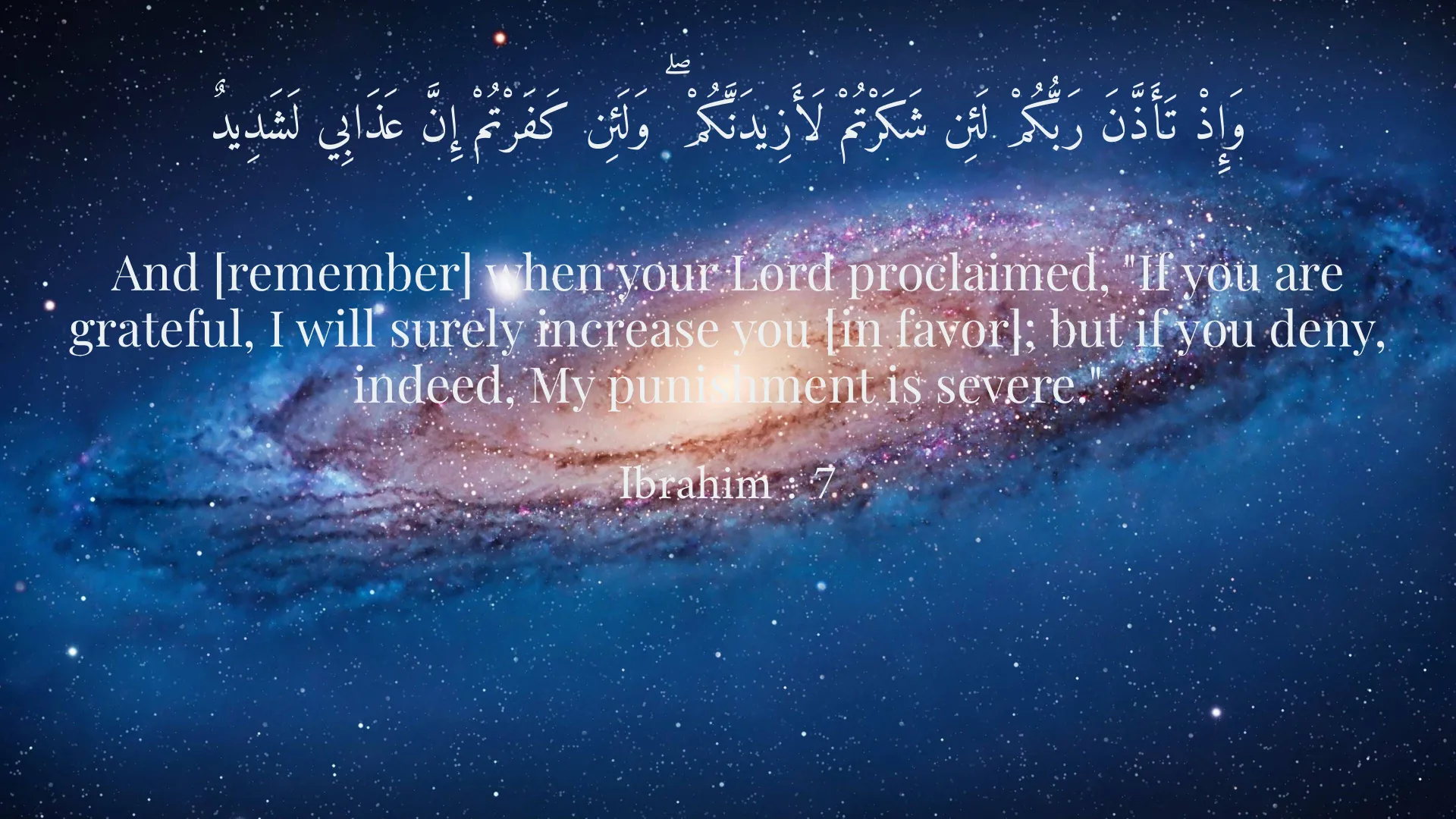
وَإِذْ تَأَذَّنَ رَبُّكُمْ لَئِن شَكَرْتُمْ لَأَزِيدَنَّكُمْ ۖ وَلَئِن كَفَرْتُمْ إِنَّ عَذَابِي لَشَدِيدٌ
And [remember] when your Lord proclaimed, "If you are grateful, I will surely increase you [in favor]; but if you deny, indeed, My punishment is severe."
Ibrahim : 7
وَاللَّهُ أَخْرَجَكُم مِّن بُطُونِ أُمَّهَاتِكُمْ لَا تَعْلَمُونَ شَيْئًا وَجَعَلَ لَكُمُ السَّمْعَ وَالْأَبْصَارَ وَالْأَفْئِدَةَ لَعَلَّكُمْ تَشْكُرُونَ
And Allah brought you out from the wombs of your mothers while you knew nothing, and He made for you hearing and vision and intellect that perhaps you would be grateful.
An-Nahl : 78
وَلَقَدْ آتَيْنَا لُقْمَانَ الْحِكْمَةَ أَنِ اشْكُرْ لِلَّهِ ۚ وَمَن يَشْكُرْ فَإِنَّمَا يَشْكُرُ لِنَفْسِهِ ۖ وَمَن كَفَرَ فَإِنَّ اللَّهَ غَنِيٌّ حَمِيدٌ
And We had certainly given Luqman wisdom [and said], "Be grateful to Allah." And whoever is grateful - his gratitude is only for [the benefit of] himself. And whoever is ungrateful - then indeed, Allah is Free of need and Praiseworthy.
Luqman : 12
Short Story
It is narrated that a man was walking in a desert, complaining of his poverty and destitution, lamenting that he had no shoes and suffered from bare feet. At that moment, he arrived at a mosque and saw a man who had no feet at all, deprived of the very blessing that he himself possessed. The first man was then ashamed and came to his senses, saying, 'O God! Forgive me for complaining about not having shoes, while this man has no feet at all.' From that day forward, he became grateful for all of God's great and small blessings, and instead of complaining, he began to appreciate what he had, and his life became filled with peace, his heart illuminated by the light of gratitude.