Quranic Answer
The Holy Quran is regarded as a guide for humanity, providing direction on various aspects of life, including spirituality, morality, and social justice. Among its many teachings, the Quran emphasizes the importance of maintaining a balance in life. This balance particularly applies to the relationship between worldly affairs and the Hereafter. According to Islamic teachings, believers are encouraged to pursue their worldly desires while remaining conscious of their spiritual obligations and responsibilities. In essence, Muslims are called to achieve success in this worldly life but not at the expense of their relationship with Allah and the assurance of a good afterlife. The concept of balance as espoused in the Holy Quran is an intricate tapestry woven with numerous verses scattered throughout its chapters (Surahs). Central to this discussion is the dichotomy between the temporary nature of worldly life and the eternal promise of the Hereafter. Surah Al-Jumu'ah (62:10) reinforces this perspective by advising believers to engage in their commercial pursuits after performing their prayers. The verse states: "And when the prayer has been concluded, disperse within the land and seek the bounty of Allah and remember Allah often." This particular verse indicates that worship is not merely an end in itself but serves as a foundation for enabling individuals to participate in everyday life. It reminds us that while prayer and remembrance of God are vital, so too is the active engagement with the world around us. This striving for balance is further emphasized in Surah An-Nazi'at (79:46), where Allah states: "And the Hereafter is better and more enduring." The emphasis on the perpetuity of the Hereafter serves as a reminder to believers about the transient nature of worldly gains. By recognizing the superiority of the Hereafter, individuals are urged to structure their lives in a manner that prioritizes their spiritual wellbeing, even when navigating the complexities of daily existence. It encourages reflecting upon one's priorities and values, ensuring that the quest for material success does not overshadow one's commitment to spiritual principles and responsibilities. Furthermore, Surah Hud (11:15) cautions against an excessive inclination towards the adornments of this world: "Those who want the life of this world and its adornment, We will pay them in full their due." This verse is a poignant reminder that, while material pursuits are part of the human experience, they should not be pursued at the cost of neglecting the Hereafter. The Quran teaches that everything in this world is fleeting, and true success lies in nurturing the soul and preparing for the life to come. It explicitly warns against becoming overly invested in materialistic pursuits, which can distract one from fulfilling their divine obligations. The transition into a life characterized by this balanced approach necessitates conscious effort. It requires the individual to strive toward achieving a harmony between their duties toward God and their interactions with the worldly realm. Striking this balance means organizing one's life such that worship and work complement each other. Ultimately, Islam encourages believers to approach their daily interactions with a sense of mindfulness, ensuring that every endeavor, whether it be in the marketplace or in the classroom, is infused with the remembrance of Allah. Indeed, maintaining this balance can be challenging, especially in a modern world that often glorifies material success to the detriment of spiritual development. However, it is crucial to understand that engagement with the world does not require the sacrifice of one’s spiritual values. Rather, the conscious integration of faith into everyday activities reinforces one's commitment to living a pious life. It transforms mundane tasks into acts of worship when approached with the right intention. This understanding is vital, as every action can be a means to accumulate rewards in the Hereafter when aligned with faith. Moreover, the Quran highlights the importance of learning from the lessons of past generations. The tales of previous prophets and their communities serve as enduring reminders of the transient nature of worldly life. People who came before us experienced both prosperity and hardship, yet their commitment to God remained unwavering. Their stories serve to inspire and challenge modern believers to cultivate resilience in their spiritual practices, even when faced with the allure of worldly temptations. In conclusion, the teachings of the Holy Quran implore followers to engage in worldly affairs while keeping the remembrance of God and the Hereafter at the forefront of their minds. The balance between these two aspects of life is critical for overall wellbeing, ensuring that neither material nor spiritual pursuits are neglected. Engaging with the world becomes a means through which we can enhance our spiritual commitment and prepare ourselves for an everlasting life with our Creator. The Quran teaches us to pursue goodness in our lives while remaining mindful of the greater purpose — to worship Allah and prepare for the Hereafter. Thus, the Quranical wisdom encourages believers to merge their daily lives with their spiritual obligations, striving for a holistic existence that honors both worlds.
Related Verses
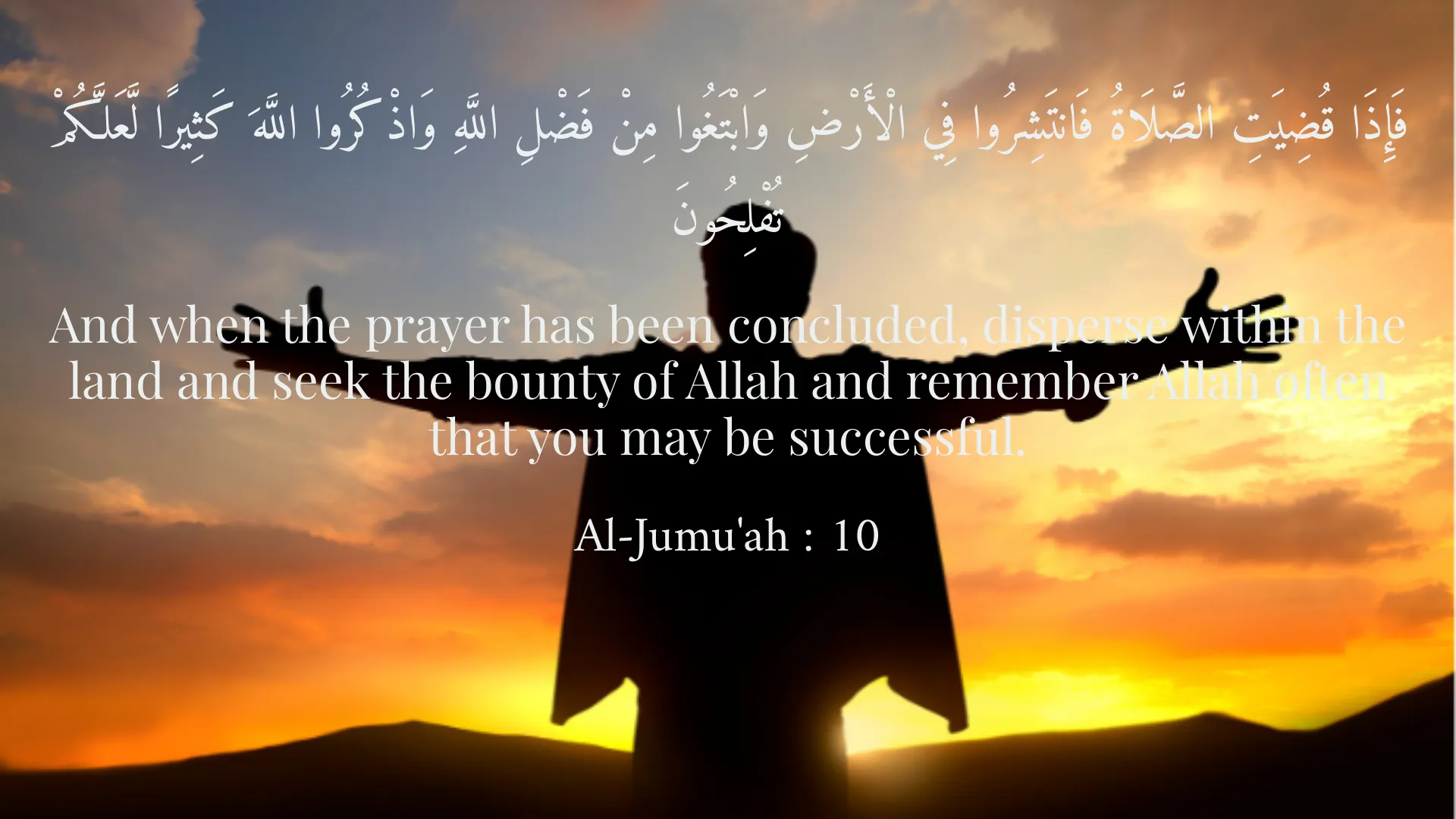
فَإِذَا قُضِيَتِ الصَّلَاةُ فَانتَشِرُوا فِي الْأَرْضِ وَابْتَغُوا مِنْ فَضْلِ اللَّهِ وَاذْكُرُوا اللَّهَ كَثِيرًا لَّعَلَّكُمْ تُفْلِحُونَ
And when the prayer has been concluded, disperse within the land and seek the bounty of Allah and remember Allah often that you may be successful.
Al-Jumu'ah : 10
وَأَمَّا الْآخِرَةُ فَهِيَ خَيْرٌ وَأَبْقَىٰ
And the Hereafter is better and more enduring.
An-Nazi'at : 46
الَّذِينَ يُرِيدُونَ الْحَيَاةَ الدُّنْيَا وَزِينَتَهَا أُو۟لَـٰئِكَ صَانِعُونَ
Those who want the life of this world and its adornment, We will pay them in full for their due; however, they will have no share in the Hereafter.
Hud : 15
Short Story
One day, Mahdi was sitting and reflecting on his life. He knew he needed to maintain balance between work and worship. Therefore, every day after his prayers, he dedicated time for relaxation and remembrance of God. Soon, he felt his life becoming filled with blessings and spirituality. Mahdi realized how maintaining balance between worship and worldly affairs could bring joy and peace.