Quranic Answer
Maintaining spirituality amidst the myriad responsibilities of life is one of the fundamental challenges of modern humanity. However, the sublime religion of Islam and the luminous verses of the Holy Quran offer comprehensive and practical solutions for this crucial task. The Quran teaches us that worldly life, though a field of trial and effort, should never distance a person from the primary purpose of creation and the connection with the Creator of existence. Spirituality in Islam is not merely confined to ritualistic worship; rather, it is a comprehensive and pervasive perspective that encompasses all aspects of life, from work and livelihood to family relationships, community service, and even moments of solitude. This holistic approach allows the believer to transform every action, even seemingly mundane and worldly ones, into an opportunity for divine proximity. The first and most fundamental step to preserving spirituality is "the remembrance of Allah (Dhikr)." The Quran repeatedly refers to this subject, considering it a source of tranquility for hearts. In Surah Ar-Ra'd, verse 28, Allah says: "Unquestionably, by the remembrance of Allah hearts are assured." This remembrance is not merely the repetition of verbal litanies but signifies the constant presence of God in one's mind and heart. The five daily prayers (Salah) themselves serve as anchors that connect an individual to the inexhaustible source of spirituality throughout the day. Each prayer offers an opportunity to disconnect from the clamor of the world and renew one's covenant with the Lord. These moments, if performed with presence of heart and contemplation, can lighten the heavy burden of responsibilities and infuse a fresh spirit. Indeed, Salah is not just a religious obligation; it is a powerful mechanism for stress management, increasing focus, and spiritual and psychological renewal. When a person pauses for prayer amidst the daily rush, they effectively create a spiritual break, separating themselves from the continuous flow of responsibilities to catch their breath and return to their activities with renewed divine energy. Furthermore, short forms of Dhikr like 'Alhamdulillah' (Praise be to Allah), 'Subhanallah' (Glory be to Allah), 'Allahu Akbar' (Allah is the Greatest), and 'Astaghfirullah' (I seek forgiveness from Allah) can be mentally or softly uttered while working, driving, walking, or waiting. These acts of remembrance act like an invisible thread, keeping the heart and mind connected to God and preventing complete immersion in materialism. The second step is "sincere intention (Niyyah)" in fulfilling all responsibilities. Islam teaches us that every action, even daily tasks such as earning a lawful livelihood, caring for family, seeking knowledge, or even sleeping and eating, if performed with the intention of seeking proximity to Allah and for His pleasure, transforms into an act of worship. This shift in perspective turns life's responsibilities from a heavy burden into a ladder for divine proximity. When a mother lovingly and compassionately cares for her children, she is, in reality, worshipping because her aim is to fulfill a divine duty and seek the pleasure of her Lord. When an employee diligently and honestly carries out their duties, they are treading the path of divine pleasure, seeing their trustworthiness and service to others as an act of worship. This approach imbues every activity with spiritual meaning and depth, rescuing an individual from meaninglessness and mundane routines. The Quran, in numerous verses, highlights the importance of intention and links righteous deeds with pure intentions. Even the pressures and difficulties of responsibilities, through this lens, are considered opportunities for patience, reliance on God, and earning divine reward, and enduring them with the right intention itself leads to spiritual elevation. The third strategy is "reliance on Allah (Tawakkul)." Life's responsibilities can be burdensome and overwhelming, bringing anxiety and worry. Tawakkul means that after expending all one's effort and planning, an individual entrusts the outcome to Allah and trusts in His wisdom and decree. This trust reduces psychological burden and brings tranquility to the heart. In Surah At-Talaq, verse 3, it states: "And whoever relies upon Allah – He is sufficient for him." Tawakkul does not mean ceasing effort or shying away from responsibility, but rather letting go of control over things beyond our power. This sense of liberation allows our mental energy not to be consumed by unnecessary worries, enabling us to focus more on performing duties correctly and maintaining inner peace. Tawakkul empowers an individual not to succumb to adversities, knowing that after sincere effort, matters are in the hands of Divine Providence. The fourth principle is "piety and God-consciousness (Taqwa)." Taqwa means continuous vigilance and self-guardianship against sin and anything that displeases Allah. Taqwa is not limited to ritual worship but permeates all life responsibilities. In professional duties, Taqwa ensures that one avoids transgressing the rights of others (Huquq al-Nas), bribery, fraud in transactions, and any injustice, acting with justice and fairness. In family relationships, Taqwa means upholding the rights of spouses and children, practicing patience, kindness, forgiveness, and fulfilling the roles of a parent or spouse in the best possible way. This constant vigilance transforms every moment of life into a spiritual occasion, as a person continually perceives themselves in the presence of Allah and measures their actions by the standard of divine pleasure. In Surah Al-Imran, verse 102, we read: "O you who have believed, fear Allah as He should be feared." This fear of God is not out of terror, but out of respect and love for the Creator who desires nothing but the well-being and betterment of His servants, and knows that the reward of Taqwa is ease in affairs and a path to eternal happiness. Fifth, "discipline and planning" based on divine priorities. The Quran teaches us that humans should organize their lives and place everything in its proper position. Allocating specific time for worship (daily prayers, Quran recitation, supplication), studying the Quran, reflection, and solitude with oneself, alongside scheduling for professional and family responsibilities, can help maintain this balance. This time management assists individuals in not getting lost in the multitude of daily tasks and in allocating time for nourishing their souls. This prevents work or family pressures from deterring an individual from their spiritual duties. Moreover, maintaining balance between the rights of God, one's own rights, and the rights of others is itself a part of spirituality and requires careful planning. Sixth, "gratitude (Shukr)" in all circumstances. Gratitude for Allah's blessings, whether in hardship or ease, helps individuals maintain a positive outlook on life and recognize the presence of divine grace and mercy in all aspects of life. In Surah Ibrahim, verse 7, it states: "If you are grateful, I will surely increase you." This gratitude, even amidst heavy responsibilities and challenges, is an opportunity to recognize divine blessings and is itself a spiritual and soul-refreshing act. Gratitude dispels negative energy and, instead of complaining, fosters a sense of contentment and hope in the heart, leading to an increase in blessings in life. Ultimately, maintaining spirituality amidst life's responsibilities is an art; the art of living according to Quranic teachings that view this world as the cultivation ground for the Hereafter. This requires awareness, continuous effort, and a deep commitment to divine values. Through constant remembrance of Allah, pure intentions, sincere reliance, practical piety, order in affairs, and continuous gratitude, we can not only preserve spirituality but also transform it into a driving force that makes responsibilities sweeter and life more fruitful. This is the true meaning of being a "servant of Allah"; that is, all of life, at every moment, is directed towards the pleasure of Allah and attaining closeness to Him. This approach to life not only shields us from the burnout caused by responsibilities but also imbues every action with a divine purpose and direction, bringing enduring inner peace.
Related Verses
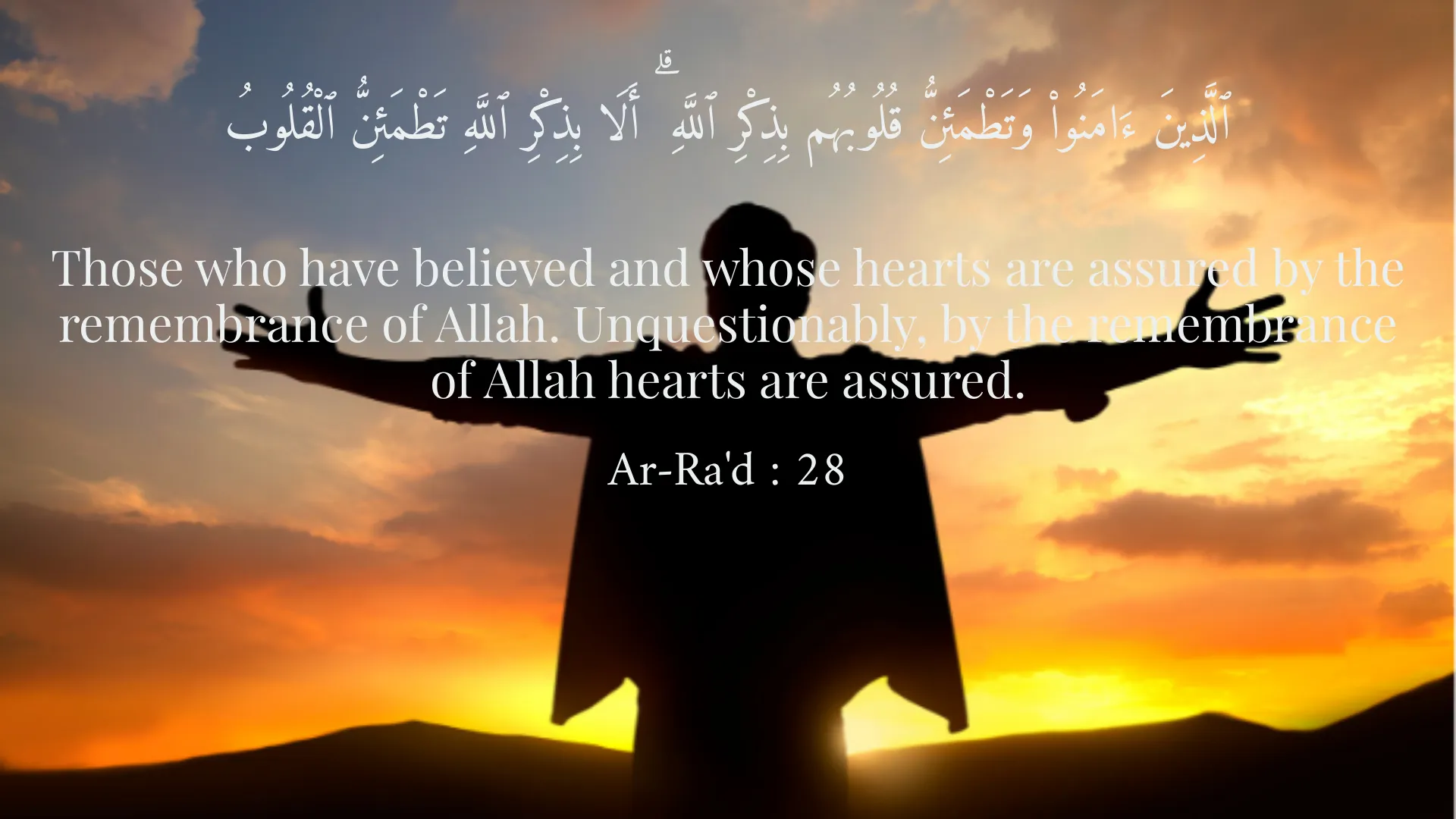
ٱلَّذِينَ ءَامَنُواْ وَتَطْمَئِنُّ قُلُوبُهُم بِذِكْرِ ٱللَّهِ ۗ أَلَا بِذِكْرِ ٱللَّهِ تَطْمَئِنُّ ٱلْقُلُوبُ
Those who have believed and whose hearts are assured by the remembrance of Allah. Unquestionably, by the remembrance of Allah hearts are assured.
Ar-Ra'd : 28
وَمَن يَتَوَكَّلْ عَلَى ٱللَّهِ فَهُوَ حَسْبُهُۥٓ ۚ إِنَّ ٱللَّهَ بَٰلِغُ أَمْرِهِۦ ۚ قَدْ جَعَلَ ٱللَّهُ لِكُلِّ شَىْءٍۢ قَدْرًۭا
And whoever relies upon Allah – He is sufficient for him. Indeed, Allah will accomplish His purpose. Allah has already set for everything a [decreed] extent.
At-Talaq : 3
يَٰٓأَيُّهَا ٱلَّذِينَ ءَامَنُواْ ٱسْتَعِينُواْ بِٱلصَّبْرِ وَٱلصَّلَوٰةِ ۚ إِنَّ ٱللَّهَ مَعَ ٱلصَّٰبِرِينَ
O you who have believed, seek help through patience and prayer. Indeed, Allah is with the patient.
Al-Baqarah : 153
Short Story
It is narrated that in a city lived two men: one a merchant, and the other a dervish. The merchant was constantly bustling, engaged in buying and selling from dawn till dusk. Though he amassed great wealth, his heart was restless, and he incessantly complained about the hardships of work and worldly anxieties, stating he had too many responsibilities and no time for peace. The dervish, however, despite his meager sustenance and simple responsibilities, began each day with the remembrance of God. In the midst of his tasks, whether it was helping a neighbor or assisting someone in need, he never forgot his good intentions. Whenever asked how he remained so calm and content, he would reply, "Every task I undertake, be it for lawful livelihood or for aiding another, I consider it an act of servitude to God. I have entrusted my heart to Him, and I know He suffices for me. Thus, worldly affairs do not distract me from the remembrance of the Hereafter, and the clamor of responsibilities does not prevent my whispered prayers to the Beloved." In this manner, the dervish preserved his spirituality amidst daily routines and found joy in his life, while the merchant, with all his possessions, remained imprisoned in a cage of sorrow and worry.