Quranic Answer
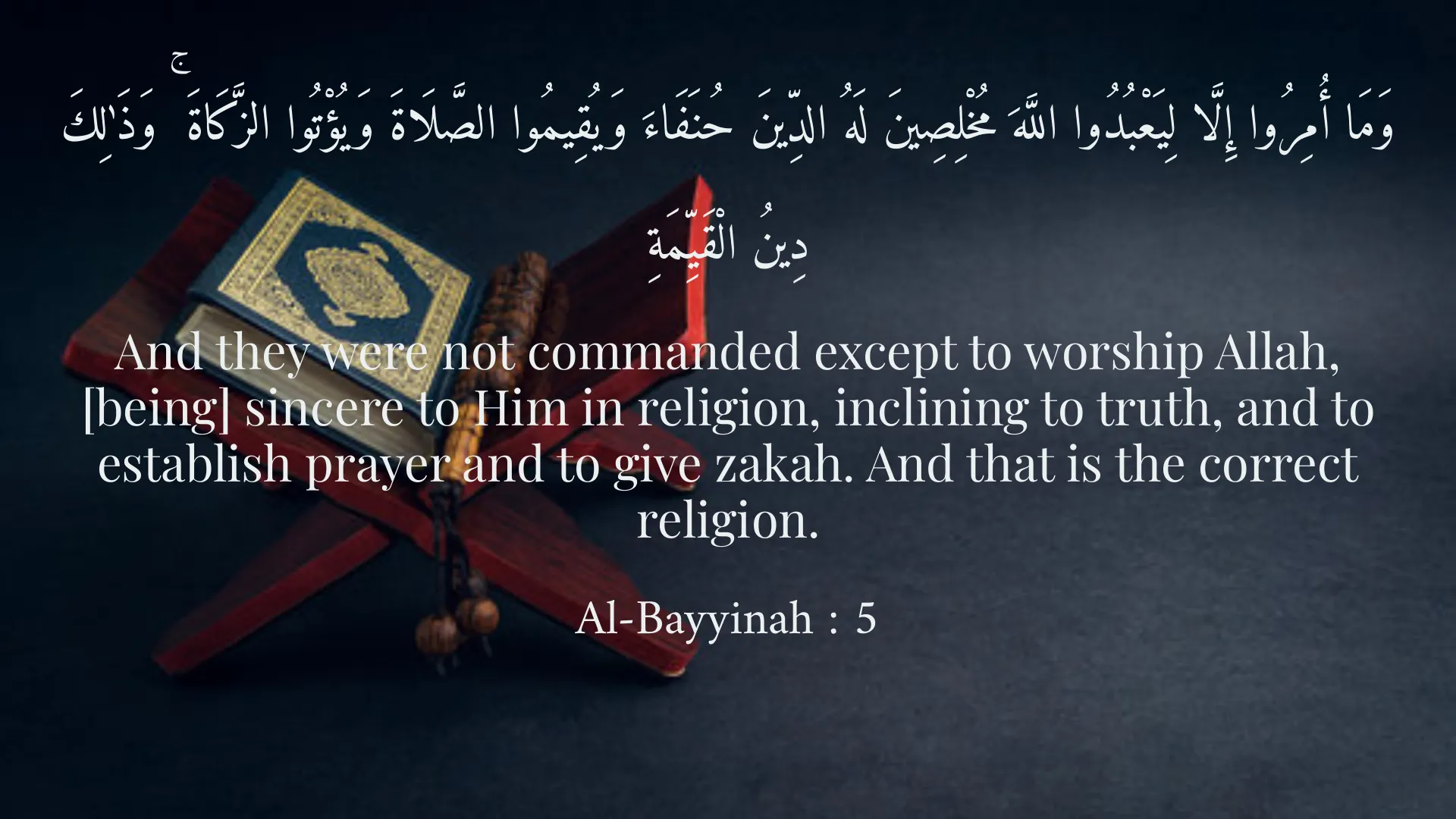
In the rich and comprehensive teachings of the Holy Quran, great emphasis is consistently placed on the importance of intention (niyyah) and sincerity (ikhlas) in every action, whether big or small. The Quran teaches us that any good deed, from the slightest smile to the grandest jihad, gains special value and its reward is multiplied if it is performed with a pure and sincere intention for the sake of Allah. Transforming everyday, seemingly small actions into deeds with a divine intention is the key to achieving a meaningful and blessed life, where every moment is an act of worship and closeness to one's Lord. This is a fundamental concept in Islam that affects every aspect of a believer's life, turning it into worship. The central axis for divinizing intentions is the concept of 'Ikhlas'. Ikhlas literally means to purify or make clear, and in Quranic terminology, it refers to purifying one's intention and action for Allah, avoiding any form of polytheism (shirk), hypocrisy (riya), or showing off. Allah states in Surah Al-Bayyinah, verse 5: "And they were not commanded except to worship Allah, [being] sincere to Him in religion, inclining to truth, and to establish prayer and to give zakah. And that is the correct religion." This verse clearly indicates that the foundation of religion and servitude is sincerity in intention and action. Any action without a pure intention for Allah will be worthless, no matter how outwardly grand or costly it may seem. In Surah Az-Zumar, verse 2, it also states: "So worship Allah, [being] sincere to Him in religion." These verses teach us that not only acts of worship like prayer and zakat, but all actions in life, should be performed with a pure intention for Allah Almighty. This perspective transforms our outlook on all daily activities. To make the intention of small actions divine, several principles must be considered: 1. Conscious Awareness and Intention (Qasd): The first step is to pause for a moment before undertaking any action, no matter how minor, and remind ourselves for whom and for what purpose we are performing this act. For instance, when tidying a room, we can intend that we are doing this for cleanliness and order, which are pleasing to Allah, or for the comfort of our family, which is also for the sake of Allah. When cooking, we can intend that we are preparing this food to provide energy for ourselves and our family for worship and service to Allah's creation. Even during rest and sleep, one can intend to rejuvenate the body for the better fulfillment of one's religious and worldly duties. This conscious intention elevates even the smallest action from merely materialistic to an act of worship. 2. Connecting to a Higher Purpose: Every small action can be part of a larger divine objective. For example, working to earn a lawful livelihood is not just an economic activity; it can be a means to preserve human dignity, avoid dependency on others, provide for one's family, and spend in the way of Allah. These are all actions encouraged in the Quran. Or studying and acquiring knowledge, not just for a degree, but for a deeper understanding of the world and its Creator, serving humanity, and elevating the level of knowledge in society, can all be divine intentions. When this connection is established, all hardships and difficulties on the path seem easier, as one knows they are walking on a divine path. 3. Remembrance of Allah (Dhikr) During Action: Remembering Allah during the course of an action strengthens the intention. Saying 'Bismillahir Rahmanir Rahim' (In the name of Allah, the Most Gracious, the Most Merciful) before starting anything is not only a blessing but also a reminder that we begin this work in the name of and with the help of Allah. Even contemplating the grandeur of creation while observing nature or showing gratitude for divine blessings while eating are all considered dhikr and help divinize the intention. This remembrance can include thinking about how to perform the action in the best way to gain Allah's pleasure. 4. Avoiding Ostentation (Riya'): As mentioned in the verses, sincerity requires avoiding ostentation. If we perform an action to be seen by people or to gain their praise, even if it appears good, it loses its divine value. Strive to perform good deeds, as much as possible, without the intention of attracting attention, and seek the reward solely from Allah. Indeed, riya is the bane of sincerity and prevents actions from ascending to the divine presence. 5. Reliance on Allah (Tawakkul): In every action, big or small, we should rely on Allah. This reliance means that we exert our utmost effort, but entrust the ultimate outcome to Allah's will and decree. This feeling of reliance grants a special tranquility, freeing one from unnecessary worries, as they know that if their intention is pure, Allah will guide them to the best path. By adhering to these principles, our daily lives transform from a series of aimless activities into a continuous chain of worship. Every moment of life becomes an opportunity to draw closer to Allah. Keeping our living environment clean, helping a neighbor, smiling at a stranger, respecting the rights of others while driving, caring for children, and even sleeping with the intention of refreshing ourselves to better fulfill our duties, all can become divine acts. This perspective not only brings spiritual tranquility but also makes one constantly feel Allah's presence in their life and perform every action with a higher motive and purpose. As a result, one will experience a more spiritual life, full of blessings and divine contentment. Allah Almighty states in the Holy Quran that He does not waste the reward of the doers of good, and not even an atom's weight of good deed goes unrewarded. "So whoever does an atom's weight of good will see it." (Surah Az-Zalzalah, verse 7). This verse shows that even the smallest good deed done with a pure intention has an account with Allah, and we will see its results in this world and the hereafter. Therefore, it does not matter how small the action may seem, but what matters is with what intention and for whom it is done. By cultivating this awareness and setting our intentions, we can transform all moments of our lives into opportunities for worship and gaining the pleasure of our Lord, and step forward on the path of perfection and felicity. This is how life, even in its most minor aspects, gains a deep and divine meaning.
Related Verses
وَمَا أُمِرُوا إِلَّا لِيَعْبُدُوا اللَّهَ مُخْلِصِينَ لَهُ الدِّينَ حُنَفَاءَ وَيُقِيمُوا الصَّلَاةَ وَيُؤْتُوا الزَّكَاةَ ۚ وَذَٰلِكَ دِينُ الْقَيِّمَةِ
And they were not commanded except to worship Allah, [being] sincere to Him in religion, inclining to truth, and to establish prayer and to give zakah. And that is the correct religion.
Al-Bayyinah : 5
إِنَّا أَنزَلْنَا إِلَيْكَ الْكِتَابَ بِالْحَقِّ فَاعْبُدِ اللَّهَ مُخْلِصًا لَّهُ الدِّينَ
Indeed, We have sent down to you the Book with truth, so worship Allah, [being] sincere to Him in religion.
Az-Zumar : 2
فَمَن يَعْمَلْ مِثْقَالَ ذَرَّةٍ خَيْرًا يَرَهُ
So whoever does an atom's weight of good will see it,
Az-Zalzalah : 7
Short Story
Once upon a time, a great king asked one of the wise scholars and mystics of his city: "O wise sage, among the many deeds we kings perform, which one is of greater value and more lasting? Is it the construction of magnificent palaces, or victories in battles and the expansion of the realm, or perhaps grand charities to the needy?" The mystic, with a warm and pleasant smile, replied: "O King, neither the grandeur of buildings, nor military victories, nor even the volume of charity, is as valuable as a pure and sincere intention. That deed is lasting and blessed which is done from a heart full of sincerity and for the pleasure of the Almighty, even if, in the eyes of people, it seems a very small and insignificant act. How many kings have, with intentions of hypocrisy and showing off, bestowed wealth and built structures, and how many dervishes have, with pure intention, given a piece of bread to a hungry person, and their reward was greater than all those structures. Intention is the soul of action, and without a soul, the body is worthless." The king pondered over these words and, from then on, even in his smallest daily tasks, tried to purify his intention for divine pleasure, finding a peace he had never found in his greatest conquests.