Quranic Answer
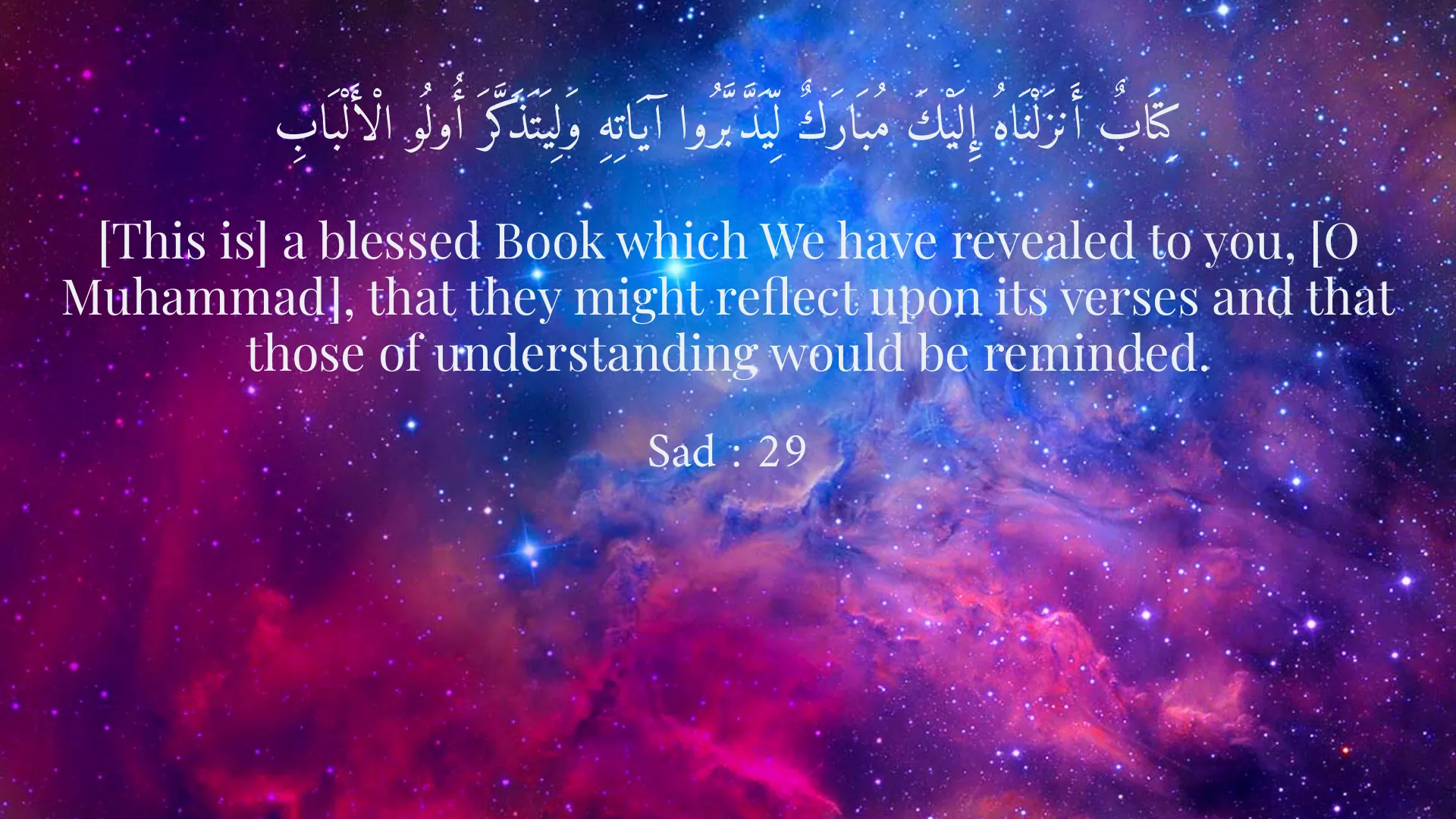
The Holy Quran, the eternal word of God, is not merely a book for recitation and earning rewards, but a complete and comprehensive guide for all dimensions of human life. Transforming this divine book into a practical guide in daily life requires a purposeful and continuous approach. The first step to making the Quran practical is to recite and reflect upon its verses. Mere reading without understanding and contemplation is insufficient. Allah states in Surah Sad, verse 29: "[This is] a blessed Book which We have revealed to you, [O Muhammad], that they might reflect upon its verses and that those of understanding would be reminded." Reflection (Tadabbur) means deep contemplation on the meanings of the verses, grasping the divine messages, and connecting them to one's own life challenges and situations. This should be done with an open heart and an inquisitive mind. One can choose a few verses daily, ponder their meanings and interpretations, and ask oneself: "What does this verse teach me? How can I apply this teaching in my behavior and decisions today?" This continuous process enhances human insight and awareness, paving the way for practical changes. The second step is a correct and deep understanding of the verses. For the Quran to be our practical guide, we must understand its language and be aware of its meanings. Learning the Arabic language and familiarizing oneself with the rules of grammar, syntax, and rhetoric of the Quran greatly aids in this. However, for the general public who do not have access to this level of knowledge, studying authentic tafsirs (explanations) and consulting religious scholars and specialists in Quranic sciences is essential. Tafsirs unveil the secrets of the verses, clarify the contexts of revelation (Asbab al-Nuzul), hidden meanings, and the connections between verses. With this deeper understanding, we can correctly discern the Quran's commands and recommendations and avoid superficial and incorrect interpretations that might lead to wrong actions. For instance, verses related to patience, justice, kindness to parents, and respecting the rights of others require precise understanding for proper application in different life situations. The third step is sincere intention and acting upon its teachings. The Quran is a book of action, and knowledge without action will not be effective. Allah says in Surah Al-Isra, verse 9: "Indeed, this Quran guides to that which is most upright and gives good tidings to the believers who do righteous deeds that they will have a great reward." This verse clearly indicates that the Quran's guidance is linked to righteous deeds. Therefore, after understanding and reflection, we must have a firm resolve to implement its commands in our daily lives. This includes fulfilling obligations (prayer, fasting, charity, Hajj), abstaining from prohibitions (lying, backbiting, oppression, usury), and adhering to Quranic ethics (honesty, trustworthiness, justice, benevolence, forgiveness, patience, gratitude). For example, when we read a verse about kindness to parents, we should immediately review our behavior towards our parents and rectify any shortcomings. When we read a verse about truthfulness, we must be careful with our speech in all situations. This action must be accompanied by consistency and perseverance, as changing habits and solidifying new behaviors require time and effort. The fourth step is continuity and steadfastness in the path of practically applying the Quran. Our lives are full of ups and downs and various challenges that might divert us from the path of the Quran. But for the Quran to remain our practical guide, we must persist in its recitation, reflection, understanding, and application. This means having a regular plan for studying and learning the Quran, for example, reading a portion daily, listening to tafsir, or attending educational classes. Furthermore, when facing problems, we should seek refuge in the Quran's verses and use them to find solutions and peace. Allah says in Surah Al-Baqarah, verse 153: "O you who have believed, seek help through patience and prayer. Indeed, Allah is with the patient." This verse shows that the Quran provides practical solutions for facing hardships, and steadfastness in the divine path is possible with the help of these solutions. Emulating the Prophet Muhammad (PBUH) and the infallible Imams (AS), who were practical embodiments of the Quran, can also be inspiring. Their lives are perfect mirrors of Quranic teachings, and following their practical example is the best way to make the Quran a guide for our lives. Finally, we must seek help and guidance from Almighty Allah. True guidance comes only from Him, and without divine grace and success, traversing this path will be difficult. Supplication and humble pleading to God make a person steadfast in acting upon the Quran's teachings and prepare their heart for accepting and acting upon Quranic truths. Transforming the Quran into a practical guide is a perpetual journey that deepens and becomes more meaningful with every verse and every day, helping individuals not to lose their way in this tumultuous world and to achieve true felicity. This approach not only transforms individual life but also plays a central role in building a society based on divine and ethical values.
Related Verses
كِتَابٌ أَنزَلْنَاهُ إِلَيْكَ مُبَارَكٌ لِّيَدَّبَّرُوا آيَاتِهِ وَلِيَتَذَكَّرَ أُولُو الْأَلْبَابِ
[This is] a blessed Book which We have revealed to you, [O Muhammad], that they might reflect upon its verses and that those of understanding would be reminded.
Sad : 29
إِنَّ هَٰذَا الْقُرْآنَ يَهْدِي لِلَّتِي هِيَ أَقْوَمُ وَيُبَشِّرُ الْمُؤْمِنِينَ الَّذِينَ يَعْمَلُونَ الصَّالِحَاتِ أَنَّ لَهُمْ أَجْرًا كَبِيرًا
Indeed, this Quran guides to that which is most upright and gives good tidings to the believers who do righteous deeds that they will have a great reward.
Al-Isra : 9
يَا أَيُّهَا الَّذِينَ آمَنُوا اسْتَعِينُوا بِالصَّبْرِ وَالصَّلَاةِ ۚ إِنَّ اللَّهَ مَعَ الصَّابِرِينَ
O you who have believed, seek help through patience and prayer. Indeed, Allah is with the patient.
Al-Baqarah : 153
Short Story
It is narrated in Saadi's Golestan that a wise man, every morning and evening, held a precious book in his hand and gazed at it intently. One of his students asked him, "O Master, you who are the memorizer of this book and knowledgeable of its secrets, why do you accompany it in this manner every day?" The master smiled and said, "This book is not merely for reading, but for living. Every day, I read a page and strive to embody its wisdom in my deeds and words. For knowledge that is not put into practice is like a lamp that gives light but does not illuminate the path." The student took heed of this saying and understood that the value of knowledge lies in its application, and that the Quran is a book of practical guidance for every moment of life, not just for the bookshelf.