Quranic Answer
When faced with a sin that seems difficult to abandon, one that has perhaps become an ingrained habit, the Islamic and Quranic approach unequivocally rejects any form of compromise or resignation. The Holy Quran and the Sunnah of the Prophet (PBUH) emphasize that a believing individual should never despair of Allah's mercy and must continuously and resolutely strive in the path of combating their lower self and sin. This struggle, often referred to as the 'Jihad al-Akbar' or 'struggle against the self,' is one of the most crucial dimensions of human spiritual growth. The primary goal is that one should 'not resign' oneself to the sin, meaning to never accept it, to always regard it as evil and harmful, and to continuously strive for liberation from it, even if one stumbles repeatedly along the way. The first and most fundamental step in this journey is 'Tawbah Nasuh,' or sincere repentance. Repentance is not merely uttering 'Astaghfirullah' (I seek Allah's forgiveness) once; it encompasses three main pillars: sincere regret from the heart for the sin committed, a firm resolve not to return to it, and making amends for any rights of others (Haqq al-Nas) that may have been violated by that sin. The Holy Quran repeatedly invites humanity to repentance and promises forgiveness. This invitation to repentance holds true even for major and repeated sins. Allah (SWT) says in Surah Az-Zumar, verse 53: "Say, 'O My servants who have transgressed against themselves [by sinning], do not despair of the mercy of Allah. Indeed, Allah forgives all sins. Indeed, it is He who is the Forgiving, the Merciful.'" This verse serves as a beacon of hope for anyone who feels trapped in the quagmire of sin, believing there is no escape. It clearly indicates that despairing of Allah's mercy is itself a greater sin. The second step is continuous 'Istighfar' (seeking forgiveness). Istighfar means asking Allah for pardon. Even if one cannot completely abandon a sin, they should constantly ask Allah to forgive them and help them to be free from that sin. The Prophet Muhammad (PBUH), who was infallible, would seek forgiveness more than seventy times a day to teach his Ummah that Istighfar is a constant need and a path to spiritual purification and closeness to Allah. This seeking of forgiveness must be from a humble heart and with conscious presence, not merely a movement of the tongue. Each time a person commits a sin, they should immediately turn back to Allah and seek forgiveness. This action breaks the chain of sin and prevents feelings of despair and indifference towards it. Repeated Istighfar demonstrates one's will and effort to be free, and Allah rewards these efforts. Patience and perseverance are of paramount importance in this path. Abandoning a deep-rooted sin requires time and continuous effort. The Holy Quran repeatedly calls believers to patience and praises it. In Surah Al-Baqarah, verse 153, we read: "O you who have believed, seek help through patience and prayer. Indeed, Allah is with the patient." Patience in the face of temptations, patience through the difficulties of breaking a habit, and patience with the results of efforts that may not immediately bear fruit, are keys to success. Alongside patience, prayer (Salah) and the remembrance of Allah (Dhikr) are great helpers. Prayer restrains one from indecency and evil (Quran 29:45), and the remembrance of Allah brings tranquility to hearts (Quran 13:28). Strengthening one's connection with Allah through acts of worship, supplication (dua), and recitation of the Quran provides the spiritual strength necessary to resist sin. To ensure we do not resign ourselves to sin, practical actions are also crucial. Identifying triggers and environmental factors that lead to sin is very important. Avoiding places, people, and situations that facilitate the commission of sin is an essential step. Furthermore, striving to replace bad habits with good and constructive ones, such as engaging in positive activities, studying religious texts, participating in religious and academic gatherings, and helping others, can aid in changing behavioral patterns. Seeking help from trusted individuals and specialists can also be very effective in some cases, especially for sins that have addictive aspects. Let us remember that Allah rewards human effort and striving, even if the final outcome is not immediately achieved. What matters is the pure intention and continuous effort in abandoning sin and returning to Him. We should never feel that there is no way out of a particular sin. This is a whisper from Satan. Allah's mercy is far vaster than one can imagine, and there is always a way back and for correction. Struggling until the last breath is a sign of true faith, and Allah will guide those who strive for His sake. (Surah Al-Ankabut, verse 69: "And those who strive for Us - We will surely guide them to Our ways. And indeed, Allah is with the doers of good.")
Related Verses
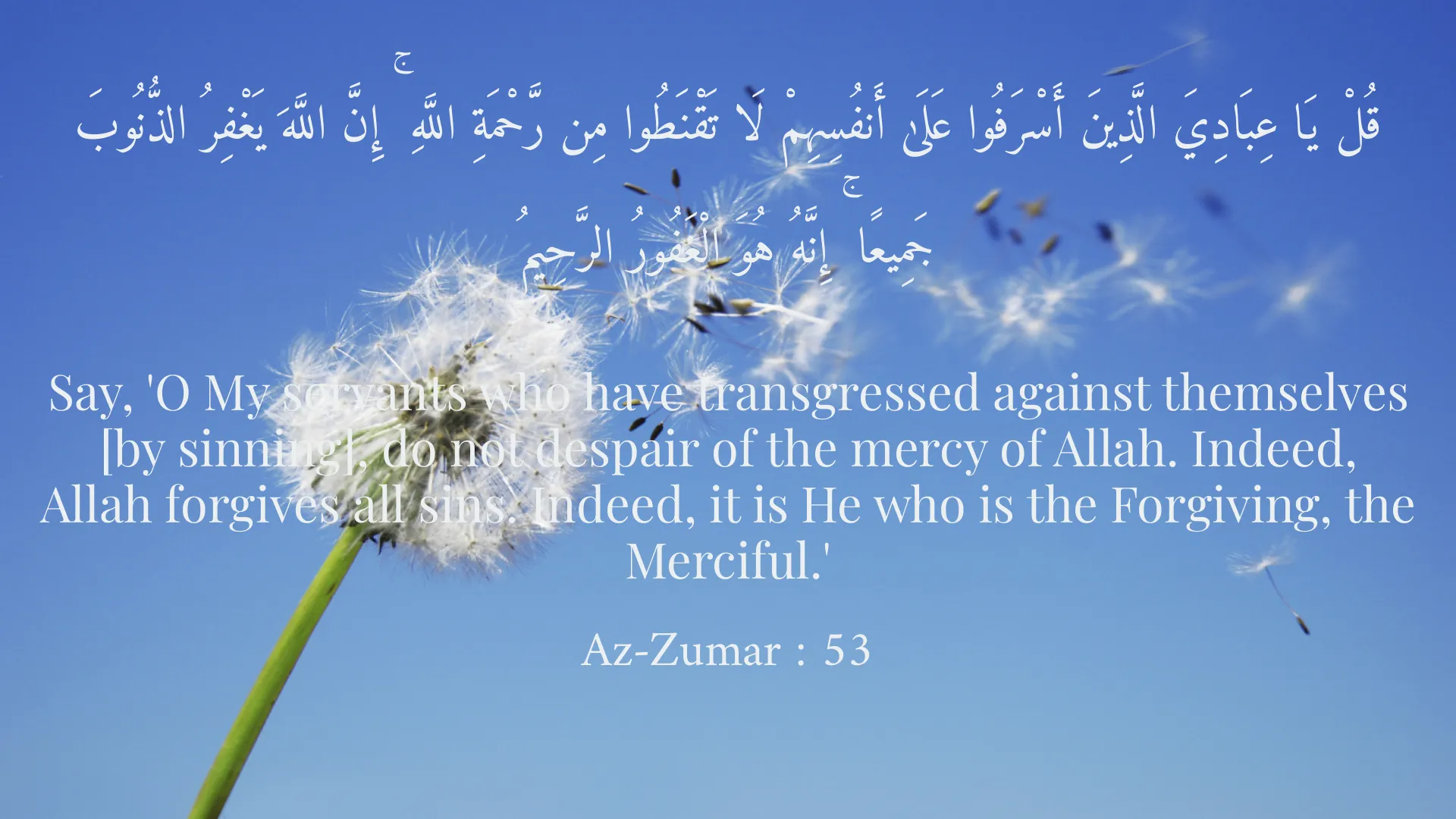
قُلْ يَا عِبَادِيَ الَّذِينَ أَسْرَفُوا عَلَىٰ أَنفُسِهِمْ لَا تَقْنَطُوا مِن رَّحْمَةِ اللَّهِ ۚ إِنَّ اللَّهَ يَغْفِرُ الذُّنُوبَ جَمِيعًا ۚ إِنَّهُ هُوَ الْغَفُورُ الرَّحِيمُ
Say, 'O My servants who have transgressed against themselves [by sinning], do not despair of the mercy of Allah. Indeed, Allah forgives all sins. Indeed, it is He who is the Forgiving, the Merciful.'
Az-Zumar : 53
وَالَّذِينَ إِذَا فَعَلُوا فَاحِشَةً أَوْ ظَلَمُوا أَنفُسَهُمْ ذَكَرُوا اللَّهَ فَاسْتَغْفَرُوا لِذُنُوبِهِمْ وَمَن يَغْفِرُ الذُّنُوبَ إِلَّا اللَّهُ وَلَمْ يُصِرُّوا عَلَىٰ مَا فَعَلُوا وَهُمْ يَعْلَمُونَ
And those who, when they commit an immorality or wrong themselves, remember Allah and ask forgiveness for their sins - and who can forgive sins except Allah? - and [who] do not knowingly persist in what they have done.
Al-Imran : 135
وَالَّذِينَ جَاهَدُوا فِينَا لَنَهْدِيَنَّهُمْ سُبُلَنَا ۚ وَإِنَّ اللَّهَ لَمَعَ الْمُحْسِنِينَ
And those who strive for Us - We will surely guide them to Our ways. And indeed, Allah is with the doers of good.
Al-Ankabut : 69
Short Story
It is narrated that in days of old, there was a man named "Fereydoun" who, whenever he resolved to abandon an undesirable habit, would after a while fall back into it, and he was deeply distressed by this situation. He went to a wise elder and lamented, saying: "O sage, each time I repent of a sin, my lower self is stronger and drags me back to it. Is there a remedy, or must I resign myself to this weakness?" The sage smiled and said: "O Fereydoun, there was no wind that could not sway a tree branch, and no drop that could not erode a rock, provided it was continuous. Whenever you fall, rise again and start anew, and do not think that your fall is a sign of absolute weakness. That branch that is swayed repeatedly will eventually break, and that rock upon which a drop falls daily will eventually be pierced. The important thing is never to cease repeating your efforts and seeking help. The Great God loves the repentance of His servants, and even if it is broken a hundred times, He still smiles upon them and helps them. Despair itself is a greater sin, for it deprives servants of the vast divine mercy." Fereydoun was encouraged by the sage's words, and each time he stumbled, he rose stronger than before, seeking refuge in the Divine presence, until finally, with God's help, he triumphed over his self and found true peace.