Quranic Answer
The question "How to overcome habitual worship?" is one of the deepest and most vital inquiries that any seeker on the divine path might encounter. Worship, at its core, is a bridge for human connection with their Creator, not merely a series of mechanical and lifeless acts. If worship transforms into a mere habit, it not only loses its primary function and the sense of presence and meaning, but it can also lead to feelings of exhaustion, boredom, and even spiritual detachment. The Holy Quran, with its divine insight, offers numerous solutions to reintroduce spirit into the body of worship and transition from a state of routine to one of presence, humility (khushu'), and spiritual vibrancy, which can transform one's entire faith life. One of the central concepts emphasized by the Quran is "Ikhlas" (sincerity). Ikhlas means purifying one's intention from any non-divine motive and performing worship solely to gain the pleasure and closeness of Allah. In Surah Al-Bayyinah, verse 5, Allah explicitly states the purpose of creation and worship: "And they were not commanded except to worship Allah, [being] sincere to Him in religion, inclining to truth, and to establish prayer and to give zakah. And that is the correct religion." When worship is accompanied by sincerity, it transforms from a lifeless, repetitive obligation into a loving and intimate conversation with the Beloved. To overcome habitual worship, one must review their intention each time before commencing an act of worship, reminding themselves that this act is purely for Allah and on the path of drawing nearer to Him. This re-evaluation and renewal of intention is the first and most crucial step in breaking the chains of habit. Ikhlas transforms worship from a mere physical movement into a profound and fruitful spiritual journey. When the intention becomes sincere, the quality of presence of heart increases, and every word and movement in worship gains a new weight and meaning. Ikhlas acts as fuel that propels the engine of worship, moving it away from stagnation and lethargy and breathing new life into it. Another concept closely related to Ikhlas, playing a vital role in combating habitual worship, is "Khushu'" (humility/mindfulness). Khushu' means humility, tranquility, focus, and presence of heart before Allah. The Holy Quran, in Surah Al-Mu'minun, verses 1 and 2, links the prosperity of believers to their humility in prayer: "Certainly will the believers prosper, who are in their prayer humbly submissive." Khushu' is the opposite of inattention, distraction, and mechanical repetition. To achieve Khushu', one must prepare themselves before worship; this preparation includes outward and inward purity, distancing oneself from distracting thoughts, and striving to understand the meanings of the remembrances (adhkar) and verses. Furthermore, contemplating the presence of the Lord of the Worlds and comprehending His grandeur all contribute to fostering and strengthening Khushu'. Khushu' keeps the heart awake and prevents worship from turning into lifeless movements. This presence of heart ensures that every bowing (ruku'), prostration (sujud), every remembrance, and glorification (tasbih) is performed with one's entire being and with an understanding of its profound meaning. Khushu' should not only be present in formal prayers but also permeate all acts of worship and even daily life; meaning, one should perceive oneself in the divine presence at all times and perform their actions with awareness and care. Practicing Khushu' requires perseverance and conscious effort; just as an artist reaches perfection through continuous practice, a worshiper, by practicing Khushu', elevates their worship from the level of habit to the depth of profound knowledge and spiritual delight. "Dhikr" (remembrance of Allah) is the third pillar for overcoming habitual worship. The Quran repeatedly emphasizes the importance of Dhikr. In Surah Taha, verse 14, Allah says: "And establish prayer for My remembrance." The primary purpose of prayer is the remembrance of Allah. If this remembrance is heartfelt and real, prayer will never become a mere habit. Dhikr is not limited to uttering specific words but includes continuously recalling Allah's presence, His power, His mercy, and His watchfulness over all actions. Dhikr strengthens the presence of heart and helps a person to perceive Allah as present and observing in every moment of their life, not just during formal worship times, but in all their endeavors. This continuous presence of Allah's remembrance leads to formal acts of worship being performed with greater fervor and enthusiasm. Dhikr awakens the heart from heedlessness and breathes life into it. To move beyond habitual worship, one must expand the scope of Dhikr beyond prayer and glorification and strive to remember Allah in every task and at every moment. This expansion of Dhikr leads to one's life transforming into a continuous and constant act of worship, and consequently, specific acts of worship also benefit from this renewed spirit and vitality. In addition to these key concepts, contemplating the verses of the Quran (tadabbur) and understanding their meanings also plays a significant role in deepening worship. When a person understands the meaning of the verses they recite in prayer and reflects upon them, they establish a deeper connection with Allah. Surah Sad, verse 29, states: "[This is] a blessed Book which We have sent down to you, that they might reflect upon its verses and that those of understanding would be reminded." Contemplation of the Quran opens new avenues of knowledge and insight to the heart, imbuing worship with content and spirit. Furthermore, understanding the purpose and philosophy behind acts of worship is crucial. Why do we pray? Why do we fast? Understanding these divine reasons and wisdoms liberates worship from formalism and imbues it with meaning and motivation. Combining "Khawf and Raja'" (fear and hope) can also contribute to the dynamism of worship and help overcome habitualness. Worship should not be solely out of fear of punishment, nor merely out of hope for reward. A balance between these two ensures that worship is performed with complete respect and reverence for Divine Majesty on one hand, and with eagerness and longing for His boundless mercy and forgiveness on the other. When one is both awe-struck by Allah's grandeur and hopeful of His infinite mercy and forgiveness, their worship will never become a mere habit; rather, it will always be accompanied by a sense of need, gratitude, and a yearning for closeness. Ultimately, overcoming habitual worship is a continuous and dynamic process that requires self-awareness, constant re-evaluation of intentions, diligent practice of humility (khushu'), and expanding the scope of remembrance (dhikr) into all aspects of life. The Holy Quran guides us towards worship that originates from the heart, is accompanied by sincerity, and aims at profound and living closeness and connection with the Lord of the Worlds. This path is one filled with light, life, and spiritual delight, never reaching the stagnation of habit, but always growing, flourishing, and ascending. By observing these points, one can transcend superficiality in worship and attain the endless depths of spirituality, tasting the true sweetness of servitude.
Related Verses
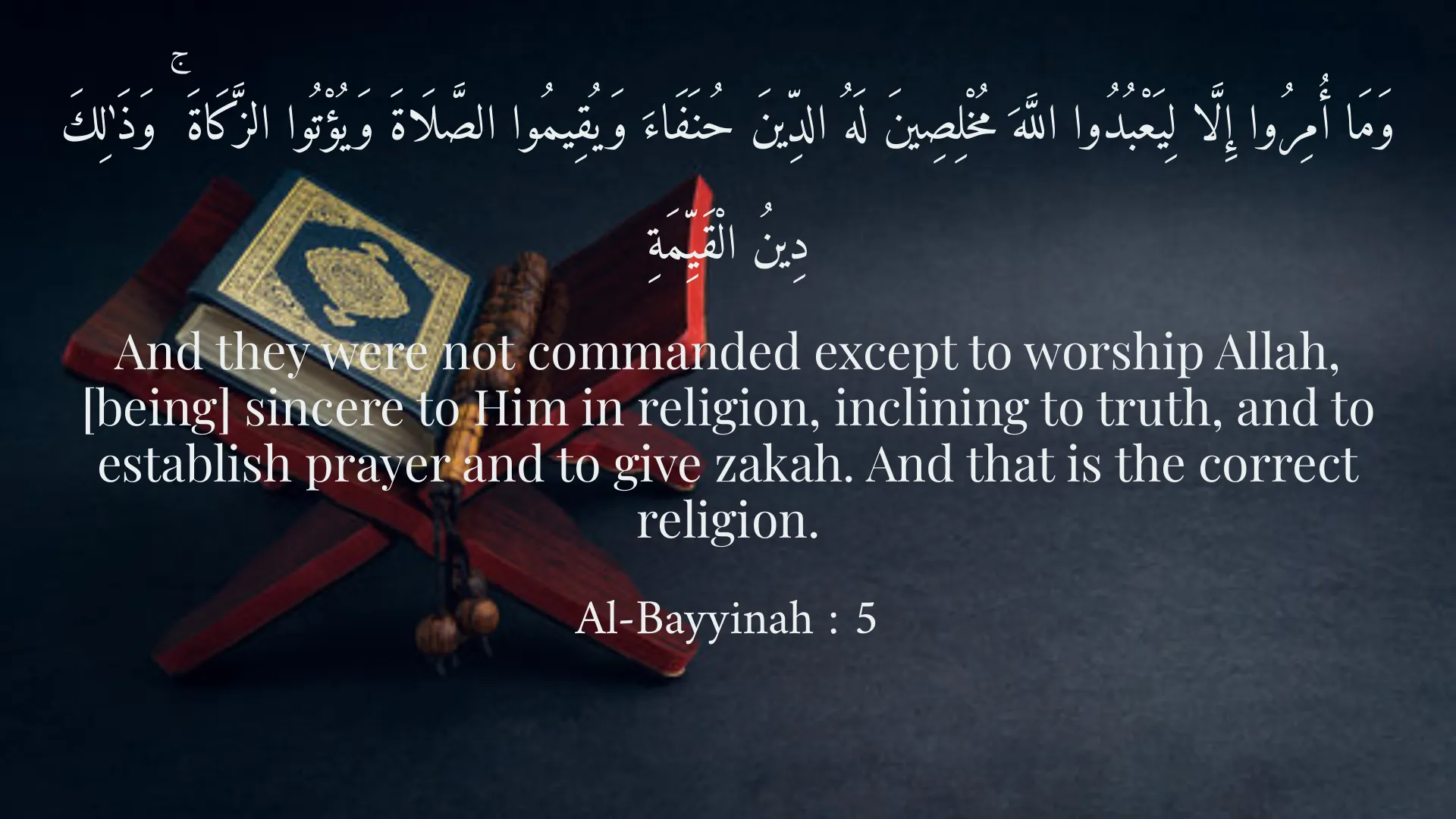
وَمَا أُمِرُوا إِلَّا لِيَعْبُدُوا اللَّهَ مُخْلِصِينَ لَهُ الدِّينَ حُنَفَاءَ وَيُقِيمُوا الصَّلَاةَ وَيُؤْتُوا الزَّكَاةَ ۚ وَذَٰلِكَ دِينُ الْقَيِّمَةِ
And they were not commanded except to worship Allah, [being] sincere to Him in religion, inclining to truth, and to establish prayer and to give zakah. And that is the correct religion.
Al-Bayyinah : 5
قَدْ أَفْلَحَ الْمُؤْمِنُونَ
Certainly will the believers prosper,
Al-Mu'minun : 1
الَّذِينَ هُمْ فِي صَلَاتِهِمْ خَاشِعُونَ
Those who are in their prayer humbly submissive.
Al-Mu'minun : 2
إِنَّنِي أَنَا اللَّهُ لَا إِلَٰهَ إِلَّا أَنَا فَاعْبُدْنِي وَأَقِمِ الصَّلَاةَ لِذِكْرِي
Indeed, I am Allah. There is no deity except Me, so worship Me and establish prayer for My remembrance.
Taha : 14
Short Story
They say there was a man in a monastery who sat on his prayer rug for years, performing his prayers daily, but his heart was preoccupied with trade and worldly gains. One day, the spiritual master saw him and said: 'O man, for years your limbs have prostrated to the earth, yet your heart remains with the world and its affairs. Worship is not merely the movement of the body; it is the tranquility of the soul. If your prayer does not free you from worldly distractions and bring you to the Divine Presence, it is nothing but a futile habit.' The man was troubled by these words and came to his senses. From then on, whenever he stood for prayer, he would first empty his heart of worldly clamor and turn with his entire being towards the Qiblah. And after some time, he tasted such sweetness and delight in worship that he was never satiated, realizing that worship is not a slave to habit, but an ascension to felicity.