Quranic Answer
Loneliness is a profound and sometimes painful emotion that can overwhelm the human spirit, detaching an individual from the ordinary course of life. While superficially interpreted as the absence of others, its roots often run deeper, relating to a sense of separation from meaning, purpose, or even oneself. The Holy Quran, though it doesn't explicitly use the term "loneliness," provides comprehensive and profound solutions to combat this feeling and achieve inner peace. The core of these solutions lies in connecting with the infinite source of tranquility, Almighty Allah, and subsequently, connecting with the believing community. Connecting with Allah: The Foremost Solution The first and most crucial step in overcoming loneliness from a Quranic perspective is strengthening one's relationship with Allah. Humanity is inherently dependent on and in need of a higher power. When this need is not properly fulfilled, an internal void emerges, which can manifest as loneliness. The Quran repeatedly emphasizes that Allah is very close to His servants and is always hearing and responsive. In Surah Al-Baqarah, verse 186, we read: "And when My servants ask you, [O Muhammad], concerning Me - indeed I am near. I respond to the invocation of the supplicant when he calls upon Me." This verse presents a comforting image of Allah's closeness to humanity, assuring the believer that they are never alone, for their Creator and Sustainer is always with them. This divine presence is not merely an abstract concept but a tangible reality that manifests through dhikr (remembrance), dua (supplication), and ibadah (worship). This continuous and reassuring connection forms the fundamental basis for relief from loneliness, as individuals realize that in every state and place, they are under the support and gaze of a merciful Lord who never forgets them. This awareness grants the human soul a deep tranquility that no other human connection alone can provide. Dhikr (Remembrance of Allah): Soothing the Hearts One of the most powerful Quranic remedies for anxiety and loneliness is the remembrance of Allah. In Surah Ar-Ra'd, verse 28, Allah states: "Those who have believed and whose hearts are assured by the remembrance of Allah. Unquestionably, by the remembrance of Allah hearts are assured." This verse explicitly declares that the primary source of inner peace is the remembrance of Allah. Dhikr can include reciting the Quran, tasbeeh (glorification), istighfar (seeking forgiveness), and various supplications. When a person engages their tongue and heart in the remembrance of Allah, they feel protected by an infinite power, and this connection eliminates the feeling of isolation. This tranquility arises because dhikr diverts one's attention from worldly worries, reminding them that everything that happens in this world is under divine will and wisdom, and ultimately for their good. This perspective reduces anxieties stemming from loneliness and replaces them with a sense of security and assurance. Continuous dhikr, such as the Tasbihat of Fatima Zahra (AS) or even the simple utterance of "La ilaha illallah," can gradually free the heart from anxieties and fill it with divine light. This light dispels inner loneliness and darkness, creating a state of contentment and submission to divine will. Salah (Prayer): The Pillar of Faith and the Believer's Ascension Salah, as the primary act of worship, is a direct conversation with Allah. In each unit of prayer (rak'ah), a person becomes free from worldly concerns and directs all their attention towards their Lord. This daily connection strengthens the sense of divine support and reminds individuals that they always have a safe and powerful refuge. In Surah Al-Baqarah, verse 153, we read: "O you who have believed, seek help through patience and prayer. Indeed, Allah is with the patient." Salah is not merely a tool for seeking help; it is itself a source of inner peace and spiritual strength that significantly aids individuals in confronting challenges like loneliness. Performing prayer with presence of heart gives an individual a profound sense of connection with the Creator, and this sense of connection is the essence of combating loneliness. Congregational prayers (Salah al-Jama'ah) also reinforce the social dimension of this worship, placing the individual among a community of believers, all facing the Qibla and worshipping one God. This sense of solidarity itself is a great barrier against loneliness. The Believing Community and Empathy: Comfort from Fellow Humans In addition to connecting with Allah, the Quran emphasizes the importance of the believing community and healthy human relationships. Humans are social beings and need connection with their peers. Islam, by emphasizing the concept of "Ummah Wahidah" (one nation/community) and "Islamic brotherhood," offers solutions for social loneliness. In Surah Al-Hujurat, verse 10, it states: "The believers are nothing but brothers, so make reconciliation between your two brothers and fear Allah that you may receive mercy." This verse not only highlights the importance of brotherhood but also encourages Muslims to resolve disputes and strengthen relationships. Participating in communal activities such as congregational prayers, attending religious and Quranic gatherings, visiting the sick, helping the needy, and being present at joyous and mournful occasions provides opportunities to create and strengthen human relationships. These activities not only help individuals feel like they are part of a larger family but also, by witnessing the problems of others and helping them, they shift focus from personal problems and gain a sense of usefulness and purpose. Serving others is one of the most powerful tools for overcoming loneliness, as it moves individuals beyond self-centeredness and connects them to the world around them. Establishing support networks in mosques, Islamic centers, or even in workplaces and universities, centered around Islamic values, can strengthen feelings of belonging and mutual support, breaking down the walls of loneliness. Finding Purpose and Meaning in Life: Combating the Inner Void Loneliness sometimes results from a lack of purpose and meaning in life. The Quran identifies the primary purpose of human creation as the worship and servitude of Allah: "And I did not create the jinn and mankind except to worship Me." (Adh-Dhariyat, verse 56). When an individual has a lofty purpose in their life that transcends material boundaries, they no longer seek to fill existential voids with temporary things. This purpose gives direction to one's life and saves them from the aimlessness and lack of direction that can lead to loneliness. Striving in the way of Allah, helping creation, seeking knowledge, and every righteous deed performed with divine intention, gives meaning to human life and fills one from within. Having a spiritual mission or even smaller, yet meaningful goals such as raising righteous children, contributing to society, or spreading knowledge, can enrich an individual's sense of existence and prevent feelings of worthlessness and loneliness. Patience and Trust (Sabr and Tawakkul): Acceptance and Overcoming Trials Loneliness can sometimes be a divine test. In such circumstances, the Quran advises patience (sabr) and reliance on Allah (tawakkul). Sabr means steadfastness and enduring difficulties, and tawakkul means complete trust in divine planning and wisdom. By relying on Allah, one accepts that every situation, even loneliness, has a wisdom behind it and can be a foundation for spiritual growth. This perspective saves individuals from despair and helps them to view situations more positively, seeking ways to overcome and grow rather than drowning in loneliness. Allah never leaves His servants alone and is always with those who are patient. Understanding that Allah never burdens a soul beyond its capacity gives strength to endure, and the belief that every hardship will ultimately be followed by ease keeps hope alive in the heart. Conclusion: Overcoming loneliness from a Quranic perspective is a dual process: first, strengthening one's personal and spiritual connection with Allah, and then actively participating in the believing community and serving others. Through the remembrance of Allah, hearts find peace, and the divine presence saves one from any form of loneliness. Then, by joining the believing community and living with a Quranic purpose and meaning, individuals experience a sense of belonging and usefulness, gradually freeing themselves from inner isolation. Therefore, the comprehensive solution to loneliness is a combination of spiritual introspection and social extroversion, both rooted in the sublime teachings of the Quran. This path not only alleviates loneliness but also grants human life lasting meaning and tranquility, guiding one towards perfection and divine contentment.
Related Verses
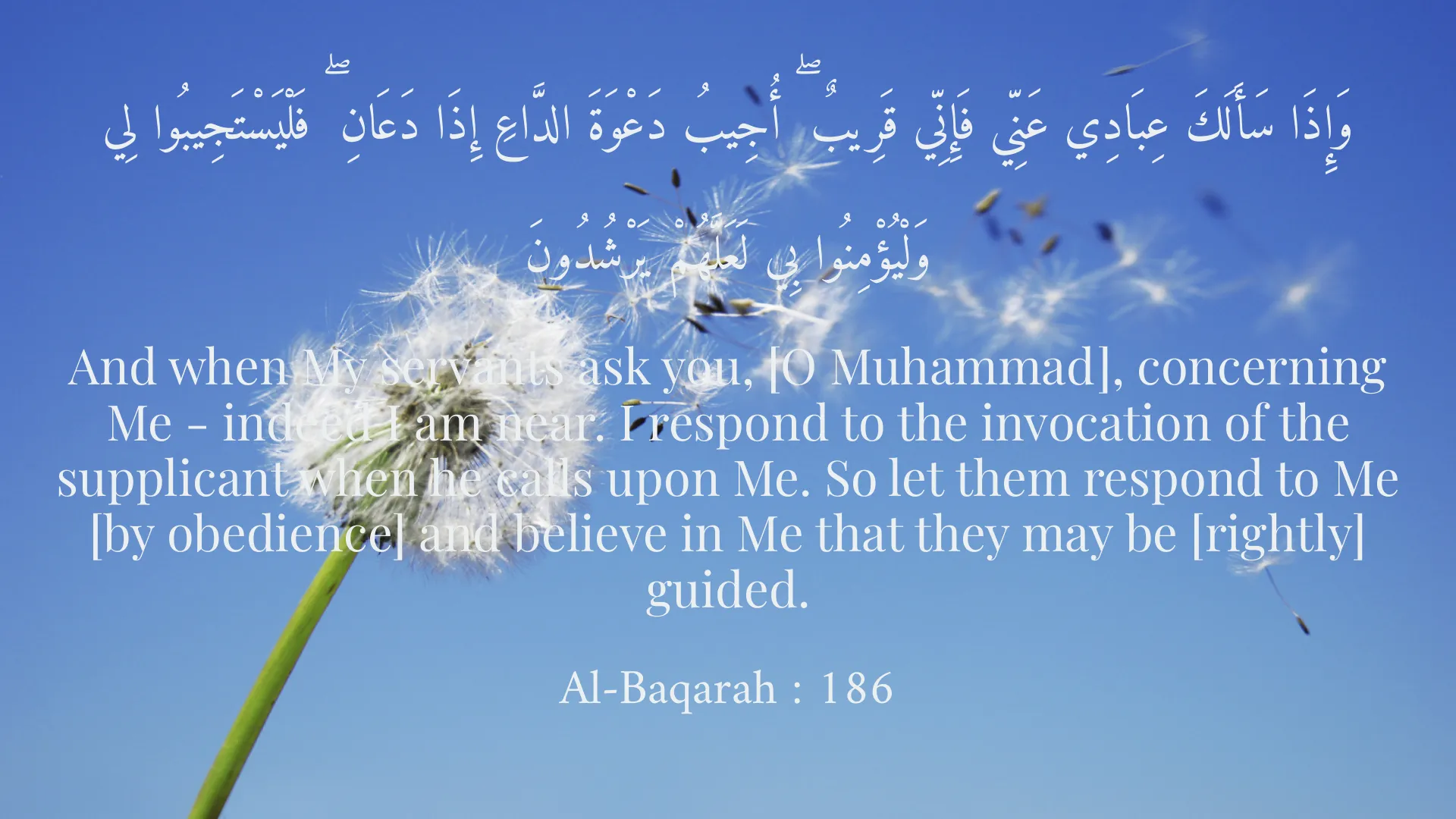
وَإِذَا سَأَلَكَ عِبَادِي عَنِّي فَإِنِّي قَرِيبٌ ۖ أُجِيبُ دَعْوَةَ الدَّاعِ إِذَا دَعَانِ ۖ فَلْيَسْتَجِيبُوا لِي وَلْيُؤْمِنُوا بِي لَعَلَّهُمْ يَرْشُدُونَ
And when My servants ask you, [O Muhammad], concerning Me - indeed I am near. I respond to the invocation of the supplicant when he calls upon Me. So let them respond to Me [by obedience] and believe in Me that they may be [rightly] guided.
Al-Baqarah : 186
الَّذِينَ آمَنُوا وَتَطْمَئِنُّ قُلُوبُهُم بِذِكْرِ اللَّهِ ۗ أَلَا بِذِكْرِ اللَّهِ تَطْمَئِنُّ الْقُلُوبُ
Those who have believed and whose hearts are assured by the remembrance of Allah. Unquestionably, by the remembrance of Allah hearts are assured.
Ar-Ra'd : 28
إِنَّمَا الْمُؤْمِنُونَ إِخْوَةٌ فَأَصْلِحُوا بَيْنَ أَخَوَيْكُمْ ۚ وَاتَّقُوا اللَّهَ لَعَلَّكُمْ تُرْحَمُونَ
The believers are nothing but brothers, so make reconciliation between your two brothers and fear Allah that you may receive mercy.
Al-Hujurat : 10
Short Story
It is narrated in Saadi's Gulistan that a pious dervish lived in the desert, detached from worldly affairs. A man asked him, 'O dervish, how do you pass your days in this boundless solitude? Do you never feel lonely?' The dervish smiled and replied, 'How can I be lonely when my eternal Companion is with me? Whenever my heart feels constricted, I recite the Quran and speak with my Lord. And if occasionally I reach a village, I find a gathering of believing brethren with whom we engage in the remembrance of God. True loneliness is separation from God, not from creation.' This anecdote reminds us that peace and freedom from loneliness are found first in a heartfelt connection with the Creator, and then in the company of the righteous.