Quranic Answer
Introduction: The struggle to overcome one's ego or 'nafs' (self) is one of the most profound and vital challenges humanity faces on the path to perfection and salvation. In Quranic and Islamic terminology, 'nafs' refers to the inner dimension and essence of human existence, which can be the source of virtues or vices. The Holy Quran explicitly addresses this internal struggle and provides practical strategies for mastering the negative aspects of the self and nurturing its positive dimensions. This inner jihad, often referred to as 'Jihad al-Akbar' (the greater jihad), is the cornerstone of all spiritual and ethical progress. Without controlling the nafs, individuals can easily fall prey to fleeting worldly desires and deviate from their primary purpose of creation. This battle is not a one-time event; rather, it is a continuous and lifelong process that requires constant vigilance and self-refinement until the last moments of life. A deep understanding of the nature of the nafs and Quranic strategies for its purification is key to achieving inner peace and true felicity. Types of Nafs in the Quran: The Quran describes three primary states of the nafs, representing different stages of human spiritual evolution: 1. Nafs al-Ammara bis-Su' (The Self that Commands Evil): This is the lower self, strongly inclined towards passions, sins, arrogance, selfishness, and anything that distances a person from the path of truth. This aspect of the self compels humans to commit undesirable actions and constantly drives them towards materialistic and fleeting pleasures. In Surah Yusuf, verse 53, it states: "And I do not acquit myself. Indeed, the soul is a persistent enforcer of evil, except for what my Lord has mercy upon. Indeed, my Lord is Forgiving and Merciful." Overcoming the nafs primarily means curbing this aspect of the self, so that one can be freed from the chains of animalistic desires and advance towards spiritual elevation. 2. Nafs al-Lawwamah (The Self-Reproaching Self): This stage is higher than the nafs al-ammara and indicates the awakening of one's inner conscience. In this state, after committing a mistake, a person experiences regret and self-reproach. This nafs signifies the awakening of one's innate conscience and divine intuition, and the self-blame it generates can be a powerful motivator for repentance, making amends, and returning to the right path. In Surah Al-Qiyamah, verse 2, the Quran declares: "And I swear by the reproaching soul." This oath underscores the significance of this stage in the soul's evolution, as regret is the first step towards correction. 3. Nafs al-Mutma'innah (The Tranquil Self): This is the highest stage of spiritual perfection, where an individual attains complete inner peace and certainty of heart. This tranquility results from liberation from the anxieties and internal conflicts caused by the nafs al-ammara, leading to serenity and contentment with divine decree. In this stage, the soul is completely surrendered to the Divine Will and maintains its peace in all circumstances, whether in ease or hardship. In Surah Al-Fajr, verses 27-30, Allah addresses this soul: "O tranquil soul! Return to your Lord, well-pleased and pleasing [to Him], so enter among My [righteous] servants and enter My Paradise." The ultimate goal in overcoming the nafs is to reach this elevated station, where one achieves intimacy with God. Quranic Strategies for Overcoming the Nafs: The Holy Quran provides comprehensive and practical strategies for the training and purification of the nafs, each contributing to strengthening willpower and purifying the soul: 1. Taqwa (God-consciousness and Piety): Taqwa signifies self-restraint and adherence to divine boundaries. It is the most crucial shield against the temptations of the nafs al-ammara. When a person constantly perceives Allah as present and observant of their actions, they distance themselves from sins and remain committed to their duties. Taqwa not only means refraining from prohibitions but also includes performing obligatory and recommended acts. The Quran frequently emphasizes the importance of Taqwa, considering it the criterion for human superiority and salvation (Surah Al-Hujurat, verse 13: "Indeed, the most noble of you in the sight of Allah is the most righteous of you."). 2. Dhikr (Remembrance of Allah): Constantly engaging in the remembrance of Allah and keeping His memory alive in the heart illuminates the soul and frees it from the dominance of satanic and carnal temptations. Dhikr includes reciting the Quran, glorifying Allah (Tasbih), praising Him (Hamd), declaring His oneness (Tahlil), and contemplating His signs. The Quran states: "Those who have believed and whose hearts are assured by the remembrance of Allah. Unquestionably, by the remembrance of Allah hearts are assured." (Surah Ar-Ra'd, verse 28). This assurance is a fundamental step towards achieving the nafs al-mutma'innah and frees a person from worldly anxieties. 3. Sabr (Patience) and Steadfastness: Overcoming the nafs requires patience and perseverance in resisting undesirable desires, and steadfastness in the path of divine obedience. The human soul constantly seeks comfort and immediate pleasures, and to counter this, one must practice patience. Patience in the face of temptations (like backbiting, lying, greed), patience in performing acts of worship (like timely prayer, fasting in heat), and patience during adversities and difficulties in life, all contribute to strengthening willpower and self-control. In Surah Al-Baqarah, verse 153, the Quran commands: "O you who have believed, seek help through patience and prayer. Indeed, Allah is with the patient." 4. Salat (Prayer) and Other Acts of Worship: Prayer is the pillar of religion and the spiritual ascent of the believer. When performed with full concentration and awareness of its meanings, prayer restrains a person from immorality and evil, serving as a direct connection with Allah and strengthening the spirit of servitude. Other acts of worship such as fasting (Sawm), charity (Zakat), and pilgrimage (Hajj) also contribute to self-purification and controlling materialistic desires. Fasting, in particular, is a practical exercise for controlling appetites, strengthening willpower, and empathizing with the needy. Hajj purifies the soul by detaching a person from worldly attachments and focusing on spirituality. 5. Self-Accountability (Muhasabah): One must constantly review their actions and intentions. Muhasabah means that before sleeping or at the end of each day, a person should reflect on their day's deeds and evaluate them; if a mistake was committed, immediately seek forgiveness and repent, and if a good deed was performed, express gratitude and find motivation to continue it. This self-awareness and continuous self-assessment is a crucial step in identifying the strengths and weaknesses of the nafs and gradually guides one towards self-refinement. 6. Dua (Supplication) and Seeking Aid from Allah: Relying on divine power and seeking His assistance is one of the most important tools for overcoming the nafs. Humans are inherently weak against the nafs al-ammara and can only prevail over it by seeking assistance from the Lord. Quranic supplications and the prayers of the infallible Imams are rich resources for seeking divine help and guidance in this path. 7. Contemplation of Divine Signs and Remembrance of Death: Reflecting on the grandeur of creation, the purpose of life, the transient nature of this world, and the certainty of death and the Day of Judgment, can liberate a person from heedlessness and worldliness, guiding them towards higher values. When one realizes that they will one day be accountable for their actions before Allah, they will be more mindful of their nafs and less inclined towards immediate pleasures that conflict with eternal values. This type of contemplation changes one's perspective and leads them towards balance and moderation in life. Conclusion: Overcoming the nafs is an ongoing internal journey that begins with understanding its various dimensions and continues by applying Quranic teachings such as Taqwa, Dhikr, Sabr, acts of worship, and self-refinement. This struggle not only leads to inner peace and eternal salvation but also enables individuals to be effective, beneficial, and exemplary members of society. Mastering the nafs frees humans from the bondage of animalistic instincts and elevates them to the true station of humanity, making them responsible and committed beings. This greater jihad carries immense reward from Allah and is the key to attaining the stage of nafs al-mutma'innah and entering Paradise. This path may seem challenging at first, but with Allah's help, reliance on Him, and continuous effort, every individual can overcome their nafs and move towards perfection and closeness to God. Therefore, every day is a new opportunity for this sacred struggle and spiritual growth.
Related Verses
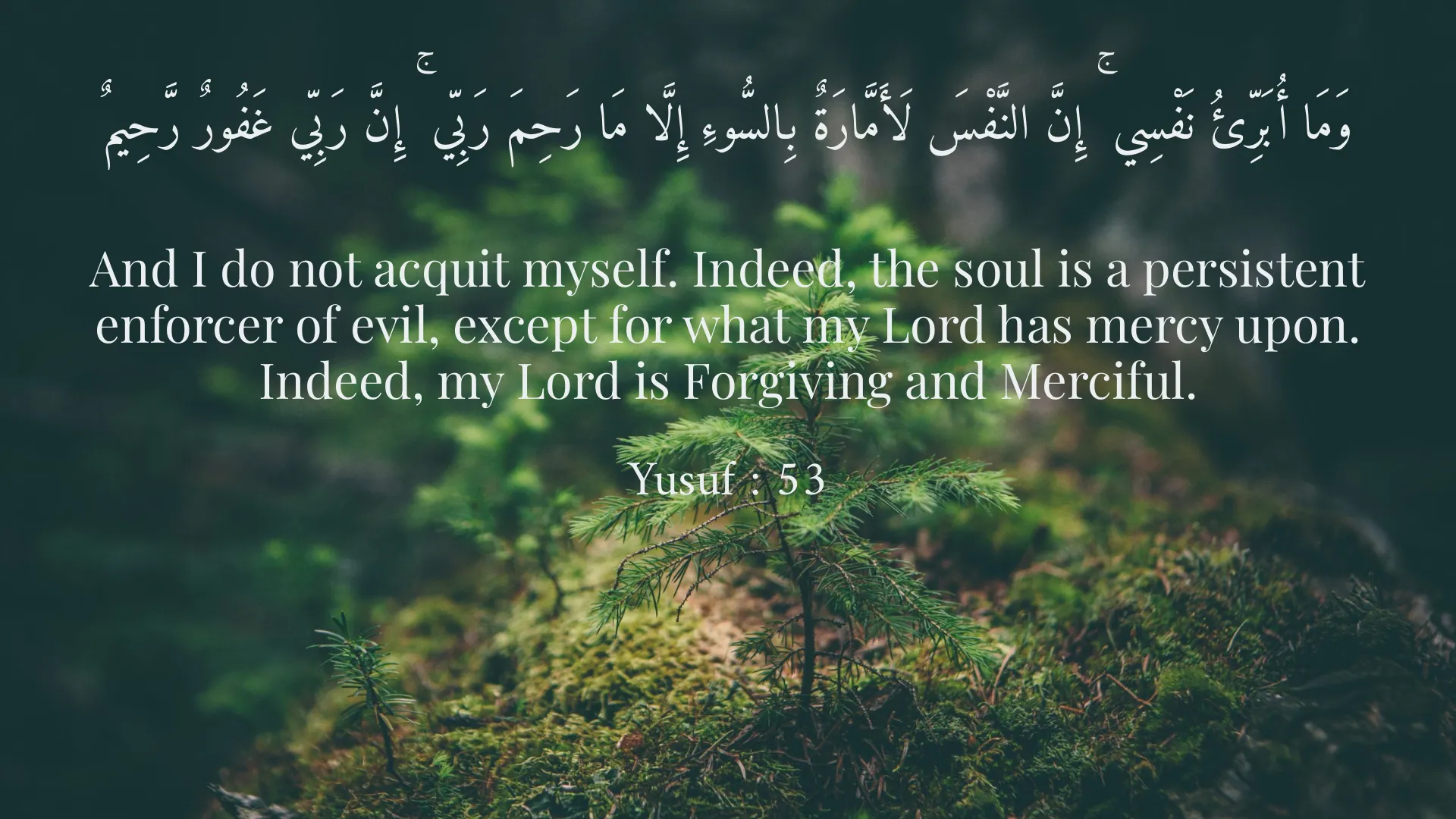
وَمَا أُبَرِّئُ نَفْسِي ۚ إِنَّ النَّفْسَ لَأَمَّارَةٌ بِالسُّوءِ إِلَّا مَا رَحِمَ رَبِّي ۚ إِنَّ رَبِّي غَفُورٌ رَّحِيمٌ
And I do not acquit myself. Indeed, the soul is a persistent enforcer of evil, except for what my Lord has mercy upon. Indeed, my Lord is Forgiving and Merciful.
Yusuf : 53
الَّذِينَ آمَنُوا وَتَطْمَئِنُّ قُلُوبُهُم بِذِكْرِ اللَّهِ ۗ أَلَا بِذِكْرِ اللَّهِ تَطْمَئِنُّ الْقُلُوبُ
Those who have believed and whose hearts are assured by the remembrance of Allah. Unquestionably, by the remembrance of Allah hearts are assured.
Ar-Ra'd : 28
يَا أَيَّتُهَا النَّفْسُ الْمُطْمَئِنَّةُ ارْجِعِي إِلَىٰ رَبِّكِ رَاضِيَةً مَّرْضِيَّةً فَادْخُلِي فِي عِبَادِي وَادْخُلِي جَنَّتِي
O tranquil soul! Return to your Lord, well-pleased and pleasing [to Him], so enter among My [righteous] servants and enter My Paradise.
Al-Fajr : 27
Short Story
A king once asked a dervish, 'O dervish, what is the most difficult thing for you in this world?' The dervish replied, 'O King, for me, taming my rebellious self is harder than conquering seven kingdoms. Many a king, with vast armies, might conquer lands but cannot conquer his own anger or desires. One day, I asked a dervish: Why do you sit alone and secluded? He replied: I do not fear people, but I fear my own self, for it is always with me and constantly calls me to evil.' The king took heed of this saying and understood that the greatest jihad is the jihad against one's own self, and true kingship is not over people, but over oneself. My dear friend, be like this dervish who was not heedless of his own self. Know that whenever you can take the reins of your own self, it is as if you have conquered the entire world and attained an inexhaustible treasure. This tale from Saadi reminds us that true victory is victory over oneself, not over others.