Quranic Answer
The concept of the self and its challenges is a profound theme in the Holy Quran, and it offers valuable insights into the human condition and the temptations we face in life. Particularly, the Quran emphasizes the struggle against one's own desires and the importance of self-awareness and moral discipline. This article delves into various Quranic verses that address the nature of the soul, its inclinations towards evil, and the ways to overcome these challenges through faith and righteous actions. To begin with, it’s essential to recognize the intrinsic nature of the self as presented in Surah Yusuf. In verse 53, it is stated, 'And I do not acquit myself. Indeed, the soul is ever enjoining to evil.' This candid admission underscores a critical reality: the human soul harbors inherent inclinations toward wrongdoing. Throughout history, many philosophers and spiritual leaders have pondered the nature of the self, and the Quran's position on this matter resonates with the observations of these thinkers. The acknowledgment that the soul can lead one into temptation paints a clear picture of the human struggle. It invites individuals to refrain from complacency regarding their moral state. The first step in overcoming the rebellious self, as outlined in the Quran, is to understand and accept this truth. Awareness of the nature of the soul compels one to engage in introspection and self-reflection. The Quran does not leave humans without hope; it guides believers in identifying effective strategies to combat the errant inclinations of the soul. Strengthening one's faith in Allah through sincere worship emerges as a vital method of control. In Surah Al-Imran, verse 135, a remarkable concept is introduced: 'And those who, when they commit an immorality or wrong themselves, remember Allah and seek forgiveness for their sins.' This verse highlights the power of remembrance and seeking Allah's forgiveness. It suggests a constructive way to deal with failures and wrongdoings. When believers fall short or make mistakes, the act of remembering Allah serves as a rehabilitative mechanism. It reinforces the idea that despite our weaknesses, there is always a path towards redemption. The remembrance of Allah encourages individuals to take responsibility for their actions, recognizing that repentance is not merely a verbal acknowledgment of wrongdoing but a sincere turning back to God. This process fosters a sense of accountability, and hence, encourages individuals to strive for moral improvement. Moreover, turning to God in repentance allows individuals to regain control over their impulses and desires. This not only aids in overcoming the rebellious self but also fosters a deeper connection with the Divine. Continuing our exploration into the Quran, Surah Al-Furqan provides significant insight in verse 70, which states, 'Except for the one who repents, believes, and does righteousness.' This verse reinforces the interconnectedness of repentance, faith, and righteous action. It suggests that true repentance should be accompanied by belief, which acts as a foundation for righteous deeds. Hence, the journey of self-improvement is a holistic endeavor that encompasses internal faith and outward righteous actions. Notably, this approach fosters transformation, enabling an individual to overcome disobedience and consistently strive towards goodness. It is also important to understand that overcoming the temptations of the self is not a singular act but rather a continuous process. The Quran emphasizes that this path requires persistent effort and commitment. As believers strive to strengthen their faith, engage in constant remembrance of Allah, and perform righteous deeds, they can cultivate a moral compass that guides them away from errant behavior. This ongoing practice of worship, reflection, and ethical conduct serves as a scaffolding that supports individuals on their quest for self-improvement. The importance of regular spiritual practices cannot be overstated. Engaging in acts of worship such as prayer, fasting, and charitable giving cultivates a diverse set of virtues that strengthen the soul against its inherent weaknesses. These practices not only serve to enlighten the mind and spirit but also instill discipline, allowing individuals to resist succumbing to their base instincts. Moreover, the Quran advocates for an environment of mutual support and positive reinforcement among believers. Creating a community grounded in faith, where individuals encourage one another to adhere to righteous conduct, plays a crucial role in combating the inherent inclinations of the soul toward evil. When surrounded by like-minded individuals who prioritize self-improvement, the quest to overcome the rebellious self becomes a collective endeavor. Furthermore, reflecting on and studying the lives of the Prophets and righteous predecessors provides practical examples and inspirations for individuals on their journeys. Observing how these figures navigated challenges and remained steadfast in faith can motivate believers to persist in their struggles against temptations. Their stories serve as cautionary tales and as sources of hope, illustrating that even the most righteous can face trials and require reliance on God's mercy and forgiveness. In conclusion, the Holy Quran provides profound insights into the nature of the self, revealing its tendencies towards evil and the inherent challenges that arise from these inclinations. By recognizing the struggles posed by the soul, engaging in sincere worship, and cultivating a community of support, believers can effectively navigate this journey of self-improvement. As the Quran assures us, the path of repentance, belief, and righteousness is not only attainable but essential for overcoming the rebellious self. Ultimately, the continuous practice of remembrance and the sincere endeavor to enhance one’s moral standing pave a way towards a fulfilling and virtuous life, steering individuals away from their base desires toward a higher purpose.
Related Verses
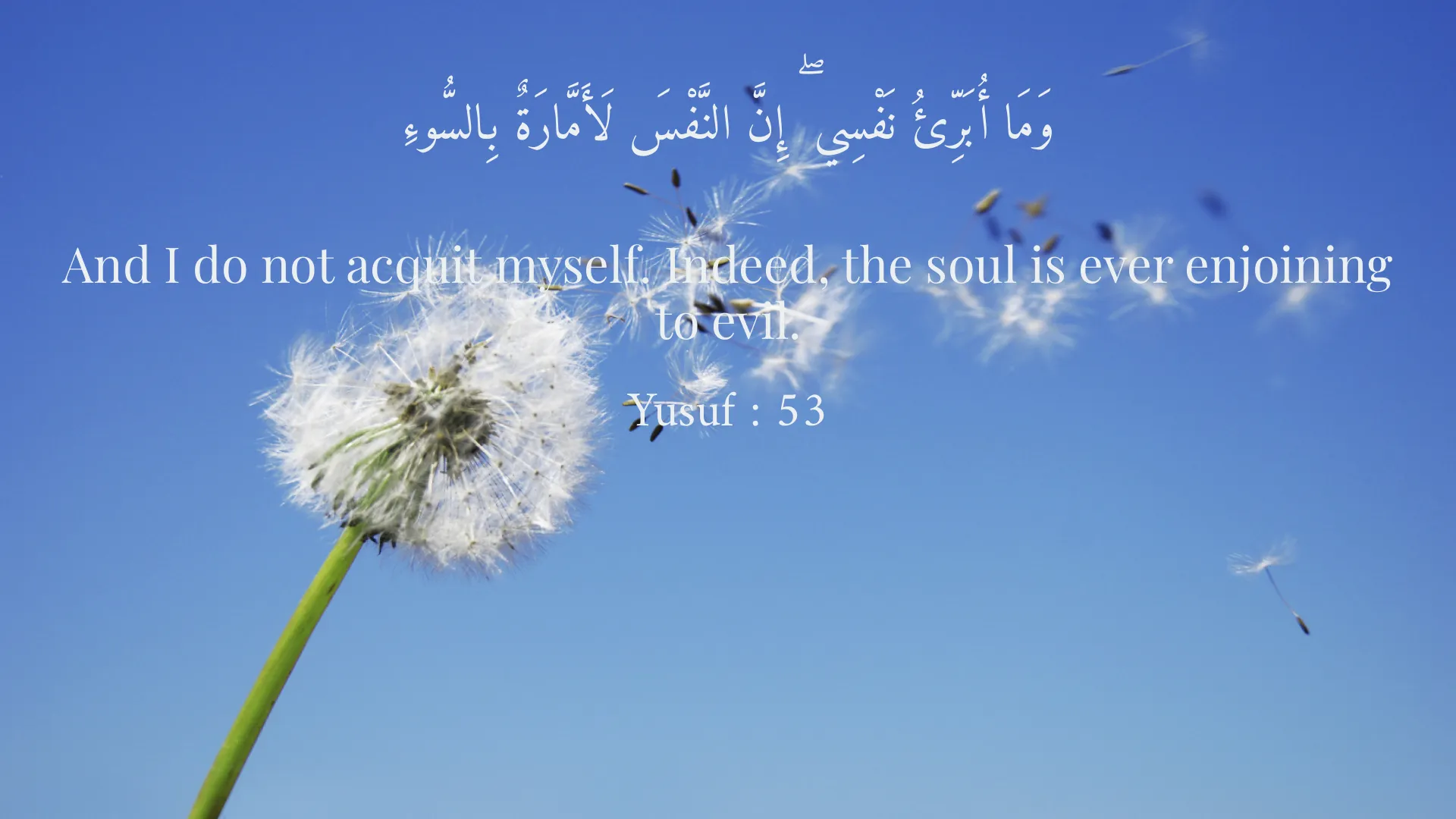
وَمَا أُبَرِّئُ نَفْسِي ۖ إِنَّ النَّفْسَ لَأَمَّارَةٌ بِالسُّوءِ
And I do not acquit myself. Indeed, the soul is ever enjoining to evil.
Yusuf : 53
وَالَّذِينَ إِذَا فَعَلُوا فَاحِشَةً أَوْ ظَلَمُوا أَنفُسَهُمْ ذَكَرُوا اللَّهَ فَاسْتَغْفَرُوا لِذُنُوبِهِمْ
And those who, when they commit an immorality or wrong themselves, remember Allah and seek forgiveness for their sins.
Al-Imran : 135
إِلَّا مَن تَابَ وَآمَنَ وَعَمِلَ عَمَلًا صَالِحًا
Except for the one who repents, believes, and does righteousness.
Al-Furqan : 70
Short Story
One day, a young man named Amir was searching for a way to overcome his inner desires. He decided to spend some time each day reading the Quran and applying its verses in his life. Over time, Amir noticed that with the remembrance of God and repentance, he could better control his desires. This positive change in his life strengthened his spirit and brought him a greater sense of peace.