Quranic Answer
In the rich and comprehensive teachings of the Holy Quran, worldly life is not merely an obstacle to spiritual growth but rather an unparalleled opportunity and ground for attaining proximity to God and earning His pleasure. Islam presents an inseparable view of this world and the hereafter, meaning that every worldly act, if performed with the correct intention, can be transformed into a great act of worship. The key to this transformation is 'divine intention' (niyyah). Intention is the spirit of an action, and without it, even the greatest good deeds lose their spiritual value. Therefore, the first step to performing worldly tasks with divine intention is to consciously form the inner purpose and will before starting any task. This means that before any action, whether small or large, we should reflect in our minds that the purpose of doing this work is to earn God's pleasure, serve His creation, earn a lawful livelihood for oneself and family, or develop the earth as commanded by God. The Holy Quran emphasizes the importance of righteous deeds and pure intention in numerous verses. For instance, in Surah Hud, verse 7, it states: “It is He who created the heavens and the earth in six days – and His Throne had been upon water – that He might test you as to which of you is best in deed.” This verse clearly indicates that the creation of the universe is a test for humanity to determine which of us performs the 'best deed' (ahsan 'amala). 'Best deed' does not merely mean performing a good deed, but rather performing a good deed in the best possible way and with the purest intention. This implies that both the quality of the action and the motive behind it are of high importance. A worker, when performing their task with divine intention, for lawful sustenance and to serve society with diligence and honesty, their work is considered an act of worship. A doctor, when striving to heal patients and alleviate their pain and suffering, with the intention of pleasing God, their work is an act of worship. Even daily life activities such as cooking, cleaning the house, or caring for children, if done with divine intention to fulfill family rights and express gratitude for God's blessings, will have spiritual reward. Another principle of great importance in this regard is 'sincerity' (ikhlas). Surah Al-Bayyinah, verse 5, states: “And they were not commanded except to worship Allah, [being] sincere to Him in religion, inclining to truth, and to establish prayer and to give zakah. And that is the correct religion.” This verse explicitly states that humans were not commanded except to worship Allah with complete sincerity. Sincerity means purifying one's intention from any non-divine impurities; it means performing actions solely for God's sake, not for show, fame, or to attract others' attention. When a person performs an action with sincerity, whether it is worldly or an act of worship, it attains its true value. It is this sincerity in intention that imbues our worldly work with a divine essence and transforms it from a mere material activity into a spiritual act. Furthermore, the Quran emphasizes 'excellence' (ihsan) in action. Ihsan means doing good and performing tasks in the best possible manner. When the intention is divine, the motivation to perform tasks with utmost quality and perfection also increases. One who does something for God performs it with greater precision, honesty, and responsibility. This not only contributes to their personal and spiritual growth but also leads to societal advancement. Imam Ali (peace be upon him) said: “Whoever performs his work well, his reward is complete.” This hadith also signifies the importance of quality and perfection in work when accompanied by divine intention. One of the most important ways to maintain divine intention in daily tasks is 'remembrance' (dhikr) of God. Remembrance of God can be present not only in the form of prayer and supplication but also throughout all moments of life. “Those who have believed and whose hearts are assured by the remembrance of Allah. Unquestionably, by the remembrance of Allah hearts are assured.” (Ar-Ra'd: 28). When a person remembers God while working and perceives Him as present and watching, it is natural that they strive to perform their work in the best possible way and in accordance with His pleasure. This continuous remembrance prevents heedlessness and worldliness, transforming worldly work into a bridge to the hereafter. Ultimately, this process requires self-discipline and continuous practice. One must constantly review their intentions and ensure that their primary motivation for performing activities is to seek divine pleasure. This perspective not only helps individuals be more purposeful and effective in their worldly lives but also imbues their existence with deeper peace and meaning, directing all their efforts towards eternal perfection and happiness. With this intention and approach, life transforms into a grand mihrab (prayer niche), where every moment is an opportunity for worship and drawing closer to the Creator.
Related Verses
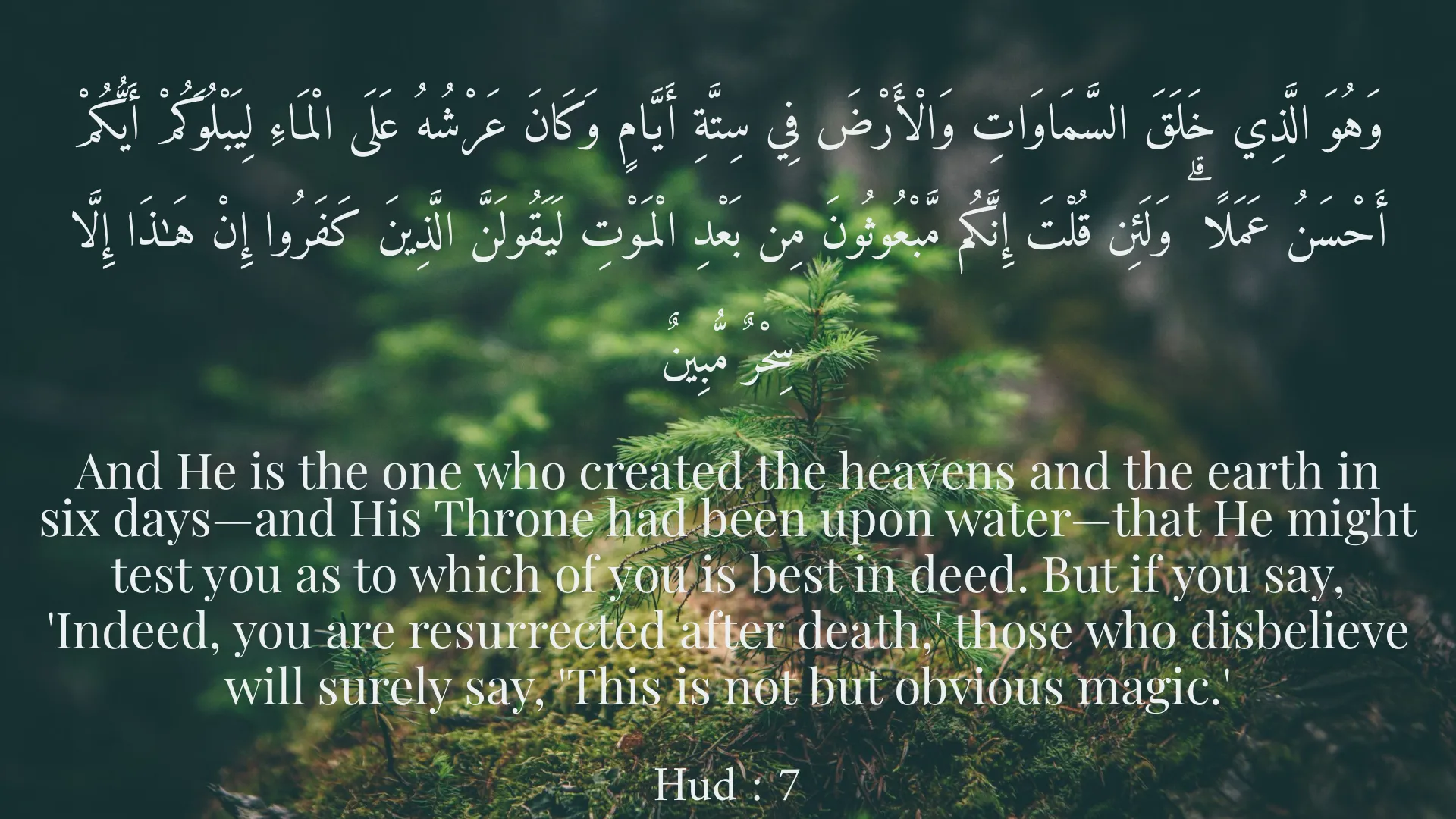
وَهُوَ الَّذِي خَلَقَ السَّمَاوَاتِ وَالْأَرْضَ فِي سِتَّةِ أَيَّامٍ وَكَانَ عَرْشُهُ عَلَى الْمَاءِ لِيَبْلُوَكُمْ أَيُّكُمْ أَحْسَنُ عَمَلًا ۗ وَلَئِن قُلْتَ إِنَّكُم مَّبْعُوثُونَ مِن بَعْدِ الْمَوْتِ لَيَقُولَنَّ الَّذِينَ كَفَرُوا إِنْ هَٰذَا إِلَّا سِحْرٌ مُّبِينٌ
And He is the one who created the heavens and the earth in six days—and His Throne had been upon water—that He might test you as to which of you is best in deed. But if you say, 'Indeed, you are resurrected after death,' those who disbelieve will surely say, 'This is not but obvious magic.'
Hud : 7
وَمَا أُمِرُوا إِلَّا لِيَعْبُدُوا اللَّهَ مُخْلِصِينَ لَهُ الدِّينَ حُنَفَاءَ وَيُقِيمُوا الصَّلَاةَ وَيُؤْتُوا الزَّكَاةَ ۚ وَذَلِكَ دِينُ الْقَيِّمَةِ
And they were not commanded except to worship Allah, [being] sincere to Him in religion, inclining to truth, and to establish prayer and to give zakah. And that is the correct religion.
Al-Bayyinah : 5
قُلْ إِنَّمَا أَنَا بَشَرٌ مِّثْلُكُمْ يُوحَىٰ إِلَيَّ أَنَّمَا إِلَٰهُكُمْ إِلَٰهٌ وَاحِدٌ ۖ فَمَن كَانَ يَرْجُو لِقَاءَ رَبِّهِ فَلْيَعْمَلْ عَمَلًا صَالِحًا وَلَا يُشْرِكْ بِعِبَادَةِ رَبِّهِ أَحَدًا
Say, 'I am only a human being like you, to whom has been revealed that your God is one God. So whoever would hope for the meeting with his Lord - let him do righteous work and not associate anyone with the worship of his Lord.'
Al-Kahf : 110
Short Story
Once upon a time, there was a devout and knowledgeable man who went to the marketplace every morning to carry out his daily tasks. People knew him and spoke well of him. One of his students asked him, 'Master, you who are a man of worship and asceticism, why do you engage so much in worldly affairs every day?' The master smiled and said, 'My dear, do you not know that intention is the spirit of action? Every step I take in this market, every transaction I make, and every word I utter is with the intention of providing a lawful livelihood for myself and my family, so that I may not be dependent on others and can help those in need, and most importantly, in all of this, to seek the pleasure and contentment of my Lord. Is not earning a lawful living with a divine intention a form of striving and worship in itself?' Upon hearing this, the student learned a great lesson: that worldly work, if accompanied by a sincere and divine intention, is greater than even major acts of worship and guides every human action towards perfection and divine pleasure.