Quranic Answer
Islamic meditation is an introspective practice that facilitates connection with the divine through contemplation, remembrance, and prayer. This form of meditation is deeply rooted in the teachings of Islam and serves as a spiritual tool to achieve tranquility and focus by bringing one closer to Allah (God). The essence of Islamic meditation lies in understanding the significance of intention, reflection, and devotion, all of which are crucial components of a fulfilling spiritual journey. To embark on the practice of Islamic meditation, one must begin with a sincere intention. The act of setting an intention is pivotal as it directs the heart and mind toward Allah. A powerful verse from the Quran, Surah Al-Imran, verse 191 states, "Those who reflect on the creation of the heavens and the earth, they say: O our Lord, You are exalted. Save us from the punishment of the fire." This verse underscores the importance of contemplation and reflection within the Islamic tradition. It encourages individuals to marvel at the universe, recognize Allah's endless creations, and appreciate His grandeur. The practice itself can be initiated in a serene and quiet environment, free from distractions. This sacred space invites practitioners to center themselves, begin focusing on their breath, and attune their hearts to the remembrance of Allah. Repeating prayers (Dhikr) and phrases from the Quran can be done softly in the mind or aloud, enabling one to forge a deeper connection to their faith. As we immerse ourselves in the rhythmic quality of our breathing and the serenity of the environment, we can find peace grounded in the heart of Islamic meditation. Reading and reflecting on the Quran is another vital element of Islamic meditation. The Quran, as the holy book of Islam, is filled with wisdom and guidance that surpasses the ages. Surah Al-Baqarah, verse 286 reminds us of Allah's power and compassion: "Allah does not burden a soul beyond that it can bear." This verse acts as a gentle reminder of Allah’s mercy and encourages believers to maintain a peaceful state of mind. Understanding and contemplating such verses can relieve anxiety and help individuals navigate the trials of life with patience and solace. Moreover, Islamic meditation serves as a means to attain a continuous state of mindfulness and presence in our daily lives. Surah Az-Zumar, verse 9 challenges us to reflect on the spiritual merits of devotion: "Is the one who spends the night prostrating and standing in prayer, fearing the Hereafter, and hoping for the mercy of their Lord, comparable to the disbeliever?" This verse highlights the importance of integrating moments of prayer, reflection, and meditation into our daily routines. While some may engage in formal prayers, meditation opens the door for believers to explore personal pathways to connect with Allah, fortifying their faith and resilience. Integrating Islamic meditation into one’s daily life allows individuals to cultivate an ongoing dialogue with Allah, fostering both spiritual and emotional growth. Regular meditation sessions can lead to enhanced focus, reduced stress levels, and greater awareness of life’s blessings. Practicing meditation encourages us to take a step back and observe our thoughts and emotions without judgment, enabling us to address life’s challenges with a sense of calm and clarity. In modern society, where distractions abound and the pace of life can often feel overwhelming, the practice of Islamic meditation becomes even more essential. It is a sanctuary for the soul, encouraging believers to find solace and stillness amidst the chaos of daily life. By dedicating time to engage in meditation, one can create a sacred routine that nourishes the spirit and revitalizes the mind. In addition, the communal aspect of Islamic meditation cannot be overlooked. Engaging in group meditation or spiritual gatherings nurtures a sense of belonging and fosters collective spiritual growth. These communal spaces allow individuals to share experiences, readings, and reflections, thus enriching each participant's meditation journey. The shared energy and intentions in group settings can amplify the experience, leading to greater spiritual fulfillment and enhanced emotional well-being. Furthermore, Islamic meditation extends beyond just personal peace; it acts as a transformative practice that compels individuals to lead a life filled with compassion, understanding, and humility. It encourages believers to think deeply about their actions, their relationships with others, and their role in the greater tapestry of creation. As noted in Surah Al-Hujurat, verse 13, "O mankind, indeed we have created you from male and female and made you peoples and tribes that you may know one another. Indeed, the most noble of you in the sight of Allah is the most righteous of you. Indeed, Allah is Knowing and Acquainted." This reflects the universal nature of our spiritual journey and the importance of fostering unity through understanding, kindness, and respect towards one another. Ultimately, incorporating Islamic meditation as a core aspect of our lives will not only enhance our spirituality but also allow us to navigate life with grace and gratitude. As we reflect upon creation, breathe with intention, and immerse ourselves in the divine presence of Allah, we begin to cultivate tranquility and draw nearer to our Creator. It becomes evident that meditation in Islam transcends simple relaxation; it is an integral practice that encourages us to deepen our faith, embrace our humanity, and recognize the blessings in our lives. In conclusion, engaging in Islamic meditation is a journey that requires dedication, sincerity, and reflection. It is a path that leads to inner peace, connection with Allah, and an enriched sense of gratitude for life’s many gifts. May we all strive to incorporate moments of meditation into our daily lives, remembering that through consistent practice, we can achieve tranquility, purpose, and a closer relationship with our Lord. Thus, Islamic meditation is not merely an act; it is a way of life that harmonizes the heart and mind in pursuit of divine nearness.
Related Verses
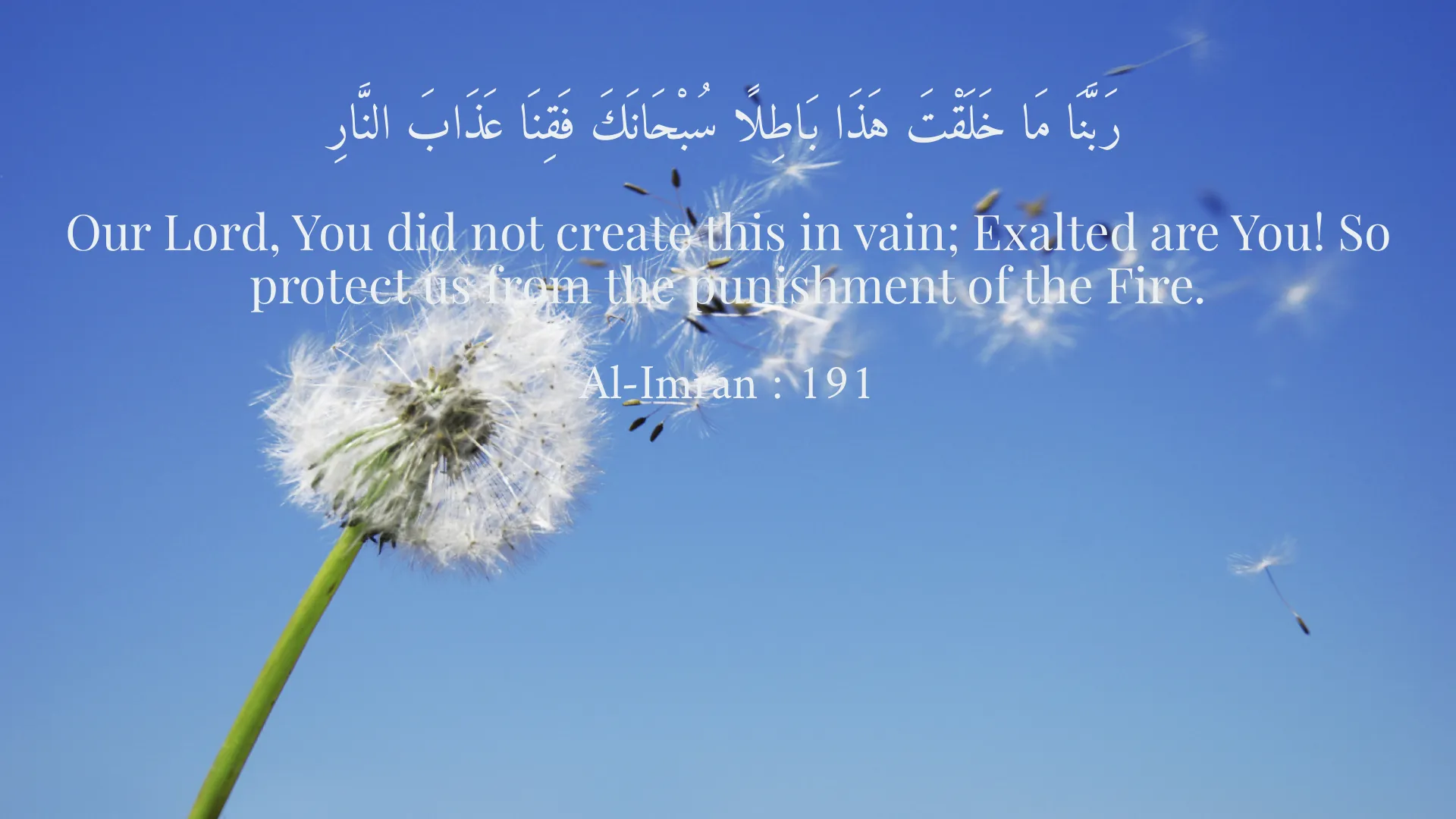
رَبَّنَا مَا خَلَقْتَ هَذَا بَاطِلًا سُبْحَانَكَ فَقِنَا عَذَابَ النَّارِ
Our Lord, You did not create this in vain; Exalted are You! So protect us from the punishment of the Fire.
Al-Imran : 191
لَا يُكَلِّفُ اللَّهُ نَفْسًا إِلَّا وُسْعَهَا
Allah does not burden a soul beyond that it can bear.
Al-Baqarah : 286
أَمَّنْ هُوَ قَانِتٌ آنَاءَ اللَّيْلِ سَاجِدًا وَقَائِمًا يَحْذَرُ الْآخِرَةَ
Is one who is devoutly obedient during the night, prostrating and standing in prayer, fearing the hereafter.
Az-Zumar : 9
Short Story
One peaceful morning, Isa decided to sit in silence for a moment and think about Allah. He closed his eyes and recalled the blessings that Allah had bestowed upon him. Gradually, he felt peace seeping into his heart and his thoughts became clearer. With this meditation, Isa resolved to remember Allah more in his daily life.