Quranic Answer
Patience is one of the essential human qualities emphasized in the Holy Quran, guiding believers in navigating the complexities of life in a way that fosters resilience and understanding. The significance of patience is particularly highlighted in Surah Al-Baqarah, verse 153, where Allah instructs believers to seek help through patience and prayer. This verse serves as a profound reminder that during tough and difficult times, it is not merely our personal strength that sustains us, but our faith and connection with God which provide the ultimate support and comfort. Patience is not just the ability to wait; it's how we act while waiting. It involves maintaining our composure and character when confronted with problems and challenges. Life often throws unexpected curveballs that aim to test our resolve, and in these moments, our responses can define our journey. For instance, if we encounter anger or tension in a conversation or a social setting, instead of reacting impulsively, the Quran encourages us to take a moment of silence to reflect. This simple yet profound practice can prevent conflict escalation and allow for a more thoughtful and measured response. In Surah Al-Imran, verse 186, Allah reminds us that believers will surely be tested. This acknowledgment is crucial since it sets the foundation for understanding that difficulties are not anomalies in life, but rather integral components of the human experience. Challenges test not only our faith but also provide valuable opportunities to practice patience. Each test can help us forge a deeper connection with Allah, encouraging us to lean on Him and seek His guidance during trials. One of the best ways to cultivate patience and resilience is through prayer and supplication to God. When we earnestly seek help from Allah, the source of all strength, we find that He is capable of aiding us to discover the patience we need to navigate through life's hardships. The act of prayer itself can be a calming and centering experience, allowing individuals to collect their thoughts and emotions while reinforcing their sense of reliance on the Divine. To further practice and train ourselves in the virtue of patience, engaging in constructive activities can prove particularly effective. For example, meditation emerges as an invaluable tool, encouraging mindfulness and present-focused awareness. Through meditation, individuals learn to focus their thoughts, regulate their emotions, and ultimately enhance their ability to remain calm in the face of adversity. This practice not only helps individuals deal with immediate challenges but also fosters a long-term mindset of patience and understanding. Journaling is another beneficial practice that can help nurture patience. By documenting daily experiences, thoughts, and emotions, one can gain insights into their reactions and patterns. This reflection helps individuals identify triggers and develop strategies to respond more calmly and effectively in challenging situations. Over time, this process can cultivate a deeper level of self-awareness, which is essential for developing patience. Engaging in discussions with those who have similar experiences can also be an effective approach to cultivating patience. Sharing individual struggles and triumphs fosters a sense of community and connection, reminding us that we are not alone in our challenges. These dialogues can offer fresh perspectives, shared wisdom, and mutual encouragement. The learning experience within such exchanges can lead to increased patience not only with oneself but also with others. Moreover, the practice of patience can extend beyond personal development and begin to positively influence our relationships with others. When we cultivate patience within ourselves, we become more understanding, compassionate, and empathetic towards others' struggles. This outward expression of patience can create a more peaceful and harmonious environment, benefiting not only ourselves but also the people who surround us. The Quran provides numerous insights and teachings that underline the value of patience as a divine quality that believers should strive to embody. The propagation of patience can be witnessed in the lives of the Prophet Muhammad (peace be upon him) and the other prophets, who encountered immense trials yet maintained their grace and steadfastness. Their innumerable lessons are countless examples for us to draw inspiration from, illustrating that patience is not merely a passive endurance of challenges but an active engagement in resilience and faith. In conclusion, patience is a multifaceted quality that encompasses not just the ability to wait, but how we conduct ourselves during trying times. By seeking solace in prayer, engaging in activities like meditation and journaling, and fostering open communication with others, we can cultivate a deeper sense of patience in our lives. The teachings of the Quran remind us that these trials and tribulations in life serve as valuable moments to practice and strengthen our patience. Through these experiences, we can emerge not only as more resilient individuals but also as more compassionate members of our communities. The journey towards patience is both a challenge and a gift, and it is one that we are called to embark upon with faith and dedication.
Related Verses
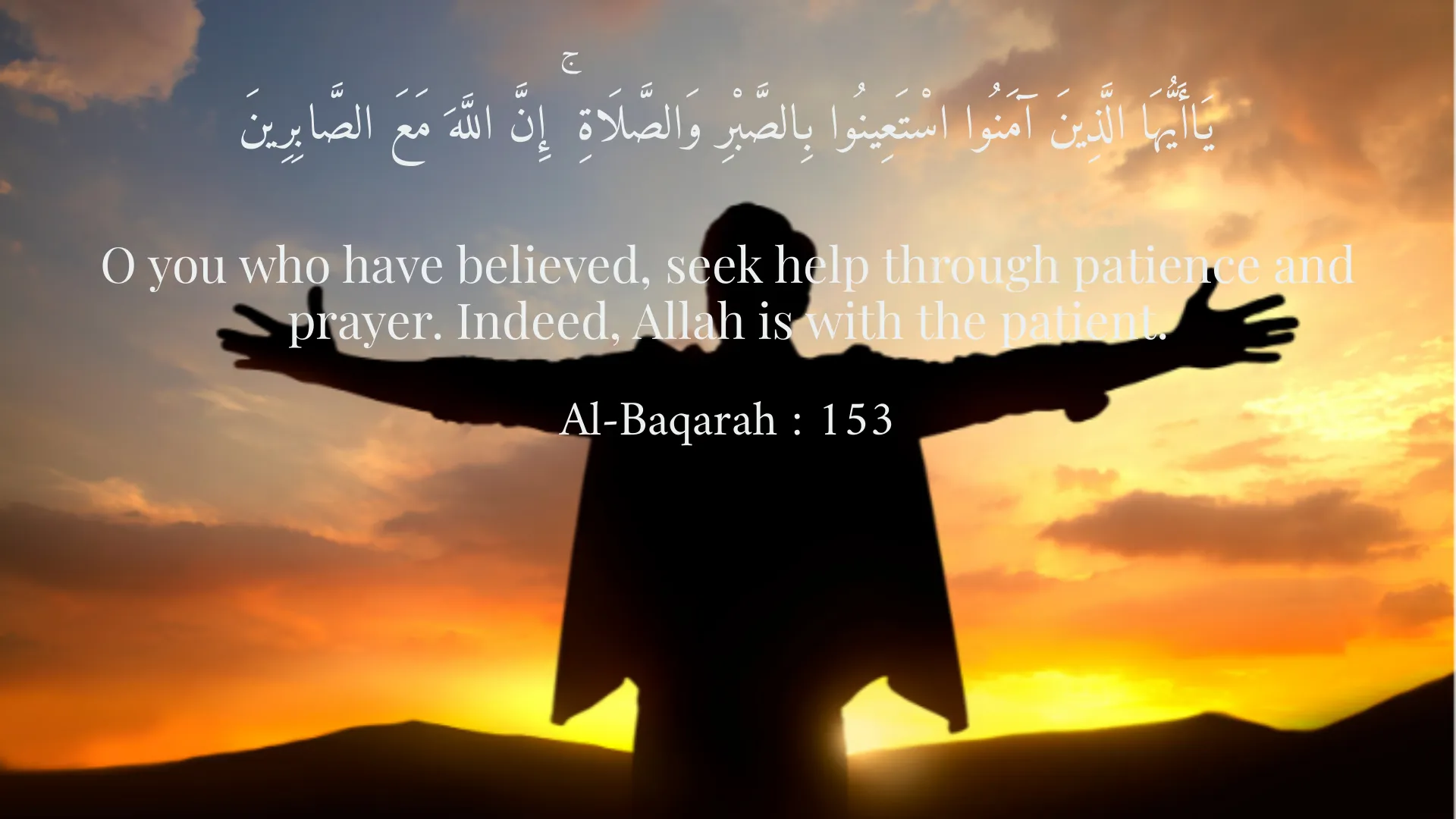
يَاأَيُّهَا الَّذِينَ آمَنُوا اسْتَعِينُوا بِالصَّبْرِ وَالصَّلَاةِ ۚ إِنَّ اللَّهَ مَعَ الصَّابِرِينَ
O you who have believed, seek help through patience and prayer. Indeed, Allah is with the patient.
Al-Baqarah : 153
لَتُبْلَوُنَّ في أَمْوالِكُمْ وَأَنفُسِكُمْ وَلَتَسْمَعُنَّ مِنَ الَّذِينَ أُوتُوا الْكِتابَ مِن قَبْلِكُمْ وَمِنَ الَّذِينَ أَشْرَكُوا أَذًى كَثِيرًا ۖ وَإِن تَصْبِرُوا وَتَتَّقُوا فَإِنَّ ذَٰلِكَ مِنْ عَزْمِ الأُمُورِ
You will surely be tested in your properties and yourselves, and you will surely hear from those who were given the Scripture before you and from those who associate others with Allah much abuse. But if you are patient and fear Allah - it is a matter [worthy] of determination.
Al-Imran : 186
Short Story
One day, in a small village, there lived a man named Ali who was very patient. He faced many challenges, but he never lost hope. One day, while helping one of his neighbors, the suit that had been lent to him got damaged. Instead of getting angry, Ali calmly talked to his neighbor and offered to compensate for the damage. His patience deepened their friendship, and Ali became known as a model of patience in the area.