Quranic Answer
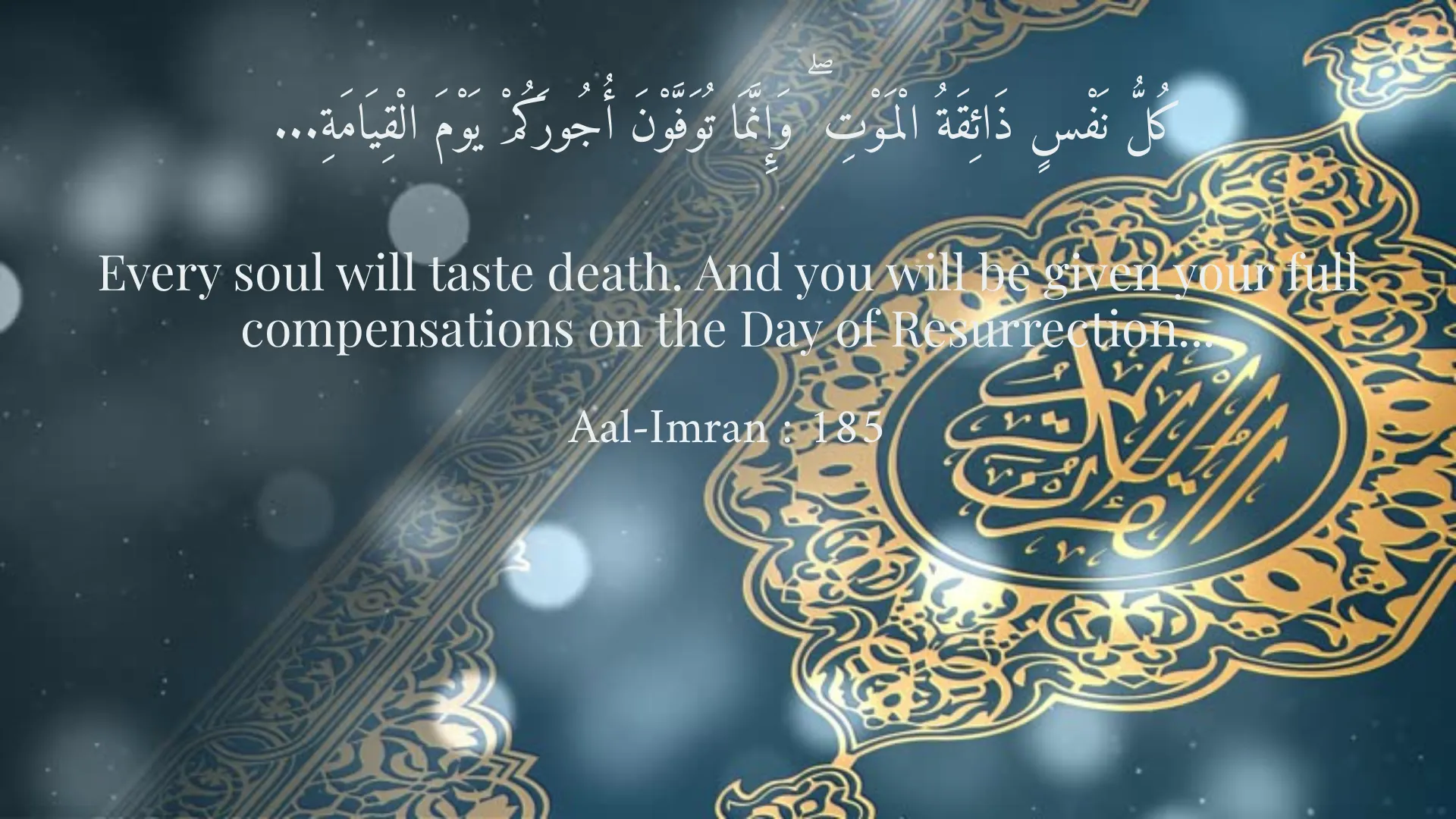
Preparing for death is one of the most significant issues addressed in the teachings of Allah and various religious doctrines. It stands as a poignant reminder of the transient nature of life, invariably provoking contemplation about our existence and mortality. Embracing the inevitability of death not only incentivizes us to live purposefully but also instructs us on how to prepare for the ultimate conclusion of our lives. In the Holy Quran, death is portrayed as an unavoidable reality, a key aspect that intricately links human existence to the concept of time and accountability. In Surah Aal-Imran, verse 185, Allah articulates: 'Every soul will taste death, and you will be given your full compensations on the Day of Resurrection...' This definitive statement cultivates a profound understanding that life is transient, and denying death is merely an act of self-deception. Through this lens, it becomes crucial to ponder the value we place on our actions, relationships, and spiritual growth. In recognizing that life is temporary, we can surmount our fears surrounding death and find a sense of purpose that transcends beyond mere earthly existence. To adequately prepare for death means to strive toward piety and engage in righteous deeds. In Surah Al-Baqarah, verse 94, Allah commands: 'And do not die except while you are Muslims.' The directive suggests that living with faith and adhering to both obligatory and recommended acts of worship are foundational steps in preparing ourselves for death. Yet, this preparation extends far beyond mere ritualistic adherence; it encapsulates the values of integrity, kindness, and compassion that we must practice continually. The concept of 'piety' in Islam encompasses a broad spectrum of behavior and intent. It calls upon each individual to align their daily conduct with the principles of their faith, understanding that the legacy left behind is essential in the face of mortality. Righteous deeds, as emphasized in Islamic teachings, are multifaceted. They include not just prayer and fasting, but also acts of charity, maintaining good relationships with others, seeking knowledge, and living a life that reflects the values of justice, equity, and kindness towards fellow beings. These actions contribute to a life lived honorably and prepares us for standing in front of Allah on the Day of Judgment. Additionally, history is rife with examples of individuals who have epitomized these principles and have faced the end of their lives with grace and dignity. The tales of the Prophets, as narrated in various Islamic texts, highlight how they embodied a constant readiness for death. Whether through physical trials or life's tribulations, their steadfastness serves as a guiding light for those seeking to remain focused on their spiritual journey. It is through their example we glean the importance of patience and the necessity of engaging in prayer for companionship with the righteous. Patience, in the face of life’s tests and tribulations, is indeed a crucial aspect that can assist us on this profound journey toward preparing for death. This virtue allows for endurance, fortitude, and resilience—qualities that fortify our spiritual fortitude during hardship. Those who cultivate patience are not only prepared for life's end; they are also better equipped to contribute positively to the world around them. Patience teaches us to look beyond immediate challenges and understand the broader context of divine wisdom in our lives—a key attribute when we consider our preparations for the afterlife. Furthermore, prayer plays an integral role in this preparation. Engaging in regular prayers connects us with Allah, serves as a reminder of our dependence on Him, and helps to purify our intentions. The act of praying is not only a way to seek forgiveness; it is a means to ask for strength, guidance, and an unwavering heart as we journey toward our last moments. Companionship with the righteous is equally essential. The Quran stresses the importance of keeping good company, as it affects our character and moral compass. In choosing to surround ourselves with those striving for righteousness, we are reminded of our values and reinforced in our efforts toward living a life devoted to the service of Allah. The bonds developed in pursuing shared beliefs create a supportive network that bolsters one’s faith and deepens their understanding of piety and its manifestations in daily life. In contemplating death, it serves as a powerful reminder for us to optimize our lives. Everyday choices, no matter how trivial they may seem, can reverberate across a lifetime and beyond. By being mindful of Allah and the Day of Judgment, we cultivate an awareness that compels us to evaluate what is truly essential in our lives. We are encouraged to solidify our legacies, whether through community service, fostering relationships grounded in love and respect, or simply nurturing our relationship with Allah. Ultimately, preparing for death encapsulates a comprehensive approach encompassing both spiritual and moral growth. By acknowledging the reality of death, aligning our actions with piety, and developing resilience through patience and prayer, we begin to construct a life conducive to a peaceful transition. This journey not only prepares us for the inevitability of death but also bestows upon us a greater appreciation for life. Each moment becomes a precious opportunity, compelling us to live fully and with intention. In light of these reflections, it becomes evident that preparing for death is indeed a transformative process that influences our daily lives. By internalizing these teachings from the Quran, one can achieve a harmonious existence, rendering the journey towards death not one of fear, but rather a passage of dignity and grace.
Related Verses
كُلُّ نَفْسٍ ذَائِقَةُ الْمَوْتِ ۖ وَإِنَّمَا تُوَفَّوْنَ أُجُورَكُمْ يَوْمَ الْقِيَامَةِ...
Every soul will taste death. And you will be given your full compensations on the Day of Resurrection...
Aal-Imran : 185
وَلا تَمُوتُنَّ إِلَّا وَأَنتُم مُّسْلِمُونَ
And do not die except while you are Muslims.
Al-Baqarah : 94
Short Story
One day, a man named Ahmad was pondering about death and the afterlife. He decided to dedicate a little bit of his time each day to remembering God and praying. As a result, he found himself drawing closer to God each day and experiencing greater peace. This path led him to be reminded of death and prepare for a life beyond this world.