Quranic Answer
How to prepare the heart for divine love? This profound and fundamental question delves into the very essence of human existence and the purpose of creation. The Holy Quran, a comprehensive guide for human well-being, not only answers this question but also provides an elaborate roadmap for spiritual journeying, enabling the human heart to become receptive to the infinite divine love. This journey is a path that begins with knowledge and culminates in action, purity, and submission to God's will. The first step in preparing the heart is "knowledge" (Ma'rifah). Knowledge of Allah (God) is not merely an awareness of His existence but encompasses an understanding of His perfect and beautiful attributes. When a person grasps God's grandeur, wisdom, power, mercy, and boundless love, their heart naturally inclines towards Him. The Quran repeatedly invites humanity to contemplate the creation of the heavens and the earth, the order governing the cosmos, and the divine signs within oneself and in nature. This contemplation opens a window to deeper insight and prepares the heart to accept absolute truth. The more a person recognizes the Creator's magnificence, the humbler they become, and their dependence on anything other than God diminishes. This process lays the groundwork for pure devotion and sincere love. This knowledge should not be merely intellectual, but should permeate a person's entire being, influencing all aspects of their life. Reflection on the verses of the Quran and studying the lives of the Prophets and saints also deepen this understanding. The second step is "purification of the heart" (Tazkiyah al-Nafs). The human heart is a vessel meant to hold divine love. Just as a container must be clean to hold pure water, so too must the heart be cleansed of impurities and veils to receive divine love. These impurities include sins, moral vices such as envy, pride, greed, stinginess, hypocrisy, and excessive worldly attachments. The Quran places great emphasis on repentance (Tawbah) and seeking forgiveness (Istighfar). True repentance involves sincere regret for sins and a firm resolve not to return to them. As stated in Surah Al-Baqarah, verse 222: "...Indeed, Allah loves those who constantly repent and loves those who purify themselves." This verse indicates that purity and repentance are prerequisites for earning divine love. Letting go of material attachments that distract a person from the remembrance of God gradually lightens the heart, making it ready to soar in the skies of love. This purification is a continuous process that requires self-reflection, introspection (Muraqabah), and accountability (Muhasabah). Avoiding prohibitions and fulfilling divine obligations are fundamental steps in this path. Every sin is like dust that settles on the mirror of the heart, preventing the reflection of divine light; therefore, seeking forgiveness and repentance are polishes for this mirror. The third step is "constant remembrance of God" (Dhikr). The human heart is like land that needs continuous irrigation. The remembrance of God is the irrigation of the heart. The Quran explicitly states that true tranquility for hearts lies in the remembrance of God: "Those who have believed and whose hearts are assured by the remembrance of Allah. Unquestionably, by the remembrance of Allah hearts are assured." (Surah Ar-Ra'd, verse 28). This verse offers a healing balm for worldly anxieties and worries. Dhikr is not merely verbal glorification and praise; it includes contemplating God's signs, prayer (Salat), supplication (Du'a), reciting the Quran, and any act that brings God to mind. When the heart is constantly filled with the remembrance of God, there is no room for satanic whispers or transient affections, and a person's entire being becomes imbued with divine essence. Both verbal and heartfelt remembrance are of great importance and complement each other. Presence of heart in worship and avoiding heedlessness are essential pillars of this remembrance. The fourth step is "obedience and following divine commands and the Prophet's Sunnah." True love is accompanied by obedience and submission. If someone claims to love God but disobeys His commands, their claim is false. In Surah Aal-e-Imran, verse 31, Allah says: "Say, [O Muhammad], 'If you should love Allah, then follow me, and Allah will love you and forgive you your sins. And Allah is Forgiving and Merciful.'" This verse clearly states that the path to divine love is through following the Noble Messenger (PBUH). Performing obligatory duties, refraining from prohibitions, and striving to perform recommended acts bring the heart closer to God. The further a person progresses on the path of servitude, the fewer the veils between them and their Lord, and the more their heart's channels open to receive divine grace. This obedience is not out of fear, but out of love and eagerness for the Beloved's pleasure. Complete obedience includes submitting to divine decree and accepting His wisdom in all matters of life. The fifth step involves "patience (Sabr) and reliance (Tawakkul)." Worldly life is full of ups and downs and divine tests. Patience in the face of difficulties, calamities, and misfortunes, and complete reliance on God, are signs of deep faith and the heart's readiness for divine love. When a person knows that everything is in God's hands and that He desires what is best for His servants, their heart finds peace and relies solely on Him. This reliance frees them from dependence on creation and directs all their attention and love towards the Creator. Gratitude for blessings also expands the heart and reminds a person of God's boundless grace. Indeed, patience and gratitude are two wings for soaring on the path of divine love. True reliance does not mean abandoning effort, but rather making an effort and entrusting the outcome to God with peace of mind. Ultimately, preparing the heart for divine love is a continuous and dynamic process that requires self-cultivation (Tazkiyah), constant introspection, and struggle against the lower self (Mujahadah). This journey is accompanied by sincerity of intention (Ikhlas), presence of heart in worship, and service to God's creation. With every step a person takes on this path, a veil is lifted, and the light of divine love begins to shine in their heart. This love elevates a person to the pinnacle of perfection, fills their life with meaning and tranquility, and guides them towards eternal felicity. This is not an unattainable goal but a profoundly personal and transformative experience accessible to anyone who sincerely seeks it. It is a path that, with every small and sincere step, opens up to boundless horizons of light and truth, cleansing the heart of all darkness and turbidity. So let us polish our hearts with the light of the Quran and the remembrance of God, that they may be ready to receive this boundless ocean of love and taste the eternal joy of divine proximity. This readiness is the fruit of a lifetime of sincere and pure effort on the path of servitude.
Related Verses
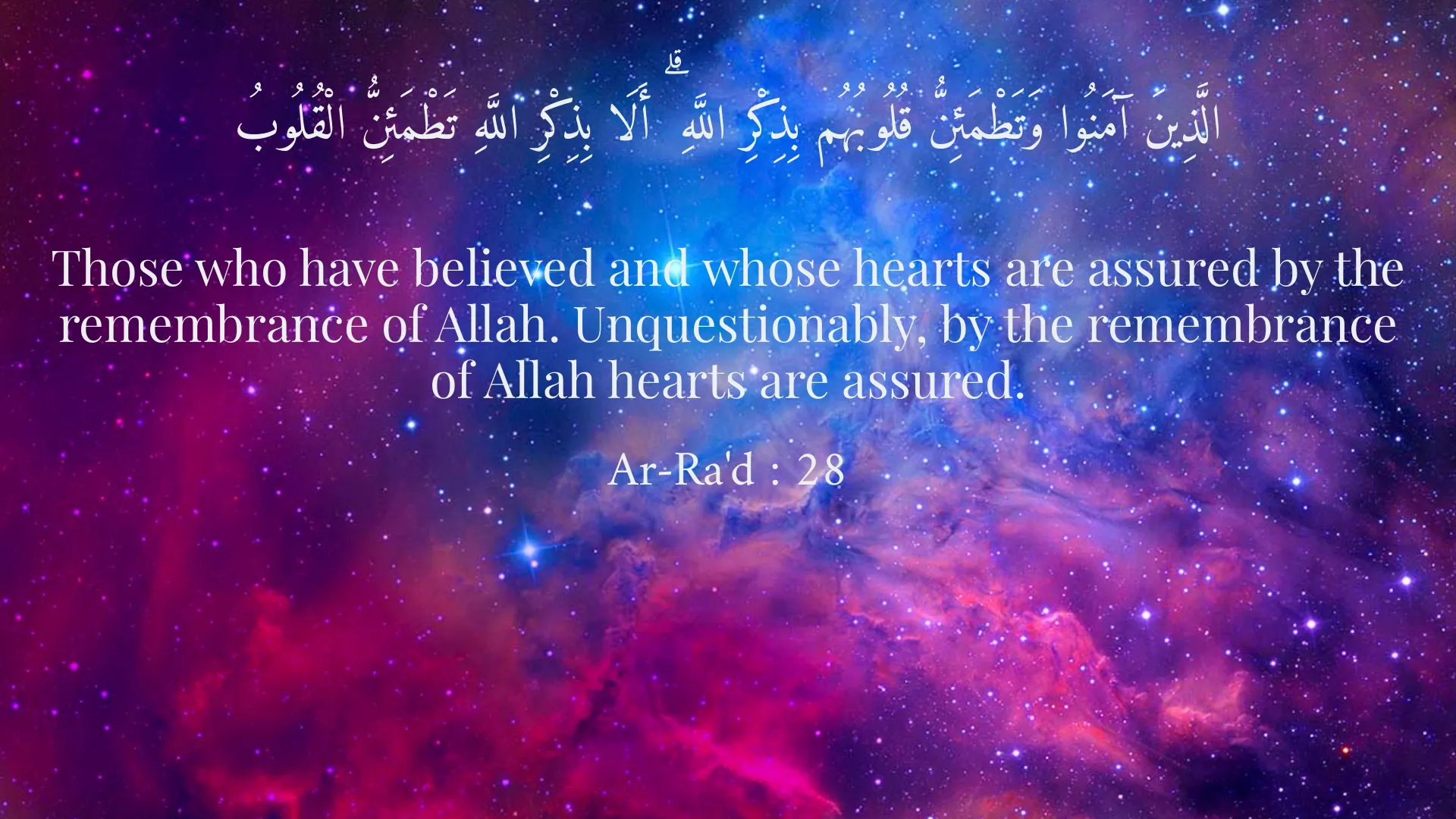
الَّذِينَ آمَنُوا وَتَطْمَئِنُّ قُلُوبُهُم بِذِكْرِ اللَّهِ ۗ أَلَا بِذِكْرِ اللَّهِ تَطْمَئِنُّ الْقُلُوبُ
Those who have believed and whose hearts are assured by the remembrance of Allah. Unquestionably, by the remembrance of Allah hearts are assured.
Ar-Ra'd : 28
قُلْ إِن كُنتُمْ تُحِبُّونَ اللَّهَ فَاتَّبِعُونِي يُحْبِبْكُمُ اللَّهُ وَيَغْفِرْ لَكُمْ ذُنُوبَكُمْ ۗ وَاللَّهُ غَفُورٌ رَّحِيمٌ
Say, [O Muhammad], 'If you should love Allah, then follow me, and Allah will love you and forgive you your sins. And Allah is Forgiving and Merciful.'
Aal-e-Imran : 31
وَيَسْأَلُونَكَ عَنِ الْمَحِيضِ ۖ قُلْ هُوَ أَذًى فَاعْتَزِلُوا النِّسَاءَ فِي الْمَحِيضِ ۖ وَلَا تَقْرَبُوهُنَّ حَتَّىٰ يَطْهُرْنَ ۖ فَإِذَا تَطَهَّرْنَ فَأْتُوهُنَّ مِنْ حَيْثُ أَمَرَكُمُ اللَّهُ ۚ إِنَّ اللَّهَ يُحِبُّ التَّوَّابِينَ وَيُحِبُّ الْمُتَطَهِّرِينَ
And they ask you about menstruation. Say, 'It is harm, so keep away from females during menstruation. And do not approach them until they are pure. And when they have purified themselves, then come to them from where Allah has ordered you. Indeed, Allah loves those who constantly repent and loves those who purify themselves.'
Al-Baqarah : 222
Short Story
It is narrated that there was a powerful king, who, despite all his grandeur and wealth, was always troubled and sorrowful. He heard of a dervish who lived in a secluded place and, despite his destitution, his heart was perpetually joyful and serene. The king went to the dervish and said: "O man of God, I, with all my wealth and power, never find peace in my heart, yet you, with all your poverty, are so content? How is this possible?" The dervish smiled and replied: "O King, your heart is filled with the fleeting world, while my heart is filled with the remembrance of the Everlasting God. When a vessel is full of one thing, there remains no room for another. How can one whose heart is tied to this transient abode ever make space for the eternal abode within it? The heart must be emptied of all else, so that the love of the Truth (God) may reside within it." The king understood this profound wisdom and realized that true tranquility lies in cleansing the heart from the rust of the world and filling it with the remembrance and love of the Divine.