Quranic Answer
Preparing the heart for servitude to God is a profound and intricate topic that resonates deeply within the teachings of the Holy Quran. The concept of soulful servitude stretches far beyond mere rituals; it encapsulates an entire way of life that is rooted in faith, righteous deeds, and spiritual elevation. This article delves into the various facets of preparing one's heart for devotion to God, highlighting the significant role that faith, charitable acts, repentance, prayer, and remembrance play in this sacred journey. The Quran, as a divine guideline, provides invaluable insights into each of these aspects, emphasizing the importance of sincere commitment to one's faith. To begin with, one of the most critical ways to prepare the heart is by fostering a deep and unwavering belief in God and committing oneself to good deeds. The Holy Quran emphasizes this dimension through its exhortations to believers, reminding them of their accountability on the Day of Judgment. This accountability serves as an impetus for individuals to align their actions with the principles of righteousness. For instance, in Surah Al-Baqarah, verse 177, Allah states: "Righteousness is not that you turn your faces toward the east or the west, but [true] righteousness is in one who believes in Allah, the Last Day, the Angels, the Book, and the Prophets and gives his wealth, in spite of his love for it, to relatives, orphans, the needy, the traveler, those who ask [for help], and for freeing slaves." This profound verse illustrates that true goodness transcends the mere performance of rituals such as prayer and fasting. It encompasses a broader spectrum of charitable deeds aimed at aiding others, thus nurturing a heart that is not only devoted to God but also compassionate towards fellow beings. The Act of charity is an essential manifestation of one's faith. By giving generously to those in need, a believer not only enhances their connection with God but also cultivates empathy and love within their heart. The Quran underscores that it is not solely the act of giving that matters, but the sincerity of the intention behind such actions. The connection between faith and good deeds creates a virtuous cycle, where acts of kindness reinforce one's faith, and the strength of faith motivates the individual to perform more good deeds. In preparing the heart, individuals learn that worship is actively engaging with the community and making tangible differences in the lives of others. Repentance plays a crucial role in this preparatory process. The act of returning to Allah in sincere repentance is a way to purify one's heart from the weight of sins and transgressions. In Surah At-Tahreem, verse 8, Allah states: "O you who have believed, repent to Allah with sincere repentance. Perhaps your Lord will remove from you your misdeeds and admit you into gardens beneath which rivers flow." This verse beautifully encapsulates the essence of God's mercy and love, portraying repentance as a path to redemption. A sincere return to Allah allows individuals to cleanse their hearts and realign their intentions towards servitude. Acknowledging one's mistakes and turning towards God in remorse fosters humility and opens the heart to divine guidance. In addition to repentance, prayer and constant remembrance are vital tools for preparing the heart for worship. The Quran frequently encourages believers to establish a strong connection with their Creator through prayer, invoking His name in humility and sincerity. As indicated in Surah Al-A'raf, verse 55: "Invoke your Lord in humility and privately." This verse reinforces the significance of personal devotion and the inner journey of the believer. Through consistent prayer and supplication, individuals are reminded of their dependence on God and their purpose in life. By dedicating time for prayer and reflection, the heart is anchored in faith, reducing distractions from worldly matters. Furthermore, the act of remembrance, known as Dhikr, serves to reinforce the presence of God in the believer's life. Through repetitive phrases that glorify and praise Allah, individuals cultivate a strong sense of awareness that keeps the heart focused on spiritual matters. The heart becomes a sanctuary for divine love and contemplation, nurturing a sense of calmness and purpose. Such practices encourage believers to detach their hearts from transient worldly affairs and embrace a deeper connection with the Eternal. It is also essential to note that the journey of preparing the heart for servitude to God is not a solitary endeavor. The community plays a crucial role in fostering an environment conducive to spiritual growth. Engaging with fellow believers creates opportunities for mutual encouragement and support. The teachings of the Quran promote unity among believers, urging them to come together in worship, prayer, and charitable acts. This collective effort not only strengthens individual hearts but also enhances the entire community's connection to God. In conclusion, preparing the heart for servitude to God is a comprehensive process rooted in faith, righteous deeds, repentance, prayer, and remembrance. Each of these elements plays a vital role in nurturing an authentic connection with the Divine. The Holy Quran serves as an invaluable guide, reminding believers of their purpose and responsibility in this world. By embracing these teachings, individuals can not only enhance their own spiritual journeys but also contribute positively to the lives of others, ultimately achieving a profound state of servitude that aligns with God's will. As the heart is prepared and exudes love, kindness, and faith, the servant becomes a beacon of light in a world that longs for compassion and divine guidance.
Related Verses
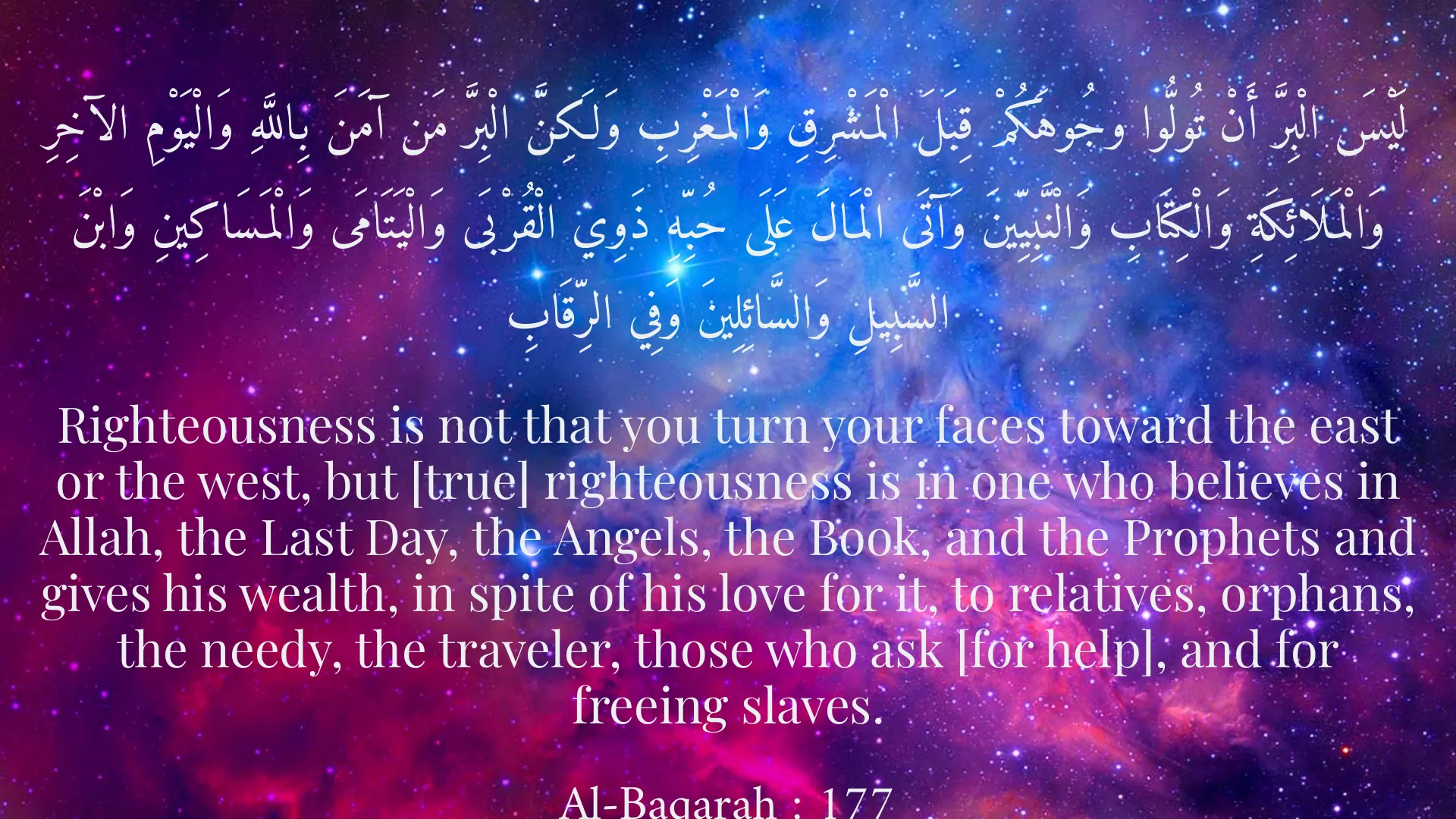
لَيْسَ الْبِرَّ أَنْ تُولُّوا وجُوهَكُمْ قِبَلَ الْمَشْرِقِ وَالْمَغْرِبِ وَلَكِنَّ الْبِرَّ مَن آمَنَ بِاللَّهِ وَالْيَوْمِ الآخِرِ وَالْمَلَائِكَةِ وَالْكِتَابِ وَالْنَّبِيِّينَ وَآتَى الْمَالَ عَلَى حُبِّهِ ذَوِي الْقُرْبَى وَالْيَتَامَى وَالْمَسَاكِينِ وَابْنَ السَّبِيلِ وَالسَّائِلِينَ وَفِي الرِّقَابِ
Righteousness is not that you turn your faces toward the east or the west, but [true] righteousness is in one who believes in Allah, the Last Day, the Angels, the Book, and the Prophets and gives his wealth, in spite of his love for it, to relatives, orphans, the needy, the traveler, those who ask [for help], and for freeing slaves.
Al-Baqarah : 177
يَا أَيُّهَا الَّذِينَ آمَنُوا تُوبُوا إِلَى اللَّهِ تَوْبَةً نَّصُوحًا عَسَى رَبُّكُمْ أَن يُكَفِّرَ عَنكُمْ سَيِّئَاتِكُمْ وَيُدْخِلَكُمْ جَنَّاتٍ تَجْرِي مِن تَحْتِهَا الْأَنْهَارُ
O you who have believed, repent to Allah with sincere repentance. Perhaps your Lord will remove from you your misdeeds and admit you into gardens beneath which rivers flow.
At-Tahreem : 8
وَادْعُوا رَبَّكُمْ تَضَرُّعًا وَخُفْيَةً
Invoke your Lord in humility and privately.
Al-A'raf : 55
Short Story
One day, Ali was sitting and reflecting on his life. He was always busy working and striving for wealth, yet sometimes he felt lost. He decided to dedicate his heart to the remembrance of Allah. One morning after the Fajr prayer, he immersed himself in worship and remembrance, and after a while, he felt a strange peace flooding his life and drew closer to Allah. He realized that true servitude could only be achieved through love for God and obedience to Him.