Quranic Answer
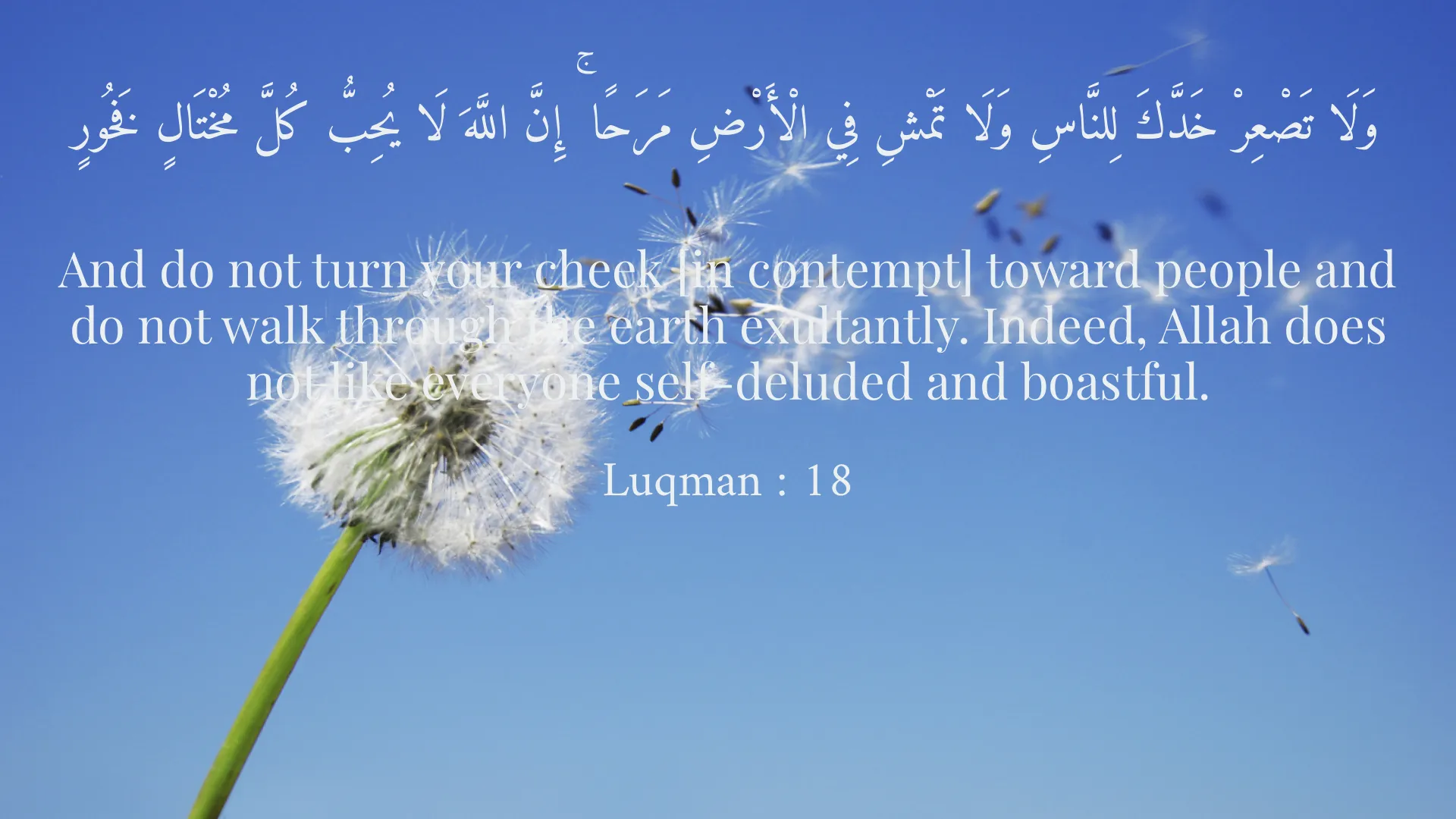
Pride and arrogance in faith are among the most dangerous traits that can lead a person astray. These vices can cloud our judgment, distort our perception of ourselves and others, and ultimately lead us away from the path of righteousness. In the Quran, Allah is quite explicit in warning believers about the lurking dangers of pride and the detrimental effects it can have on one's spiritual growth and personal development. Recognizing pride as a hidden adversary, believers are encouraged to cultivate humility and gratitude for the blessings bestowed upon them. A pivotal verse that addresses this issue can be found in Surah Luqman, verse 18, where Allah cautions believers against the adornments of this world, which can often lead them to arrogance. He states, "And do not turn your cheek [in contempt] toward people and do not walk through the earth exultantly. Indeed, Allah does not like everyone self-deluded and boastful." This reminder serves as a tool for self-reflection, urging individuals to pause and reflect whenever feelings of superiority or elevated status arise. It is essential to ground ourselves in the understanding that everything in this world, including any achievements or status we may have, is entirely by the will and decree of God. Recognizing this truth helps cultivate a mindset of humility where one acknowledges their dependence on divine grace rather than their inherent merit. Furthermore, the Quran warns that pride can obstruct one's access to knowledge and wisdom. This caution is articulated in Surah Al-A'raf, verse 146, where Allah declares, "But those who wrongfully elevated themselves in their hearts with pride were shown the truth and kept unaware due to the arrogance they possessed." This verse starkly illustrates how pride can distance a person from knowledge, thereby stunting their growth and halting their journey toward perfection. Knowledge and humility should go hand in hand; a heart filled with pride is unlikely to be open to learning, growth, or self-improvement. In recognizing that all wisdom and knowledge ultimately originate from Allah, believers are reminded that their spiritual progression is contingent upon their ability to remain humble, receptive, and committed to continual learning. In a society where competition is often glorified, the notion of humility becomes even more critical. In Surah Al-Hujurat, verse 11, Allah provides additional guidance, advising believers to avoid mocking or belittling one another – a behavior often born of pride. The verse states, "O you who have believed, let not a people ridicule [another] people; perhaps they may be better than them. And do not insult one another and do not call each other by [offensive] nicknames. Wretched is the name of disobedience after [one's] faith. And whoever does not repent - then it is those who are the wrongdoers." This verse encourages us to view others through the lens of equality, reminding us that our perceptions of superiority are often subjective and flawed. Pride manifests itself not just in our attitudes toward accomplishments but also in our interactions with others. Thus, if we aim for a society based upon mutual respect, kindness, and understanding, we must first examine our internal character and address any seeds of arrogance that may have taken root. By promoting humility and being grateful for what we have without condescending toward others, we contribute to a more harmonious community. The essence of preventing pride in faith is rooted in the understanding that all else is temporary and that true greatness, as defined by spiritual means, comes from our connection with God – not from worldly possessions or status. We are consistently reminded in the Quran that humility is an essential facet of righteousness. A believer ought to maintain an attitude of gratitude, recognizing that all blessings are a manifestation of Allah’s mercy. This perspective enables one to navigate life’s trials with patience and resilience while fostering an inner sense of peace regardless of external circumstances. Moreover, embodying humility means extending compassion and understanding to those around us. When we relinquish feelings of superiority, we open ourselves to forming deeper connections with our communities, gaining insights from diverse perspectives, and growing in our spiritual journeys. In essence, humility acts as a fertile ground for collective growth, as it encourages a supportive spirit rather than a competitive one, which often breeds discontent and division. Additionally, overcoming pride is an ongoing journey, requiring self-awareness and conscious effort. As believers, it is vital to engage in self-reflection and prayer, asking Allah for guidance and support in our quest for humility. Engaging in acts of kindness and service to others also serves to reinforce our commitment to humility, reminding us that true fulfillment stems not from personal accolades but from uplifting and supporting our fellow beings. In conclusion, pride and arrogance can pose significant barriers to personal growth and spiritual enlightenment. The insights gleaned from the Quran serve as essential reminders for believers to remain humble, grateful, and committed to lifelong learning. By understanding that our worth is derived from our relationship with Allah and not from our accomplishments or social standing, we cultivate an environment where humility flourishes, and genuine connections can thrive. Let us strive to embody the principles of humility in our faith, recognizing that true greatness lies not in our earthly possessions but in our character and compassion toward one another.
Related Verses
وَلَا تَصْعِرْ خَدَّكَ لِلنَّاسِ وَلَا تَمْشِ فِي الْأَرْضِ مَرَحًا ۚ إِنَّ اللَّهَ لَا يُحِبُّ كُلَّ مُخْتَالٍ فَخُورٍ
And do not turn your cheek [in contempt] toward people and do not walk through the earth exultantly. Indeed, Allah does not like everyone self-deluded and boastful.
Luqman : 18
فَسَأَصْرِفُ عَنْ آيَاتِي الَّذِينَ يَتَكَبَّرُونَ فِي الْأَرْضِ بِغَيْرِ الْحَقِّ ۖ وَإِن يَرَوْا كُلَّ آيَةٍ لَّا يُؤْمِنُوا بِهَا ۖ وَإِن يَرَوْا سَبِيلَ الرُّشْدِ لَا يَتَّخِذُوهُ سَبِيلًا ۖ وَإِن يَرَوْا سَبِيلَ الضَّلَـالَ يَتَّخِذُوهُ سَبِيلًا ۗ ذَٰلِكَ بِأَنَّهُمْ كَذَّبُوا بِآيَاتِنَا وَكَانُوا غَافِلِينَ
So I will turn away from My verses those who are arrogant upon the earth without right. And if they should see every sign, they will not believe in them; and if they see the path of righteousness, they will not adopt it as a way; but if they see the path of error, they will adopt it as a way. That is because they have denied Our verses and they were heedless of them.
Al-A'raf : 146
يَا أَيُّهَا الَّذِينَ آمَنُوا لَا يَسْخَرْ قَوْمٌ مِّن قَوْمٍ عَسَى أَن يَكُونُوا خَيْرًا مِّنْهُمْ ۖ وَلَا تَلْمِزُوا أَنفُسَكُمْ وَلَا تَنَابَزُوا بِالْأَلْقَابِ ۚ بِئْسَ الِاسْمُ الْفُسُوقُ بَعْدَ الْإِيمَانِ ۚ وَمَن لَّمْ يَتُبْ فَأُولَـئِكَ هُمُ الظَّالِمُونَ
O you who have believed, let not a people ridicule [another] people; perhaps they may be better than them. And do not insult one another and do not call each other by [offensive] nicknames. Wretched is the name of disobedience after [one's] faith. And whoever does not repent - then it is those who are the wrongdoers.
Al-Hujurat : 11
Short Story
One day, a man sat among his friends and spoke proudly about his faith. Suddenly, one of his friends said to him: 'Have you forgotten that everything you have is from God?' This sentence planted a deep notion in his heart about why he should remain humble and not forget God. From that day on, he always tried to introspect and be grateful while keeping away from arrogance.