Quranic Answer
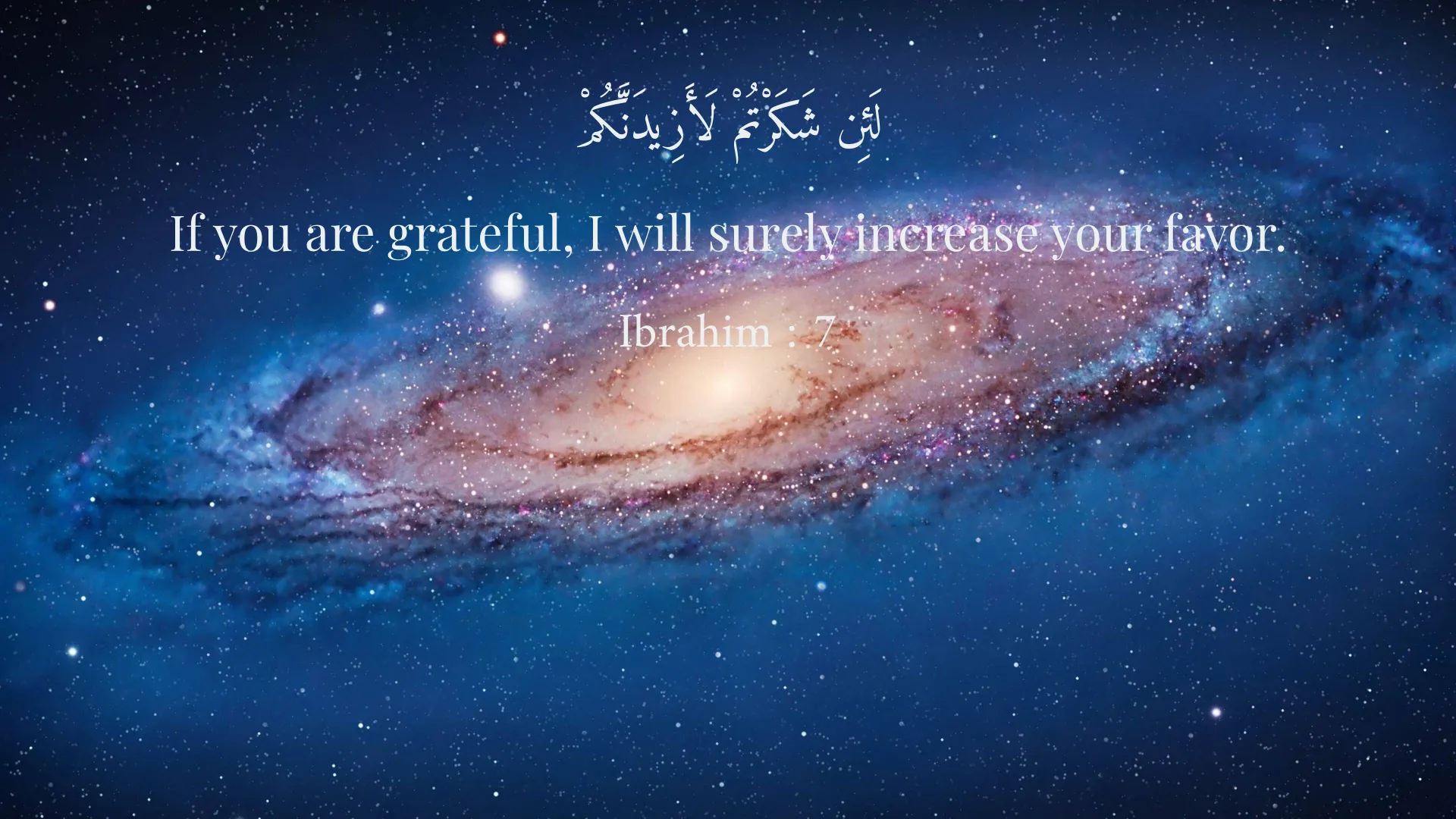
Gratitude is an essential practice emphasized in the Holy Quran, and it holds a central place in the Islamic faith. The significance of thanking Allah for His countless blessings is woven throughout Islamic teachings and practices. One of the most striking affirmations of the importance of gratitude can be found in the Quran itself, where Allah states, "If you are grateful, I will surely increase your favor" (Surah Ibrahim, 14:7). This powerful verse encapsulates the profound relationship between gratitude and the receipt of blessings, serving as a reminder that gratitude extends beyond mere vocal expressions. It is a holistic practice, requiring active participation and a commitment to align one's actions with the values and commandments set forth by Allah. Gratitude in Islam is not limited to the acknowledgement of the positive aspects of life; instead, it calls for individuals to exhibit thankfulness in every circumstance, including the tumultuous periods rife with challenges. When one merely responds with the words "Alhamdulillah" during joyful moments, the essence of gratitude remains unfulfilled. True gratitude emerges in times of hardship when an individual recalls Allah's presence and mercy, continuously recognizing His favors despite the struggles. A faithful individual understands that every trial is an opportunity for growth and learning, and through this perspective, one cultivates a resilient spirit rooted in gratitude. Adopting an attitude of thankfulness becomes integral to how we navigate life's ups and downs, reinforcing the belief that Allah provides for us in both ease and adversity, and thus, we should remain grateful at all times. To express genuine gratitude, it is imperative to embody it through our deeds. Expression in words is of utmost importance; however, it is the actions that follow which demonstrate the authenticity of our gratitude. From the smallest acts of kindness towards others to immense efforts in self-improvement, each action reflects our acknowledgment of the blessings we receive. This practice extends into how we view and treat the environment around us, showcasing our appreciation for the world Allah has created. In addition to treating the natural world with respect, gratitude is profoundly manifested in our relationships with others, especially when it comes to our parents. The Quran repeatedly emphasizes the importance of honoring and respecting one’s parents. In Surah Luqman, Allah advises humanity with regard to their obligations towards their parents, representing one of the highest forms of gratitude. Caring for our parents, both emotionally and physically, embodies the essence of gratitude and pays homage to the sacrifices they have made throughout our lives. It is worth noting that gratitude is a virtue that can transform interpersonal relations. When individuals actively express gratitude, they foster an atmosphere of positivity and appreciation. Even simple acts such as affirming someone’s effort or showing appreciation for the little things can bolster relationships and create an environment that thrives on mutual respect and kindness. Furthermore, living a life filled with gratitude not only enhances personal joy and satisfaction but also contributes to the greater good of the community. When individuals engage in acts of charity and selfless service, they inherently acknowledge the abundance they have been granted. This cycle of gratitude and giving creates a powerful ripple effect, inspiring others to do the same. Each act of kindness performed out of gratitude promotes social cohesion and harmony, thereby strengthening the fabric of society. Islam encourages its followers to perpetually nurture the virtue of gratitude as a daily practice. This can be achieved through regular prayers, reflections on the blessings received, and genuine efforts to acknowledge and utilize those blessings for the betterment of oneself and the community. Keeping a gratitude journal, for instance, where one writes down daily blessings, can aid in concentrating the mind on the positive aspects of life, creating a habit of appreciating even the smallest joys. This regular reflection ignites a sense of continuous gratitude that fuels motivation and happiness. Moreover, satisfaction with what one has is a significant aspect of gratitude in Islam. The Prophet Muhammad (peace be upon him) taught that recognizing and valuing one's provisions fosters contentment and drives one to be more grateful. When we let go of the often pervasive mindset of desire for more, we find peace in our circumstances. In doing so, we inherently develop a more robust relationship with our possessions and with Allah, recognizing that He is the ultimate provider of all that sustains us. In conclusion, gratitude is not merely a fleeting emotion or a societal nicety but is a profound act of faith that embodies the essence of a believer’s life. As outlined in the Quran, it serves as a direct link to receiving further blessings and favor from Allah. Our practice of gratitude should encapsulate both words and actions, establishing a continuous and meaningful relationship with our Creator and those around us. By embodying gratitude in our daily lives, we can create a legacy of kindness, respect, and appreciation that resonates throughout our family, community, and the wider world. Therefore, let us commit to making gratitude an essential practice ingrained in the very fabric of our existence, and let it flow through our thoughts, words, and deeds, promoting a brighter future for ourselves and those we encounter on our journey.
Related Verses
لَئِن شَكَرْتُمْ لَأَزِيدَنَّكُمْ
If you are grateful, I will surely increase your favor.
Ibrahim : 7
وَوَصَّيْنَا الْإِنْسَانَ بِوَالِدَيْهِ
And We have enjoined upon man [care] of his parents.
Luqman : 14
Short Story
Once upon a time, there was a man named Hassan who was often worried and sad about his problems. One day, he decided to practice gratitude. He realized that he had overlooked the blessings of Allah in his life. He then made it a point to spend a few minutes every morning thanking God and being kind to others. Soon, he felt better and his happiness multiplied.