Quranic Answer
The Significance of Pure Intention in Islam: An Exploration of Allah's Teachings In the rich tapestry of Islamic teachings, one finds that intention (niyyah) holds a position of unparalleled significance. Within the Holy Quran, a text regarded as the ultimate guide for Muslims, the importance of pure and correct intention is stated with unwavering clarity. This concept transcends mere religious obligation; it underscores the very essence of action in the life of a Muslim. It serves as a foundation for righteousness, a compass directing believers towards a life filled with purpose and sincerity. At the pinnacle of Islamic values, intention reigns supreme, weaving its influence through the fabric of every action undertaken by a believer. Allah, the all-seeing and all-knowing, scrutinizes not only the deeds but also the intentions that fuel these actions. As profound as it is simple, this idea is encapsulated in Surah Al-Baqarah, verse 225, which states: 'Allah is aware only of the intentions and good desires.' This verse, with its penetrating insight, communicates a vital message that resonates through generations: no matter how commendable one's actions might appear on the surface, if they are not underpinned by a pure and sincere intention, their significance diminishes considerably. To truly grasp the importance of pure intention, one must comprehend its transformative potential. Our intentions, shaped by thoughts and emotions, appear as the drivers of our deeds. It is critical to recognize that intention serves as the motivation behind all of our actions. A simple act of charity, for instance, can transform depending on the intention behind it: an act can either be a means to seek Allah's pleasure or an opportunity for self-aggrandizement. Thus, the need for purifying our intentions becomes pivotal. The process of purifying one's intention begins with turning to Allah, seeking His help and guidance in every aspect of our lives. The sincerity of our prayers—those heartfelt supplications made in solitude—plays a crucial role in this endeavor. By seeking divine guidance, believers can open the floodgates of genuine passion and commitment to doing what is right. In a world filled with hypocrisy and disillusionment, sincere prayer acts as a powerful tool to safeguard against such pitfalls. It becomes a means to cleanse our hearts, aligning our desires with those of our Creator. Moreover, self-examination emerges as a vital practice in the journey towards purifying our intentions. Before embarking on any action, believers are encouraged to pause and introspect. A thoughtful inquiry into the underlying motivations can reveal whether our intentions align solely with the pleasure of Allah or whether they drift into the realms of showing off to others. This practice not only serves to cultivate self-awareness but also to fortify our resolve against any potential feelings of pride or arrogance that may slip into our actions. In Surah Al-Anfal, verse 28, another striking reminder is presented: 'And know that your properties and your children are but a trial, and that Allah has with Him a great reward.' This verse emphasizes that everything we hold dear in this life—our material possessions, our loved ones, and even our ambitions—are ultimately trials designed to test our faith and intentions. For Muslims, it reinforces that our ultimate aim in acquiring wealth or cherishing relationships should be one that earns us Allah's satisfaction. Acknowledging that our lives are transient and that we will return to Allah allows us to reassess our intentions continually. The challenge, however, lies in remaining vigilant against the constant whispers and distractions posed by Shaytan (Satan). Negative inclinations, self-doubt, and the desire for recognition can all cloud our intentions, leading us astray from our purpose. Consequently, it is essential that we perform all our actions with sincerity, ensuring that our motivations stem from devotion to Allah alone. This practice cultivates a profound connection with our Creator, fostering a fulfilling spiritual journey that transcends mere ritualistic adherence to Islamic duties. In Islam, the straightforward act of performing daily prayers or giving charity is endowed with immense significance when underscored by sincerity. For instance, during the act of prayer (Salah), one is reminded to maintain focus and connection with Allah, consciously warding off distracting thoughts. Each gesture and utterance becomes meaningful when rooted in a pure intention to submit to God's will. Similarly, charity manifests itself more powerfully when given with the intention of helping others for Allah’s pleasure rather than for social standing or recognition. Such acts of service ripple outwards, cultivating a more compassionate and cooperative society. Furthermore, historical accounts of the early Muslim community illustrate the profound effects of pure intention. Many companions of the Prophet Muhammad (peace be upon him) dedicated their lives solely to the cause of Islam, propelled by the desire to please Allah above all else. Their actions—often characterized by sacrifice, courage, and selflessness—resonated deeply within their communities and beyond, illustrating the transformative power of an unwavering commitment to virtuous intention. Thus, followers of Islam are continually reminded to engage in actions that harbor the purest intentions. In their daily lives, believers can strive to infuse sincerity into everything from their work ethics to interpersonal relationships. Whether it is prioritizing honesty in the workplace, dedicating time toward community service, or even performing simple acts of kindness, blending these actions with the desire to earn Allah’s pleasure enhances the impact they have on oneself and society. In conclusion, the importance of pure intention in Islam cannot be overstated. It is an essential element that gives life and meaning to every action, shaping our character and determining our standing with Allah. By recognizing our hearts and intentions, believers embark on a journey of incessant self-improvement and spiritual growth. It encourages a quest for authenticity that enriches the lives of others, forming an inseparable bond between human actions and divine will. The profound teachings of the Holy Quran serve as a constant reminder of this truth. Ultimately, in a world where many distractions vie for our attention, let us remain committed to steering our hearts towards a noble purpose—one that is solely for the sake of Allah.
Related Verses
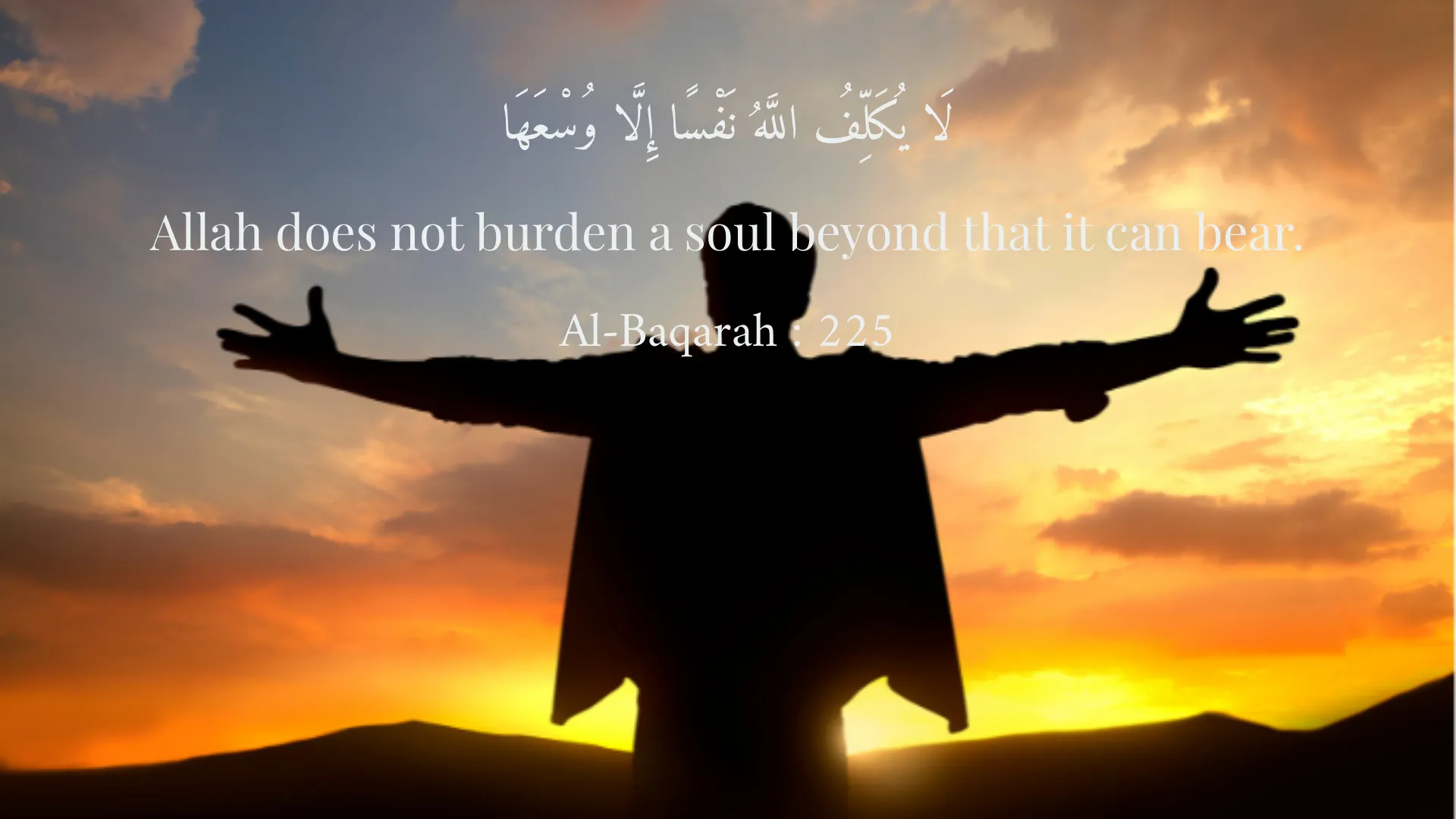
لَا يُكَلِّفُ اللَّهُ نَفْسًا إِلَّا وُسْعَهَا
Allah does not burden a soul beyond that it can bear.
Al-Baqarah : 225
وَاعْلَمُوا أَنَّمَا أَمْوَالُكُمْ وَأَوْلَادُكُمْ فِتْنَةٌ ۖ وَأَنَّ اللَّهَ عِندَهُ أَجْرٌ عَظِيمٌ
And know that your properties and your children are but a trial, and that Allah has with Him a great reward.
Al-Anfal : 28
Short Story
Once upon a time, a young man named Mustafa sat in a forest deeply reflecting on his life. He wondered how he could purify his intentions. A voice within him reminded him of the Quranic verses. He decided that every time he engaged in an action, he would evaluate his purpose and plead with Allah to keep his intentions pure and clear. From that day on, Mustafa's life changed, and he found greater joy and satisfaction in his existence.