Quranic Answer
The human heart, this precious essence of our being, constantly seeks tranquility and stability. However, along life's journey, certain attachments and dependencies form that, if useless or excessive, not only fail to benefit the individual but can also act as chains, preventing the heart from soaring towards perfection. The question of how to purify the heart from these useless attachments is, in essence, a crucial inquiry for attaining true happiness and peace, to which the luminous teachings of the Holy Quran offer a comprehensive and comforting answer. The Quran, as a book of guidance, provides practical and profound strategies for achieving a tranquil heart, free from materialistic and fleeting attachments. These teachings are built upon a realistic view of this world and the Hereafter, and founded on the principles of pure monotheism and sincere servitude to God. The Fundamental Principle: Tawhid and Remembrance of Allah: The most critical step in purifying the heart is to redirect its orientation from scattered attachments towards the One True Deity, Allah. The Holy Quran, in numerous verses, emphasizes the importance of remembering Allah (Dhikr). Verse 28 of Surah Ar-Ra'd states: “Those who have believed and whose hearts are assured by the remembrance of Allah. Unquestionably, by the remembrance of Allah hearts are assured.” This noble verse clearly indicates that the primary source of peace and tranquility for the heart is the remembrance and contemplation of Allah. Useless attachments often stem from heedlessness of Allah and forgetting the primary purpose of creation. When a person remembers Allah and makes Him the center of their life, worldly attachments shrink and become insignificant in their eyes. The remembrance of Allah is not merely uttering words but includes contemplating divine verses, performing prayers, reciting the Quran, and every action that keeps the remembrance of Allah alive in the heart. Through continuous Dhikr, the heart is cleansed of the rust of sins and attachments, taking steps towards the light of divine guidance. This process is akin to cleaning a dark room of all shadows and illusions by turning on a light. The remembrance of Allah is the lamp of the heart that dispels the darkness of useless attachments. Understanding the Nature of Dunya (Worldly Life) and Akhirah (Hereafter): One of the roots of useless attachments is an incorrect perception of this world and its purpose. The Holy Quran repeatedly invites humanity to ponder the transient nature of this world and the permanence of the Hereafter. Verse 20 of Surah Al-Hadid states: “Know that the worldly life is only play and amusement, an adornment and boasting among yourselves, and a rivalry in [accumulating] wealth and children…” This verse compares worldly life to matters that are transient and of little value. Elsewhere, in verse 17 of Surah Al-A’la, it states: “While the Hereafter is better and more enduring.” When a person realizes that this world is merely a passage and that what is essential is the everlasting abode and righteous deeds therein, their attachment to worldly adornments diminishes. This perspective shifts one’s view from 'having' to 'being'; meaning, instead of accumulating material possessions, one focuses on spiritual growth and earning divine pleasure. A deep understanding of this reality frees the heart from greed and covetousness towards what is perishable and directs it towards enduring good deeds. Tawakkul (Trust) and Submission to Divine Will: Another crucial tool for purifying the heart is trusting in Allah (Tawakkul). Many useless attachments arise from the fear of loss, anxiety about the future, or greed for obtaining things beyond human control. When a person truly trusts in Allah and knows that all matters are in His hands and whatever He decrees is best, their heart finds peace and is liberated from vain attachments. This trust does not mean inaction but rather striving combined with submission and entrusting the outcome to Allah. Verse 2 of Surah Al-Anfal states: “The believers are only those who, when Allah is mentioned, their hearts become fearful, and when His verses are recited to them, it increases them in faith; and upon their Lord they rely.” Proper Tawakkul leads a person to detach from what is in the hands of others and to be freed from worldly sorrows and anxieties. Sabr (Patience) and Shukr (Gratitude): Patience in adversity and gratitude for blessings are also vital factors in purifying the heart. Useless attachments often form when a person cannot come to terms with what they do not possess (requiring patience) or fails to appreciate what they do have (requiring gratitude). Patience frees the heart from restlessness and greed, bestowing upon it the power of endurance, while gratitude fosters a positive outlook and directs one towards divine providence. The Holy Quran frequently refers to patience and gratitude, considering them among the attributes of true believers. Avoiding Sins and Repentance (Tawbah): Sins leave rust on the heart, distancing it from divine light. Many useless attachments also stem from committing sins and following desires. Repentance and returning to Allah are the processes of cleansing the heart from this rust. Allah states in the Quran that He is Oft-Forgiving and Merciful and accepts the repentance of His servants. Seeking forgiveness lightens and liberates the heart, preparing it to receive divine guidance. Conclusion: Purifying the heart from useless attachments is a continuous spiritual journey achieved by altering one’s perspective on this world and the Hereafter, focusing on the remembrance of Allah, genuine trust in Him, and cultivating moral virtues such as patience and gratitude. This path leads to liberation from anxieties, sorrows, and material dependencies, ultimately culminating in lasting peace and eternal happiness. By following the Quranic teachings, one can possess a heart that attaches itself only to what is enduring and beneficial, and detaches from all that is fleeting and useless. This purity of heart not only brings inner peace but also opens the way for a deeper connection with the Creator and a life of meaning and purpose.
Related Verses
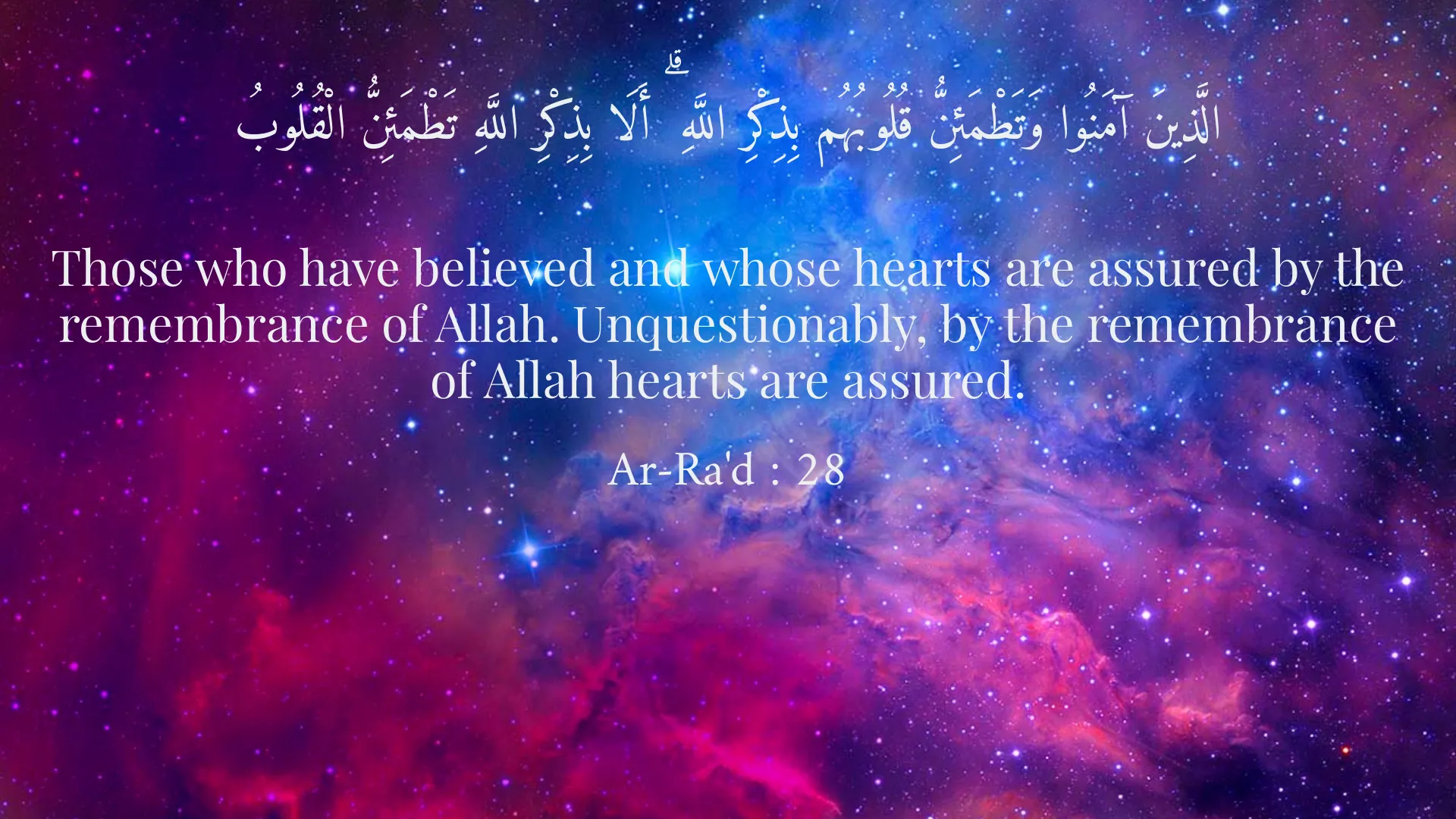
الَّذِينَ آمَنُوا وَتَطْمَئِنُّ قُلُوبُهُم بِذِكْرِ اللَّهِ ۗ أَلَا بِذِكْرِ اللَّهِ تَطْمَئِنُّ الْقُلُوبُ
Those who have believed and whose hearts are assured by the remembrance of Allah. Unquestionably, by the remembrance of Allah hearts are assured.
Ar-Ra'd : 28
بَلْ تُؤْثِرُونَ الْحَيَاةَ الدُّنْيَا
But you prefer the worldly life,
Al-A'la : 16
وَالْآخِرَةُ خَيْرٌ وَأَبْقَىٰ
While the Hereafter is better and more enduring.
Al-A'la : 17
اعْلَمُوا أَنَّمَا الْحَيَاةُ الدُّنْيَا لَعِبٌ وَلَهْوٌ وَزِينَةٌ وَتَفَاخُرٌ بَيْنَكُمْ وَتَكَاثُرٌ فِي الْأَمْوَالِ وَالْأَوْلَادِ ۖ كَمَثَلِ غَيْثٍ أَعْجَبَ الْكُفَّارَ نَبَاتُهُ ثُمَّ يَهِيجُ فَتَرَاهُ مُصْفَرًّا ثُمَّ يَكُونُ حُطَامًا ۚ وَفِي الْآخِرَةِ عَذَابٌ شَدِيدٌ وَمَغْفِرَةٌ مِّنَ اللَّهِ وَرِضْوَانٌ ۚ وَمَا الْحَيَاةُ الدُّنْيَا إِلَّا مَتَاعُ الْغُرُورِ
Know that the worldly life is only play and amusement, an adornment and boasting among yourselves, and a rivalry in [accumulating] wealth and children. [It is] like the example of a rain whose [resulting] plant growth pleases the disbelievers; then it dries and you see it [become] yellow; then it becomes [scattered] debris. And in the Hereafter is severe punishment and forgiveness from Allah and approval. And what is the worldly life except the enjoyment of delusion.
Al-Hadid : 20
Short Story
It is narrated that in ancient times, there was a wealthy merchant who possessed vast riches, yet his heart was never at ease. He was constantly worried about market downturns and losing his fortune. One day, he passed by a monastery and saw a dervish, clad only in a worn cloak and holding a wooden bowl, engaged in the remembrance of God with a peaceful heart and a joyful face. The merchant, surprised, asked, “O Dervish, you possess nothing, yet how are you so calm and free from sorrow?” The dervish smiled and replied, “My heart is not attached to anything fleeting. What I have of this world is sufficient, and what I do not have, I do not grieve over. But you, who possess everything, your heart is tied to thousands of useless attachments, and this is what has robbed you of your peace.” The merchant took heed of this advice and realized that the heart’s tranquility lies not in accumulating wealth, but in liberation from attachments. From then on, he strove to lessen his worldly ties and guide his heart towards God.