Quranic Answer
Quitting bad habits is a challenging process that requires willpower and effort. Many individuals struggle to rid themselves of behaviors and patterns that are detrimental to their health, happiness, and overall well-being. This challenge is not merely a personal struggle; it is a universal experience that many people face. However, in seeking to overcome these habits, one can find guidance and inspiration from various sources, including spiritual texts. In particular, the Holy Quran offers significant principles that can aid us on our journey towards personal improvement and rectification of our behaviors. One of the essential keys to successfully quitting bad habits is self-awareness. Understanding and recognizing negative behaviors is the first step toward change. Self-awareness is largely about introspection—taking an honest look at oneself and identifying the habits that hold one back from living a fulfilling life. Recognizing the impact of these habits on our relationships, mental health, and spiritual well-being is crucial. In Surah Al-Baqarah, verse 218, Allah states: "Indeed, those who have believed and those who have emigrated and fought in the cause of Allah, they hope for the mercy of Allah..." This verse highlights the importance of faith coupled with effort. To change for the better, one must recognize their shortcomings and be willing to engage in the struggle for self-improvement, which is a part of an authentic faith journey. Furthermore, Surah Al-Anfal, verse 53 reminds us: "This is because Allah would not change a favor which He had bestowed upon a people until they change what is within themselves." This profound verse serves as a reminder that external changes in our lives are often reflections of our inner transformations. Therefore, it's imperative to acknowledge that bad habits can lead to negative consequences and unfavorable results in our lives. The realization that these habits can obstruct our spiritual and personal growth must fuel our commitment to quitting them. For many, the secular approach to quitting bad habits often revolves around setting specific goals, counting days without the habit, or seeking support from loved ones. While these methods can be effective, incorporating a spiritual dimension can serve as an additional source of strength. Acknowledging a higher power and seeking guidance through prayer can significantly enhance our determination to change. In Surah Ghafir, verse 60, Allah says: "And your Lord says, 'Call upon Me; I will respond to you...'" This verse emphasizes the power of prayer in the pursuit of self-betterment. The act of prayer connects us with Allah and reminds us of His mercy and guidance. When we call upon Him, we not only ask for strength but also acknowledge our dependence on Him. This connection can provide the encouragement needed to persist in our efforts to quit bad habits. Prayer serves as a source of solace and motivation, particularly when the journey toward quitting becomes overwhelming. By praying regularly, we invite divine assistance into our lives, which can make the arduous task of overcoming bad habits less daunting. The Quran also provides several examples of the consequences of bad habits and the importance of turning to a more righteous path. For instance, the stories of previous prophets illustrate the struggles they faced and how their faith enabled them to surmount obstacles. By reflecting on these stories, individuals can find motivation and reassurance that change is possible, even when it feels impossible. Moreover, the Quran encourages believers to engage in righteous deeds, which can serve as a counterbalance to bad habits. Engaging in acts of kindness, charity, and community service can motivate individuals to focus on positive actions, thereby reducing the allure of negative behaviors. Cultivating a lifestyle centered around good deeds can create an environment that naturally discourages the reconsideration of bad habits. This approach not only enhances spiritual well-being but also fosters a sense of belonging and purpose. Acts of kindness and service to others can create a positive feedback loop, reinforcing the desire to move away from bad habits and toward a more fulfilling life. The transformation from undesirable habits to positive actions requires patience and persistence. It is essential to remember that change does not happen overnight; it is a gradual process that requires consistent effort and resilience. Individuals may encounter setbacks and challenges along the way, but the key is not to be disheartened. Instead, one should view these setbacks as opportunities for learning and growth. Understanding that the path to self-improvement is rarely linear can help individuals remain steadfast in their resolutions to quit bad habits. In conclusion, the journey of quitting bad habits is indeed challenging but attainable with willpower, effort, and spiritual guidance. The principles outlined in the Holy Quran offer invaluable support for this endeavor. Through self-awareness, recognition of one's negative behaviors, prayer, and commitment to positive change, individuals can effectively work to rid themselves of bad habits. The encouragement to turn towards faith and seek the help of Allah can significantly enhance one's strength to overcome obstacles. Ultimately, the goal is to move towards a fulfilling and purposeful life, driven by the pursuit of self-betterment and righteous actions. By embracing the teachings of the Quran, one can embark on a transformative journey capable of leading to profound change and spiritual renewal.
Related Verses
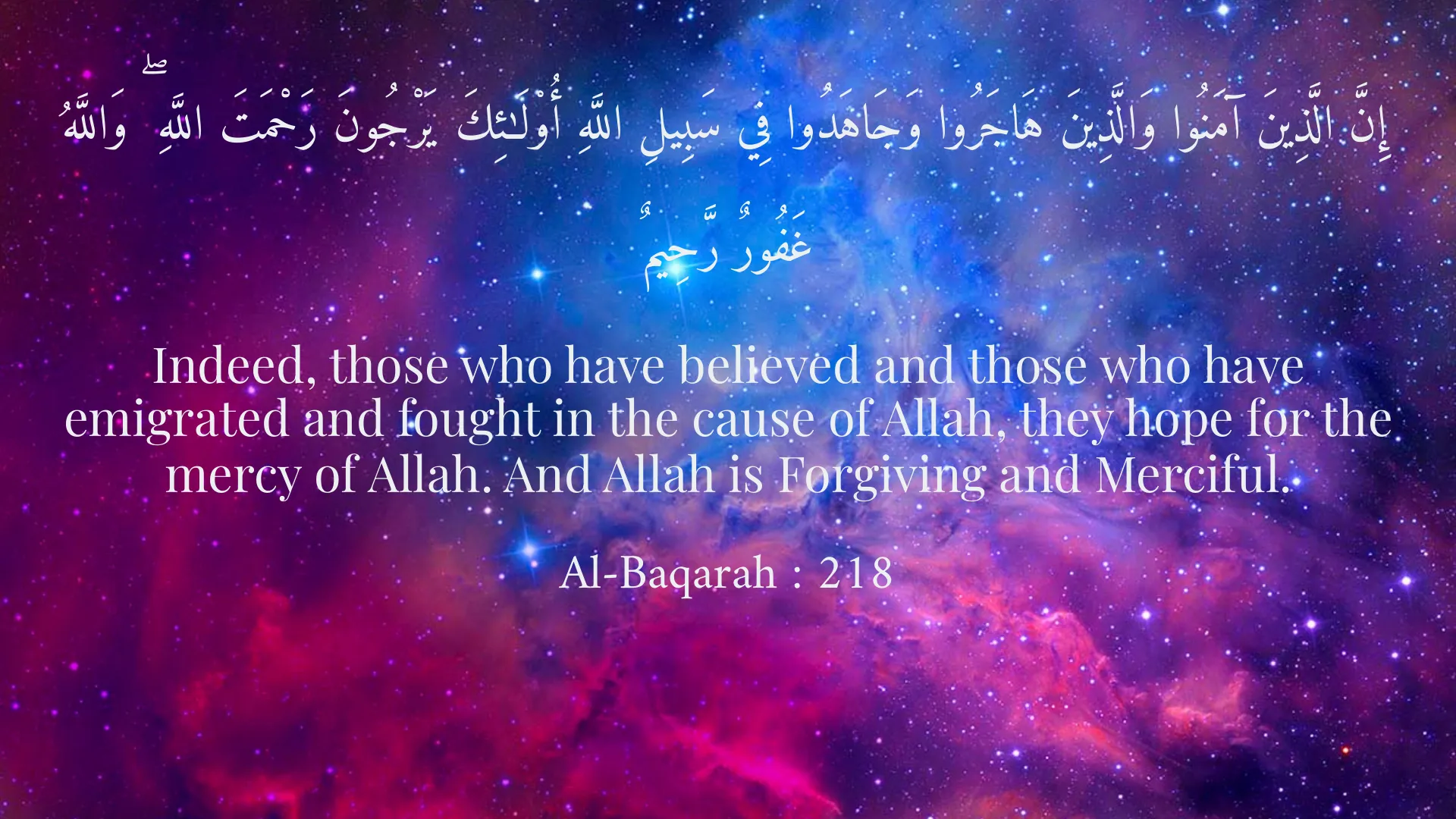
إِنَّ الَّذِينَ آمَنُوا وَالَّذِينَ هَاجَرُوا وَجَاهَدُوا فِي سَبِيلِ اللَّهِ أُو۟لَـٰئِكَ يَرْجُونَ رَحْمَتَ اللَّهِ ۖ وَاللَّهُ غَفُورٌ رَّحِيمٌ
Indeed, those who have believed and those who have emigrated and fought in the cause of Allah, they hope for the mercy of Allah. And Allah is Forgiving and Merciful.
Al-Baqarah : 218
ذَٰلِكَ بِأَنَّ اللَّهَ لَمْ يَكُ مُغَيِّرًا نِعْمَةً أَنْعَمَهَا عَلَىٰ قَوْمٍ حَتَّى يُغَيِّرُوا مَا بِأَنفُسِهِمْ ۚ وَأَنَّ اللَّهَ سَمِيعٌ عَلِيمٌ
This is because Allah would not change a favor which He had bestowed upon a people until they change what is within themselves. And that Allah is Hearing and Knowing.
Al-Anfal : 53
وَقَالَ رَبُّكُمْ ادْعُونِي أَسْتَجِبْ لَكُمْ ۚ إِنَّ الَّذِينَ يَسْتَكْبِرُونَ عَنْ عِبَادَتِي سَيَدْخُلُونَ جَهَنَّمَ دَاخِرِينَ
And your Lord says, 'Call upon Me; I will respond to you.' Indeed, those who disdain My worship will enter Hell, humbled.
Ghafir : 60
Short Story
A story from Saadi: Once, a man lived in a dilemma between good and bad habits. He secretly longed to quit his bad habits and think of becoming better. One day, he decided to turn to sincere prayer and seek aid from Allah. After some time, relying on his will and continuous prayers, he was able to change and his life became full of joy and tranquility.