Quranic Answer
The Quranic response to this profound and challenging question is rooted in the monotheistic worldview and the philosophy of human existence in Islam. The Holy Quran teaches us that the primary source of honor and dignity is Allah Almighty alone, and any true evaluation must be based on piety, good deeds, and divine pleasure, not on the approval or disapproval of people. Contemptuous looks from others, though they can be painful and distressing and may lead to negative psychological effects such as decreased self-confidence or feelings of isolation, cannot shake a person whose faith is firmly established on the solid rock of monotheism. This inner steadfastness and resilience do not stem from arrogance, but from confidence in the righteousness of one's path and a stable connection with the Creator of the universe—a connection that transcends human judgments and worldly fluctuations. First and foremost, the most crucial step in dealing with contemptuous looks from others is to strengthen the heartfelt belief that true honor belongs solely to Allah and is bestowed by Him. In Surah An-Nisa, verse 139, we read: “Whoever desires honor – then to Allah belongs all honor.” This foundational verse teaches us that if we seek honor from other than Allah, we will not only fail to find it but may also fall into the trap of degradation and dependence on fluctuating and sometimes malicious judgments of people. 'Izzah' (honor/dignity) in the Quran signifies invincibility, power, and dominance, attributes that belong entirely to Allah. When a person profoundly believes that only Allah's opinion matters and that He is the one who bestows true dignity and worth, then the contemptuous looks of others—which are often based on ignorance, envy, or trivial worldly standards—will hold little significance for them. This serves as a powerful psychological and spiritual shield, protecting the individual from the poisoned arrows of mockery and contempt, allowing them to continue on the path of truth, irrespective of external affirmations or denials. This perspective frees a person from any futile attempts to gain the approval of individuals who are themselves intellectually and morally deficient, guiding them towards spiritual self-sufficiency. Second, the Quran strongly emphasizes the importance of patience (Sabr) and reliance on Allah (Tawakkul). In Surah Al-Baqarah, verse 153, it states: “O you who have believed, seek help through patience and prayer. Indeed, Allah is with the patient.” Contemptuous looks are a form of divine test or social difficulty that requires patience. Patience here does not mean passive endurance, but rather steadfastness, resilience, and continuing on the path of truth despite harm and taunts. Sabr means restraining the soul from distress and agitation, the tongue from complaining, and the limbs from inappropriate actions. This active form of patience grants a person an inner strength that prevents them from being affected by negative events and looks, keeping them firm on the path of their noble goals. Prayer, as the pillar of faith and a means of communication with the Creator, is a source of tranquility, strength, and rejuvenation. Through prayer, a person establishes a direct connection with the Originator of existence, seeking His help, calming their heart with His remembrance, and freeing their soul from worldly anxieties. When a person’s heart finds peace through the remembrance of Allah, the contemptuous looks of others recede into the background and lose their effect. Reliance on Allah (Tawakkul) complements patience; it means that an individual knows that ultimate help and support come from Him, and there is no need to seek the approval of creation at the cost of losing self-dignity or divine values. Tawakkul means trusting Allah with one's entire being and entrusting the outcomes of affairs to Him, for He is the best guardian and helper, and His will alone is effective and certain. Third, the Quran forbids us from humiliating others, and this itself is a lesson in strengthening oneself against contemptuous gazes. When an individual applies Quranic principles in their life and refrains from humiliating others, they naturally create an atmosphere of mutual respect, and internally, they come to the conclusion that contemptuous looks are worthless and unfounded. Surah Al-Hujurat, verse 11, explicitly states: “O you who have believed, let not a people ridicule [another] people; perhaps they may be better than them; nor let women ridicule [other] women; perhaps they may be better than them. And do not insult one another and do not call each other by [offensive] nicknames. Wretched is the name of disobedience after [one's] faith. And whoever does not repent - then it is those who are the wrongdoers.” This verse is a golden rule in social relations, teaching us never to humiliate anyone, as they may hold a higher status with Allah, and their inner self may be better than their outward appearance. This mutual understanding leads a person to consider themselves independent of superficial and outward judgments from others. Someone who does not humiliate others themselves possesses a stronger inner resilience to being humiliated, because they understand that such behavior stems from intellectual and moral deficiency, not from any shortcoming in themselves; and every hater, in truth, wrongs themselves. Fourth, the Quran reminds humanity that the criterion for value is piety (Taqwa), not appearance, wealth, or worldly status. In Surah Al-Hujurat, verse 13, it states: “Indeed, the most noble of you in the sight of Allah is the most righteous of you.” This verse rejects all materialistic and superficial criteria for evaluating human beings, considering the true criterion to be internal and spiritual. If a person lives according to divine standards and their goal is to please Allah, then contemptuous looks based on worldly standards will not affect them. In fact, they reach a spiritual maturity where they deem superficial and un-divine looks to be invalid. This approach to life grants a person intellectual and personal independence, freeing them from the bondage of 'public opinion.' This deep understanding helps the individual to liberate themselves from imperfect and transient judgments, focusing instead on what holds value in the sight of Allah, and thus experiencing a life of meaning and purpose. Fifth, the Quran asks us not to be arrogant or conceited, and this, conversely, helps us to be resilient against the contempt of others. Surah Luqman, verse 18, states: “And do not turn your cheek in contempt toward people and do not walk through the earth exultantly. Indeed, Allah does not like every self-deluded and boastful person.” Although this verse ostensibly advises against arrogance, it implicitly teaches resilience against humiliation. A person who is not arrogant themselves and recognizes true value in humility and servitude to Allah is less affected by the contempt of others. This humility stems from self-confidence based on monotheism, not from weakness or self-abasement. In reality, by avoiding arrogance, a person places themselves in a position where they neither seek false superiority nor are harmed by others' imagined inferiority. They neither seek others' praise nor fear their censure. This state of balance is the result of firm faith and a correct understanding of one's place before the Lord, and thus, the person achieves inner peace and contentment that no external gaze can tarnish. To remain resilient against contemptuous looks, one must always pay attention to these points: 1. Divine Intention: Do our deeds solely for the pleasure of Allah, not to gain praise or avoid blame from people. When intentions are pure, external judgments become ineffective, and the soul finds tranquility. 2. Understanding True Self-Worth: The worth of every human being is not in their material possessions, but in their connection with Allah, their good character, and their righteous deeds. This understanding increases inner self-confidence and shifts one's focus from worldly appearances to spiritual realities. 3. Seeking Help through Patience and Prayer: These two powerful spiritual tools bring peace to hearts and make a person resilient against hardships and emotional distress. Prayer acts as a place for spiritual renewal, and patience acts as a shield against adversities. 4. Disregarding Superficial Judgments: If contemptuous looks are based on appearances (e.g., due to financial status, physical appearance, or minor flaws), it must be understood that these judgments are invalid from a Quranic perspective, and only divine criteria are lasting and true. 5. Focusing on One's Duty and Divine Mission: When a person knows their purpose and mission in life and is occupied with fulfilling it, they pay less attention to distractions and negative looks from others, dedicating their energy to progressing on the path of truth. 6. Strengthening Positive Relationships: Surrounding oneself with positive, supportive individuals who adhere to divine values can reduce the impact of negative looks and help a person grow in a healthy environment. Ultimately, it must be understood that the contemptuous gaze of others, more than indicating the weakness of the humiliated individual, reveals the moral and intellectual weakness of the one who humiliates. The Quran condemns such behaviors and considers them characteristics of oppressors and the ignorant. Therefore, when faced with such a gaze, instead of blaming ourselves, we should pray for the guidance of that person and, by strengthening our faith and piety, demonstrate that human worth and dignity transcend superficial and malicious judgments. This approach not only protects one's soul and mind but also indirectly provides a practical lesson to others about where true human value lies and how people should view one another. This resilience is not passive; rather, it is an active resilience coupled with spiritual and moral growth that elevates the individual and protects them from the harmful effects of contemptuous looks. This path guides a person towards self-knowledge and God-centeredness, freeing them from the shackles of unstable and superficial human judgments, and this is the true honor that the Quran has promised to believers. This Quranic approach brings inner stability and peace, enabling a person to live with dignity and strength in a world full of ups and downs.
Related Verses
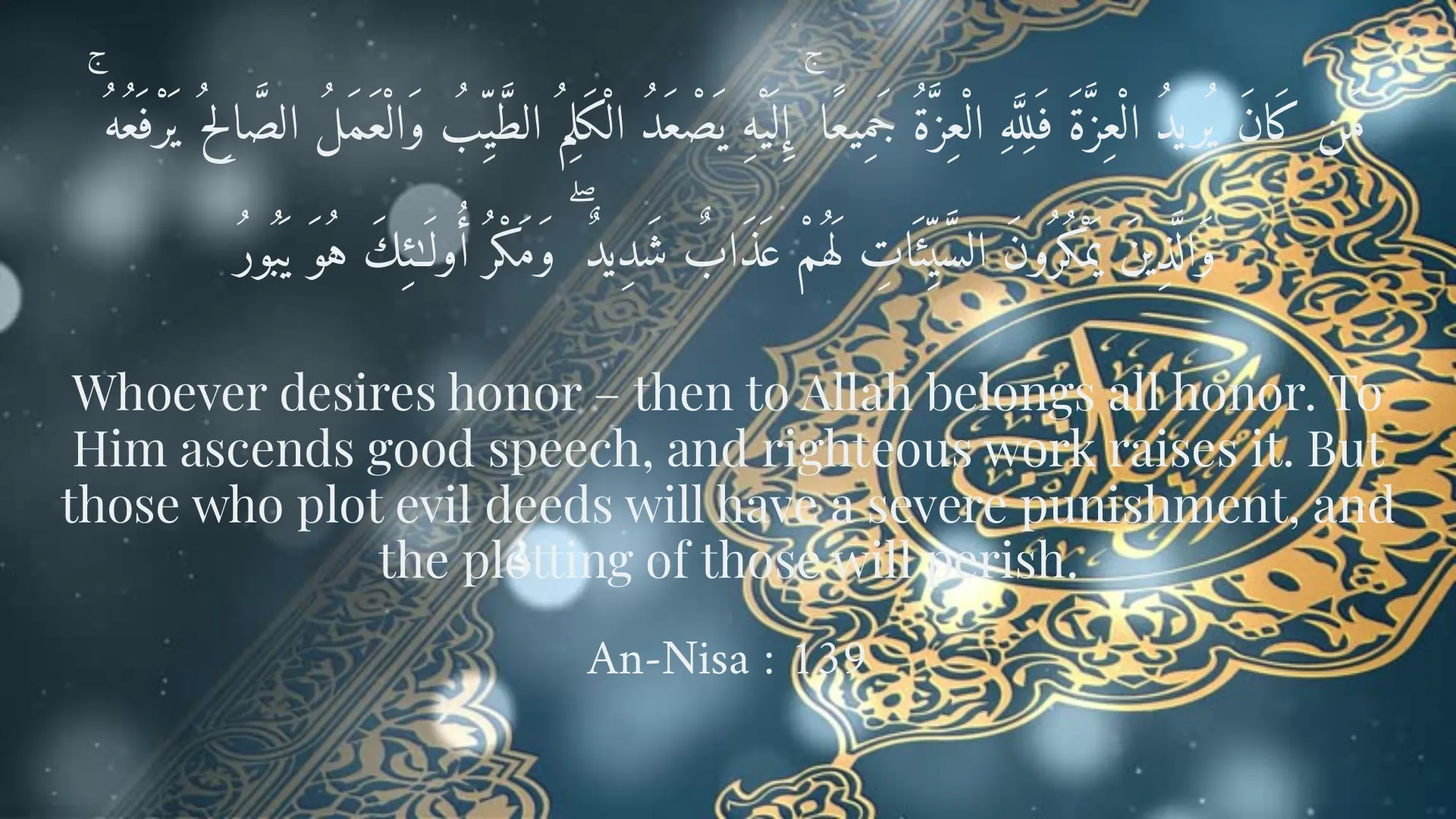
مَن كَانَ يُرِيدُ الْعِزَّةَ فَلِلَّهِ الْعِزَّةُ جَمِيعًا ۚ إِلَيْهِ يَصْعَدُ الْكَلِمُ الطَّيِّبُ وَالْعَمَلُ الصَّالِحُ يَرْفَعُهُ ۚ وَالَّذِينَ يَمْكُرُونَ السَّيِّئَاتِ لَهُمْ عَذَابٌ شَدِيدٌ ۖ وَمَكْرُ أُولَٰئِكَ هُوَ يَبُورُ
Whoever desires honor – then to Allah belongs all honor. To Him ascends good speech, and righteous work raises it. But those who plot evil deeds will have a severe punishment, and the plotting of those will perish.
An-Nisa : 139
يَا أَيُّهَا الَّذِينَ آمَنُوا اسْتَعِينُوا بِالصَّبْرِ وَالصَّلَاةِ ۚ إِنَّ اللَّهَ مَعَ الصَّابِرِينَ
O you who have believed, seek help through patience and prayer. Indeed, Allah is with the patient.
Al-Baqarah : 153
يَا أَيُّهَا الَّذِينَ آمَنُوا لَا يَسْخَرْ قَوْمٌ مِّن قَوْمٍ عَسَىٰ أَن يَكُونُوا خَيْرًا مِّنْهُمْ وَلَا نِسَاءٌ مِّن نِّسَاءٍ عَسَىٰ أَن يَكُنَّ خَيْرًا مِّنْهُنَّ ۖ وَلَا تَلْمِزُوا أَنفُسَكُمْ وَلَا تَنَابَزُوا بِالْأَلْقَابِ ۖ بِئْسَ الِاسْمُ الْفُسُوقُ بَعْدَ الْإِيمَانِ ۚ وَمَن لَّمْ يَتُبْ فَأُولَٰئِكَ هُمُ الظَّالِمُونَ
O you who have believed, let not a people ridicule [another] people; perhaps they may be better than them; nor let women ridicule [other] women; perhaps they may be better than them. And do not insult one another and do not call each other by [offensive] nicknames. Wretched is the name of disobedience after [one's] faith. And whoever does not repent - then it is those who are the wrongdoers.
Al-Hujurat : 11
وَلَا تُصَعِّرْ خَدَّكَ لِلنَّاسِ وَلَا تَمْشِ فِي الْأَرْضِ مَرَحًا ۖ إِنَّ اللَّهَ لَا يُحِبُّ كُلَّ مُخْتَالٍ فَخُورٍ
And do not turn your cheek in contempt toward people and do not walk through the earth exultantly. Indeed, Allah does not like every self-deluded and boastful person.
Luqman : 18
Short Story
It is told that in a certain era, a contented dervish had secluded himself in a corner, grateful for the little he possessed. One day, a wealthy and arrogant merchant, accustomed to boasting about his vast riches, passed by him. He cast a contemptuous look at the dervish and said: 'Oh miserable one, what is your life but poverty and destitution? We eat the finest foods and rest in the best garments, but you have nothing but hardship and sorrow.' The dervish, with a calm smile and a bright heart, replied: 'My brother, you seek bodily comfort and worldly prosperity, while I seek peace of heart and spiritual richness. Your comfort is tainted by the fear of thieves, losses in trade, and the grief of losing wealth, but my comfort belongs to a soul freed from every bond and attachment. Every morning and evening you worry about what you possess, but I, with reliance on the One Lord, am at peace every moment. Your contemptuous look is but a speck of dust on the mirror of my heart, which is wiped clean by the breeze of remembrance of God. Everyone sees what they love.' When the merchant heard these wise words, he bowed his head and realized that true treasure lies in contentment and peace of heart, not in the superficial and contemptuous gazes of others.