Quranic Answer
In today's world, saturated with information, social media, work pressures, and a fast-paced lifestyle, maintaining inner peace and constantly remembering the Almighty God can seem challenging. However, the Holy Quran, as a book of guidance and light, offers clear pathways to overcome these distractions and sustain a connection with the Creator of the universe. The remembrance of God, or 'Dhikr,' is not merely an act of worship but a state of heart, a continuous attitude, and a way of life that brings tranquility and peace to the human soul. 1. Abundant and Continuous Dhikr: The Root of Tranquility The Holy Quran commands believers to remember God with 'Dhikran Kathiran' (much remembrance). This means not limiting the remembrance of God to specific times, such as prayer, but allowing it to flow through all aspects of life. As stated in Surah Al-Ahzab, verse 41: 'O you who have believed, remember Allah with much remembrance.' This abundant remembrance can include verbal remembrance (Tasbih, Tahlil, Takbir, Istighfar), mental remembrance (contemplating divine signs and greatness), and practical remembrance (performing righteous deeds with a divine intention). When our hearts are constantly turned towards God, we are less likely to fall into the trap of insignificant distractions, and a profound peace pervades our being. 2. Salat (Prayer): A Daily Anchor in the Sea of Distractions The five daily prayers act as anchors in the turbulent ocean of daily life. Each prayer is an opportunity to disconnect from worldly concerns and establish a direct and immediate link with God. In Surah Al-Ankabut, verse 45, Allah says: 'Recite what has been revealed to you of the Book and establish prayer. Indeed, prayer prohibits immorality and wrongdoing, and the remembrance of Allah is greater.' Prayer not only deters us from evil but is the greatest remembrance, providing a spiritual recharge and an opportunity to regain focus. By performing prayer with sincerity and concentrating on the meaning of the words, we can achieve greater spiritual presence and use it as a powerful tool to overcome distractions. Prayer reminds us that our lives have a higher purpose, and this awareness protects us from the fleeting attractions of this world. 3. Tafakkur (Contemplation) and Tadabbur (Reflection) on Divine Signs: From Nature to One's Own Being The Quran repeatedly invites humanity to contemplate the creation of the heavens and the earth, the alternation of night and day, and the divine signs within humanity itself. This contemplation and reflection ('Tafakkaru fi khalqis-samawati wal-ard') is a powerful way to remember God. When we ponder the grandeur of mountains, the vastness of oceans, the complexity of a single cell, or the astonishing order of galaxies, we instinctively recognize the power and wisdom of their Creator, and our hearts turn towards Him. This type of remembrance not only pushes away distractions but also increases faith and inner insight. We can use every opportunity in nature or even in daily experiences as a chance to reflect on God's infinite power, mercy, and knowledge. 4. Shukr (Gratitude): A Gateway to Constant Presence One of the most effective ways to remember God is through continuous and heartfelt gratitude. When we observe and appreciate the countless divine blessings in our lives, God becomes ever-present in our minds and hearts. This includes major blessings like health and family, down to the smallest details like the ability to breathe or to see beauty. In Surah Ibrahim, verse 7, the Quran states: 'If you are grateful, I will surely increase you.' Gratitude diverts our attention from perceived shortcomings and deficiencies, which can be sources of distraction and dissatisfaction, and directs it towards focusing on God's grace and generosity. 5. Recitation and Reflection on the Quran: The Word of Truth, the Healing of Hearts The Holy Quran is the direct word of God, and its recitation and contemplation of its verses are considered among the greatest forms of remembrance. When we read the Quran with sincerity and ponder its meanings, it is as if we are speaking with God, and He, in turn, responds to us through His words. The Quran is full of reminders, stories, advice, and warnings that awaken the heart and focus the mind. Dedicating even a short time each day to reciting and understanding the Quran can serve as a strong shield against the onslaught of distractions. 6. Divine Intention in Every Action: Transforming the World into a Place of Worship One of the most astonishing teachings of Islam is that every permissible act can be transformed into an act of worship through divine intention (niyyah). If you work, do so with the intention of earning lawful sustenance for your family and contributing to society; if you eat, do so with the intention of gaining strength for worship; if you sleep, do so with the intention of resting to rejuvenate. This approach links all moments of life to the remembrance of God and turns distractions into opportunities for closeness to Him. In this state, the bustling world transforms into a grand mosque, where every corner is a place for the remembrance of God. 7. Avoiding Heedlessness and Excessive Materialism The Quran repeatedly warns humanity not to let the fleeting pleasures of this world distract them from the remembrance of God and the ultimate purpose of creation. In Surah Al-Hadid, verse 20, it states: 'Know that the life of this world is only play and amusement, pomp and mutual boasting among you, and rivalry in respect of wealth and children.' This verse reminds us that the nature of this world is temporary and deceptive. This does not mean abandoning the world, but rather not becoming excessively attached to it and maintaining a balance between this world and the Hereafter. The less our hearts are entangled with material possessions and worldly appearances, the more we can sense God's presence in our lives and the less we fall prey to superficial distractions. Ultimately, remembering God in a distracting world requires practice and perseverance. With a little effort and planning, we can establish spiritual habits that help us maintain our peace even in the busiest moments, keeping our hearts alive with His remembrance and name. The very fact that the heart finds tranquility in the remembrance of God is a sign of the correctness of this path and a promise for a meaningful and purposeful life. This inner peace will be a strong barrier against external influences and the distractions of the age.
Related Verses
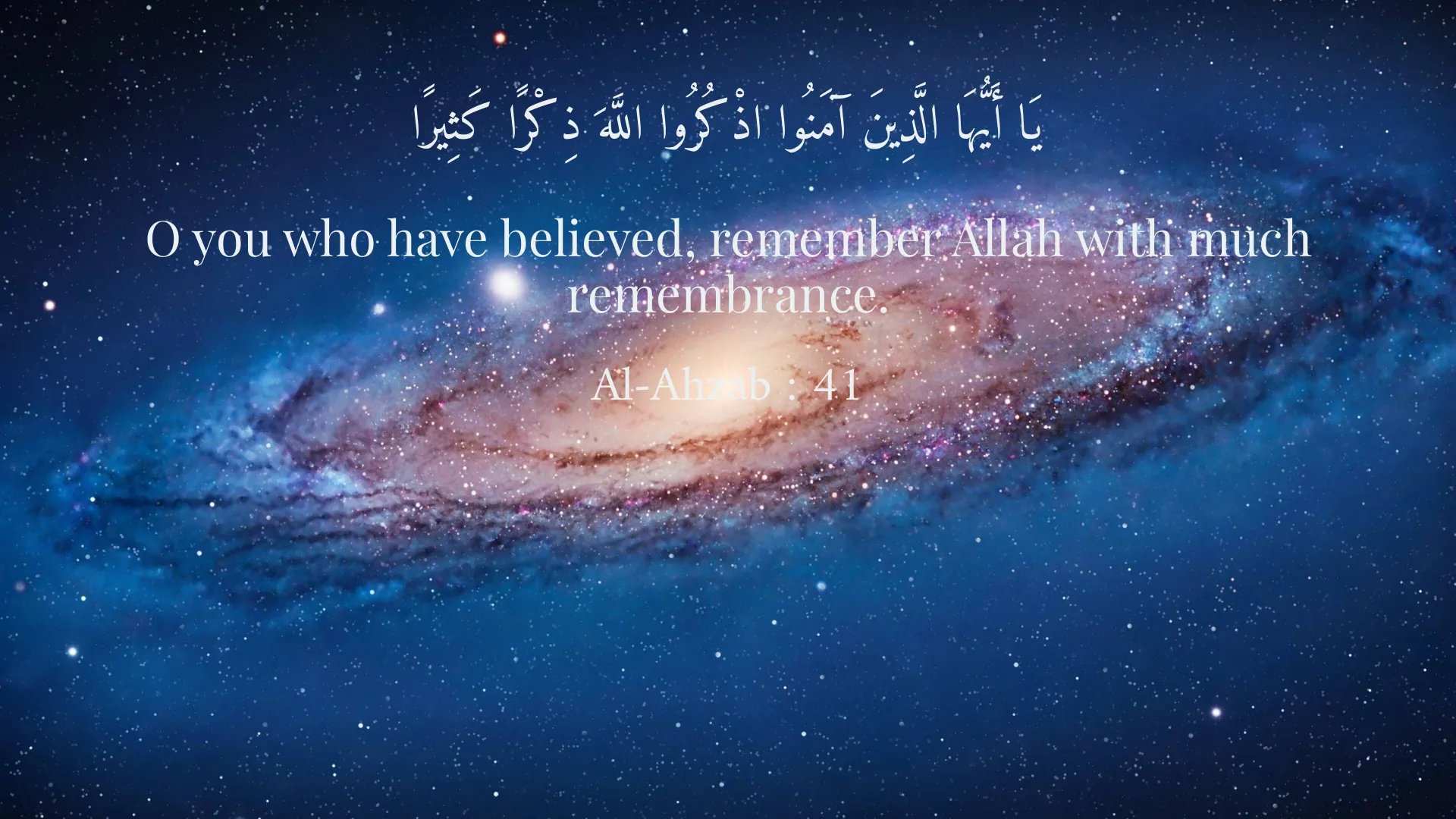
يَا أَيُّهَا الَّذِينَ آمَنُوا اذْكُرُوا اللَّهَ ذِكْرًا كَثِيرًا
O you who have believed, remember Allah with much remembrance.
Al-Ahzab : 41
الَّذِينَ آمَنُوا وَتَطْمَئِنُّ قُلُوبُهُم بِذِكْرِ اللَّهِ ۗ أَلَا بِذِكْرِ اللَّهِ تَطْمَئِنُّ الْقُلُوبُ
Those who have believed and whose hearts are assured by the remembrance of Allah. Unquestionably, by the remembrance of Allah hearts are assured.
Ar-Ra'd : 28
وَأَقِمِ الصَّلَاةَ ۖ إِنَّ الصَّلَاةَ تَنْهَىٰ عَنِ الْفَحْشَاءِ وَالْمُنكَرِ ۗ وَلَذِكْرُ اللَّهِ أَكْبَرُ ۗ وَاللَّهُ يَعْلَمُ مَا تَصْنَعُونَ
Recite what has been revealed to you of the Book and establish prayer. Indeed, prayer prohibits immorality and wrongdoing, and the remembrance of Allah is greater. And Allah knows that which you do.
Al-Ankabut : 45
Short Story
It is said that in days of old, there was a merchant who possessed vast wealth, yet from dawn till dusk, he was immersed in the pursuit of market gains. The thought of profit and loss so consumed his heart that he tasted neither the flavor of food nor the pleasure of wakefulness or sleep. At night, slumber eluded his eyes as he perpetually counted his riches. One day, he passed by a serene scholar who sat peacefully in a corner, engaged in the remembrance of Truth. The merchant lamented his distress, saying, 'O wise one, advise me, how can I escape this storm of anxiety?' The scholar smiled and replied, 'Consider the heart like a flowing stream; if for a moment water ceases to flow, thorns and debris will settle within it. Whenever the heart becomes heedless of God's remembrance, worldly temptations settle in it like thorns and debris. So, refresh your heart with the remembrance of Truth, for remembrance is like water that washes away the rust of heedlessness, and peace follows. Begin every action with God's intention, and whenever sorrow strikes, remember that He is the Absolute Sovereign.' The merchant took the scholar's advice to heart. Thereafter, even as he busied himself with his affairs, the remembrance of 'La hawla wa la quwwata illa billah' (There is no might or power except with Allah) and 'Alhamdulillah' (Praise be to Allah) never left his tongue. Before long, he found a wondrous tranquility pervading his heart. No longer did worldly gains intoxicate him, nor did its losses disturb his mind. He understood that true peace lies not in possessing wealth, but in possessing God.