Quranic Answer
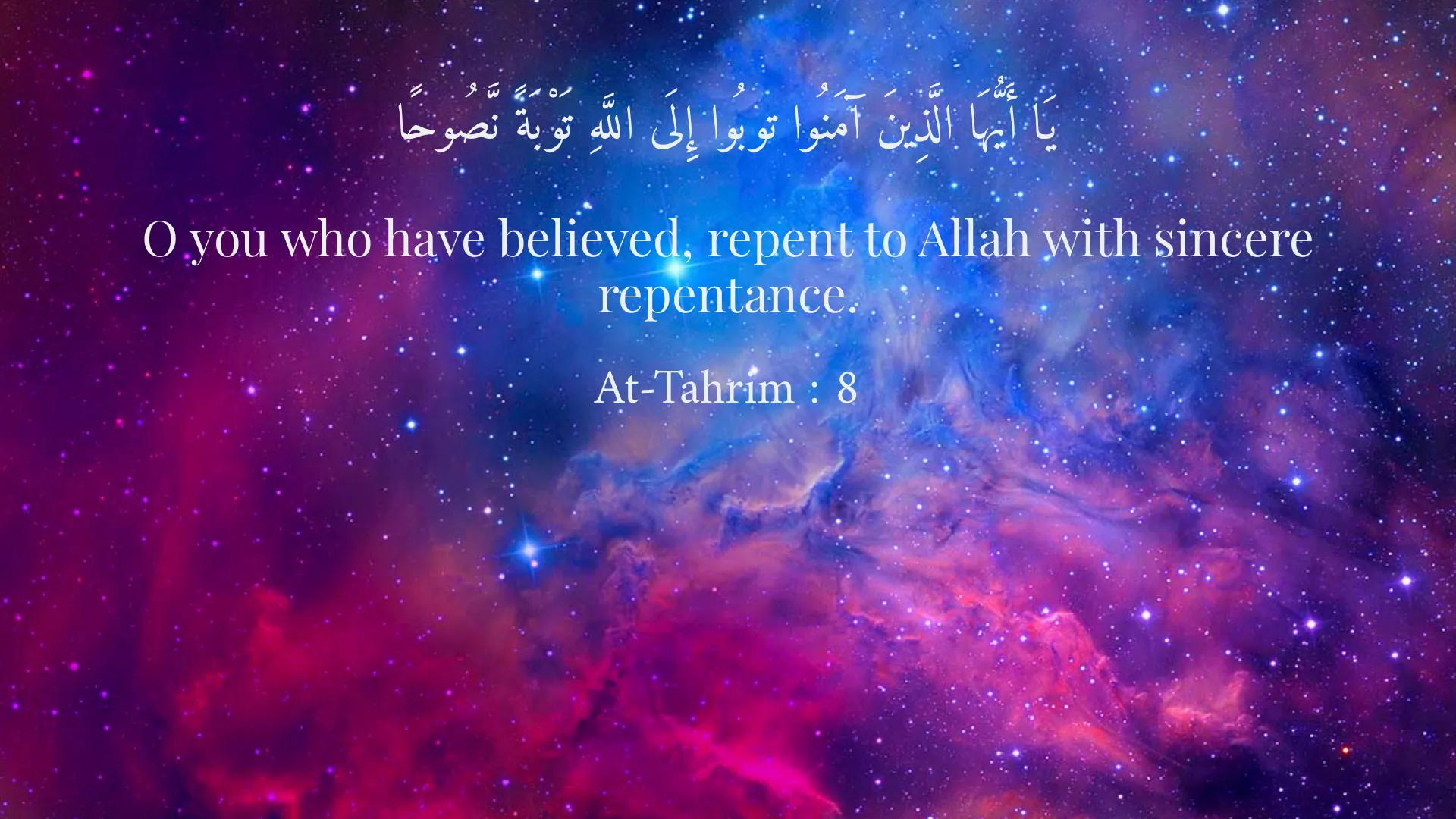
Repentance, or Tawbah, in Islam is an essential element that shapes the moral and spiritual fabric of a Muslim's life. It embodies the concept of returning to God with a sincere heart and a genuine desire to rectify one's errors. The Quran, the holy book of Islam, strongly emphasizes the significance of repentance. In fact, it is regarded as both a privilege and a necessity for believers seeking to mend their relationship with Allah. As highlighted in Surah At-Tahrim, verse 8, Allah commands, 'O you who have believed, repent to Allah with sincere repentance.' This verse not only underscores the importance of repentance but also emphasizes the purity of intent behind this act. It is a call to believers to engage in a heartfelt return to God, signaling an end to their sinful ways. Furthermore, the Quranic text in Surah Az-Zumar, verse 53, illustrates Allah's infinite mercy, stating, 'Say, O My servants who have believed, fear your Lord. For those who do good in this world is good, and the earth of Allah is spacious. Indeed, the patient will be given their reward without account.' This verse acts as a beacon of hope for all believers and reassures them of divine mercy that is ever-present and accessible. No individual is beyond the reach of Allah's forgiveness, as long as one approaches repentance with a genuine heart. The process of repentance in Islam involves several key steps that reflect a person's sincere intention to seek forgiveness. The first step is genuine remorse for past actions. Feeling sorrow for one's misdeeds is crucial; it's the emotional acknowledgment of the wrongs that have occurred. This remorse must be profound and genuine, emanating from the heart, leading a person to realize the gravity of their sins. Once remorse has been established, it is essential to make a firm decision to stop committing the sinful acts. This commitment marks a significant transition from wrongdoing toward righteousness. One must actively resolve not only to abandon sinful behavior but also to cultivate self-discipline and consciousness of God in future actions. This determination to forsake sins must be coupled with a proactive approach to good deeds. The notion that good deeds can atone for previous wrongdoings is strongly supported in Islamic teachings. Engaging in acts of kindness, charity, and worship can play a pivotal role in re-establishing a person's spiritual balance. Moreover, prayer and supplication are integral to the process of repentance. Discussing with Allah in supplication, one acknowledges their faults and asks for forgiveness, demonstrating humility and dependence on divine mercy. The heartfelt plea for mercy, known as Du'a, serves to further connect the believer to their Lord. It is a moment where one avows their intention to change while simultaneously submitting to Allah's unbounded compassion. True repentance must begin from the heart. The transformation that takes place within an individual's soul ignites a journey toward a life imbued with divine guidance and purpose. Through sincere repentance, Muslims believe they can attain a renewed sense of spirituality and moral clarity. The purification of one's heart leads not only to the forgiveness of sins but also fosters a deeper relationship with Allah, thereby enriching one's life significantly. In Islam, it is also critical to recognize that the act of repentance is not merely a one-time event but a continual process. Life is filled with challenges, tests, and temptations that can lead one astray. Therefore, the practice of turning back to God, asking for forgiveness, and striving for moral integrity should be an ongoing endeavor. This cyclical relationship emphasizes the importance of self-evaluation and spiritual awareness throughout one's life journey. Repentance instills hope and resilience in a believer's heart. No matter the extent of one's transgressions, turning back to God is always encouraged and welcomed. Allah's mercy is vast and all-encompassing—a crucial lesson taught through the Quran and the Hadith (sayings of the Prophet Muhammad). The idea is to cultivate a mindset where the possibility for redemption exists, fostering a spirit of optimism and perseverance. Furthermore, the importance of communal repentance cannot be overlooked. Within the Islamic community, supporting one another in striving for goodness plays a substantial role in fostering an environment conducive to repentance and spiritual growth. By maintaining a supportive community, believers can create a culture of accountability and encourage each other’s efforts to reform and repent. Ultimately, the act of repentance in Islam is not merely about seeking a pardon for sins but also about fostering a lifestyle guided by principles of righteousness, ethics, and compassion. It offers a refreshing opportunity to reconnect with one's faith and recommit to a life of purpose and devotion. Embracing repentance allows Muslims to cultivate a transformative spiritual experience that cleanses the heart, renews the spirit, and paves the way for an enlightened path aligned with Allah's will. In conclusion, repentance is a profound and transformative concept in Islam, imbued with mercy and hope. It encompasses genuine remorse, firm resolve, good deeds, and fervent supplication, creating a holistic framework for moral and spiritual development. By sincerely returning to God, individuals can reclaim their spiritual integrity, foster close ties with their Creator, and continuously strive toward a life filled with goodness, hope, and divine blessings.
Related Verses
يَا أَيُّهَا الَّذِينَ آمَنُوا توبُوا إِلَى اللَّهِ تَوْبَةً نَّصُوحًا
O you who have believed, repent to Allah with sincere repentance.
At-Tahrim : 8
قُلْ يَا عِبَادِيَ الَّذِينَ آمَنْتُمْ اتَّقُوا رَبَّكُمْ
Say, 'O My servants who have believed, fear your Lord.'
Az-Zumar : 53
Short Story
One day, a man felt a deep sense of regret and decided to repent. He remembered the Quran and resolved to return to God with a sincere heart. He began to pray and seek forgiveness and noticed positive changes in his life. With each passing day, he felt a greater sense of peace and satisfaction within himself.